1
Locate the original business name registration
Retrieve the original certificate number, filing date, and the exact jurisdiction where the name was registered. County clerks and state secretary of state offices maintain searchable online databases you can use if you have misplaced the original.
💡 Search the filing authority's website by your legal name, not the business name — records are indexed under the registrant.
2
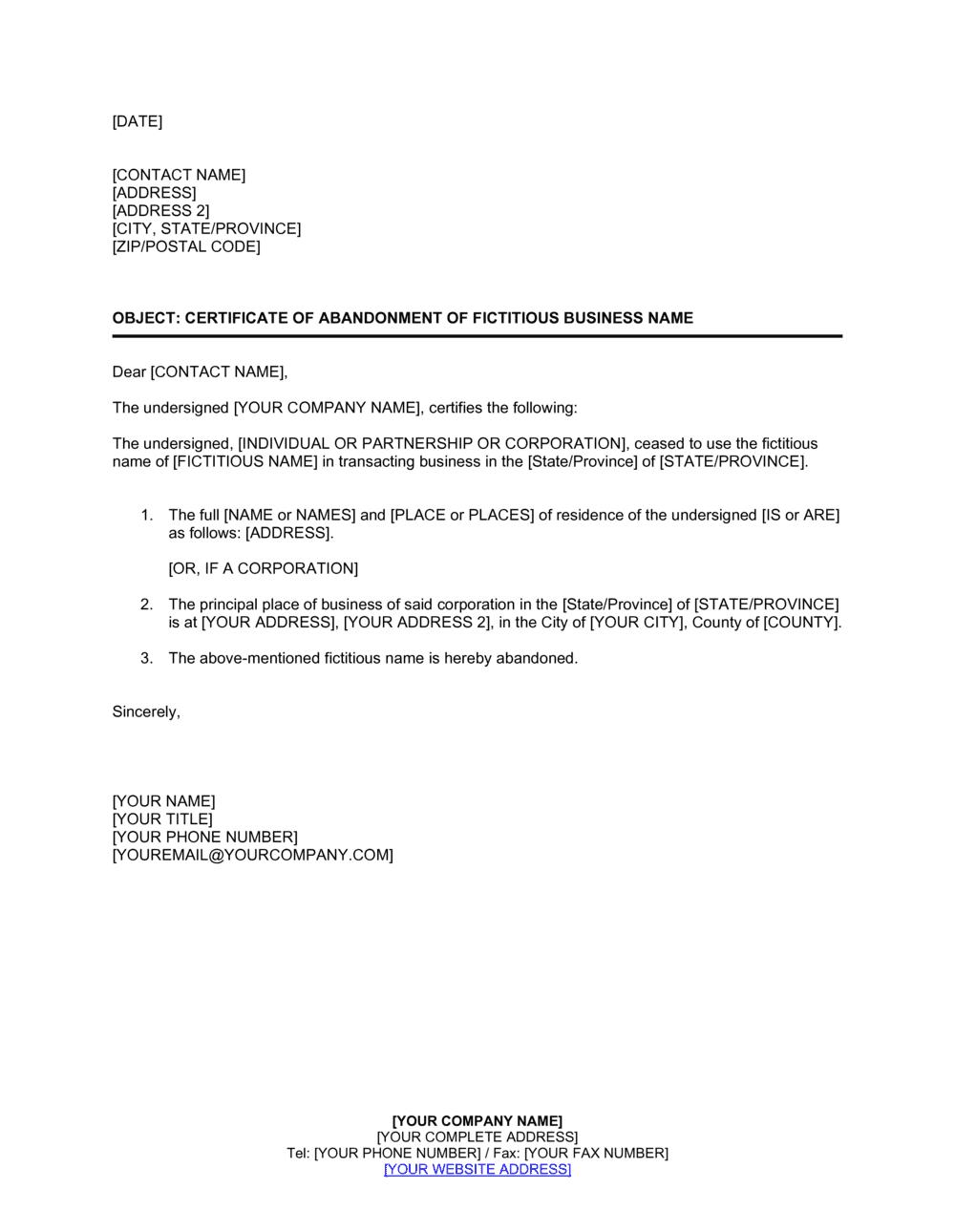
Enter the registrant's full legal name and address
Use the exact legal name that appears on the original registration — your full personal name for a sole proprietorship, or the legal entity name for a partnership or corporation. Include the current principal business address.
💡 If the registrant's address has changed since the original filing, use the current address but note the original address in the description section to help the clerk match the record.
3
Reproduce the registered business name exactly
Copy the business name character-for-character from the original certificate, including punctuation, spacing, and any designators such as '& Co.' or 'Inc.' A single character difference can cause a mismatch.
💡 If you are unsure of the exact spelling, pull a certified copy of the original registration from the filing authority before completing this field.
4
Insert the original certificate number and filing date
Enter the unique registration number assigned by the filing authority and the date the original certificate was issued. Both fields are needed to locate and cancel the record.
💡 If the filing authority's database allows it, confirm the certificate number online before submitting — transposing a single digit is a common cause of rejection.
5
Set the effective date of abandonment
Choose the date on which you want the abandonment to take effect. For an immediate cessation, use today's date or the date of filing. For a future date — for example, coordinating with the end of a lease or final payroll — enter that specific calendar date.
💡 Align the effective date with the last day of any active contracts or licenses that reference the business name to avoid creating a gap between abandonment and operational wind-down.
6
Complete the representation of authority and declaration
Confirm your role and authority to sign — sole owner, general partner, managing member, or authorized officer. Sign the declaration of accuracy under the laws of the filing jurisdiction.
💡 For partnerships, check your partnership agreement to confirm who is authorized to file administrative documents on behalf of the firm.
7
Arrange notarization if required
Check the filing authority's current requirements for your jurisdiction. If notarization is required, sign the document in the presence of a commissioned notary public — do not pre-sign before appearing before the notary.
💡 Many UPS Stores, banks, and public libraries offer walk-in notary services for under $15 per signature, eliminating the need to schedule a legal appointment.
8
File the certificate and retain a stamped copy
Submit the completed certificate to the correct filing office — county clerk for county-registered DBAs, secretary of state for state-level trade names — along with any required filing fee (typically $5–$25). Request a file-stamped copy for your records.
💡 File in person or by certified mail with return receipt requested; electronic filings are accepted in some jurisdictions but not all, and confirmation of receipt matters.