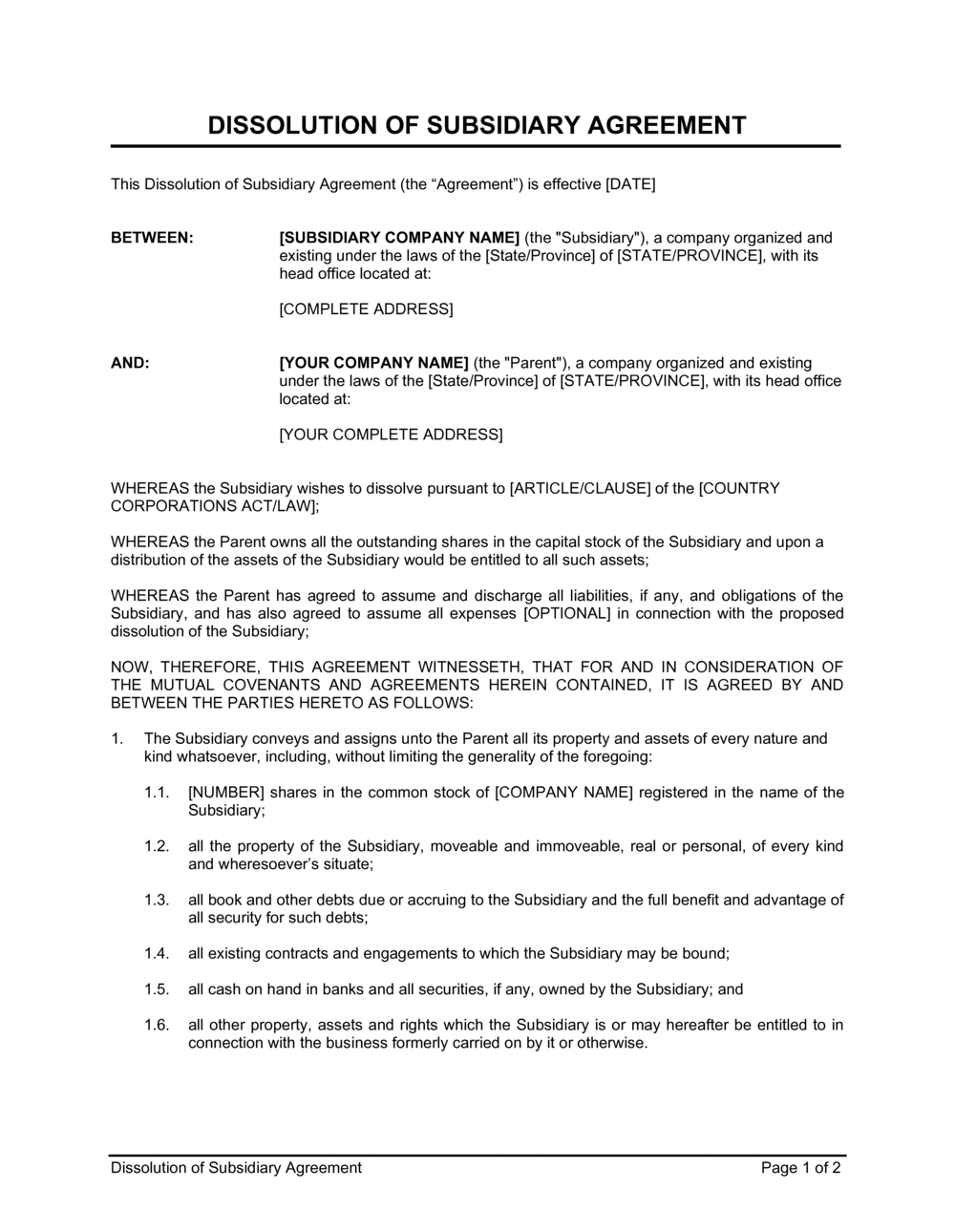
- Dissolution
- The formal legal process of terminating a corporation's or LLC's existence, including settling obligations and filing final documents with the relevant government authority.
- Wind-Down
- The operational phase preceding dissolution during which the subsidiary ceases new business activity, fulfills outstanding obligations, and prepares assets for transfer or liquidation.
- Articles of Dissolution
- The formal statutory filing submitted to the state, province, or national registrar to officially terminate a legal entity's registration.
- Intercompany Settlement
- The process of reconciling and extinguishing loans, payables, and receivables between the dissolving subsidiary and other entities within the same corporate group.
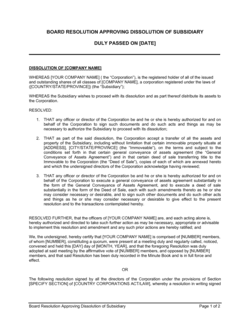
- Board Resolution
- A formal written decision adopted by the board of directors authorizing a specific corporate action — in this context, approving the dissolution of the subsidiary.
- Parent Company
- The controlling corporate entity that owns a majority or all of the shares of the subsidiary being dissolved.
- Residual Assets
- Any assets remaining in the subsidiary after all debts, liabilities, and wind-down costs have been settled, which are typically distributed to the parent or shareholders.
- Indemnification
- A contractual obligation by which one party (typically the parent) agrees to compensate the other for losses, claims, or liabilities arising from the dissolution process.
- Tax Clearance Certificate
- A document issued by a tax authority confirming that a dissolving entity has no outstanding tax obligations — required before dissolution is final in many jurisdictions.
- Effective Date of Dissolution
- The specific date on which the subsidiary legally ceases to exist, typically the date the dissolution filing is accepted by the relevant government registry.
- De-registration
- The administrative process of removing a legal entity from the official company register, completing the dissolution process in most jurisdictions.