1
Confirm the requesting party's specific requirements
Contact the bank, institution, or counterparty to determine exactly what they need — addressee format, notarization, specimen signatures, and acceptable staleness window (typically 30–90 days).
💡 Ask for their template or checklist upfront. Many banks have a preferred format; matching it exactly prevents a second round of document requests.
2
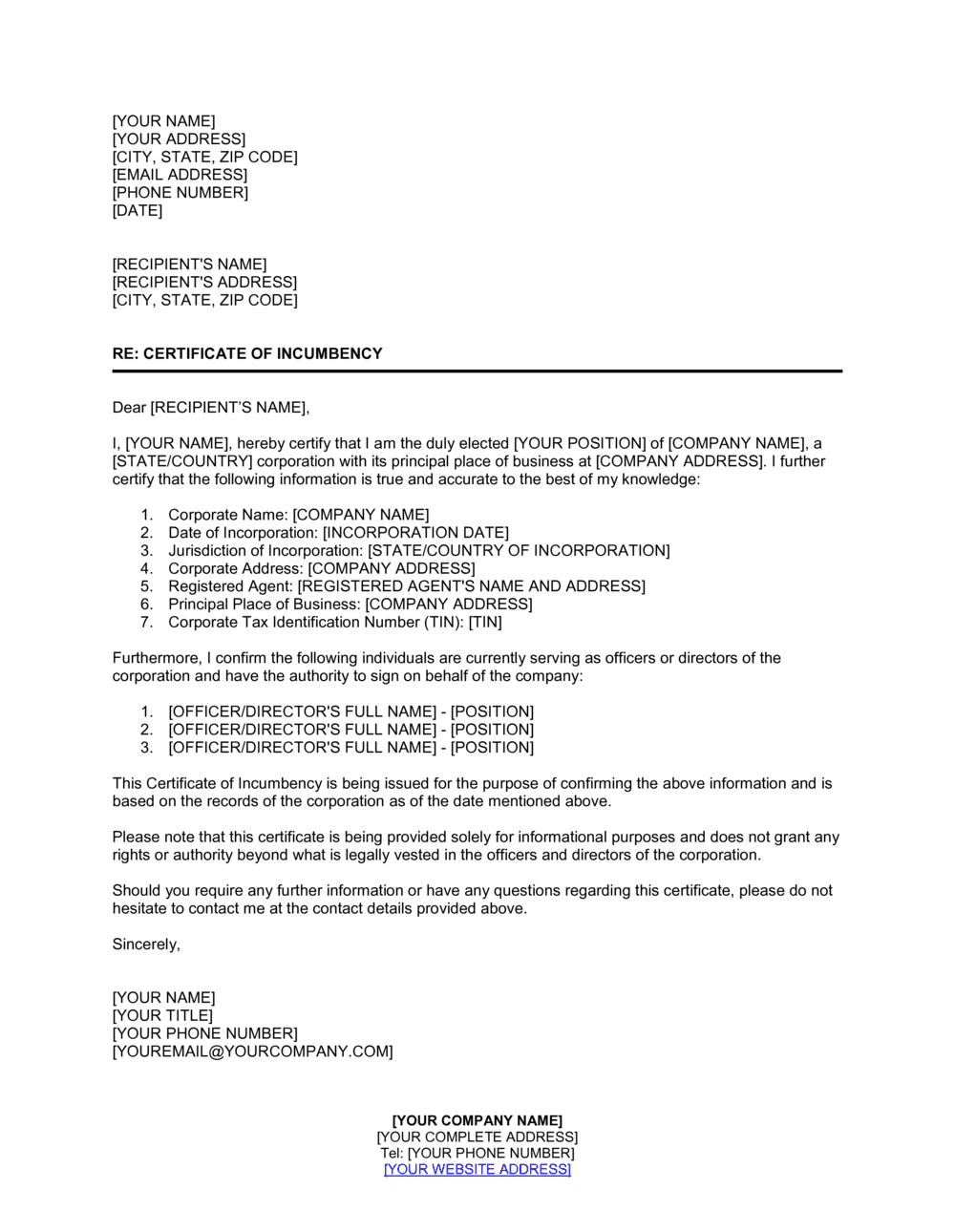
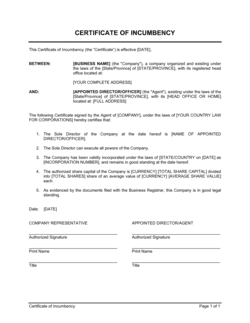
Enter the company's legal identification details
Fill in the exact registered legal entity name, jurisdiction of incorporation, company registration number, and registered office address. Cross-reference the certificate of incorporation to ensure these match.
💡 Do not abbreviate the entity type — write 'Delaware Corporation' not 'Corp.' Abbreviations create matching failures in automated bank compliance systems.
3
Compile the current officer and director roster
Pull the current roster from the corporate minute book or share register. List each person's full legal name, exact title, and the date they were elected or appointed to that role.
💡 If an officer change has occurred recently, confirm the board resolution approving the change is dated before the incumbency certificate.
4
Collect specimen signatures from each authorized signatory
Have each person listed as an authorized signatory sign their name in the designated specimen block. Use the same signature they use on official company documents.
💡 Collect all signatures in a single sitting if possible — mismatched ink colors or paper quality across pages can prompt authenticity questions from reviewers.
5
Define and state the signing authority scope
Write out exactly who can sign, whether signatures are individual or joint, and any transaction-value limits. Verify this matches the language in your most recent relevant board resolution.
💡 If your bylaws require two signatories for transactions over a threshold, state that threshold explicitly — vague authority statements are a common source of bank disputes.
6
Have the corporate secretary sign and date the certificate
The corporate secretary signs in the designated block and dates the certificate with today's date. If the company has no corporate secretary, identify which officer is signing and note their authorization.
💡 Date the certificate on the same day you send it. Banks count the staleness window from the certificate date, not the submission date.
7
Arrange notarization if required
If the recipient requires notarization, bring the completed (but unsigned) certificate to a notary public. The corporate secretary signs in the notary's presence, and the notary completes their authentication block.
💡 Book the notary appointment before collecting all internal signatures — notarization is the last step, and scheduling delays are the most common cause of missed bank deadlines.
8
Submit and retain a certified copy
Send the signed (and notarized, if applicable) certificate to the requesting party and keep a copy in the company's minute book alongside the related board resolution.
💡 Scan and file the fully executed version in your corporate records system immediately — you will almost certainly need to produce it again within 12–24 months.