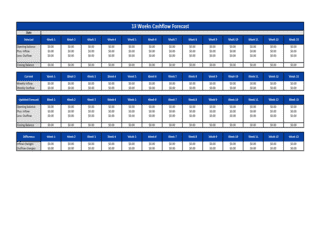
- Opening Cash Balance
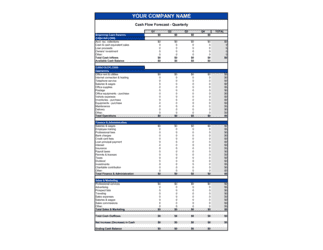
- The amount of cash held at the start of a forecast period, carried forward from the prior month's closing balance.
- Cash Inflow
- Any source of cash received during the period — including customer receipts, loan drawdowns, asset sales, or investor contributions.
- Cash Outflow
- Any payment of cash made during the period — including supplier payments, payroll, rent, loan repayments, and tax remittances.
- Net Cash Movement
- Total cash inflows minus total cash outflows for the month — a positive figure means cash increased; negative means it decreased.
- Closing Cash Balance
- The amount of cash remaining at the end of the period, calculated as opening balance plus net cash movement.
- Burn Rate
- Monthly net cash outflow for a pre-revenue or growth-stage business — how quickly it consumes available capital.
- Runway
- The number of months a business can operate at its current burn rate before cash reaches zero, assuming no new revenue or funding.
- Operating Activities
- Cash flows directly tied to the core business — customer receipts, supplier payments, wages, and overhead expenses.
- Investing Activities
- Cash flows from the purchase or sale of long-term assets such as equipment, vehicles, or property.
- Financing Activities
- Cash flows related to borrowing or repaying debt, issuing equity, or paying dividends to shareholders.
- Variance
- The difference between a forecasted cash figure and the actual amount recorded — used to measure forecast accuracy and flag emerging issues.
- Accrual vs. Cash Basis
- Accrual accounting records revenue and expenses when earned or incurred; cash-basis accounting records them only when cash actually changes hands — a cashflow forecast always uses the cash basis.