1
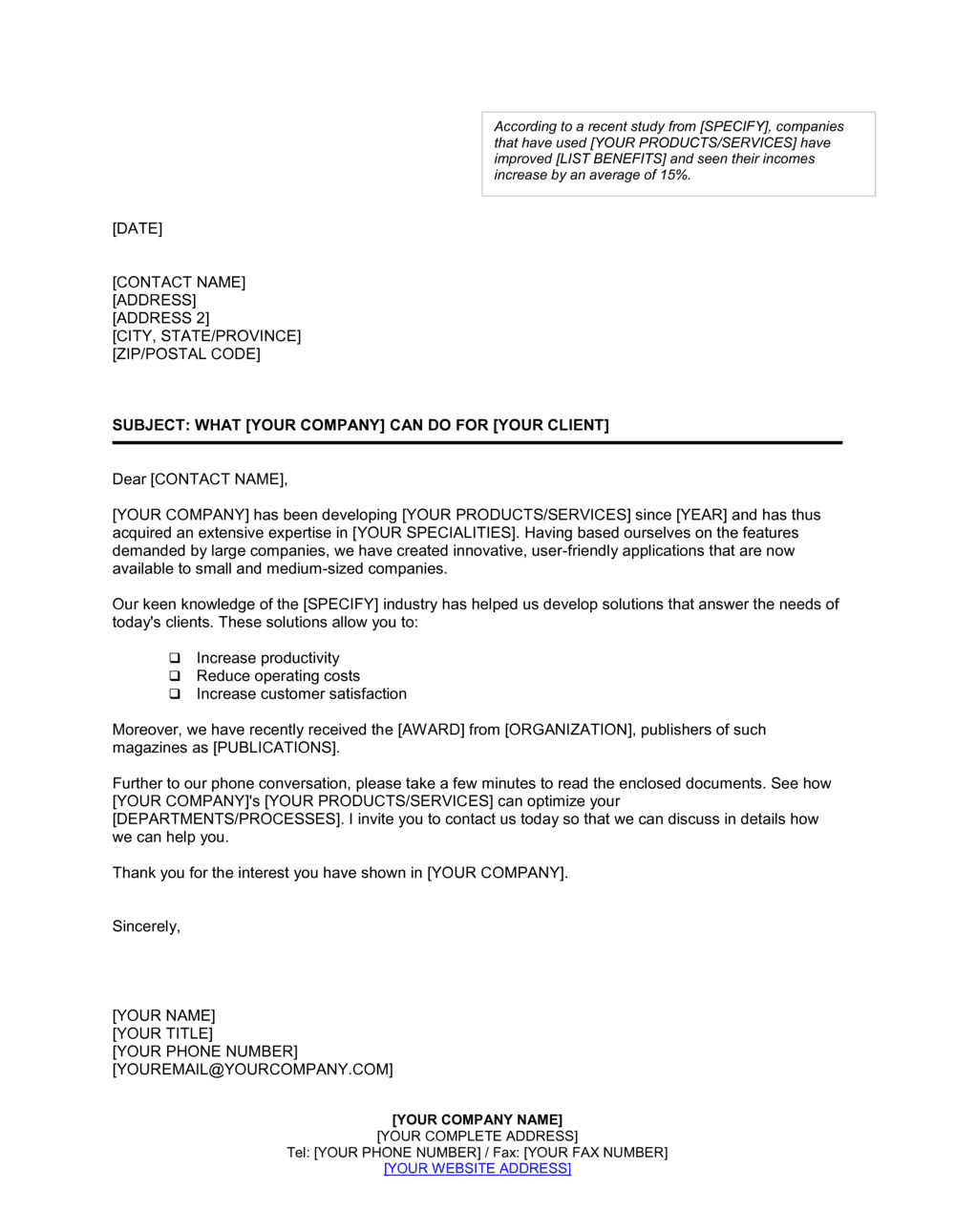
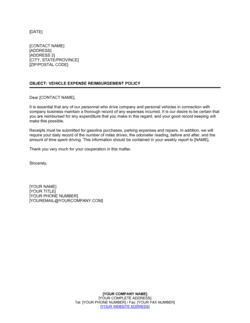
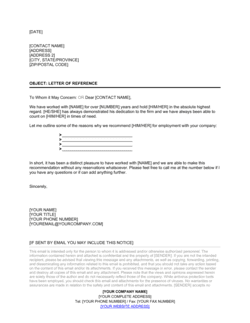
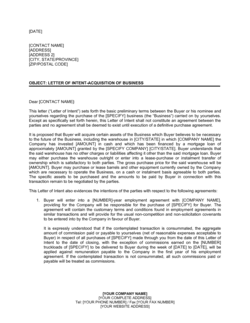
Add your letterhead and the recipient's address block
Enter your company name, address, phone, and email at the top. Below the date, add the recipient's full name, title, company, and mailing address. Confirm the correct spelling of the recipient's name before proceeding.
💡 A quick LinkedIn check takes 60 seconds and ensures you have the right title and spelling — wrong details on the first line are hard to recover from.
2
Write a salutation using the recipient's name
Use 'Dear [MR. / MS. / DR.] [LAST NAME],' unless you have an established first-name relationship. Avoid 'To Whom It May Concern' if a named contact is available.
💡 If you are genuinely unsure of gender, use the recipient's full name: 'Dear Jordan Smith,' — this is widely accepted and avoids an awkward misstep.
3
Open with context and the connection
State who you are, your role, and why you are writing in two to three sentences. Name any mutual contact or specific trigger — a referral, a conference, a published article — that prompted the outreach.
💡 A named referral in the first sentence increases open and response rates significantly. Lead with it if you have one.
4
Write the introduction body paragraph
Present what you are introducing — person, company, or product — in three to four sentences. Focus on what it does and who it serves, not on history or credentials.
💡 Read the paragraph aloud and ask: 'Would the recipient care about this?' If the answer is no for any sentence, cut it.
5
Add a recipient-specific value proposition
Connect your offering to something specific about the recipient's industry, company size, or known challenge. One targeted paragraph outperforms three generic ones.
💡 Spend five minutes on the recipient's company website before writing this paragraph. One specific reference — a recent expansion, a product launch — makes the letter feel researched rather than mass-produced.
6
Include one line of social proof
Cite a specific result, client type, or credential that substantiates the value proposition. Quantify the result wherever possible — percentages and timeframes carry more weight than adjectives.
💡 If you cannot name the client, describe them by industry and size: 'a mid-size logistics firm in the Southeast' is enough to make the proof credible.
7
Close with a specific call to action
Propose a single, low-friction next step — a 20-minute call, a product overview, a meeting — and give a timeframe. State when you will follow up so the ball is not entirely in the recipient's court.
💡 Offering two specific time slots in the letter ('Tuesday at 10am or Thursday at 2pm EST') reduces the scheduling back-and-forth and gets a faster response.
8
Sign off, attach enclosures, and proofread
Use a standard close ('Sincerely,' or 'Best regards,'), add your printed name and title, and note any attachments on the enclosure line. Proofread for spelling of the recipient's name and company before sending.
💡 Send a test PDF to yourself before emailing to the recipient. Formatting that looks correct in Word sometimes breaks when exported — header alignment and signature spacing are common culprits.