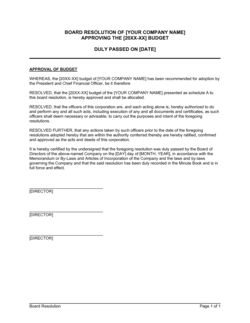
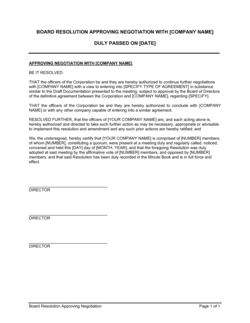
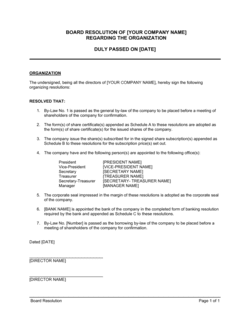
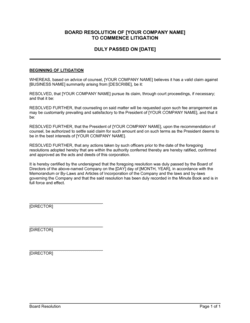
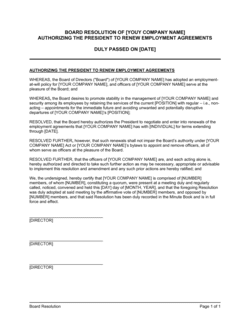
- Board Resolution
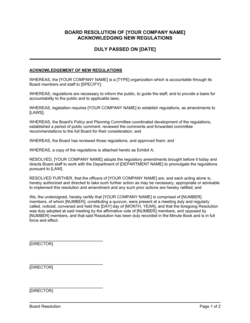
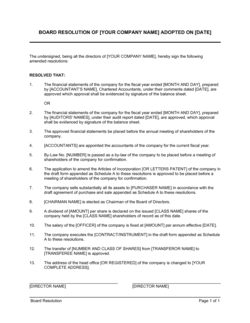
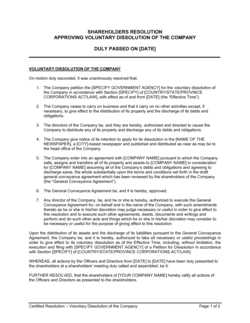
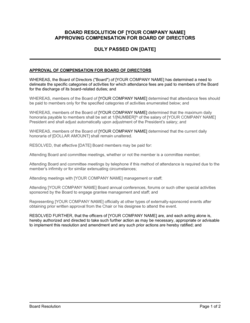
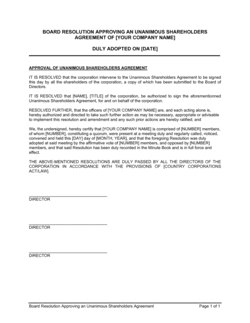
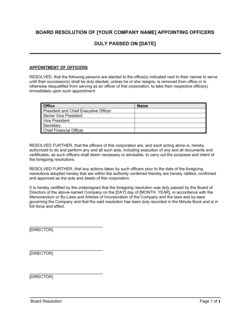
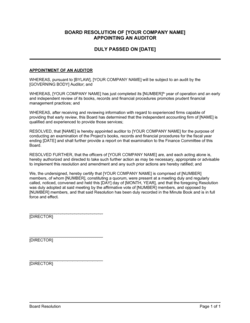
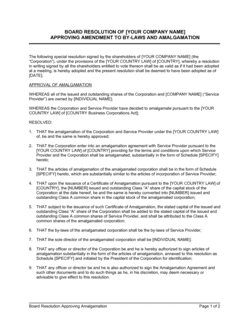
- A formal written record of a decision made by a company's board of directors, typically required to authorize significant corporate actions.
- Surviving Entity
- The corporation that continues to exist after a merger; the entity that absorbs the other and assumes its assets, liabilities, and obligations.
- Constituent Corporation
- Any company that is a party to a merger, whether it survives or is absorbed into the surviving entity.
- Plan of Merger
- A formal document, often required by statute, detailing the terms under which two or more entities will combine, including ownership exchange ratios and treatment of liabilities.
- Unanimous Written Consent
- A mechanism allowing directors or shareholders to approve a resolution without holding a formal meeting, by signing a written document.
- Articles of Merger
- State- or province-level filing documents submitted to the relevant secretary of state or corporate registry to give legal effect to a merger.
- Successor Liability
- The legal obligation of the surviving entity in a merger to honor the contracts, debts, and liabilities of the absorbed company.
- Quorum
- The minimum number of directors who must be present at a board meeting for a resolution to be validly passed.
- Effective Date
- The specific date on which the merger is legally deemed to have occurred, which may differ from the date the resolution is adopted.
- Indemnification
- A contractual obligation by the surviving entity to compensate directors, officers, or counterparties for losses arising from the merger transaction.
- Fiduciary Duty
- The legal obligation of directors to act in the best interests of the company and its shareholders when approving a merger or major corporate transaction.