1
Confirm the company's legal name and incorporation details
Enter the company's exact registered legal name, the state or province of incorporation, and the entity type (corporation, LLC, nonprofit). Cross-reference the corporate registry filing to ensure the name matches exactly.
💡 Pull the most recent certificate of good standing — it confirms the legal name and that the company is authorized to do business, which opposing counsel may request.
2
Describe the dispute accurately in the recitals
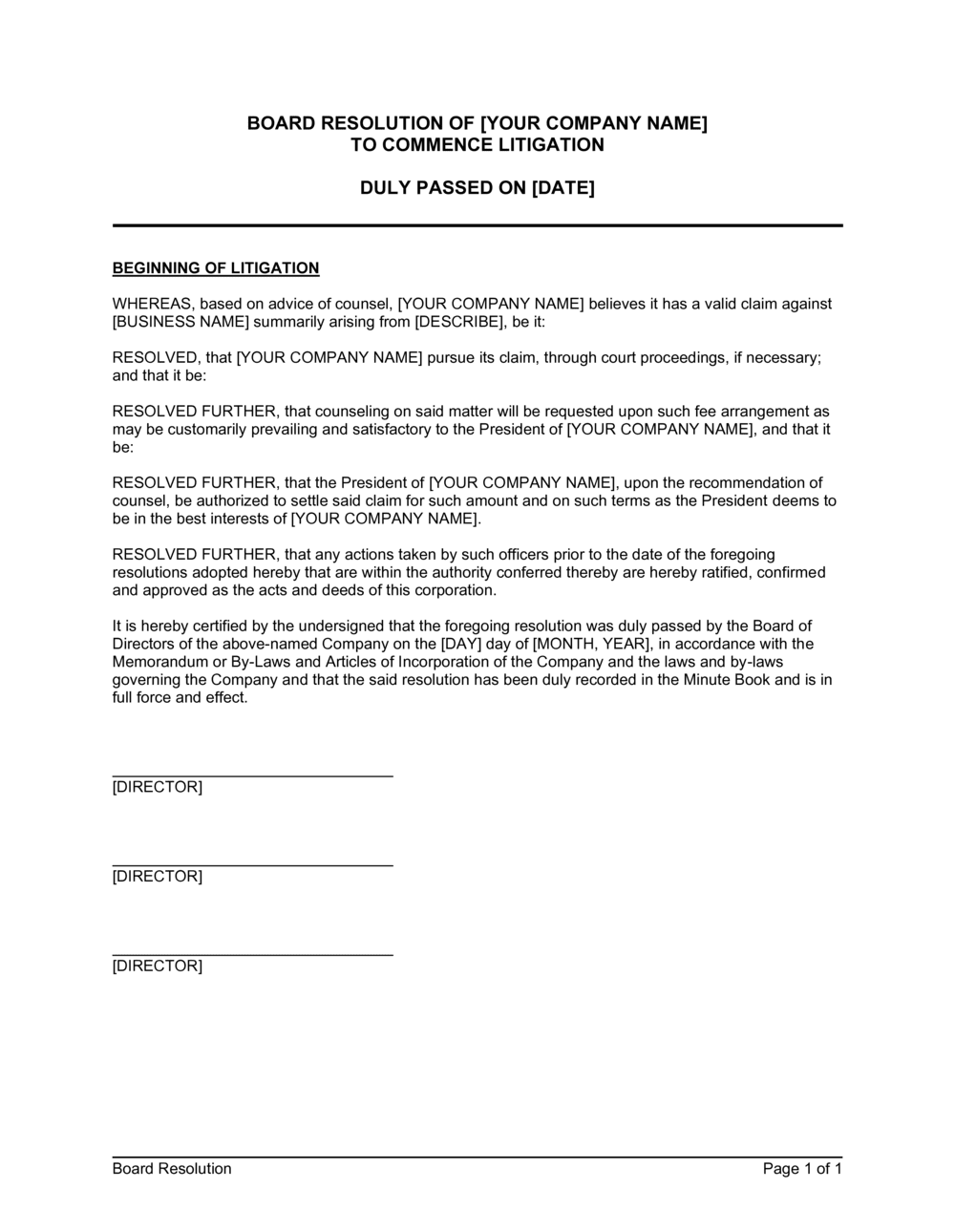
Draft WHEREAS clauses that identify the adverse party by full legal name, describe the claim (breach of contract, IP infringement, fraud, etc.), state the approximate damages or relief sought, and reference any prior demand or notice already sent.
💡 Coordinate with litigation counsel before finalizing the recitals — overly broad or inaccurate descriptions can complicate the pleading if the resolution is attached to the complaint or referenced in discovery.
3
Draft the core authorization clause with a specific claim and forum
State that the company is authorized to file suit against the named adverse party, specify the type of claim and the intended court or jurisdiction, and confirm that the board has determined the action to be in the company's best interests.
💡 If the forum has not yet been determined, write 'in such court or jurisdiction as litigation counsel may advise' to preserve flexibility without leaving the clause empty.
4
Designate the authorized officer by title and name
Identify the officer — CEO, President, or General Counsel — who will instruct counsel and execute documents. Include their name if the individual is known at the time of adoption.
💡 Designate a backup officer in case the primary is unavailable to sign time-sensitive court filings or settlement documents.
5
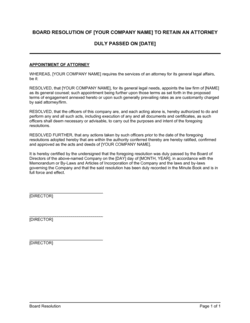
Identify and engage litigation counsel
Name the outside law firm being retained or authorize the designated officer to retain counsel. If the engagement letter has already been negotiated, reference it by date and firm name and authorize its execution.
💡 Ask counsel to review the draft resolution before adoption — they will confirm the scope of authority is sufficient for the specific proceedings and flag any jurisdiction-specific requirements.
6
Include a litigation hold directive
Add a clause directing the appropriate officers to issue an immediate litigation hold notice to all employees who may have relevant documents, emails, or data — including IT systems, cloud storage, and personal devices used for company business.
💡 Date the litigation hold separately from the resolution and keep a log of who received it and when. The hold date, not the filing date, is what courts examine for spoliation purposes.
7
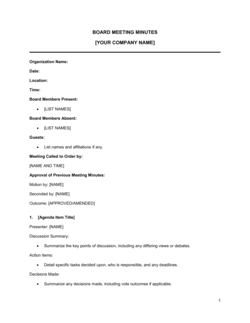
Adopt the resolution by the correct procedure
Convene a duly noticed board meeting at which a quorum is present, or obtain unanimous written consent from all directors if your bylaws permit. Record the vote accurately — including any abstentions or dissenting votes.
💡 Check your bylaws for the required quorum threshold and whether a simple majority or supermajority is needed for litigation authorization — some charters impose a higher bar for significant legal actions.
8
Certify and distribute the executed resolution
Have the corporate secretary sign the certification block, date it, and attach it to the company's minute book. Provide a certified copy to outside counsel, and retain the original in corporate records.
💡 Outside counsel will typically attach the certified resolution to their conflict-check and file-opening paperwork — send it promptly to avoid delays in engagement and filing deadlines.