1
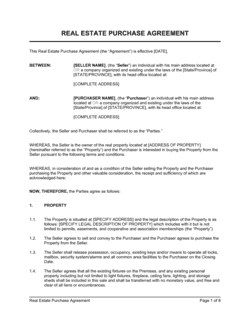
Enter the legal names and entity types for both parties
Use each party's full registered legal name — not a trade name or DBA. Include the entity type (LLC, corporation, sole proprietor) and the state or country of formation.
💡 Pull names directly from a state corporation registry or EDGAR search to avoid typos that complicate title recording or enforcement.
2
Describe the assets or goods with maximum specificity
List every item being sold by name, quantity, serial number, VIN, or other unique identifier. Attach a Schedule A for complex or multi-item transactions rather than cramming descriptions into the body.
💡 Photograph or video the assets before signing and reference the date and file name in Schedule A — this anchors the condition record if a dispute arises.
3
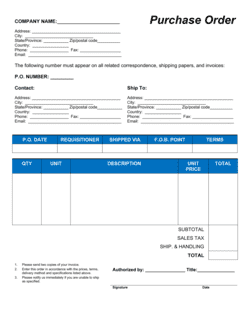
Set the purchase price, deposit, and payment mechanics
State the total price, the deposit amount and due date, and the balance due at closing. Include wire instructions or specify escrow if the transaction warrants it.
💡 For transactions above $50,000, use a third-party escrow service rather than direct wire — it protects both parties simultaneously and eliminates risk of funds being sent before documents are delivered.
4
Draft representations and warranties appropriate to the asset type
The seller must warrant clear title, no undisclosed liens, and accurate condition. For business asset purchases, add warranties covering no pending litigation, accurate financial records, and compliance with applicable law.
💡 Ask the seller to provide a UCC lien search and title or ownership documentation before signing — verify the warranties against actual records, not just the seller's word.
5
Define conditions precedent with deadlines
List every condition that must be met before closing — financing approval, inspection completion, regulatory clearance — and set a specific date for each. Include what happens if a condition is not met (termination right, extension option, or waiver).
💡 Cap the inspection period at 10–14 business days and require written notice of any objection — open-ended inspection rights can be weaponized to stall or renegotiate.
6
State the closing date, delivery location, and risk-of-loss transfer point
Enter the exact closing date, the physical location of delivery or handoff, and the moment at which risk passes to the buyer — typically upon actual delivery or execution of the Bill of Sale.
💡 For large equipment or inventory, schedule a joint physical count and inspection on closing day before releasing funds — discrepancies discovered after payment are far harder to resolve.
7
Set indemnification caps and baskets
Cap total indemnification liability at the purchase price or a negotiated percentage. Add a deductible basket (e.g., claims must exceed $5,000 before indemnification kicks in) to filter nuisance claims.
💡 Indemnification caps and baskets are heavily negotiated — start with the purchase price as the ceiling and a 1% basket as a reasonable opening position for most commercial transactions.
8
Choose governing law and dispute resolution mechanism
Select the jurisdiction where both parties are located or where the assets are situated. Choose arbitration for faster, private resolution or litigation if either party requires court-enforced discovery.
💡 Arbitration clauses typically produce faster outcomes (9–18 months versus 2–4 years for commercial litigation) and lower legal fees for disputes under $500,000.