1
Identify the parties and state the purpose
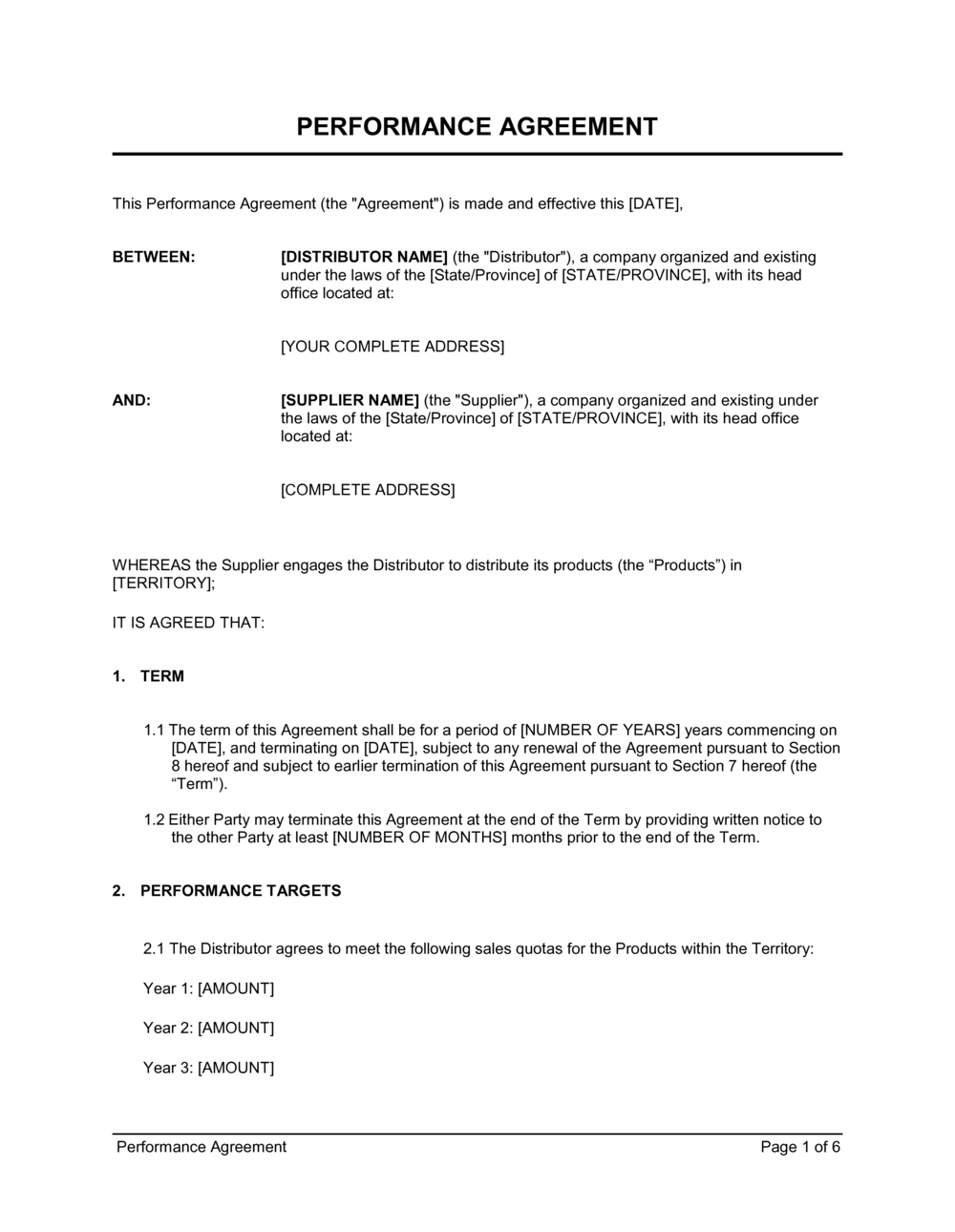
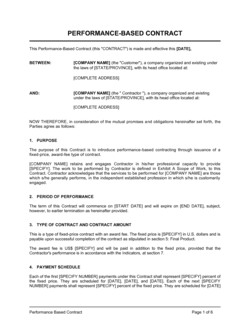
Enter the employer's full registered legal name and the employee's legal name and job title. In the purpose clause, select one of the standard triggers — onboarding, probationary period, performance concern, or routine goal cycle — and enter the start and end dates of the review period.
💡 Have HR confirm the exact legal entity name against payroll records before the document is finalized. Mismatched entity names create procedural complications if the agreement is later referenced in a termination dispute.
2
Define specific, measurable performance goals
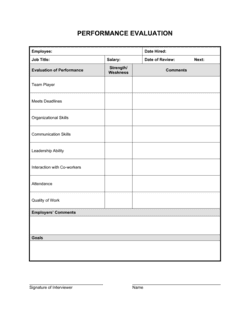
List each goal in numerical or otherwise objective terms. For sales roles, use units, revenue, or conversion rates. For operational roles, use cycle time, error rate, or output volume. For project-based goals, use milestone completion dates.
💡 Limit the agreement to three to five goals maximum. A list of ten goals signals a punitive document and dilutes accountability — both parties lose track of what actually matters.
3
Set the review schedule and name the measurement sources
Specify how frequently progress will be reviewed (weekly check-ins are standard for a 30-day PIP; monthly is typical for a 90-day probationary period) and name the specific data source for each KPI — CRM report, project tracker, supervisor scorecard.
💡 Lock the data source in writing before the period begins. Disputes about whether a goal was met almost always come down to which numbers count — agreeing on the source upfront eliminates that argument.
4
Document employer support commitments
List every resource or action the employer commits to providing during the review period — coaching sessions, training access, tool upgrades, or workload adjustments. Be specific about frequency and format.
💡 In Canada and the UK, documented employer support significantly strengthens the employer's legal position if the process leads to termination. Courts look for evidence that the employer gave the employee a genuine opportunity to improve.
5
State both success and failure consequences clearly
Write a separate clause for each outcome. For success: confirmation of employment, removal of performance designation, or a salary review. For failure: extension, reassignment, or termination with stated notice. Reference statutory minimum notice where applicable.
💡 Avoid the phrase 'immediate termination.' Even in at-will US states, documenting a notice period or pay-in-lieu option protects against wrongful-termination claims and gives you flexibility at the time of the decision.
6
Add confidentiality and data handling language
Include a clause confirming that both parties will treat the agreement and related performance data as confidential. For employees in EU or UK jurisdictions, add a reference to the applicable data protection framework.
💡 For EU-based employees, confirm that performance data collected during the review period is processed under a documented lawful basis — legitimate interests or contractual necessity — before the agreement is signed.
7
Sign before the review period begins
Both parties must sign and date the agreement before the review period starts. Deliver the signed document to the employee with enough time to read it — at least 24–48 hours — before execution.
💡 Use a timestamped eSign solution so there is an unambiguous record of when each party signed. Post-start-date signatures weaken the enforceability of consequence clauses in common-law jurisdictions.
8
Schedule the formal mid-point and end-of-period reviews
Put the review meetings on both parties' calendars immediately after signing. A mid-point review prevents surprises at the final evaluation and gives the employee a documented opportunity to course-correct.
💡 Document the mid-point review in writing — even a brief email summary — so there is a paper trail showing the process was followed in good faith. A single end-of-period surprise termination, with no documented interim feedback, is the most common procedural failure point in performance disputes.