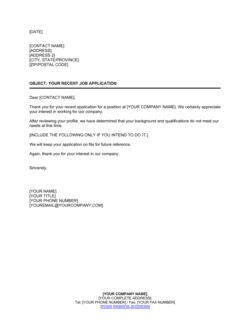
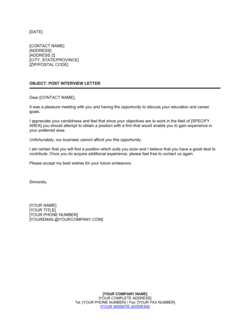
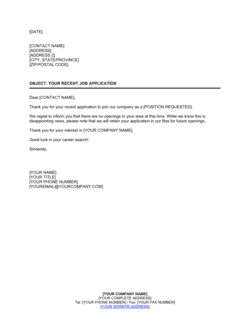
- Post-Interview Rejection
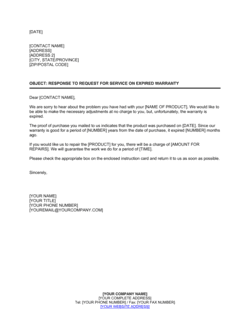
- A formal written notice sent to a job candidate who has completed one or more interviews but has not been selected for the position.
- Adverse Action Notice
- A legally required written notification — most common in consumer credit contexts but increasingly applied in hiring — informing an applicant of a negative decision and, in some jurisdictions, the reasons for it.
- Disparate Impact
- An unintentional employment practice that disproportionately disadvantages a protected group, even if the policy appears neutral on its face.
- Protected Characteristic
- A personal attribute — such as race, sex, age, disability, religion, or national origin — that employment laws prohibit employers from using as the basis for hiring decisions.
- At-Will Employment
- An employment relationship (common in most US states) that either party may end at any time for any lawful reason — but the hiring stage is governed by anti-discrimination law regardless of at-will status.
- Employer Brand
- The reputation and perception a company holds as a place to work, shaped significantly by how it treats candidates throughout the hiring process — including rejections.
- Selection Criteria
- The documented, job-related standards an employer uses to evaluate and compare candidates — qualifications, skills, experience, and competencies.
- Talent Pool
- A database or pipeline of vetted candidates an employer keeps on file for future openings, often populated by strong candidates who were not selected for the original role.
- EEOC
- The US Equal Employment Opportunity Commission — the federal agency that enforces federal employment discrimination laws and investigates discrimination charges filed by candidates or employees.
- Record Retention
- The obligation to keep hiring-related documents — applications, interview notes, rejection letters — for a defined period (typically 1–3 years in the US) to respond to audits or discrimination claims.