Overtime and Compensatory Time Policy Template

Free Word download β€’ Edit online β€’ Save & share with Drive β€’ Export to PDF

3 pagesβ€’20–25 min to fillβ€’Difficulty: Standard
Learn more ↓
FreeOvertime and Compensatory Time Policy Template

At a glance

What it is
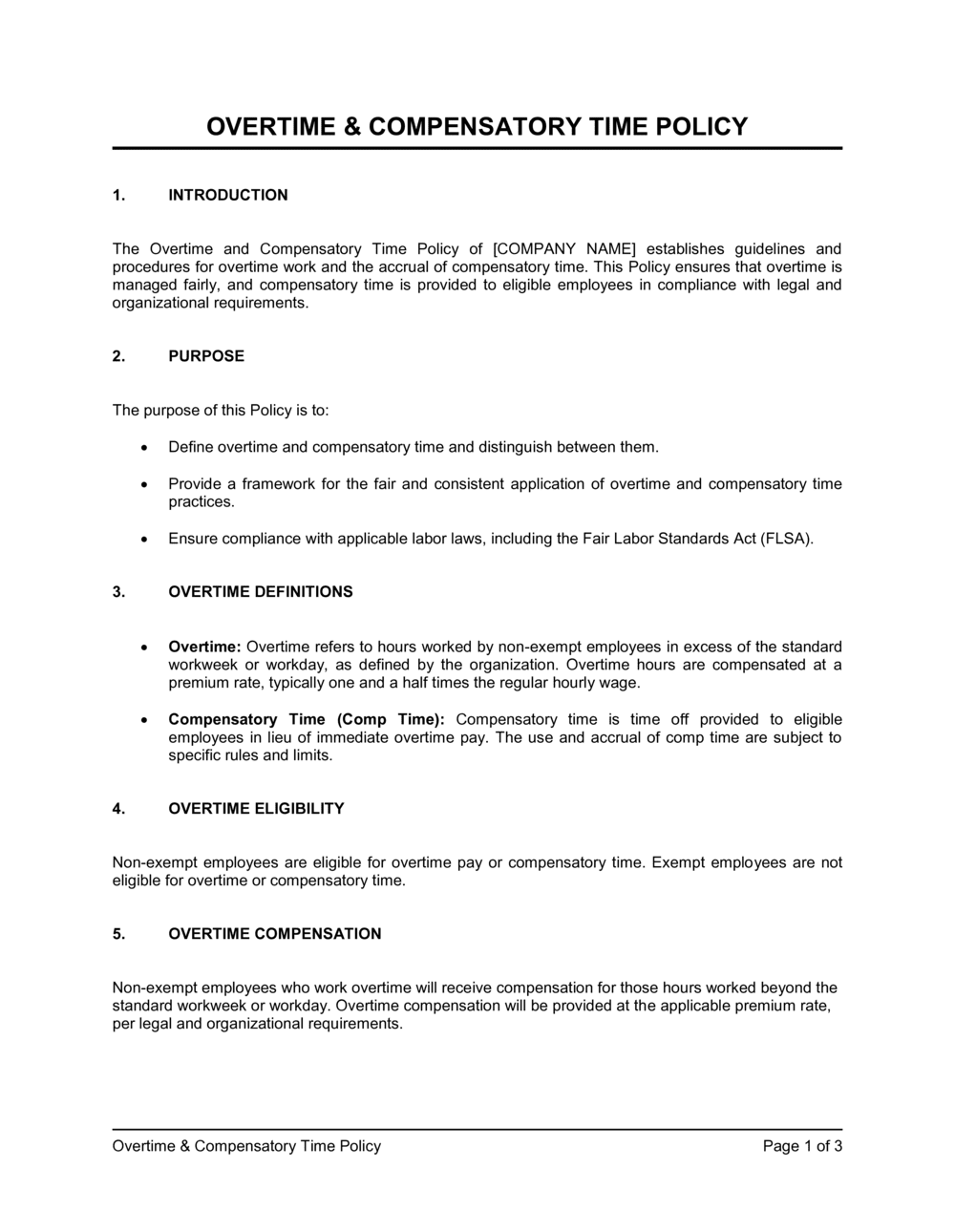
An Overtime and Compensatory Time Policy is a formal written document that defines how an organization tracks, approves, and compensates hours worked beyond the standard workweek. This free Word download covers eligibility criteria, authorization procedures, comp time accrual and usage rules, and FLSA classification requirements β€” giving managers and HR teams a single reference point for consistent, compliant decisions.
When you need it
Use it when hiring employees who may work irregular or extended hours, when formalizing HR practices ahead of an audit, or when inconsistent overtime approvals are creating payroll disputes or compliance exposure.
What's inside
The policy covers purpose and scope, exempt versus non-exempt employee classifications, overtime eligibility and thresholds, the manager approval process, compensatory time accrual and redemption rules, recordkeeping requirements, and consequences for policy violations.

What is an Overtime and Compensatory Time Policy?

An Overtime and Compensatory Time Policy is a formal written document that establishes how an organization authorizes, tracks, and compensates employee hours worked beyond the standard 40-hour workweek. It defines which employees are eligible for overtime pay or comp time, how managers must approve extended hours before they are worked, the rate at which comp time accrues, accrual caps, payout rules, and the recordkeeping obligations that support compliance with the Fair Labor Standards Act and applicable state wage laws. Rather than leaving overtime decisions to individual managers, the policy creates a consistent, auditable framework that applies uniformly across departments and locations.

Why You Need This Document

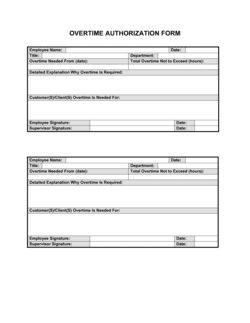
Without a written overtime and compensatory time policy, every manager makes judgment calls β€” and those calls vary widely, producing unequal treatment, payroll disputes, and wage-and-hour liability that compounds with each passing pay period. The FLSA requires employers to pay for all hours they knew or should have known an employee worked, whether those hours were approved or not; an employer without a documented pre-authorization procedure has no consistent defense when an employee claims unpaid overtime. A formal policy also closes the gap that misclassification creates β€” by naming the classification criteria and the HR contact responsible for questions, it shifts overtime decisions from guesswork to a documented standard. The cost of a Department of Labor audit finding unpaid overtime is back pay for up to three years, liquidated damages equal to the unpaid amount, and attorney fees β€” costs that dwarf the hour it takes to implement this policy correctly.

Which variant fits your situation?

If your situation is…Use this template
Private-sector employer tracking FLSA overtime pay for non-exempt staffOvertime and Compensatory Time Policy
State or local government entity offering comp time in lieu of overtime payGovernment Compensatory Time Policy
Employer managing flexible schedules across time zonesFlexible Work Arrangement Policy
Documenting hours and pay rules as part of a full employee handbookEmployee Handbook
Tracking individual employee hours and overtime calculationsEmployee Timesheet
Formalizing all compensation-related policies in one placeCompensation and Benefits Policy
Setting broader attendance and scheduling rules alongside overtimeAttendance and Punctuality Policy

Common mistakes to avoid

❌ Classifying employees by job title rather than FLSA duties tests

Why it matters: Misclassifying a non-exempt employee as exempt means they have been underpaid for every overtime hour worked β€” liability includes back pay for up to three years plus liquidated damages.

Fix: Apply the salary-level test ($684/week) and the specific duties test (executive, administrative, professional, or other) to each role before assigning an exemption status in the policy.

❌ Stating that unauthorized overtime will not be compensated

Why it matters: The FLSA requires employers to pay for all hours they knew or should have known were worked, regardless of whether they were authorized. This clause creates false expectations and is unenforceable.

Fix: Replace it with language clarifying that unauthorized overtime will be paid as required by law, and that the disciplinary consequence applies to the policy violation β€” not to withholding pay.

❌ Offering comp time to private-sector non-exempt employees

Why it matters: Private-sector employers generally cannot offer comp time in lieu of overtime pay for non-exempt employees under the FLSA. Doing so exposes the employer to back-pay liability for the unpaid cash difference.

Fix: Consult employment counsel before implementing a comp time program for non-exempt staff. If your state has an applicable exception, cite the specific statute in the policy.

❌ Setting no accrual cap on comp time balances

Why it matters: Uncapped comp time accruals create a growing balance-sheet liability and operational risk β€” an employee departing with 300 banked hours requires a large cash payout at their final pay rate.

Fix: Set a maximum accrual cap (40–80 hours is typical) and a payout trigger when the cap is reached, so the liability is manageable and predictable.

❌ Publishing the policy without employee acknowledgment records

Why it matters: In a wage-and-hour dispute, the employer must show the employee was aware of the policy. A published-but-unacknowledged policy is difficult to enforce and easy for employees to disclaim.

Fix: Require a signed or e-signed acknowledgment from every covered employee at hire and each time the policy is updated. Retain records for the same period as timekeeping records.

❌ Failing to update the policy when FLSA salary thresholds change

Why it matters: If the policy references a specific dollar exemption threshold that has since been raised by regulation, it may misclassify employees who are now non-exempt under the current rule.

Fix: Review the policy annually and after any DOL regulatory update. Reference the FLSA salary threshold by regulation rather than by a specific dollar figure, or schedule an annual review date in the document.

The 9 key sections, explained

Purpose and scope

Employee classification

Overtime eligibility and thresholds

Pre-authorization requirement

Compensatory time accrual and usage

Recordkeeping and timekeeping

Comp time payout and forfeiture rules

Manager responsibilities

Consequences for policy violations

How to fill it out

  1. 1

    Confirm your employee classifications before customizing

    Review your current workforce roster and verify which employees are FLSA-exempt and which are non-exempt based on the salary-level test (currently $684/week) and the applicable duties test β€” not just job titles.

    πŸ’‘ If any classification is uncertain, resolve it before publishing the policy. A wrong classification embedded in a written policy is harder to fix than one that was never written down.

  2. 2

    Define your workweek start and end day

    Enter the specific day and time your company's workweek begins and ends (e.g., Monday 12:01 a.m. through Sunday midnight). This determines when the 40-hour overtime threshold resets.

    πŸ’‘ Once set, the workweek definition can only be changed if the change is permanent and not intended to avoid overtime obligations β€” document the rationale if you ever change it.

  3. 3

    Set your overtime thresholds and state-specific rules

    Enter the weekly overtime threshold (40 hours federal) and add any daily overtime thresholds required in the states where you operate. California requires overtime for hours over 8 in a day and double time for hours over 12.

    πŸ’‘ If you operate in multiple states with different thresholds, add a jurisdiction-specific addendum rather than blending rules into a single paragraph β€” blended language confuses managers.

  4. 4

    Write your pre-authorization procedure with named tools

    Specify the exact form, system, or channel managers use to approve overtime β€” not just 'in writing.' Reference your actual timekeeping system (ADP, Workday, or a paper form number) so the process is unambiguous.

    πŸ’‘ A named system makes the pre-authorization requirement auditable. 'Via email to your manager' is the minimum; a timestamped workflow tool is better.

  5. 5

    Decide whether to offer comp time and set the cap

    Determine if your organization will offer comp time as an alternative to overtime cash pay. Remember: private-sector employers may only offer comp time to non-exempt employees if permitted by a valid collective bargaining agreement or applicable state law. Set the accrual cap in hours.

    πŸ’‘ A cap of 40–80 comp time hours is common for most employers. Cap too low and employees resent the restriction; cap too high and the liability on your balance sheet becomes material.

  6. 6

    Fill in recordkeeping retention periods and responsible parties

    Enter the timekeeping system name, the supervisor review deadline, and the minimum retention period (three years for FLSA; some states require four). Name the HR contact or department responsible for auditing records.

    πŸ’‘ Three years is the federal minimum, but many employment attorneys recommend five years to cover state statute-of-limitations periods for wage claims.

  7. 7

    Distribute, acknowledge, and store signed copies

    Have each covered employee sign or electronically acknowledge receipt of the policy and retain acknowledgment records. Include the policy in your employee handbook and new-hire onboarding packet.

    πŸ’‘ An unacknowledged policy is nearly impossible to enforce in a dispute. Signed acknowledgment is your first line of defense in any wage-and-hour claim.

Frequently asked questions

What is an overtime and compensatory time policy?

An overtime and compensatory time policy is a written document that defines how a company authorizes, tracks, and compensates hours worked beyond the standard workweek. It specifies which employees are eligible for overtime pay or comp time, how managers must approve extended hours in advance, how accrued comp time is earned and redeemed, and what records must be maintained. A written policy creates consistency across managers and provides documented evidence of compliance intent in a wage-and-hour audit.

What is the difference between overtime pay and compensatory time?

Overtime pay is cash compensation at 1.5 times an employee's regular hourly rate for hours worked beyond 40 in a workweek, as required by the FLSA for non-exempt employees. Compensatory time is paid time off accrued at the same 1.5-hour rate per overtime hour β€” offered in lieu of cash. Private-sector employers generally cannot offer comp time to non-exempt employees as a substitute for overtime pay under the FLSA; the practice is permitted for state and local government employers and, in limited circumstances, under state law or collective bargaining agreements.

Who is covered by the FLSA overtime requirements?

Non-exempt employees covered by the FLSA β€” generally those earning less than $684 per week or whose job duties do not meet the executive, administrative, or professional exemption tests β€” are entitled to overtime pay for hours over 40 in a workweek. Exempt employees, independent contractors, and certain agricultural and transportation workers are excluded. State laws may extend overtime coverage to workers not covered by the federal threshold.

Can a private employer offer comp time instead of paying overtime?

Generally no. The FLSA does not allow private-sector employers to substitute comp time for overtime pay for non-exempt employees. State and local government employers are explicitly permitted to offer comp time under the FLSA. A small number of states have enacted laws allowing private employers to offer comp time under specific conditions; consult employment counsel before implementing a comp time program for non-exempt staff in the private sector.

Do I need to pay employees for unauthorized overtime?

Yes. The FLSA requires employers to pay for all hours they knew or should have known an employee worked, regardless of whether those hours were pre-authorized. You can discipline an employee for working overtime without approval, but you cannot withhold pay for hours actually worked. Any policy language stating that unauthorized overtime will not be compensated is unenforceable and creates wage-and-hour liability.

How long should overtime and comp time records be kept?

The FLSA requires employers to retain payroll records, including hours worked and overtime calculations, for at least three years. Time and employment records used to calculate wages must be kept for at least two years. Many employment attorneys recommend a five-year retention period to cover the statute of limitations for willful FLSA violations, which is three years, plus additional buffer for state law claims that may carry longer limitations periods.

What is an accrual cap and why does it matter?

An accrual cap is the maximum number of comp time hours an employee may bank before the employer must pay out the balance in cash. Without a cap, comp time balances grow indefinitely and become a significant balance-sheet liability β€” particularly for employees who rarely take time off. A typical cap is 40 to 80 hours. When an employee reaches the cap, the employer pays out the excess at the employee's current regular rate and resets the balance.

Does this policy need to be included in an employee handbook?

Including it in the employee handbook is strongly recommended. A standalone policy distributed at onboarding and referenced in the handbook ensures employees can find it, managers know it exists, and HR can demonstrate consistent application. Policies maintained only in a filing cabinet or HR system β€” without handbook integration or employee acknowledgment β€” are far harder to enforce in a dispute.

How often should an overtime policy be reviewed?

Review the policy at least annually and immediately following any change to the FLSA salary threshold, a relevant state wage law, or your timekeeping system. The DOL raised the FLSA exempt salary threshold in 2024; employers who had not updated their classification language were exposed to misclassification claims the moment the rule took effect. Build an annual review date into the policy document itself.

How this compares to alternatives

vs Employee Handbook

An employee handbook is a comprehensive reference covering all HR policies β€” conduct, benefits, leave, pay practices, and more. An overtime and compensatory time policy is a single-topic document with the operational depth and legal specificity the handbook summary cannot accommodate. The policy is typically referenced in the handbook rather than reproduced in full.

vs Attendance and Punctuality Policy

An attendance policy governs when employees are expected to be at work and how absences and tardiness are managed. An overtime policy governs what happens when employees work beyond scheduled hours. Both affect timekeeping but address opposite ends of the schedule β€” one limits absence, the other manages excess presence.

vs Flexible Work Arrangement Policy

A flexible work arrangement policy authorizes alternative schedules β€” compressed workweeks, remote work, or flex hours β€” often as a tool to manage hours and avoid unnecessary overtime. An overtime policy addresses what happens when hours exceed the threshold regardless of schedule type. The two documents should be cross-referenced when flexible schedules are in use.

vs Employee Timesheet

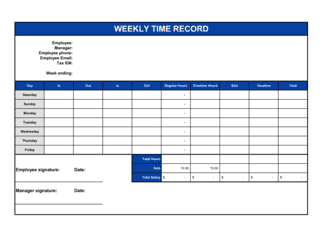
A timesheet is the operational record used to capture hours worked each day and week. The overtime policy is the governance document that defines the rules the timesheet enforces. The timesheet is evidence of compliance; the policy is the standard against which that evidence is measured.

Industry-specific considerations

Healthcare

Shift-based staffing means overtime is common and often unavoidable; policies must address on-call hours, mandatory overtime laws in several states, and joint-employer liability for agency nurses.

Manufacturing

Production surges and machine downtime routinely push hourly workers past 40 hours; pre-authorization workflows and daily overtime tracking for California and Alaska facilities are critical.

Retail and Hospitality

Seasonal volume spikes and part-time scheduling mean overtime exposure is concentrated in a few weeks per year; clear threshold rules prevent surprise payroll costs during peak periods.

Professional Services

High proportion of exempt employees reduces FLSA exposure, but misclassification of analysts and coordinators below the salary threshold creates material back-pay risk in audit-heavy industries.

Nonprofit Organizations

Grant-funded programs with strict budget caps need written comp time procedures to absorb overtime costs without exceeding funder-approved salary lines.

Construction

Project-deadline pressure and prevailing wage requirements on public contracts make accurate overtime recordkeeping both a compliance obligation and a contract deliverable.

Template vs pro β€” what fits your needs?

PathBest forCostTime
Use the templateSmall to mid-size employers standardizing overtime rules for a domestic workforce in a single stateFree1–2 hours
Template + professional reviewEmployers operating in multiple states with differing daily overtime laws, or those adding comp time for a public-sector workforce$200–$500 (employment counsel review)2–5 business days
Custom draftedUnionized workforces, regulated industries with mandatory overtime laws (healthcare, transportation), or employers with recent DOL audit history$1,000–$3,0001–3 weeks

Glossary

FLSA
The Fair Labor Standards Act β€” the US federal law that sets minimum wage, overtime pay, recordkeeping, and child labor standards for covered employees.
Non-Exempt Employee
An employee entitled to overtime pay at 1.5 times their regular rate for all hours worked beyond 40 in a workweek, as defined by the FLSA.
Exempt Employee
An employee classified under the FLSA as not entitled to overtime pay, typically due to meeting salary-level and duties tests for executive, administrative, or professional roles.
Compensatory Time (Comp Time)
Paid time off granted in lieu of overtime pay β€” accrued at 1.5 hours of leave for each overtime hour worked β€” permitted for public-sector employers and in some state contexts.
Regular Rate of Pay
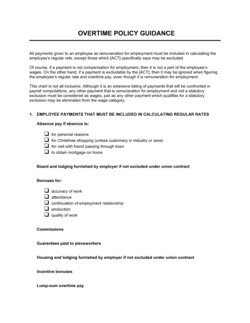
The hourly rate used to calculate overtime, determined by dividing total compensation in a workweek by total hours worked, including bonuses and shift differentials.
Workweek
A fixed, regularly recurring period of seven consecutive 24-hour days used as the basis for calculating overtime obligations β€” it does not need to align with the calendar week.
Pre-Authorization
A documented approval from a manager or supervisor obtained before an employee works overtime hours, required under most employer overtime policies.
Accrual Cap
The maximum number of compensatory time hours an employee may accumulate before the employer must pay out the balance in cash.
Time and a Half
The overtime pay rate of 1.5 times an employee's regular hourly rate, required by the FLSA for non-exempt employees working more than 40 hours in a workweek.
Wage and Hour Audit
A review β€” by the Department of Labor, a state agency, or internal compliance β€” of an employer's pay practices, timekeeping records, and employee classifications.

Part of your Business Operating System

This document is one of 3,000+ business & legal templates included in Business in a Box.

  • Fill-in-the-blanks β€” ready in minutes
  • 100% customizable Word document
  • Compatible with all office suites
  • Export to PDF and share electronically

Create your document in 3 simple steps.

From template to signed document β€” all inside one Business Operating System.
1
Download or open template

Access over 3,000+ business and legal templates for any business task, project or initiative.

2
Edit and fill in the blanks with AI

Customize your ready-made business document template and save it in the cloud.

3
Save, Share, Send, Sign

Share your files and folders with your team. Create a space of seamless collaboration.

Save time, save money, and create top-quality documents.

β˜…β˜…β˜…β˜…β˜…

"Fantastic value! I'm not sure how I'd do without it. It's worth its weight in gold and paid back for itself many times."

Managing Director Β· Mall Farm
Robert Whalley
Managing Director, Mall Farm Proprietary Limited
β˜…β˜…β˜…β˜…β˜…

"I have been using Business in a Box for years. It has been the most useful source of templates I have encountered. I recommend it to anyone."

Business Owner Β· 4+ years
Dr Michael John Freestone
Business Owner
β˜…β˜…β˜…β˜…β˜…

"It has been a life saver so many times I have lost count. Business in a Box has saved me so much time and as you know, time is money."

Owner Β· Upstate Web
David G. Moore Jr.
Owner, Upstate Web

Run your business with a system β€” not scattered tools

Stop downloading documents. Start operating with clarity. Business in a Box gives you the Business Operating System used by over 250,000 companies worldwide to structure, run, and grow their business.

Start freeΒ Β·Β No credit card required