What is a Request Instructions to Return Rejected Goods?
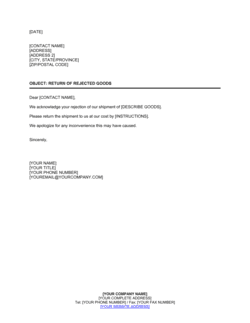
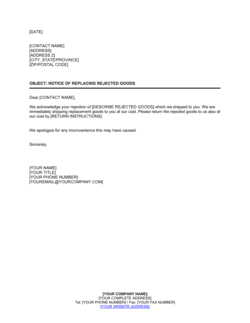
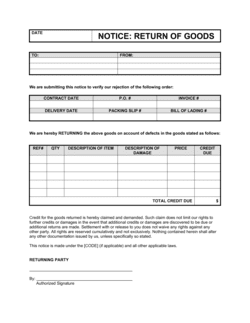
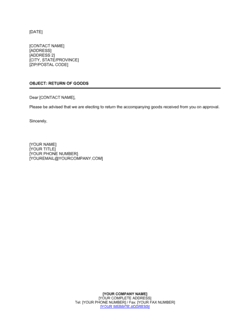
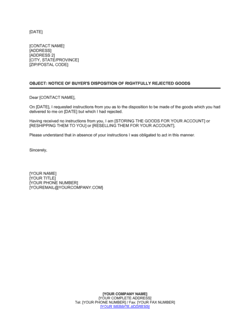
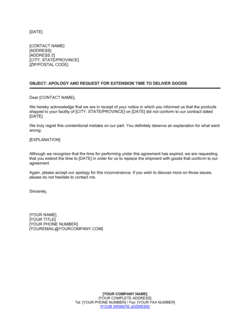
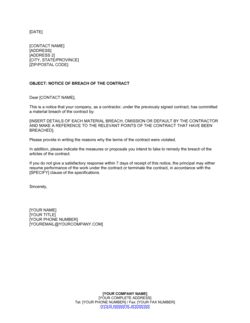
A Request Instructions to Return Rejected Goods is a formal written notice a buyer issues to a supplier after inspecting and rejecting a delivered shipment that fails to conform to the purchase order specifications, agreed quality standards, or applicable legal requirements. It identifies the nonconforming goods by lot and SKU, states the specific grounds for rejection with reference to the contractual standard that was breached, and formally demands that the supplier issue return authorization, carrier instructions, and a return address within a stated deadline. The notice also confirms that the buyer is holding the goods safely pending the supplier's response and reserves all legal remedies — including claims for replacement, refund, and consequential damages.
The document functions both as an operational communication — getting defective goods out of the buyer's warehouse — and as a legally significant notice that preserves the buyer's rights under sale-of-goods law in most major commercial jurisdictions. Without it, a buyer who simply stores rejected goods without formal written notice risks being deemed to have accepted them, permanently losing the right to demand a remedy.
Why You Need This Document
Receiving nonconforming goods without sending a properly structured rejection notice is one of the most common and costly mistakes in commercial procurement. Under the UCC, the UK Sale of Goods Act, and equivalent Canadian provincial statutes, a buyer who retains goods beyond a reasonable inspection period without objection is legally treated as having accepted them — at which point rejection is no longer available and the buyer's remedies are limited to damages only, which are harder to quantify and recover. A timely, specific rejection notice stops that clock immediately.
Beyond preserving your legal position, this notice creates the paper trail you need for every downstream action: deducting return costs from outstanding payables, pursuing a cover purchase from an alternative supplier, filing an insurance or freight claim, or escalating to arbitration. Suppliers who receive a vague complaint email have every incentive to dispute the rejection; suppliers who receive a signed notice citing the specific PO clause breached, the lot numbers involved, and a 10-business-day response deadline have a clear, documented obligation to respond. This template gives you that structure in under an hour.