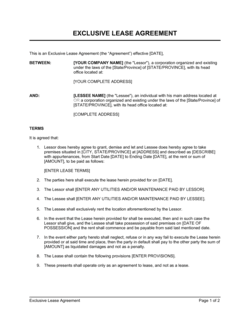
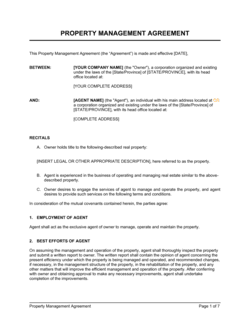
Airbnb Arbitrage Agreement Template

Free Word download • Edit online • Save & share with Drive • Export to PDF

3 pages25–30 min to fillDifficulty: StandardSignature requiredLegal review recommended
Learn more ↓
FreeAirbnb Arbitrage Agreement Template

At a glance

What it is
An Airbnb Arbitrage Agreement is a legally binding contract between a property owner (landlord) and a tenant-operator who intends to sublease the unit on short-term rental platforms such as Airbnb, Vrbo, or Booking.com. This free Word download covers subletting authorization, platform restrictions, revenue-sharing terms, insurance obligations, and termination rights in a single document you can edit online and export as PDF.
When you need it
Use it before a rental arbitrage operator takes possession of any unit they plan to list on a short-term rental platform. It protects both the landlord's property and the operator's business arrangement by recording agreed permissions and obligations in writing before any guests check in.
What's inside
Subletting authorization and platform permissions, monthly base rent and revenue-sharing formula, insurance and liability requirements, guest conduct rules, property maintenance obligations, compliance with local short-term rental laws, and termination triggers specific to the arbitrage business model.

What is an Airbnb Arbitrage Agreement?

An Airbnb Arbitrage Agreement is a legally binding contract between a property owner and a tenant-operator who leases the property long-term with the express purpose of re-listing it on short-term rental platforms — such as Airbnb, Vrbo, or Booking.com — at a higher nightly rate to generate a profit margin. Unlike a standard residential sublease, this agreement is purpose-built for the commercial subletting model: it grants explicit platform-specific subletting authorization, defines a base rent plus revenue-sharing formula, sets insurance minimums, assigns regulatory compliance responsibility to the operator, and establishes termination triggers unique to the short-term rental business — including platform account bans and permit revocations that a standard lease would never contemplate.

Why You Need This Document

Operating a rental arbitrage business without a signed, STR-specific agreement exposes both parties to serious and concrete risks. Landlords who permit subletting through a verbal arrangement or a generic lease addendum have no contractual basis to demand insurance certificates, audit platform revenue, enforce guest conduct rules, or terminate the relationship if the operator's Airbnb account is banned. Operators who list a unit without written landlord authorization are in breach of virtually every standard residential lease in existence — grounds for immediate eviction, loss of security deposit, and personal liability for any guest-caused damage the landlord's insurer refuses to cover due to unauthorized commercial use. Local municipalities increasingly require proof of landlord consent as part of the STR permit application process, meaning no agreement means no permit, and no permit means no legal listing. This template gives both parties a documented, enforceable framework that protects the landlord's property, secures the operator's business, and satisfies the evidentiary requirements of permitting authorities — in the 30 minutes it takes to fill in the blanks before any guest checks in.

Which variant fits your situation?

If your situation is…Use this template
Landlord wants a percentage of nightly revenue instead of fixed rent onlyAirbnb Arbitrage Agreement with Revenue Share
Operator is subleasing a unit in a building with an HOA or condo associationShort-Term Rental HOA Addendum
Owner wants to retain the right to use the property during low-season periodsAirbnb Arbitrage Agreement with Owner-Use Clause
Operator manages the property on behalf of the owner (not subletting)Short-Term Rental Property Management Agreement
Standard residential sublease without short-term rental platform useSublease Agreement
Operator listing on Vrbo or Booking.com as primary platformVacation Rental Arbitrage Agreement
Multi-unit building where landlord permits arbitrage across all unitsMaster Lease Arbitrage Agreement

Common mistakes to avoid

❌ Relying on a standard residential sublease instead of an STR-specific agreement

Why it matters: A generic sublease has no provisions for platform account control, occupancy tax compliance, per-stay cleaning requirements, or STR permit obligations — leaving both parties exposed to regulatory fines, insurance gaps, and unresolved disputes.

Fix: Use an agreement drafted specifically for short-term rental arbitrage that addresses platform permissions, regulatory compliance, and guest conduct in dedicated clauses.

❌ No revenue documentation requirement from the operator

Why it matters: Without a clause requiring the operator to share monthly platform payout statements, landlords have no way to verify whether a revenue-share threshold was reached or the percentage was calculated correctly — leading to disputes that are nearly impossible to resolve after the fact.

Fix: Add a clause requiring the operator to provide a copy of all platform payout statements within 10 days of each month-end as a condition of revenue-share payment.

❌ Relying solely on Airbnb AirCover instead of independent commercial liability insurance

Why it matters: AirCover excludes certain damage categories, has claim caps, and requires disputes to go through Airbnb's resolution center — leaving landlords without recourse for losses Airbnb declines to cover.

Fix: Require the operator to carry a standalone commercial general liability policy with the landlord named as an additional insured, regardless of any platform-provided protection.

❌ No termination trigger for loss of STR permit or platform ban

Why it matters: If the operator loses their short-term rental permit due to a code violation or their platform account is suspended, a standard lease with only non-payment termination rights gives the landlord no remedy while the unit sits idle and generating no arbitrage income.

Fix: Add explicit termination triggers for permit revocation, platform account suspension or ban, and failure to maintain required insurance — with a short cure window of 14 days or less.

❌ Executing the agreement after the listing is already live

Why it matters: Guests who stayed before the agreement was signed are outside any contractual indemnification or insurance framework, exposing the landlord to uninsured liability for pre-execution guest incidents.

Fix: Execute the agreement and obtain the certificate of insurance before the operator creates any platform listing or accepts any booking.

❌ Ignoring local short-term rental ordinances when drafting

Why it matters: Many cities — including New York, San Francisco, and Seattle — have enacted STR regulations that restrict or ban non-owner-occupied short-term rentals. An arbitrage agreement in a prohibited market is void as against public policy and cannot be enforced.

Fix: Confirm the legality of STR arbitrage in the specific municipality before executing the agreement, and include a compliance clause that places full permit and regulatory responsibility on the operator.

The 10 key clauses, explained

Parties, property description, and recitals

In plain language: Identifies the landlord and operator as legal persons or entities, describes the specific property being leased, and records the background — the existing master lease and the operator's intent to conduct short-term rental arbitrage.

Sample language
This Airbnb Arbitrage Agreement ('Agreement') is entered into on [DATE] between [LANDLORD FULL NAME / ENTITY], owner of the property located at [FULL PROPERTY ADDRESS] ('Landlord'), and [OPERATOR FULL NAME / ENTITY] ('Operator'). Operator intends to list the Property on short-term rental platforms as described herein.

Common mistake: Describing the property by street address only without including the unit number, parcel ID, or legal description — creating ambiguity if the landlord owns multiple units in the same building.

Subletting authorization and permitted platforms

In plain language: Grants the operator explicit written permission to sublet the property to short-term guests and names the platforms on which listing is permitted — limiting exposure to unapproved channels.

Sample language
Landlord hereby authorizes Operator to sublet the Property to short-term guests via the following platforms only: [AIRBNB / VRBO / BOOKING.COM / OTHER — LIST ALL PERMITTED PLATFORMS]. Operator shall not list the Property on any platform not expressly listed without prior written consent from Landlord.

Common mistake: Granting blanket subletting permission without specifying platforms. Landlords who later discover their unit listed on platforms with different insurance standards or guest vetting have no contractual basis to object.

Rent, revenue share, and payment terms

In plain language: States the fixed monthly base rent, any revenue-sharing formula above a gross revenue threshold, the payment date, and the method of payment — including how the operator documents revenue to support percentage calculations.

Sample language
Operator shall pay Landlord a base rent of $[AMOUNT] per month, due on the [1st / 15th] of each month. In addition, Operator shall pay Landlord [X]% of gross nightly revenue exceeding $[THRESHOLD] per month, payable within [10] days of month-end with a supporting revenue statement from the applicable platform.

Common mistake: No revenue-share documentation requirement. Without a provision requiring the operator to share platform payout statements, landlords have no way to verify whether the threshold has been met or the percentage calculated correctly.

Insurance and liability

In plain language: Requires the operator to maintain specified insurance coverage — typically commercial general liability plus the platform's own host protection — and indemnifies the landlord against guest-caused damages exceeding normal wear and tear.

Sample language
Operator shall maintain, at its own expense, commercial general liability insurance with a minimum limit of $[1,000,000] per occurrence and $[2,000,000] aggregate, naming Landlord as an additional insured. Operator shall also enroll in [PLATFORM]'s Host Protection Insurance program where available. Operator shall indemnify and hold harmless Landlord from any claims, damages, or losses arising from Operator's short-term rental activities.

Common mistake: Relying solely on Airbnb's AirCover program as substitute for independent commercial liability insurance. AirCover has coverage exclusions and claim limits that can leave landlords exposed to significant uninsured losses.

Guest conduct and occupancy rules

In plain language: Sets the maximum guest count per stay, quiet-hours policy, parking and smoking rules, and requires the operator to enforce these standards against guests — with the operator bearing direct liability for guest violations.

Sample language
Operator shall impose and enforce the following guest rules: maximum occupancy of [X] guests per night; no smoking on the Property or within [25] feet of any entrance; no parties or events; quiet hours from [10:00 PM] to [8:00 AM]. Operator is responsible for all guest conduct and any resulting damage or neighbor complaints.

Common mistake: No mechanism for guest rule enforcement. Listing conduct rules without specifying that the operator is directly liable for violations means the landlord must pursue guests directly — practically impossible after checkout.

Property maintenance and condition

In plain language: Defines the operator's maintenance obligations — routine cleaning between stays, restocking consumables, prompt reporting of damage, and a cap on unilateral repair spending before landlord approval is required.

Sample language
Operator shall maintain the Property in clean, rental-ready condition at all times, including professional cleaning between each guest stay. Operator shall promptly notify Landlord of any damage exceeding $[200] and shall not authorize repairs exceeding $[500] without Landlord's prior written approval.

Common mistake: No turnover cleaning standard. Without specifying professional cleaning between stays (not just tidying), landlords risk accelerated wear, complaints from neighbors, and property deterioration that voids a standard residential lease.

Regulatory compliance and permits

In plain language: Places responsibility for obtaining and maintaining all required short-term rental permits, business licenses, and occupancy tax registrations squarely on the operator — protecting the landlord from regulatory penalties.

Sample language
Operator shall, at its sole cost and expense, obtain and maintain all permits, licenses, and registrations required by [CITY / COUNTY / STATE] to operate a short-term rental at the Property, including but not limited to a Short-Term Rental Permit No. [PERMIT NUMBER], business license, and applicable occupancy tax registration. Operator shall provide Landlord with copies of all such permits within [10] days of issuance.

Common mistake: No copy-delivery requirement for permits. Landlords who cannot verify permit status are exposed to municipal fines and property liens if the operator operates without proper authorization.

Platform account and listing control

In plain language: Addresses who controls the listing, what happens if the operator's platform account is suspended or banned, and whether the landlord has the right to review listing content before it goes live.

Sample language
The Airbnb (or applicable platform) listing shall be maintained in Operator's name. Landlord shall have the right to review and approve the initial listing description and photographs. In the event Operator's platform account is suspended or permanently banned, this Agreement shall terminate automatically upon [30] days' written notice from Landlord.

Common mistake: No termination trigger for platform account ban. If an operator loses their Airbnb account due to policy violations and the agreement is silent, the landlord may be locked into a long-term lease with an operator who can no longer generate the revenue needed to pay rent.

Term, renewal, and termination

In plain language: Sets the initial contract term, automatic renewal conditions, and the specific events that allow either party to terminate — including non-payment, regulatory changes banning STRs, platform account loss, and operator insolvency.

Sample language
This Agreement commences on [START DATE] and continues for an initial term of [12] months, automatically renewing on a month-to-month basis unless either party provides [60] days' written notice of non-renewal. Either party may terminate immediately for cause, including: failure to pay rent for [5] or more days past the due date; loss of any required STR permit; platform account ban; or material breach not cured within [14] days of written notice.

Common mistake: Using standard residential lease termination clauses without adding STR-specific triggers. A landlord who can only terminate for non-payment has no remedy when the operator's platform account is banned but they continue paying rent from another source while the unit sits idle.

Governing law, dispute resolution, and entire agreement

In plain language: Specifies the jurisdiction whose law governs the agreement, whether disputes go to mediation, arbitration, or court, and confirms the written agreement supersedes all prior verbal arrangements between the parties.

Sample language
This Agreement is governed by the laws of [STATE / PROVINCE]. Any dispute shall first be submitted to mediation administered by [ORGANIZATION] in [CITY] before either party may initiate litigation. This Agreement constitutes the entire agreement between the parties and supersedes all prior representations, understandings, and oral agreements relating to the Property's short-term rental use.

Common mistake: No entire-agreement clause. Without one, verbal side deals — 'the landlord said I could keep all revenue in month one' — can be introduced as enforceable terms, undermining the written contract.

How to fill it out

  1. 1

    Identify both parties with full legal names

    Enter the landlord's full legal name or registered entity name and the operator's full legal name or business entity. If either party is an LLC or corporation, use the exact registered name, not a trade name.

    💡 If the operator is running the arbitrage business through an LLC, the LLC should be the contracting party — not the individual — so liability stays at the entity level.

  2. 2

    Attach or reference the underlying master lease

    Reference the existing long-term lease by date and parties in the recitals, or attach it as Exhibit A. The arbitrage agreement operates as a subletting addendum layered on top of the master lease.

    💡 Check the master lease's subletting clause before drafting — if it contains a blanket no-subletting prohibition, the landlord must formally amend it before this agreement is enforceable.

  3. 3

    List every permitted platform explicitly

    Name each short-term rental platform the operator is authorized to use. Do not write 'any platform' — specify Airbnb, Vrbo, Booking.com, or whichever platforms are agreed.

    💡 Different platforms have different host insurance, guest vetting, and review systems. Landlords who care about guest quality should approve platforms individually.

  4. 4

    Set the base rent and revenue-share formula

    Enter the fixed monthly base rent, the gross revenue threshold above which revenue sharing begins, the percentage, and the payment date. Specify that the operator must provide monthly platform payout statements to document revenue.

    💡 Set the base rent at a level that covers the landlord's mortgage and expenses regardless of STR performance — revenue share is upside, not core income replacement.

  5. 5

    Define insurance minimums and name the landlord as additional insured

    Specify the required commercial general liability coverage amounts and require the operator to provide a certificate of insurance naming the landlord as an additional insured before the first guest checks in.

    💡 Request the certificate of insurance before handing over keys — do not accept a promise to obtain coverage after move-in.

  6. 6

    Draft the guest conduct rules and occupancy cap

    Enter the maximum overnight guest count, quiet hours, smoking policy, pet policy, and event prohibition. Make clear in the agreement that the operator is liable for guest violations, not just the guests themselves.

    💡 Align the occupancy cap with the unit's local fire code maximum — exceeding it voids most insurance policies and can trigger municipal fines.

  7. 7

    Complete the regulatory compliance section

    Enter the applicable city, county, or state jurisdiction. Require the operator to obtain all required STR permits and business licenses before listing goes live, and to deliver copies to the landlord within 10 days of issuance.

    💡 Research the STR permit requirements for the specific municipality before executing — some cities ban STR arbitrage outright, which would make the agreement void as against public policy.

  8. 8

    Sign before any listing goes live

    Both parties must sign and date the agreement before the operator creates any platform listing or accepts any guest booking. Retroactive authorization does not protect either party for the period before execution.

    💡 Use a digital signature platform to timestamp execution and store the fully executed copy — platform disputes and insurance claims both require proof of the signed agreement.

Frequently asked questions

What is an Airbnb arbitrage agreement?

An Airbnb arbitrage agreement is a contract between a property owner and a tenant-operator who leases the property long-term and re-lists it on Airbnb or similar short-term rental platforms to generate a profit margin between the nightly rate and the monthly rent. It formalizes the landlord's permission to sublet, sets revenue-sharing terms, defines insurance and maintenance obligations, and establishes termination rights specific to the short-term rental business model.

Do I need a landlord's written permission for Airbnb arbitrage?

Yes. Most residential leases contain a subletting prohibition that bars any form of short-term rental without the landlord's explicit written consent. Operating without written permission violates the master lease and can result in eviction, loss of the security deposit, and personal liability for any guest-caused damages that the landlord's insurance refuses to cover due to the unauthorized commercial use. A signed arbitrage agreement is the written permission the operator needs before creating any listing.

What insurance does an Airbnb arbitrage operator need?

An arbitrage operator should carry commercial general liability insurance with at least $1,000,000 per occurrence coverage, naming the landlord as an additional insured. Airbnb's AirCover provides some property damage and liability protection, but it contains exclusions and coverage caps that make it insufficient as a standalone policy for commercial operations. Some insurers offer short-term rental-specific policies that cover the gap between personal homeowner coverage (which typically excludes commercial subletting) and full commercial property insurance.

How does revenue sharing work in an arbitrage agreement?

A revenue-share clause typically provides for a fixed base monthly rent plus a percentage of gross nightly revenue above a defined threshold. For example, the operator pays $1,500/month base rent and remits 20% of any gross monthly revenue exceeding $3,000. The operator must provide monthly platform payout statements to document revenue. This structure gives the landlord stable base income while allowing them to participate in the upside when the property performs well as a short-term rental.

What happens if Airbnb bans the operator's account?

A well-drafted arbitrage agreement includes an automatic termination trigger if the operator's platform account is suspended or permanently banned. Without this clause, the landlord remains locked into the long-term lease even though the operator can no longer generate short-term rental income to pay rent. The termination trigger typically gives the landlord the right to terminate on 30 days' written notice following a confirmed platform ban, allowing them to re-let the unit or engage a new operator.

What is the difference between an Airbnb arbitrage agreement and a property management agreement?

In an arbitrage arrangement, the operator leases the property from the landlord and assumes all financial risk — paying rent whether or not the unit is booked. In a property management arrangement, the manager operates the property on the owner's behalf and typically receives a percentage of revenue as a fee, with no obligation to pay rent during vacant periods. The arbitrage model transfers vacancy risk to the operator; the management model retains it with the owner. Each model requires a different contract structure.

Can I use a standard sublease agreement for Airbnb arbitrage?

A standard sublease agreement is insufficient for short-term rental arbitrage because it was designed for traditional long-term subleasing. It does not address platform permissions, per-stay cleaning requirements, occupancy tax obligations, STR permit requirements, revenue-share documentation, or termination triggers for platform bans. Using a generic sublease exposes both parties to regulatory fines, insurance gaps, and disputes with no contractual resolution framework. An STR-specific arbitrage agreement is necessary.

How long should an Airbnb arbitrage agreement last?

Most arbitrage agreements run for an initial term of 12 months — long enough for the operator to establish a listing reputation and optimize pricing, but short enough for the landlord to reassess the arrangement before a long commitment. After the initial term, month-to-month renewal with 60 days' notice is a common and balanced structure. Avoid initial terms shorter than 6 months, as the operator's startup and furnishing costs make shorter terms economically unworkable and reduce the quality of operators willing to sign.

Who is responsible for paying occupancy taxes in an arbitrage arrangement?

In most arbitrage agreements, the operator bears full responsibility for collecting and remitting all applicable short-term rental occupancy taxes — city, county, and state — since the operator is conducting the commercial activity. Many platforms including Airbnb collect and remit occupancy taxes automatically in jurisdictions where they have tax collection agreements. The agreement should confirm which taxes are platform-collected and which the operator must handle independently, and require the operator to provide the landlord with copies of all tax registrations.

How this compares to alternatives

vs Standard sublease agreement

A standard sublease agreement transfers occupancy from tenant to subtenant for a fixed period — it does not address short-term rental platforms, nightly occupancy cycles, STR permits, or revenue sharing. An Airbnb arbitrage agreement is purpose-built for the commercial subletting model and includes every clause a standard sublease omits. Use a sublease for traditional tenancy transfers; use an arbitrage agreement for any unit being listed on a short-term rental platform.

vs Property management agreement

A property management agreement engages a manager to operate the unit on the owner's behalf for a fee — the owner retains vacancy risk and platform account ownership. An arbitrage agreement transfers both the unit and the commercial risk to the operator, who pays rent regardless of bookings. Choose property management when the owner wants control and no vacancy exposure; choose arbitrage when the owner wants a fixed monthly income and is comfortable delegating all operations.

vs Vacation rental agreement

A vacation rental agreement governs the relationship between the property owner and each individual guest — it is a per-stay booking contract. An arbitrage agreement governs the relationship between the owner and the operator who creates the listing and manages all guest relationships. The two documents serve different parties at different levels of the rental chain and both may be needed: the arbitrage agreement with the operator, and a vacation rental agreement (or platform terms) with each guest.

vs Lease agreement

A standard residential lease agreement covers long-term occupancy by a single tenant for personal residential use. An Airbnb arbitrage agreement is specifically structured for commercial subletting — it adds platform authorization, revenue sharing, STR permit obligations, per-stay cleaning requirements, and short-term rental-specific termination rights that a standard lease does not contain. Using a standard lease for an arbitrage arrangement leaves both parties without contractual protection for the commercial dimension of the relationship.

Industry-specific considerations

Real estate investment

Investors use arbitrage agreements to monetize vacant or underperforming units without selling, structuring revenue-share clauses that generate returns above standard long-term rental yields.

Hospitality and short-term rentals

Professional STR operators managing multi-unit portfolios require standardized arbitrage agreements with consistent insurance, maintenance, and platform control terms across all landlord relationships.

Property management

Property management companies acting as arbitrage operators need agreements that clearly delineate their liability from the owner's, covering guest incidents, HOA compliance, and permit maintenance.

Retail and co-working real estate

Commercial property owners exploring flexible-use conversions of mixed-use or residential-over-retail buildings use arbitrage agreements to pilot short-term rental income without a full management build-out.

Franchising and hospitality chains

Emerging arbitrage franchise models use master lease agreements across multiple units, requiring standardized arbitrage addenda that satisfy both franchisor brand standards and individual landlord requirements.

Professional services and relocation

Relocation firms and corporate housing providers use arbitrage-style agreements to secure medium-term furnished inventory for business travelers, blending STR platform rates with corporate direct-booking terms.

Jurisdictional notes

United States

STR regulation in the US is primarily municipal, not federal. Cities including New York, San Francisco, Los Angeles, and Chicago have enacted strict ordinances limiting or banning non-owner-occupied short-term rentals. Many jurisdictions require an STR permit, business license, and occupancy tax registration before a unit may be listed. Landlord-tenant laws governing subletting vary by state — California, New York, and Oregon have tenant-protective statutes that affect how subletting authorization clauses must be drafted.

Canada

Canadian municipalities including Vancouver, Toronto, and Montreal have enacted principal-residence requirements for short-term rentals, effectively banning arbitrage in non-owner-occupied units. Provincial residential tenancy acts govern subletting rights — in British Columbia and Ontario, landlords may withhold consent to sublet only on reasonable grounds, and the process for obtaining written consent is prescribed by statute. Quebec requires agreements to be in French for provincially-regulated landlords.

United Kingdom

In England, properties in Greater London are subject to a 90-night annual cap on short-term lets under the Deregulation Act 2015, though the government proposed registration reforms in 2023. Scotland, Wales, and Northern Ireland have separate licensing frameworks. Most UK residential tenancy agreements (ASTs) prohibit subletting without the landlord's written consent, and operating without consent can result in Section 8 possession proceedings. The operator is also responsible for registering with HMRC for income tax and VAT if applicable thresholds are exceeded.

European Union

The EU Short-Term Rental Regulation (Regulation 2024/1028), in effect from 2026, requires platforms to collect and share host registration data with member state authorities. Individual member states and cities apply widely varying rules — Paris limits non-primary-residence STRs to 120 nights per year, Amsterdam to 30 nights, and Berlin requires a permit for any commercial subletting. GDPR applies to the collection and storage of guest personal data by operators. Revenue from STR activity is taxable income in all EU member states, and some require VAT registration above minimum thresholds.

Template vs lawyer — what fits your deal?

PathBest forCostTime
Use the templateOperators and landlords in STR-friendly jurisdictions executing a straightforward single-unit arbitrage arrangementFree30–45 minutes
Template + legal reviewMulti-unit arrangements, jurisdictions with active STR regulation, or agreements with complex revenue-share structures$300–$8002–5 days
Custom draftedPortfolio-scale arbitrage operators, mixed-use commercial properties, or markets with rapidly changing STR ordinances$1,500–$4,000+1–3 weeks

Glossary

Rental Arbitrage
A business model in which a tenant leases a property long-term and re-lists it on short-term rental platforms at a higher nightly rate to generate a profit margin.
Subletting Authorization
Written permission from a landlord allowing a tenant to sublet the property to third parties, which is required before any short-term rental listing can be created legally.
Revenue Share
A contractual arrangement where the operator pays the landlord a base rent plus a defined percentage of gross nightly revenue above a specified threshold.
Host Agreement
The separate platform terms-of-service contract between the operator and Airbnb (or another platform) that governs listing creation, guest communications, and payout processing.
Short-Term Rental (STR) Permit
A municipal or county license required in many jurisdictions before a residential unit may be legally rented to guests for stays under 30 consecutive days.
Occupancy Tax
A tax levied by state, county, or city governments on short-term rental income, similar to hotel taxes, which may be the operator's responsibility under the arbitrage agreement.
Master Lease
The primary long-term lease between the property owner and the arbitrage operator that serves as the foundational agreement the subletting authorization is layered on top of.
Good Neighbor Policy
A set of conduct rules for guests — noise limits, parking restrictions, occupancy caps — that the operator is contractually obligated to enforce on behalf of the landlord.
Indemnification
A clause requiring one party (typically the operator) to compensate the other (the landlord) for losses, damages, or legal costs arising from the subletting activity.
Force Majeure
A clause excusing non-performance due to unforeseeable events outside a party's control — such as a government ban on short-term rentals or a platform policy change — that makes performance commercially impossible.
Platform Ban
Termination of an operator's account by Airbnb or another platform, which typically triggers an automatic termination right for the landlord under a well-drafted arbitrage agreement.
Occupancy Cap
The maximum number of overnight guests permitted in the unit per stay, set by the agreement to protect the property and comply with local safety codes.

Part of your Business Operating System

This document is one of 3,000+ business & legal templates included in Business in a Box.

  • Fill-in-the-blanks — ready in minutes
  • 100% customizable Word document
  • Compatible with all office suites
  • Export to PDF and share electronically

Create your document in 3 simple steps.

From template to signed document — all inside one Business Operating System.
1
Download or open template

Access over 3,000+ business and legal templates for any business task, project or initiative.

2
Edit and fill in the blanks with AI

Customize your ready-made business document template and save it in the cloud.

3
Save, Share, Send, Sign

Share your files and folders with your team. Create a space of seamless collaboration.

Save time, save money, and create top-quality documents.

★★★★★

"Fantastic value! I'm not sure how I'd do without it. It's worth its weight in gold and paid back for itself many times."

Managing Director · Mall Farm
Robert Whalley
Managing Director, Mall Farm Proprietary Limited
★★★★★

"I have been using Business in a Box for years. It has been the most useful source of templates I have encountered. I recommend it to anyone."

Business Owner · 4+ years
Dr Michael John Freestone
Business Owner
★★★★★

"It has been a life saver so many times I have lost count. Business in a Box has saved me so much time and as you know, time is money."

Owner · Upstate Web
David G. Moore Jr.
Owner, Upstate Web

Run your business with a system — not scattered tools

Stop downloading documents. Start operating with clarity. Business in a Box gives you the Business Operating System used by over 250,000 companies worldwide to structure, run, and grow their business.

Free Forever Plan · No credit card required