1
Gather all details about the lost item
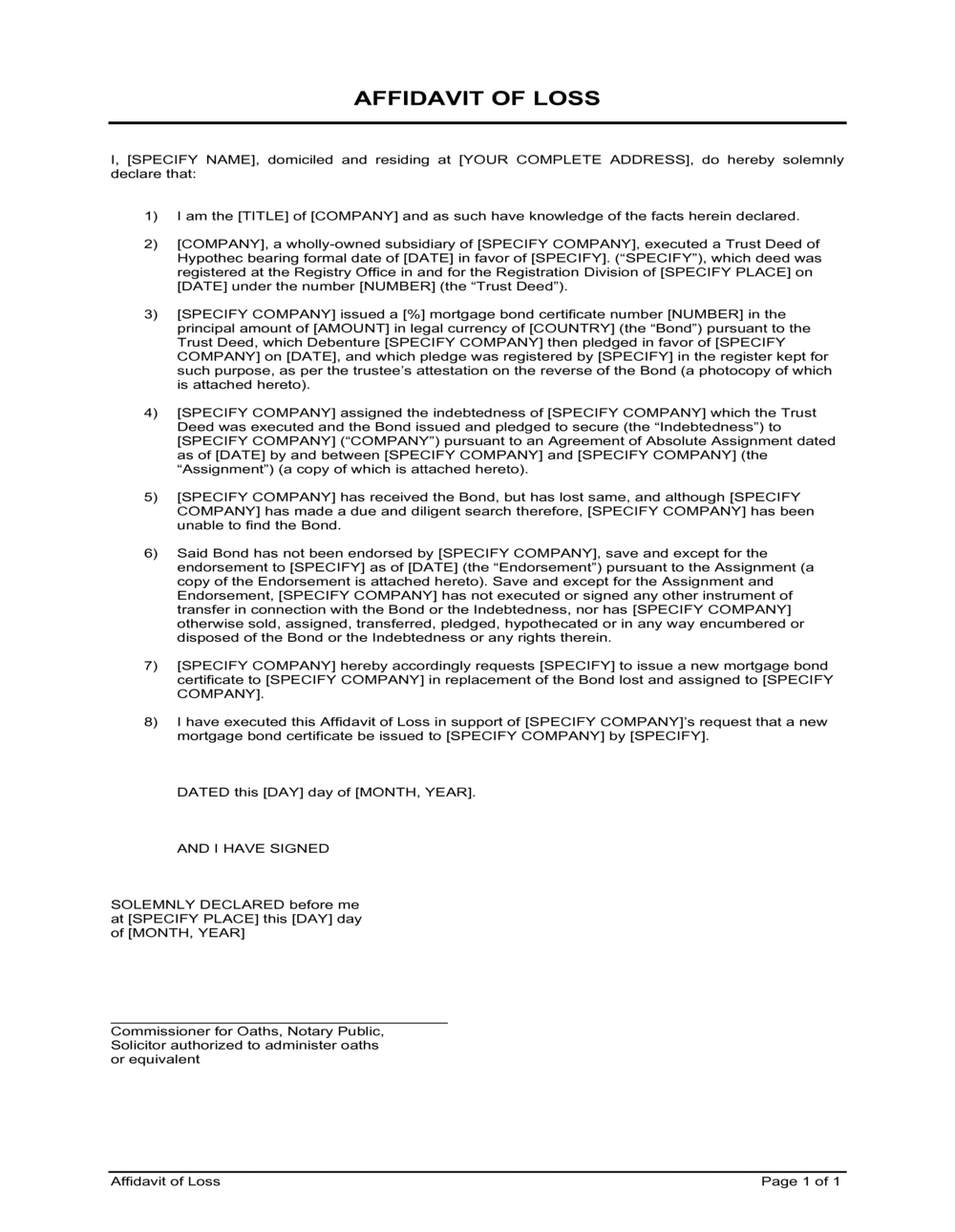
Before opening the template, collect the full name of the document or item, its serial or reference number, the name of the issuing authority, and the original date of issuance. Contact the issuer if necessary to confirm exact identifiers.
💡 Most institutions require the reference number to match their internal records exactly — a digit transposed in a certificate number is sufficient grounds to reject the affidavit.
2
Enter the affiant's full legal identification
Type the affiant's full legal name as it appears on a government-issued photo ID, complete residential or business address, and — where required by the institution — a government ID number or date of birth.
💡 Bring the same ID to the notary appointment. The notary is required to verify identity and will record the ID type and number on the jurat.
3
Describe the item in precise detail
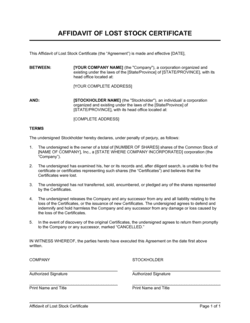
Complete the description clause with the document type, all reference numbers, the issuing authority's full name, and the date of issuance. If the item is a financial instrument, include its face value and any registered holder details.
💡 Copy the description verbatim from any prior correspondence, statements, or records you have for that item — institutions match this language against their records.
4
Describe the circumstances of loss
Write a clear, specific account of when and where the item was last seen, the circumstances under which it was lost or stolen, and every location searched. If theft is suspected, include the date and reference number of the police report.
💡 A police report number adds credibility and is sometimes mandatory for lost financial instruments — file it before completing this step.
5
Complete the ownership and indemnity clauses
Confirm that you are the sole owner with no outstanding encumbrances, pledges, or transfers. Review the indemnity language and ensure it covers all claims the institution could face, including legal costs and consequential losses.
💡 If the institution provides its own indemnity form or bond requirement, ask for it before drafting this clause — some institutions will not accept third-party indemnity language.
6
Leave the signature block blank until before the notary
Print the completed affidavit but do not sign it. Bring the unsigned document and a valid government-issued photo ID to your notary appointment.
💡 Schedule the notary appointment at the institution that will receive the affidavit when possible — some banks and registrars have on-site notaries who are familiar with their own acceptance requirements.
7
Execute before a notary and obtain the seal
Sign the affidavit in the notary's physical presence after taking the oath. Confirm the notary completes the jurat in full — date, location, commission number, expiry date, and official seal or stamp.
💡 Request two certified copies at the notary appointment — most institutions keep the original and some replacement processes require a copy for your own records.
8
Submit with any required supporting documents
Deliver the notarized affidavit to the relevant institution along with any required supporting documents — such as a police report, surety bond, or application form — and retain a copy of the submission confirmation.
💡 Follow up in writing within five business days if you do not receive an acknowledgement. Institutions sometimes route affidavits to a specialist department that operates on a separate processing timeline.