1
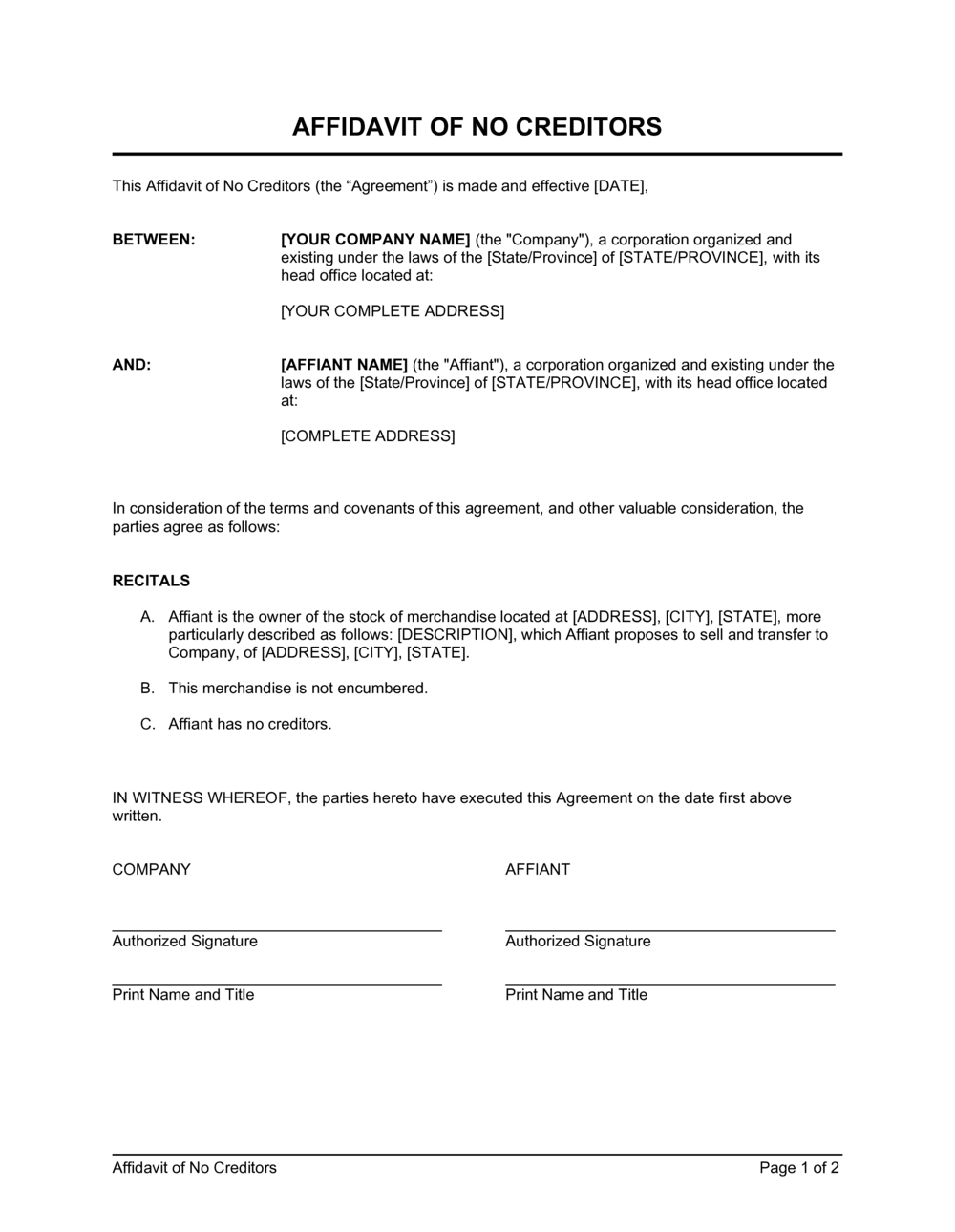
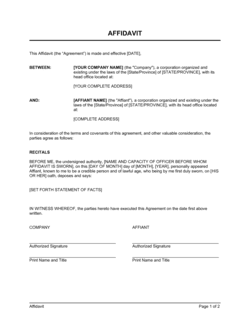
Identify the affiant and confirm their legal authority
Enter the full legal name and residential address of the person signing. Confirm their role — executor, administrator, surviving owner, or corporate officer — and attach supporting documents such as Letters Testamentary or a corporate resolution if required.
💡 Cross-reference the affiant's name against the probate court appointment, deed, or corporate registry record to ensure the names match exactly.
2
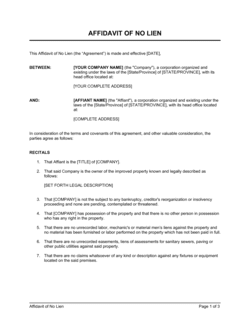
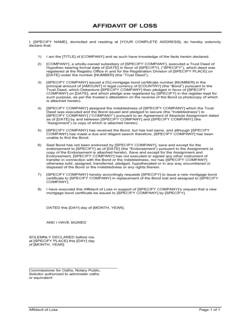
Describe the subject estate or assets with specificity
Identify the decedent's full name and date of death, or the entity name and asset list. For real property, include the legal description from the deed. For business assets, attach a Schedule A listing each asset by type and estimated value.
💡 Title companies routinely reject affidavits with vague asset descriptions — a specific legal description or attached schedule eliminates this risk.
3
Search for all known creditors before signing
Review bank statements, unpaid invoices, UCC lien filings (searchable through the Secretary of State's office), court judgment records, and tax accounts. Confirm federal and state tax clearance through official certificates where the jurisdiction provides them.
💡 In the US, search the PACER federal court database and the relevant state court dockets for any pending lawsuits against the estate or entity before signing.
4
Confirm the creditor notice period has elapsed
Verify that the required statutory creditor notice period for your jurisdiction has run without any claims being filed. Enter the publication date, the name of the publication, and the expiry date of the notice window.
💡 In most US states, the creditor claim window ranges from 30 to 120 days from the date of published notice — check the exact requirement in the governing state's probate code.
5
Complete the tax clearance representation
Confirm that all federal, state, and local taxes have been filed and paid. Obtain a tax clearance certificate or a closing letter from the IRS (Form 5495 for estates) and reference it in this clause.
💡 An IRS estate tax closing letter can take 6–12 months to arrive — if it is pending, note the application date and consider whether to delay transfer until clearance is confirmed.
6
Review and complete the indemnification clause
Ensure the indemnification covers all claim types — creditor claims, tax liabilities, third-party judgments, and attorney's fees. Confirm the recipient's legal name is correct so the indemnification runs to the right party.
💡 If the affiant has significant personal assets, the recipient may request a financial statement alongside the affidavit to confirm the indemnification is backed by real capacity to pay.
7
Sign in front of a notary public
Do not sign the affidavit before appearing before a licensed, active notary. Bring government-issued photo ID. The notary will administer the oath, witness the signature, and complete the notarial certificate with their seal and commission expiry date.
💡 Confirm the notary's commission is current before your appointment — an expired commission invalidates the notarization and requires the entire execution to be repeated.
8
Retain certified copies and distribute to required parties
Obtain at least two certified copies from the notary — one for the recipient and one for your permanent records. File the original with the probate court or recording office if required by local law.
💡 Some title companies and probate courts require the affidavit to be recorded in the county property records — confirm the filing requirement before closing.