- List Segmentation
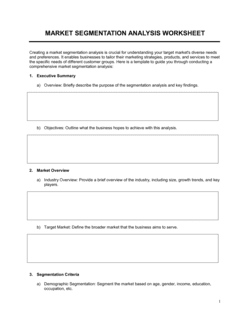
- The practice of dividing an email subscriber list into smaller groups based on shared characteristics so that each group receives more relevant messages.
- Behavioral Segmentation
- Grouping subscribers based on actions they have taken — emails opened, links clicked, pages visited, or purchases made.
- Demographic Segmentation
- Dividing a list by observable personal attributes such as age, gender, geographic location, or job title.
- Firmographic Segmentation
- Grouping B2B subscribers by company-level attributes such as industry, company size, annual revenue, or number of employees.
- Lifecycle Stage
- A subscriber's position in the customer journey — new subscriber, active buyer, at-risk customer, lapsed customer, or loyal advocate.
- RFM Model
- A scoring framework that ranks customers by Recency of last purchase, Frequency of purchases, and Monetary value of total spend.
- Engagement Score
- A numerical value assigned to each subscriber based on their interaction history — opens, clicks, replies, and site visits — used to prioritize sending.
- Suppression Segment
- A group of subscribers excluded from specific campaigns — such as recent buyers excluded from a promotional email for a product they already own.
- Dynamic Content
- Email content blocks that automatically display different text or images to different segments within a single campaign send.
- Re-engagement Segment
- A group of subscribers who have not opened or clicked an email in a defined period — typically 90 to 180 days — and are targeted with a win-back sequence.
- Tag
- A label applied to individual subscribers in an email platform to record an interest, behavior, or attribute that can be used as a segmentation filter.
- Preference Center
- A subscriber-facing page where contacts can self-select the types, topics, or frequency of emails they wish to receive.