Marketing Metrics Explained Template

Free to read • Save or share with one click

FreeMarketing Metrics Explained Template

At a glance

What it is
Marketing Metrics Explained is a structured reference and reporting document that defines every key performance indicator your marketing function tracks, establishes how each metric is calculated, and sets the benchmarks against which performance is measured. This free Word download lets you customize metric definitions, formulas, and targets for your business, then export as PDF to align teams, clients, or agency partners around a single source of truth.
When you need it
Use it when onboarding a new marketing agency or in-house team, launching a performance reporting framework, or resolving disputes about how results are calculated and attributed. It is also the right document to produce before signing a marketing services agreement so all parties agree on what success means before work begins.
What's inside
Defined KPI glossary, calculation formulas with variable definitions, reporting cadence and data source specifications, benchmark targets by channel, attribution methodology, and acknowledgment signatures from all parties responsible for reporting against the metrics.

What is a Marketing Metrics Explained document?

A Marketing Metrics Explained document is a formal reference and agreement that defines every key performance indicator a marketing program uses, specifies the exact formula by which each metric is calculated, designates the authoritative data source from which numbers are pulled, and records the benchmark targets against which performance is evaluated. Unlike an informal reporting spreadsheet or a dashboard screenshot, this document is executed by all parties responsible for producing and acting on marketing results — creating a shared, enforceable understanding of what success means before a campaign, engagement, or reporting period begins. It bridges the gap between strategic intent and measurable accountability by turning vague goals like "improve engagement" into precisely defined, consistently reported numbers.

Why You Need This Document

Without a formally agreed metrics framework, every reporting cycle carries the risk of a measurement dispute — the agency reports a 4:1 ROAS using last-click attribution from the ad platform while the client's CRM shows 2.1:1 using a different attribution window, and neither party is technically wrong. These discrepancies erode trust, delay decisions, and in performance-fee arrangements, create genuine financial disputes with no documented basis for resolution. A signed marketing metrics document eliminates that ambiguity before it starts: it locks in the formula, the data source, the attribution model, and the target — so the only question at reporting time is whether the number was hit, not how it was calculated. For agencies protecting their fees, founders reporting to investors, or marketing directors defending budget allocations to a CFO, this document is the evidence that the numbers mean what you say they mean.

Which variant fits your situation?

If your situation is…Use this template
Reporting on paid digital advertising campaignsDigital Marketing Report
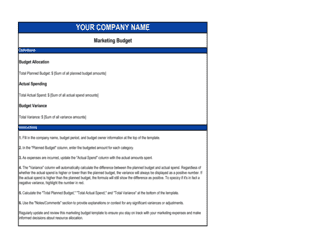
Tracking monthly marketing performance against a budgetMarketing Budget Template
Establishing goals and tactics for a full marketing programMarketing Plan
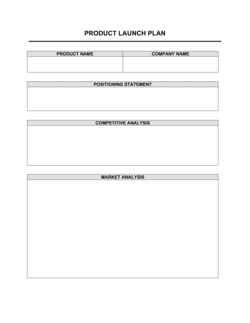
Measuring results from a specific product or service launchProduct Launch Plan
Reporting on email and content marketing channel performanceContent Marketing Report
Defining social media KPIs and channel-specific benchmarksSocial Media Marketing Plan
Evaluating ROI from a single campaign or eventMarketing Campaign Report

Common mistakes to avoid

❌ Leaving metric formulas undefined

Why it matters: When a formula is absent, each party applies its own calculation logic. Conversion rate discrepancies of 20–40% between agency and client systems are routine when no shared formula exists.

Fix: Write out the full arithmetic formula for every metric, define each variable explicitly, and list at least two items excluded from each variable.

❌ No named authoritative data source

Why it matters: Google Analytics, the ad platform, and the CRM routinely report different conversion counts for the same campaign. Without a designated source of truth, every reporting cycle starts with a reconciliation argument.

Fix: Name the platform, account ID, and specific report or view for each metric. Designate one source as final for any metric where multiple platforms track the same event.

❌ Omitting an expiration and review clause

Why it matters: A metrics document without an expiration date gets used indefinitely. Benchmarks become stale, discontinued tools remain listed as sources, and targets set during a growth phase stay in place during a contraction.

Fix: Set a specific expiration date no longer than 12 months from execution and build in a quarterly review trigger for any metric where the underlying platform or strategy changes.

❌ Setting targets without a performance consequence

Why it matters: Targets with no attached threshold or escalation process are wishes, not commitments. Underperformance accumulates for quarters before anyone treats it as a problem requiring action.

Fix: Pair every target with a minimum acceptable threshold and a documented escalation process — who is notified, within what timeframe, and what review is triggered.

❌ No confidentiality clause for metric data

Why it matters: Performance benchmarks, CAC figures, and ROAS data are competitively sensitive. Without a confidentiality clause, they can be shared in agency case studies or sales pitches without the client's knowledge.

Fix: Include an explicit confidentiality clause covering all reported data, benchmark targets, and performance results, with a carve-out only for legally required disclosures.

❌ Signing the metrics document after the campaign launches

Why it matters: Retroactively applying metric definitions to data already collected creates attribution gaps and makes the first reporting cycle impossible to reconcile cleanly.

Fix: Execute the metrics document before the first campaign goes live. If the engagement has already started, document an agreed effective date and apply the framework prospectively from that point.

The 10 key clauses, explained

Definitions and scope

In plain language: Establishes the full definitions of every metric covered in the document, the business unit or campaigns to which they apply, and the period of measurement.

Sample language
For purposes of this document, '[METRIC NAME]' means [FORMULA OR DEFINITION] as measured across [CHANNEL / CAMPAIGN / BUSINESS UNIT] during the period commencing [START DATE] and ending [END DATE].

Common mistake: Using informal shorthand like 'traffic' or 'leads' without a precise definition — different platforms count these differently, leading to disputes when reported numbers don't match.

Metric formulas and calculation methodology

In plain language: Provides the exact arithmetic formula for each KPI, including what is included and excluded from each variable.

Sample language
CAC = Total Sales and Marketing Spend ([PERIOD]) / New Customers Acquired ([PERIOD]). 'New Customers' excludes reactivated churned accounts and internal test accounts.

Common mistake: Omitting exclusions from the formula — failing to specify whether trials, internal users, or partner referrals count inflates or deflates metrics inconsistently across reporting periods.

Data sources and tracking tools

In plain language: Identifies the authoritative data source for each metric — specific platform, database, or reporting tool — so all parties pull numbers from the same place.

Sample language
Conversion Rate for paid search shall be sourced exclusively from [GOOGLE ADS / ANALYTICS PLATFORM NAME], Account ID [XXXXX]. Discrepancies between platform and CRM data exceeding [X]% shall be escalated within [Y] business days.

Common mistake: Leaving data source unspecified when multiple platforms are in use — agency and client pulling from different tools routinely produces numbers that diverge by 15–30%, triggering unnecessary disputes.

Benchmark targets and performance thresholds

In plain language: States the agreed target value for each metric, the minimum acceptable threshold below which performance is considered underperforming, and how targets are revised over time.

Sample language
Target ROAS for [CHANNEL]: [X]:1. Minimum acceptable threshold: [Y]:1. Targets shall be reviewed quarterly and adjusted by mutual written agreement. Sustained performance below threshold for [Z] consecutive weeks constitutes a performance event.

Common mistake: Setting targets without defining what happens when they are missed — without a defined consequence or escalation process, underperformance goes unaddressed for months.

Attribution methodology and multi-touch rules

In plain language: Defines which attribution model governs conversion credit — last-click, first-click, linear, time-decay, or data-driven — and how it applies to multi-channel campaigns.

Sample language
Revenue conversions shall be attributed using [ATTRIBUTION MODEL] with a [X]-day lookback window. For campaigns running across more than one channel simultaneously, the following weight distribution shall apply: [CHANNEL A]: [X]%, [CHANNEL B]: [X]%.

Common mistake: Defaulting to last-click attribution without disclosing it — this systematically undercredits awareness and consideration channels and distorts budget allocation decisions.

Reporting cadence and delivery obligations

In plain language: Sets the frequency of metric reporting, who produces each report, the format and delivery channel, and the deadline for each reporting cycle.

Sample language
Weekly performance snapshots shall be delivered by [PARTY] to [RECIPIENT] via [CHANNEL] no later than [DAY] at [TIME ZONE]. Monthly full-metric reports are due within [X] business days of month-end. Annual reports are due by [DATE].

Common mistake: Agreeing on monthly reporting without specifying when in the month — 'monthly' has been interpreted as anywhere from the 5th to the 28th, causing missed review cycles.

Data access and audit rights

In plain language: Grants each party the right to access underlying data supporting reported metrics and establishes the process for requesting an audit if a number is disputed.

Sample language
Each party shall have the right to audit reported metrics upon [X] business days' written notice. The audited party shall provide read-only access to the relevant data source within [Y] business days. Audit costs shall be borne by [REQUESTING PARTY / AUDITED PARTY IF MATERIAL DISCREPANCY IS FOUND].

Common mistake: Granting audit rights without specifying a timeline for access — agencies that control platform credentials can delay audits indefinitely without a contractual deadline.

Confidentiality of metric data

In plain language: Restricts both parties from sharing reported metric data, benchmark targets, or performance results with third parties without prior written consent.

Sample language
All metric data, benchmark targets, and performance reports generated under this document are Confidential Information of [COMPANY NAME] and shall not be disclosed to any third party without prior written consent, except as required by applicable law.

Common mistake: Omitting a confidentiality clause from a metrics document entirely — agencies sometimes share anonymized performance benchmarks externally without realizing the client considers campaign data proprietary.

Dispute resolution for metric discrepancies

In plain language: Provides a structured process for resolving disagreements about reported numbers — escalation steps, a resolution timeline, and the mechanism for selecting a tiebreaker data source.

Sample language
In the event of a discrepancy exceeding [X]% between parties' reported figures for any metric, the parties shall meet within [Y] business days to reconcile. If unresolved after [Z] days, the parties shall appoint [NEUTRAL THIRD-PARTY TOOL / AUDITOR] as the authoritative source.

Common mistake: No dispute clause at all — when a client and agency disagree on whether a ROAS target was hit, the absence of a resolution process turns a measurement question into a contract dispute.

Amendment, review, and expiration

In plain language: Establishes how and when metric definitions, targets, and formulas may be updated, and sets an expiration date after which the document must be reviewed and re-executed.

Sample language
This document shall remain in effect for [X] months from the Effective Date. Either party may propose amendments in writing; amendments require mutual written agreement. This document automatically expires on [DATE] unless renewed by written agreement of both parties.

Common mistake: No expiration date — a metrics framework drafted for a 2022 campaign is often still in use in 2025 with outdated benchmarks and discontinued tools listed as authoritative data sources.

How to fill it out

  1. 1

    List every metric your team currently tracks

    Before opening the template, compile a complete inventory of the KPIs used across all active channels — paid, organic, email, social, and CRM. Include both leading indicators (CTR, MQL volume) and lagging indicators (CAC, LTV, revenue).

    💡 Limit the final document to 12–18 metrics. More than 20 creates reporting overhead without improving decision-making.

  2. 2

    Write a precise formula for each metric

    Enter the arithmetic formula for every KPI, define each variable in plain language, and specify what is excluded. Use the format: Metric = Numerator / Denominator, where Numerator excludes [X] and Denominator includes [Y].

    💡 If two people on your team calculate the same metric and get different numbers, the formula is underspecified. Test it before finalizing.

  3. 3

    Identify and record the authoritative data source

    For each metric, name the specific platform, account ID, and report or view from which the number will be pulled. Where multiple sources exist, designate one as authoritative and note how discrepancies are handled.

    💡 Add a column for 'last verified date' next to each data source — platforms change their tracking methodology regularly, and outdated source references cause silent errors.

  4. 4

    Set benchmark targets and minimum thresholds

    Enter the agreed target value and the minimum acceptable threshold for each metric. Base targets on at least three months of historical data, and note the source of any industry benchmark you use as a reference.

    💡 Set thresholds 15–20% below target rather than at target — this gives you an early-warning signal before performance becomes a serious problem.

  5. 5

    Define the attribution model and lookback window

    Choose and name the attribution model that governs conversion credit for each channel. Record the lookback window in days and explain how multi-channel overlap is handled.

    💡 Document the model in plain language in a footnote — 'last-click, 30-day window' — so non-technical stakeholders understand what the numbers represent.

  6. 6

    Set the reporting cadence and assign responsibilities

    Enter the reporting frequency for each metric, the person or team responsible for producing the report, the delivery format, and the deadline relative to the close of each period.

    💡 Assign a single owner per metric, not a team. Shared ownership produces delayed or inconsistent reports.

  7. 7

    Have all responsible parties review and sign

    Share the completed document with every stakeholder who will produce or receive metric reports. Incorporate their feedback, then collect signatures from the authorized representative of each party before reporting begins.

    💡 Execute the metrics document before signing the underlying marketing services agreement — once the campaign starts, renegotiating definitions becomes contentious.

  8. 8

    Schedule a quarterly review date

    Record a specific calendar date for the first quarterly review in the amendment clause. Set a recurring reminder 30 days before that date to assess whether targets, formulas, or data sources need updating.

    💡 Any change in attribution platform, CRM, or ad account mid-engagement should trigger an immediate document amendment, not just a verbal agreement.


Frequently asked questions

What is a marketing metrics document?

A marketing metrics document is a formal reference that defines every key performance indicator a marketing program tracks, specifies the exact formula used to calculate each metric, identifies the authoritative data source, and records the agreed benchmark targets. It functions as both a reporting guide and a binding agreement between the parties responsible for producing and reviewing performance data. Without it, the same campaign can produce different numbers depending on who pulls the report and which platform they use.

Why do marketing metrics need to be formally defined?

Different platforms count the same event differently. Google Ads, Google Analytics, and your CRM will each report a different conversion count for the same campaign because they use different attribution windows and event triggers. A formally defined metrics document designates one authoritative source, one formula, and one attribution model — eliminating the reconciliation arguments that consume hours of reporting cycles and erode trust between clients and agencies.

Should a marketing metrics document require signatures?

Yes, in most professional and agency-client contexts. Signatures confirm that both parties reviewed and agreed to the metric definitions, benchmark targets, and data sources before work began. This is particularly important when performance-based fees, bonuses, or contract renewals are tied to hitting specific KPI thresholds. A signed document prevents one party from retroactively redefining success after results are known.

What is the difference between a KPI and a metric?

A metric is any quantifiable measurement — page views, clicks, or email opens. A KPI is a metric elevated to strategic importance because it directly indicates progress toward a specific business objective. Every KPI is a metric, but not every metric is a KPI. A good marketing metrics document distinguishes between the two: it tracks a broader set of diagnostic metrics while designating a smaller set as the KPIs that drive decisions and accountability.

What attribution model should I use in my marketing metrics document?

The right attribution model depends on your sales cycle length and channel mix. Last-click attribution is simple and widely understood but systematically undercredits awareness channels. Data-driven attribution is more accurate but requires sufficient conversion volume (typically 300+ conversions per month per channel) to be statistically valid. For most small and mid-size businesses, a linear or time-decay model offers a reasonable balance between simplicity and accuracy. The most important thing is to document and disclose whichever model you choose so all parties interpret the numbers with the same context.

How often should marketing metrics be reviewed and updated?

Quarterly reviews are standard for most ongoing marketing programs. Additionally, any change in attribution platform, CRM, ad account structure, or campaign strategy should trigger an immediate update. Annual re-execution is a minimum — benchmarks set 18 months ago frequently no longer reflect current channel performance or business goals. Build a specific review date into the document's amendment clause so the review happens on a schedule rather than only when a problem arises.

What happens when client and agency numbers don't match?

Without a documented dispute resolution process, a measurement discrepancy becomes a trust problem rather than a technical problem. A well-drafted metrics document specifies a discrepancy threshold — typically 5–10% — below which differences are treated as normal tracking variance and above which a formal reconciliation is triggered. The document should name the escalation timeline and designate a neutral tiebreaker source or auditor so the issue resolves in days rather than weeks.

Do I need a lawyer to draft a marketing metrics document?

For most standard agency-client or team-level reporting frameworks, a high-quality template is sufficient. Consider involving a lawyer when the document is incorporated by reference into a larger marketing services agreement, when performance bonuses or contract renewal clauses are tied to specific metric thresholds, or when the program spans multiple jurisdictions with differing data privacy requirements that affect what can be tracked and reported. A brief legal review typically costs $200–$400 and is worthwhile when significant fees depend on the numbers.

How is a marketing metrics document different from a marketing report?

A marketing metrics document defines the rules — what each KPI means, how it is calculated, and what the targets are. A marketing report applies those rules to actual data from a specific period. Think of the metrics document as the scoreboard specifications and the report as the actual score. The report is only trustworthy when the underlying metrics document has been agreed upon in advance.

How this compares to alternatives

vs Marketing Plan

A marketing plan defines strategy, target audience, channels, and budget allocation for a program. A marketing metrics document defines how performance against that plan will be measured and by whom. The plan sets the direction; the metrics document establishes what success looks like and how disputes about results are resolved. Both are needed for an accountable marketing program.

vs Digital Marketing Report

A digital marketing report presents actual performance data for a completed period — the realized numbers. A marketing metrics document establishes the definitions, formulas, and targets against which those numbers are evaluated. The report is produced repeatedly; the metrics document is agreed once and governs all reports during the engagement.

vs Marketing Services Agreement

A marketing services agreement governs the commercial relationship — scope of work, fees, intellectual property, and termination. A marketing metrics document governs the measurement relationship — how performance is calculated and reported. The two documents complement each other and are typically executed together, with the metrics document incorporated by reference into the services agreement.

vs KPI Dashboard

A KPI dashboard is a visual display of live or period metric data. A marketing metrics document is the written agreement that defines what each number in that dashboard means. Without the underlying metrics document, a dashboard showing 'Conversion Rate: 3.2%' provides no shared context about what events count as conversions, which platform the number comes from, or whether 3.2% represents success or failure.

Industry-specific considerations

Digital agencies and consultancies

Agencies use metrics documents to align clients on KPI definitions at engagement start, preventing disputes when reported ROAS or lead volumes differ from client-side CRM data.

SaaS and technology

SaaS companies track MQL-to-SQL conversion rates, CAC payback periods, and pipeline attribution across long sales cycles where multi-touch attribution is critical to accurate channel credit.

E-commerce and retail

E-commerce teams define ROAS, average order value, repeat purchase rate, and cart abandonment rate with channel-specific benchmarks for paid social, paid search, and email separately.

Healthcare and professional services

Privacy regulations in healthcare restrict certain tracking methods — the metrics document must specify compliant data sources and exclude any personally identifiable patient data from reported figures.

Financial services

Regulated marketing in financial services requires that performance metrics exclude any data derived from non-compliant tracking, with audit trails maintained to demonstrate regulatory adherence.

Consumer packaged goods

CPG brands running campaigns across retail media networks, social, and broadcast need a unified metrics framework to compare ROAS across fundamentally different measurement methodologies.

Jurisdictional notes

United States

US marketing metrics documents used in agency-client relationships are governed by general contract law — no federal statute specifically regulates them. However, when metrics track user behavior online, the data collection methods underlying those metrics must comply with the FTC Act, CCPA (California), and applicable state privacy laws. Ensure your designated data sources do not rely on tracking methods that violate state-level consent requirements.

Canada

Canada's PIPEDA and provincial privacy laws (including Quebec's Law 25, which came into full effect in 2023) impose strict requirements on collecting and using personal data to generate marketing metrics. Metrics derived from email open rates, behavioral tracking, or ad retargeting must be supported by valid consent documentation. Quebec-based engagements require French-language contracts and may require a French version of the metrics document.

United Kingdom

Post-Brexit, the UK operates under its own UK GDPR and the Data Protection Act 2018. Marketing metrics that rely on cookie-based tracking, pixel data, or email engagement data require compliant consent mechanisms under the Privacy and Electronic Communications Regulations (PECR). Metrics documents used in UK agency agreements should specify that all reported data was collected in compliance with applicable UK data protection law.

European Union

EU GDPR applies to any marketing metrics that involve processing personal data of EU residents, regardless of where the reporting party is based. Cookie-based conversion tracking, email open rates, and behavioral attribution data all require a valid legal basis under GDPR Article 6. Member states including Germany and France have additional national guidance on digital advertising measurement. Metrics documents for EU programs should specify GDPR-compliant data sources and reference the applicable consent management platform.

Template vs lawyer — what fits your deal?

PathBest forCostTime
Use the templateMarketing teams, agencies, and consultants defining internal or client-facing KPI frameworks with no performance-contingent feesFree2–4 hours
Template + legal reviewAgency-client agreements where performance bonuses, contract renewals, or fee adjustments are tied to specific metric thresholds$200–$4001–2 days
Custom draftedEnterprise marketing programs with multi-jurisdiction data privacy obligations, regulated industries, or significant financial exposure tied to measured performance$800–$2,500+1–2 weeks

Glossary

KPI (Key Performance Indicator)
A specific, measurable value that indicates how effectively a team or campaign is achieving a defined business objective.
CAC (Customer Acquisition Cost)
Total sales and marketing spend in a period divided by the number of new customers acquired in that same period.
LTV (Customer Lifetime Value)
The total gross profit a business expects to earn from a single customer over the entire duration of the relationship.
CTR (Click-Through Rate)
The percentage of people who clicked a link or ad out of the total number who saw it, calculated as clicks divided by impressions.
Conversion Rate
The percentage of visitors or leads who completed a desired action — purchase, sign-up, or form submission — out of total visitors in the measured period.
ROAS (Return on Ad Spend)
Revenue generated divided by the amount spent on advertising in the same period, expressed as a ratio or dollar return per dollar spent.
MQL (Marketing Qualified Lead)
A lead that has met predefined engagement or demographic criteria indicating they are more likely than average to become a customer.
Attribution Model
The rule or set of rules that determines how credit for a conversion is assigned across the touchpoints in a customer's journey.
Impression
A single instance of an ad, post, or piece of content being displayed to a user, regardless of whether the user engaged with it.
Bounce Rate
The percentage of website sessions in which the visitor left after viewing only one page without taking any further action.
NPS (Net Promoter Score)
A customer loyalty metric calculated by subtracting the percentage of detractors from the percentage of promoters on a 0–10 satisfaction scale.
Marketing ROI
Net revenue attributable to marketing activity minus the cost of that activity, divided by the cost, expressed as a percentage.

Part of your Business Operating System

This document is one of 3,000+ business & legal templates included in Business in a Box.

  • Fill-in-the-blanks — ready in minutes
  • Compatible with all office suites
  • Export to PDF and share electronically

Create your document in 3 simple steps.

From template to signed document — all inside one Business Operating System.
1
Download or open template

Access over 3,000+ business and legal templates for any business task, project or initiative.

2
Edit and fill in the blanks with AI

Customize your ready-made business document template and save it in the cloud.

3
Save, Share, Send, Sign

Share your files and folders with your team. Create a space of seamless collaboration.

Save time, save money, and create top-quality documents.

★★★★★

"Fantastic value! I'm not sure how I'd do without it. It's worth its weight in gold and paid back for itself many times."

Managing Director · Mall Farm
Robert Whalley
Managing Director, Mall Farm Proprietary Limited
★★★★★

"I have been using Business in a Box for years. It has been the most useful source of templates I have encountered. I recommend it to anyone."

Business Owner · 4+ years
Dr Michael John Freestone
Business Owner
★★★★★

"It has been a life saver so many times I have lost count. Business in a Box has saved me so much time and as you know, time is money."

Owner · Upstate Web
David G. Moore Jr.
Owner, Upstate Web

Run your business with a system — not scattered tools

Stop downloading documents. Start operating with clarity. Business in a Box gives you the Business Operating System used by over 250,000 companies worldwide to structure, run, and grow their business.

Free Forever Plan · No credit card required