Due Diligence and Audits Templates
★★★★★4.7from 280+ reviews· Trusted by 20M+ businesses
Collect the right documents, surface every risk, and close deals with confidence using structured due diligence templates.
WordEditable onlinePDF16+ due diligence templates
Other Finance & Accounting categories
M&A and investment due diligence
Customer due diligence and credit management
250K+Clients
20M+Free users
20+Years
190+Countries
10,000+Law firms
50M+Downloads
Trusted across review platforms
- Capterra★★★★☆4.649 reviews
- G2★★★★☆4.713 reviews
- GetApp★★★★☆4.649 reviews
- Google Play★★★★☆4.6179 ratings
- Google Reviews★★★★☆4.567 reviews
Frequently asked questions
What is due diligence and why is it important?
Due diligence is the formal process of verifying information about a company, customer, or counterparty before committing to a deal or relationship. It matters because it surfaces hidden liabilities, regulatory risks, and financial discrepancies that would otherwise only become visible after money has changed hands. Skipping due diligence is one of the most common reasons acquisitions, investments, and partnerships fail to deliver expected value.
What documents are typically requested in an M&A due diligence?
A standard M&A due diligence request covers corporate records (articles, bylaws, board minutes), financial statements (typically three to five years), tax filings, material contracts, IP ownership records, HR and employment agreements, litigation history, real estate leases, regulatory licences, and insurance policies. The exact list varies by industry and deal structure — a share purchase typically requires broader disclosure than an asset purchase.
How long does a due diligence process take?
A simple customer due diligence check can take one to three days. A full M&A due diligence review typically runs three to eight weeks for a mid-market transaction and can extend to several months for complex, cross-border, or heavily regulated deals. Starting with a well-structured request list shortens the timeline considerably by reducing back-and-forth on incomplete submissions.
What is customer due diligence (CDD) and who needs to do it?
Customer due diligence is the process of verifying a new customer's identity, beneficial ownership, and risk profile before entering a business relationship. It is a legal requirement for financial institutions, law firms, accountants, real estate agents, and others covered by anti-money laundering (AML) regulations. Many businesses outside regulated industries perform CDD voluntarily to reduce fraud and credit risk.
What is the difference between a due diligence checklist and a requisition list?
A checklist is used internally to track which review tasks have been completed. A requisition list is sent externally to the target party to request specific documents. In practice the two overlap — many requisition lists double as internal trackers once responses arrive, but their primary audiences differ.
Can I use a due diligence template without a lawyer?
For straightforward reviews — onboarding a new supplier or conducting a preliminary financial review — a quality template is usually sufficient. For complex transactions involving significant sums, regulated industries, cross-border parties, or material IP, engaging legal and financial advisors is advisable. Templates reduce cost and improve consistency; advisors provide judgment on what the findings mean.
What happens if due diligence reveals a problem?
Common outcomes include renegotiating the deal price or terms, requiring the seller to resolve the issue before closing, adding indemnification clauses to the purchase agreement, or walking away from the deal entirely. The due diligence report provides the documented basis for any of these responses, which is why a clear written record of findings is essential.
How are past-due account notices related to due diligence?
Past-due notices — for overdue payments, held deliveries, or credit withdrawal — are a form of accounts-receivable governance that complements due diligence. Before extending credit to a new customer, CDD assesses their risk profile. After credit is extended, past-due notices enforce the terms agreed to. Both processes protect the business's financial position through structured documentation.
Due Diligence And Audit vs. related documents
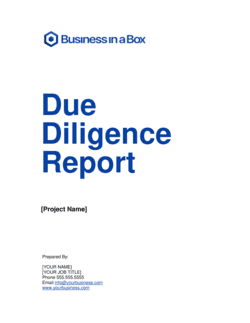
A due diligence checklist or requisition list is used at the start of the process to request and track documents from the target party. A due diligence report is produced at the end, summarizing what was reviewed, what risks were identified, and what the reviewer recommends. Both documents are needed in most transactions — the checklist drives the information-gathering phase; the report drives the decision.
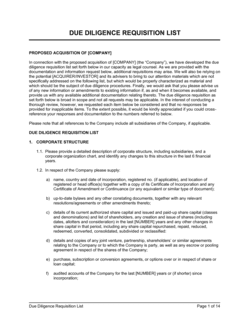
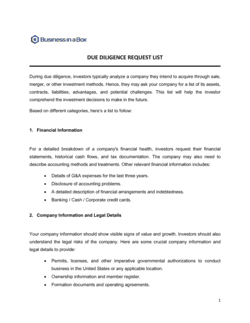
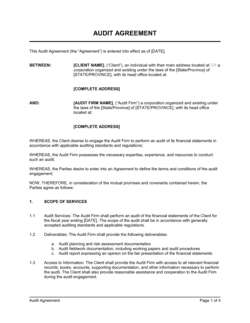
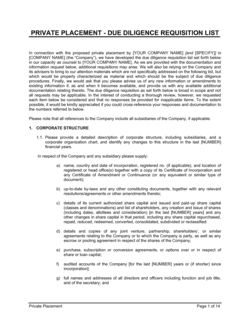
These two templates serve the same purpose — requesting documents from a counterparty — but differ in formality and depth. A request list is a shareable, concise document suited for early-stage discussions or communication with advisors. A requisition list is more granular and often used for detailed, multi-category requests in complex transactions such as acquisitions or private placements.
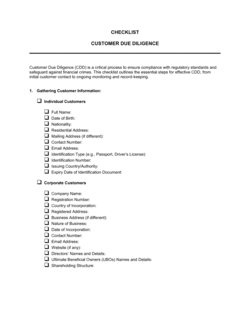
Customer due diligence (CDD) focuses on verifying the identity, ownership, and risk profile of a new customer — primarily for KYC and AML compliance purposes. Commercial due diligence assesses the market position, revenue quality, and competitive environment of a business being acquired or invested in. CDD is an ongoing compliance obligation; commercial due diligence is transaction-specific.
Due diligence notices are requests for information before a deal closes. Past-due notices are collections tools sent after a customer fails to pay on time. Both appear in this folder because both require formal written documentation, but they serve entirely different functions and are used at opposite ends of a business relationship.
Key clauses every Due Diligence And Audit contains
Due diligence documents share a common set of informational elements, regardless of whether the template is a checklist, a request list, or a formal report.
- Parties and transaction description. Identifies the buyer, seller, or reviewer and summarizes the nature of the deal or relationship being assessed.
- Scope of review. Defines which areas are covered — financial, legal, operational, tax, HR, or regulatory — so nothing is inadvertently excluded.
- Document categories requested. Lists the specific record types being requested, organized by category to make collection and tracking manageable.
- Submission deadline and format. States when documents are due and in what form — physical originals, certified copies, or electronic files.
- Confidentiality obligations. Confirms that all information exchanged during the review is subject to an NDA or equivalent confidentiality obligation.
- Findings and risk summary. In a due diligence report, this section summarizes what was discovered and flags material risks for the decision-maker.
- Recommended conditions or actions. Outlines any conditions to closing, price adjustments, or remediation steps recommended as a result of the review.
- Reviewer credentials and sign-off. Identifies who conducted the review and confirms they have the authority or expertise to validate the findings.
How to conduct a due diligence review
A structured due diligence process follows the same sequence regardless of deal size — from defining scope to signing off on findings.
1
Define the scope and objectives
Determine which areas — financial, legal, operational, tax, commercial — will be reviewed and what decision the review is meant to support.
2
Select and customize your request list
Choose the appropriate requisition list template and tailor the document categories to the specific transaction type and industry.
3
Send the request list to the target party
Deliver the request list with a clear submission deadline, a preferred format for responses, and a named point of contact.
4
Set up a secure data room
Organize received documents in a structured virtual or physical data room so reviewers can access, annotate, and track materials efficiently.
5
Review documents against your checklist
Work through each document category systematically, noting gaps, inconsistencies, or items that require follow-up.
6
Identify and escalate material risks
Flag any findings — litigation exposure, undisclosed liabilities, regulatory non-compliance — that could affect deal terms or the go/no-go decision.
7
Compile and deliver the due diligence report
Summarize findings by category, assign a risk rating where relevant, and list recommended conditions or actions before closing.
8
Archive the completed file
Retain the full due diligence package — request lists, documents received, and the final report — for post-closing reference and potential audit.
At a glance
- What it is
- Due diligence is the structured process of verifying financial, legal, operational, and commercial information before signing a deal, onboarding a customer, or extending credit. A due diligence template formalizes that process with standardized document request lists, checklists, and report formats.
- When you need one
- Any time your company is acquiring a business, accepting a new high-value customer, entering a private placement, or managing overdue receivables, a due diligence template ensures nothing critical is missed.
Which Due Diligence And Audit do I need?
The right template depends on whether you are investigating a counterparty before a deal, onboarding a new customer, or managing a past-due receivable. Match your scenario below.
Your situation
Recommended template
Documenting findings after completing a full due diligence review
Provides a structured format for summarizing risks, findings, and recommendations.Onboarding a new business customer and verifying their identity
Covers KYC and AML compliance steps required before accepting a new client.Requesting documents from a target company before an acquisition
Comprehensive document request covering corporate, financial, and legal records.Sharing a formal document request list with a seller or advisor
Clean, shareable format suited for communication with counterparty advisors.Acquiring common shares and needing deal-specific document requests
Tailored specifically to share-purchase transactions and equity transfer reviews.Conducting due diligence for a private placement investment
Addresses the specific disclosure requirements of private securities offerings.Notifying a customer their account is 60 days past due
Formally escalates an overdue balance with a clear payment deadline.Suspending deliveries until an outstanding balance is cleared
Puts a customer on notice that fulfillment is paused pending payment.Glossary
- Due diligence
- The formal process of investigating a company, customer, or asset before entering a significant transaction or relationship.
- Requisition list
- A structured list of documents formally requested from a counterparty as part of a due diligence review.
- Data room
- A secure physical or virtual repository where due diligence documents are stored and shared between parties during a transaction.
- KYC (Know Your Customer)
- The process of verifying a customer's identity and assessing their risk profile before establishing a business relationship.
- AML (Anti-Money Laundering)
- A set of laws and procedures designed to prevent the use of financial systems to disguise the proceeds of illegal activity.
- Material adverse change
- A significant negative development in a company's condition that may allow a buyer to renegotiate or terminate a deal.
- Beneficial ownership
- The natural persons who ultimately own or control a company, even if the company is held through intermediary structures.
- Representations and warranties
- Statements of fact made by a seller about the company being sold, which form the basis of liability if they prove false.
- Indemnification
- A contractual obligation for one party to compensate the other for losses arising from a specific risk identified during due diligence.
- Past-due account
- A customer account where payment has not been received by the agreed due date, triggering collections procedures.
- Assignment of money due
- A legal instrument transferring the right to receive a debt or payment from one party to another.
What is due diligence?
Due diligence is the structured investigation a buyer, investor, lender,
or business conducts to verify financial, legal, operational, and commercial
information about a counterparty before committing to a significant transaction
or relationship. The process typically involves requesting specific documents,
reviewing them against a standardized checklist, and producing a written report
that summarizes findings and flags risks for decision-makers.
Due diligence takes several distinct forms depending on context. M&A due
diligence examines a target company's corporate structure, financials, tax
position, contracts, and litigation history before an acquisition closes.
Customer due diligence (CDD) verifies a new customer's identity and
risk profile to satisfy KYC and AML compliance obligations. Private placement
due diligence reviews the disclosure documents and financial condition of a
company seeking investment outside a public market. In all cases, the goal is
the same: replace assumption with verified fact before money or commitment
changes hands.
When you need a due diligence template
Due diligence is not a single event — it is a recurring obligation that arises
any time your business is exposed to a new financial, legal, or counterparty
risk. A template ensures the process is consistent, defensible, and thorough
regardless of who conducts the review.
Common triggers:
- Acquiring a company or purchasing a significant asset
- Accepting a private placement or equity investment
- Onboarding a new high-value or high-risk customer under AML/KYC regulations
- Entering a material supplier, distributor, or licensing relationship
- Extending significant credit to a new business customer
- Escalating collections on an account that has gone 30, 60, or 90 days past due
- Suspending delivery or shipment until an outstanding balance is resolved
- Preparing a board or investor report on the results of a formal review
Skipping or abbreviating due diligence rarely saves time — it typically
defers risk rather than eliminating it. A hidden liability discovered after
closing is almost always more expensive to resolve than it would have been to
identify beforehand. Structured templates reduce that risk by ensuring the
right questions are asked, the right documents are collected, and the findings
are recorded in a format that can be reviewed, challenged, or used in
post-closing negotiations.
Award-winning platform
- Great Place to Work 2025
- BIG Award — Product of the Year 2025
- Smartest Companies 2025
- Global 100 Excellence 2026
- Best of the Best 2025