1
Define the transaction scope and assemble the review team
Enter the target entity, transaction type, review period, and the names of all contributors (financial, legal, technical, HR). Specify any known scope limitations before work begins.
💡 Agree on the scope document before the data room opens — expanding scope mid-review delays the report and complicates version control.
2
Request and organize the data room documents
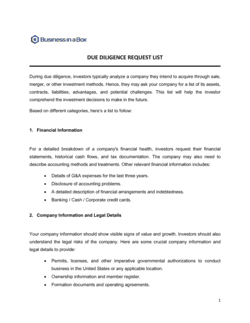
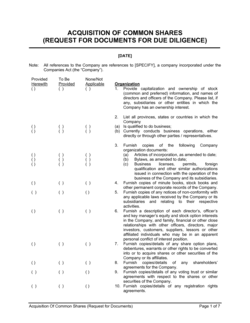
Use the report's section structure to build your data room request list. Map each document received to the section it informs and flag any requested items that were not provided.
💡 Track missing documents in a running gap log rather than individual emails — the gap log becomes the basis for scope-limitation disclosures in the final report.
3
Complete the financial analysis section first
Trace reported revenue and EBITDA to source documents, prepare the normalization schedule, and calculate the working capital peg. Confirm net debt figures against bank statements and loan agreements.
💡 Build the EBITDA bridge (reported → normalized) in a separate Excel tab and paste the summary into the report — this lets reviewers audit the math independently.
4
Fill in legal, HR, and compliance sections in parallel
Assign each non-financial section to a specialist reviewer. Legal reviews contracts and litigation; HR reviews employment terms and headcount; compliance reviews licenses and regulatory filings.
💡 Schedule a mid-point sync call after each reviewer has spent 50% of their allotted time — early flags can redirect the financial analysis before the model is finalized.
5
Build the consolidated risk register
Pull one finding per identified risk from each section, assign a severity rating (high / medium / low), estimate financial exposure in dollars, and draft a recommended mitigation action for each.
💡 Limit the risk register to findings with estimated exposure above a materiality threshold — typically 0.5–1% of deal value — so the deal team focuses on what matters.
6
Draft the recommendations and conditions precedent
Based on the risk register, state any recommended price adjustments, escrow holdbacks, reps-and-warranties insurance requirements, or walk-away conditions. Assign each open item a responsible party and deadline.
💡 Frame recommendations in terms of deal structure, not deal sentiment — 'escrow holdback of $X for Y months' is actionable; 'we have concerns about litigation' is not.
7
Write the executive summary last
Pull the overall risk rating, three to five most material findings, and the top two or three deal recommendations into a 1–2 page summary. The summary must be internally consistent with the body.
💡 Have a reviewer who did not write the report read only the executive summary and confirm it accurately represents the findings without reading the full document.
8
Circulate for internal review and version-control the final report
Distribute the draft to all contributors for accuracy review, lock a final version with a report date and version number, and deliver to the client with a cover memo stating any remaining open items.
💡 Never share a draft without a clear 'DRAFT — NOT FOR DISTRIBUTION' watermark. Preliminary findings shared prematurely have derailed negotiations and created legal exposure.