- Habit Loop
- The three-step neurological pattern underlying every habit — cue, routine, and reward — that the brain uses to encode repeated behaviors.
- Cue (Trigger)
- The specific signal — a time, place, emotion, or preceding action — that automatically initiates a habitual behavior.
- Keystone Habit
- A single habit that, once established, tends to trigger positive changes in other unrelated areas of behavior.
- Implementation Intention
- A specific 'when-then' plan that links a desired behavior to a time and location: 'When [CUE], I will [BEHAVIOR] at [LOCATION].'
- Habit Stacking
- Attaching a new habit to an existing one so the completion of the first automatically cues the second.
- Identity-Based Habit
- A habit framed around who you want to become rather than what you want to achieve — e.g., 'I am a writer' instead of 'I want to write a book.'
- Friction
- Any obstacle — physical, mental, or logistical — that increases the effort required to perform a habit, making it less likely to occur.
- Reward
- The positive outcome or sensation that follows completing a habit and reinforces the brain's motivation to repeat the behavior.
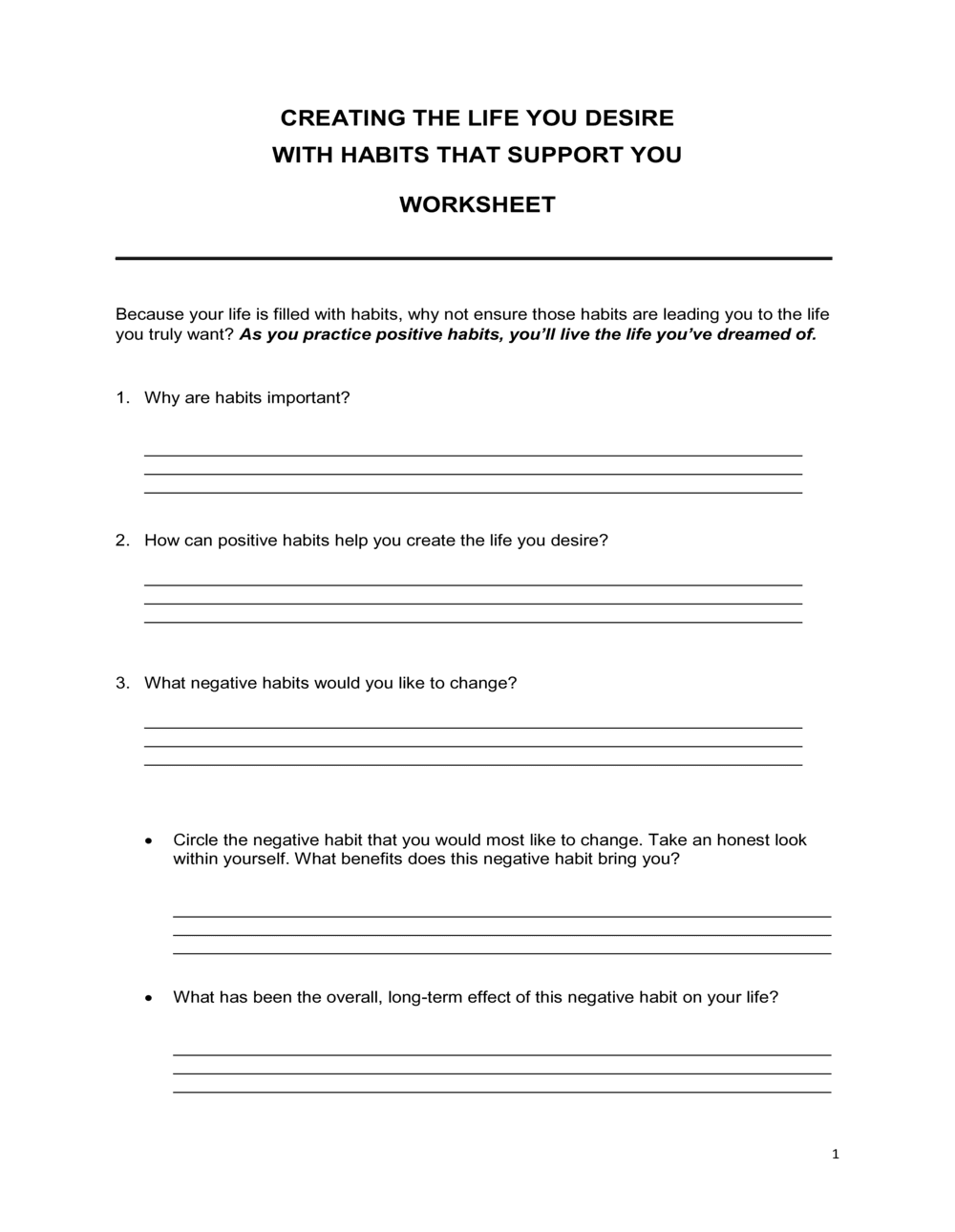
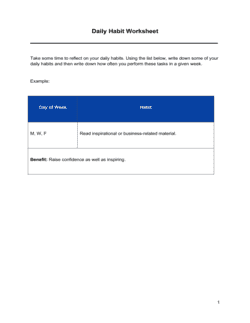
- Habit Audit
- A structured review of your current daily routines to identify which habits support your goals, which undermine them, and which are neutral.
- Streaks
- A consecutive count of days on which a target habit was completed — used as a motivational tracking metric.