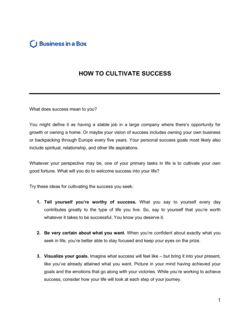
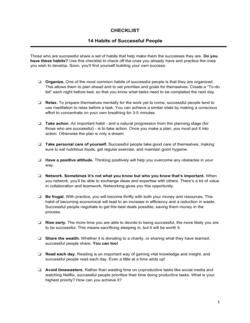
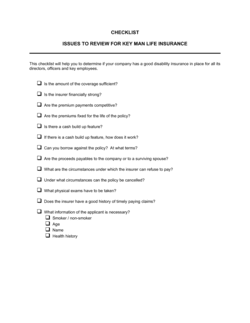
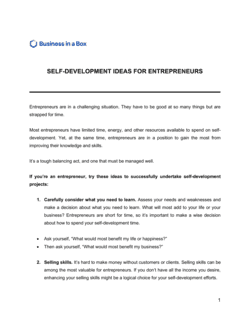
Success Hindering Habits To Kick Out Of Your Life Template

Free to read β€’ Save or share with one click

FreeSuccess Hindering Habits To Kick Out Of Your Life Template

At a glance

What it is
Success-Hindering Habits to Kick Out of Your Life is a structured self-development guide in Word format β€” free to download and edit online β€” that names the specific behavioral patterns most likely to stall entrepreneurial and professional growth, explains why each one compounds over time, and provides a concrete replacement habit to adopt instead.
When you need it
Use it when you sense your output has plateaued despite working long hours, when a mentor or peer has flagged a recurring behavioral blind spot, or when preparing for a performance review, coaching session, or annual goal-setting exercise.
What's inside
Ten habit profiles each covering the behavior, its hidden cost, and a replacement action, plus reflection prompts, a habit-audit checklist, and a 30-day replacement-habit tracker to measure progress.

What is a Success-Hindering Habits Guide?

A Success-Hindering Habits Guide is a structured self-development document that identifies the specific behavioral patterns most likely to quietly undermine entrepreneurial and professional performance β€” and pairs each one with a concrete replacement habit and a 30-day tracking method. Unlike general productivity advice, this guide operates at the level of individual triggers: the specific situations, emotions, and environmental cues that activate counterproductive behavior. It covers ten habit profiles across procrastination, perfectionism, reactive time use, sunk-cost decision-making, overcommitment, and external-validation dependency, giving each one a diagnostic framework and a measurable replacement protocol.

Why You Need This Document

The habits that cap your results are rarely dramatic β€” they accumulate quietly across hundreds of small daily decisions: the email checked before the strategy document is opened, the project continued past its useful life because of the months already invested, the commitment accepted because the word "no" felt too costly in the moment. Over a year, those micro-decisions compound into a measurable gap between effort and output. Without a structured audit, the patterns stay invisible and the effort-to-result ratio stays flat regardless of how many hours you add. This guide makes the invisible visible β€” it names the behaviors, traces them to their triggers, and installs replacements specific enough to execute on day one, not after a motivational retreat.

Which variant fits your situation?

If your situation is…Use this template
Conducting a structured personal performance reviewSelf-Assessment Template
Setting and tracking 90-day behavioral goalsPersonal Development Plan
Facilitating a team workshop on workplace behaviorsTeam Meeting Agenda
Coaching a direct report through a recurring performance issuePerformance Improvement Plan
Annual review of business strategy and personal leadership gapsSWOT Analysis
Onboarding a new leader into a high-performance cultureLeadership Development Plan
Documenting recurring team-wide behavioral patterns to addressLessons Learned Report

Common mistakes to avoid

❌ Trying to change more than three habits at once

Why it matters: Willpower and attention are finite daily resources. Splitting them across eight or ten simultaneous behavior changes produces shallow progress on every front and abandonment within two weeks.

Fix: Rank habits by impact, pick the top two or three, and give them 30 days of focused effort before adding a fourth.

❌ Skipping the trigger diagnosis

Why it matters: A replacement habit installed without identifying the original trigger gets overridden the moment the trigger fires β€” the old loop reasserts itself automatically.

Fix: Before writing any replacement, spend ten minutes journaling the last three times the old habit occurred and identify the common situational thread.

❌ Writing vague replacement intentions

Why it matters: Research on implementation intentions shows that habits stated as 'I will do X when Y at Z' are two to three times more likely to be executed than goals stated as general aspirations.

Fix: Rewrite every replacement habit using the when–what–where format and post it somewhere visible at the trigger location.

❌ Using the tracker as a streak counter only

Why it matters: A streak shows consistency but not causality. Without recording friction points and outcomes, you cannot tell whether the replacement habit is actually producing the intended result.

Fix: Add a one-sentence friction note and one measurable outcome to the tracker every week, even when the streak is perfect.

❌ Choosing an accountability partner who won't challenge you

Why it matters: A supportive friend who accepts any excuse at check-in provides the feeling of accountability without its function, and progress slows to the pace of unaccountable solo effort.

Fix: Brief your accountability partner on the two specific questions to ask each week and give them explicit permission to push back on rationalizations.

❌ Abandoning the process after a missed day

Why it matters: Missing a single day does not break a habit β€” interpreting a miss as failure and quitting does. The 'all-or-nothing' framing is itself one of the habits this guide targets.

Fix: Build a 'never miss twice' rule into your tracker: one missed day is data; two consecutive missed days trigger a trigger-diagnosis review, not a restart.

The 9 key sections, explained

Habit audit checklist

Procrastination profile

Perfectionism and completion block

Reactive vs. proactive time allocation

Negative self-talk interruption

Sunk-cost exit framework

Overcommitment and boundary-setting

Comparison and external-validation dependency

30-day replacement-habit tracker

How to fill it out

  1. 1

    Complete the habit audit checklist

    Work through all ten habit profiles and score each one honestly using the 0–3 frequency scale. Calculate your total score per habit and rank them highest to lowest.

    πŸ’‘ Do this audit alone before sharing it with a coach or manager β€” social pressure in the room distorts scores by an average of one full point per item.

  2. 2

    Select two to three habits to address first

    Pick the two or three highest-scoring habits β€” not all ten. Attempting to change more than three behaviors simultaneously is the most common reason habit-change efforts collapse within 30 days.

    πŸ’‘ Choose at least one habit with a measurable output impact (e.g., procrastination on revenue-generating tasks) rather than only internal-feeling habits.

  3. 3

    Diagnose the trigger for each selected habit

    For each habit, fill in the trigger field in its profile section. The trigger is the specific cue β€” a situation, emotion, or time of day β€” that activates the behavior.

    πŸ’‘ If you cannot name the trigger in one sentence, you haven't found it yet. Keep asking 'what was happening right before the behavior started' until you reach a concrete answer.

  4. 4

    Write the replacement habit with a specific implementation intention

    Use the format: 'When [TRIGGER], I will [REPLACEMENT BEHAVIOR] at [TIME/PLACE].' Vague intentions like 'I'll procrastinate less' produce no behavior change.

    πŸ’‘ Attach the new behavior to an existing anchor β€” a fixed daily event like a morning coffee or a weekly team meeting β€” so the trigger fires automatically.

  5. 5

    Set measurable weekly outcomes for each habit

    Define what success looks like at the end of Week 1, Week 2, and Week 4 in observable, countable terms β€” not feelings. Enter these in the tracker section.

    πŸ’‘ A Week 1 outcome should be achievable at 60% effort. An overly ambitious first target destroys momentum before the habit has time to take root.

  6. 6

    Assign an accountability partner and check-in cadence

    Name one person who will review your tracker weekly and ask two questions: what obstacle did you hit, and what are you changing next week. Enter their name and the check-in schedule in the template.

    πŸ’‘ Choose someone who will ask uncomfortable questions rather than someone who will affirm whatever you report β€” comfort at check-in correlates with slower progress.

  7. 7

    Run the 30-day tracker and review at Day 30

    Complete the daily grid for each habit, noting friction points and weekly outcomes. On Day 30, review the full dataset to decide: sustain, adjust, or replace the habit.

    πŸ’‘ A habit that showed a consistent four-day streak but never reached seven days has a friction point you haven't identified yet β€” go back to the trigger diagnosis step.

Frequently asked questions

What is a success-hindering habits guide?

A success-hindering habits guide is a structured self-development document that names the specific behavioral patterns most likely to cap professional and entrepreneurial results, explains the mechanism by which each habit creates drag on performance, and provides a concrete replacement behavior paired with a tracking method. It differs from general motivational content in that it is actionable, specific, and measurable.

How many habits should I try to change at once?

Two to three is the evidence-based upper limit for simultaneous habit change. Behavioral research consistently shows that attempting more than three new behaviors at once produces shallow progress across all of them and a high abandonment rate within the first 30 days. Rank your habits by impact on your most important current goal and sequence the rest.

How long does it take to break a bad habit?

The widely cited "21 days" figure has no strong empirical basis. Research published in the European Journal of Social Psychology found an average of 66 days for a new behavior to become automatic, with a range of 18 to 254 days depending on complexity and individual variation. A 30-day tracker is a useful first checkpoint, not a finish line.

What is the difference between a habit and a personality trait?

A habit is a learned, context-triggered behavior that can be changed by identifying the trigger and installing a replacement routine. A personality trait is a relatively stable dispositional tendency. Most behaviors that feel like fixed traits β€” procrastination, people-pleasing, avoidance β€” are actually habits with identifiable triggers, which means they are changeable with the right diagnostic approach.

Can this guide be used in a team setting?

Yes. HR managers and executive coaches regularly adapt habit-audit frameworks for team workshops, replacing individual scoring with anonymous aggregate results to surface shared behavioral patterns. The guide works best in a team setting when paired with a psychological-safety norm that separates behavioral patterns from personal character judgments.

How does this guide differ from a performance improvement plan?

A performance improvement plan (PIP) is a formal managerial document addressing a specific, documented performance gap with measurable targets and consequences. This guide is a voluntary self-development tool β€” the individual identifies their own habits, sets their own targets, and owns the process. A PIP is corrective and employer-initiated; this guide is developmental and self-initiated.

What if I don't know which habit is causing the most damage?

Start with the habit audit checklist and score all ten profiles before trying to identify a priority. If two or three habits score similarly high, apply a second filter: which one, if changed, would most directly accelerate the single most important goal you are working on right now? Impact on a concrete current objective is a more reliable prioritization criterion than general severity.

Do I need a coach to use this guide effectively?

No β€” the guide is designed for self-directed use. An accountability partner (peer, mentor, or coach) increases completion rates significantly, but the trigger-diagnosis and replacement-habit sections are structured to work without external facilitation. A coach adds the most value when a habit has deep emotional roots or has survived multiple prior change attempts.

How this compares to alternatives

vs Personal Development Plan

A personal development plan sets long-term skill and career goals with structured milestones. This guide focuses specifically on removing the behavioral obstacles that prevent those goals from being reached. Use the habit guide to clear the path, then a personal development plan to define the destination.

vs Performance Improvement Plan

A performance improvement plan is a formal managerial document used when an employee's output falls below a defined standard, with documented consequences for non-compliance. This guide is a voluntary self-development tool with no managerial oversight or consequences. The PIP is corrective; this guide is developmental.

vs SWOT Analysis

A SWOT analysis identifies strengths, weaknesses, opportunities, and threats at a strategic level. This guide operates at the behavioral level β€” diagnosing and replacing specific daily habits. A SWOT may surface a personal weakness that this guide then addresses with a concrete habit-change protocol.

vs Lessons Learned Report

A lessons learned report documents what went wrong on a completed project for institutional memory. This guide diagnoses recurring behavioral patterns across multiple projects and installs preventive habits. One is retrospective and project-scoped; the other is prospective and person-scoped.

Industry-specific considerations

Technology / SaaS

Analysis paralysis on shipping decisions and perfectionism in code review are the two habits most commonly cited as growth blockers by early-stage SaaS founders.

Professional Services

Overcommitment and reactive time allocation are endemic in consulting and agency work, where client demand is unpredictable and saying no feels like a revenue risk.

Retail / E-commerce

Sunk-cost bias around underperforming product lines and comparison to competitor metrics are the habits most likely to distort inventory and marketing decisions.

Healthcare / MedTech

Perfectionism and negative self-talk are particularly prevalent in clinical and research roles where error intolerance is professionally conditioned but counterproductive in leadership and innovation contexts.

Template vs pro β€” what fits your needs?

PathBest forCostTime
Use the templateIndividuals conducting a self-directed habit audit with no prior coaching engagementFree2–3 hours for audit and planning; 30 days for the tracker cycle
Template + professional reviewProfessionals who have attempted habit change before without lasting results and want one structured coaching session to diagnose blockers$150–$400 for a single executive coaching session1–2 weeks setup plus 30-day tracker
Custom draftedLeadership teams or HR departments building a company-wide behavioral development program with facilitated workshops and ongoing measurement$2,000–$8,000 for a facilitated program design4–8 weeks to design and deploy

Glossary

Habit Loop
The neurological cycle of cue, routine, and reward that encodes a behavior into automatic repetition.
Procrastination
Delaying high-priority tasks in favor of lower-stakes activities, typically driven by discomfort avoidance rather than poor time management.
Analysis Paralysis
A state in which excessive information-gathering or option-weighing prevents a decision from being made at all.
Perfectionism
Setting an internal quality standard so high that completion is perpetually deferred, often masking fear of judgment or failure.
Reactive Mode
Spending the majority of the workday responding to others' requests and interruptions rather than executing on self-directed priorities.
Negative Self-Talk
An internal narrative that interprets setbacks as evidence of fixed personal deficiency rather than as correctable situational factors.
Sunk-Cost Bias
Continuing to invest time, money, or energy in a failing course of action because of prior investment, rather than future expected value.
Scope Creep (personal)
Taking on additional commitments beyond one's capacity because of difficulty saying no, resulting in diluted focus and missed deadlines.
Compounding Behavior
A habit whose positive or negative effects multiply over time β€” a 1% daily improvement over one year produces a 37Γ— output gain.
Accountability Partner
A peer or coach who holds you to stated behavioral commitments through regular check-ins and candid feedback.

Part of your Business Operating System

This document is one of 3,000+ business & legal templates included in Business in a Box.

  • Fill-in-the-blanks β€” ready in minutes
  • Compatible with all office suites
  • Export to PDF and share electronically

Create your document in 3 simple steps.

From template to signed document β€” all inside one Business Operating System.
1
Download or open template

Access over 3,000+ business and legal templates for any business task, project or initiative.

2
Edit and fill in the blanks with AI

Customize your ready-made business document template and save it in the cloud.

3
Save, Share, Send, Sign

Share your files and folders with your team. Create a space of seamless collaboration.

Save time, save money, and create top-quality documents.

β˜…β˜…β˜…β˜…β˜…

"Fantastic value! I'm not sure how I'd do without it. It's worth its weight in gold and paid back for itself many times."

Managing Director Β· Mall Farm
Robert Whalley
Managing Director, Mall Farm Proprietary Limited
β˜…β˜…β˜…β˜…β˜…

"I have been using Business in a Box for years. It has been the most useful source of templates I have encountered. I recommend it to anyone."

Business Owner Β· 4+ years
Dr Michael John Freestone
Business Owner
β˜…β˜…β˜…β˜…β˜…

"It has been a life saver so many times I have lost count. Business in a Box has saved me so much time and as you know, time is money."

Owner Β· Upstate Web
David G. Moore Jr.
Owner, Upstate Web

Run your business with a system β€” not scattered tools

Stop downloading documents. Start operating with clarity. Business in a Box gives you the Business Operating System used by over 250,000 companies worldwide to structure, run, and grow their business.

Start freeΒ Β·Β No credit card required