We Have Moved to a Bigger Office Template

Free Word download • Edit online • Save & share with Drive • Export to PDF

1 page20–30 min to fillDifficulty: StandardSignature requiredLegal review recommended
Learn more ↓
FreeWe Have Moved to a Bigger Office Template

At a glance

What it is
A "We Have Moved To A Bigger Office" letter is a formal written notice a business sends to clients, vendors, partners, and service providers to announce a change of address and communicate the significance of the relocation. This free Word download gives you a professionally structured template you can edit online, tailor to your brand, and export as PDF or send by post and email to every relevant contact in minutes.
When you need it
Use it when your business is physically relocating to a larger premises — whether expanding within the same city, moving to a new district, or upgrading to a purpose-built facility. Send it at least two weeks before the move date so contacts can update records, reroute deliveries, and adjust any service-level arrangements before disruption occurs.
What's inside
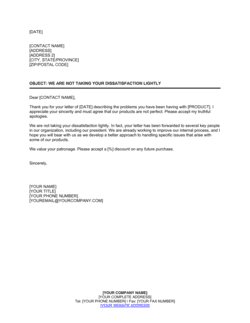
The letter covers your company's current and new address details, the effective date of the move, a brief explanation of the reason for relocating, updated contact information, and a call to action for recipients to acknowledge and update their records. It also includes a professional closing that reinforces goodwill and continued business relationships.

What is a "We Have Moved To A Bigger Office" Letter?

A "We Have Moved To A Bigger Office" letter is a formal written announcement a business sends to its clients, vendors, partners, and service providers to communicate a change of physical address — specifically one driven by business growth and expansion into larger premises. The letter identifies the company, states the new address in full, confirms the effective date of the move, reassures recipients that all other contact details and service arrangements remain unchanged, and asks them to update their records accordingly. Unlike a bare change-of-address notice, this template frames the relocation as a positive milestone, reinforcing business credibility and maintaining the quality of stakeholder relationships throughout the transition.

Why You Need This Document

Failing to send a timely, professional office relocation notice exposes your business to a cascade of practical and legal problems. Mail directed to your old address — including invoices, legal notices, contract renewals, and regulatory correspondence — can be delayed or lost, causing missed deadlines, lapsed filings, and broken payment cycles. Vendors who continue shipping to the old location incur costs they will pass back to you. Clients who cannot reach you at the address on their contracts may question your stability. In several jurisdictions, failing to notify your corporate registry or tax authority of an address change within the statutory window triggers fines and invalidates your official registration. A single, clearly written, signed letter sent to every relevant contact at least two weeks before moving day eliminates all of these risks at the cost of 30 minutes — and this template gives you the professional structure to do it right the first time.

Which variant fits your situation?

If your situation is…Use this template
Announcing a move to clients and customers onlyWe Have Moved To A Bigger Office (Client Version)
Notifying vendors and suppliers of the address changeChange of Address Letter to Vendor
Informing a bank or financial institution of the new addressChange of Address Letter to Bank
Communicating the relocation internally to all employeesOffice Relocation Announcement (Internal Memo)
Notifying a government body or regulatory agency of the address changeChange of Registered Address Notice
Sending a brief one-paragraph address update in an email newsletterOffice Move Email Announcement
Relocating an entire business operation including registered officeBusiness Relocation Notice

Common mistakes to avoid

❌ Sending the notice too late

Why it matters: Clients and vendors who receive less than one week's notice cannot update payroll systems, reroute shipments, or adjust scheduled deliveries in time — resulting in missed parcels, returned mail, and broken service chains.

Fix: Send the letter a minimum of two weeks before the move date; for regulated counterparties, government agencies, or financial institutions, allow four to six weeks to process the change.

❌ Omitting the cutoff date for the old address

Why it matters: Without a stated end date, recipients assume their old address records are still valid indefinitely, so they never update them — leaving you responsible for a mail-forwarding arrangement that eventually lapses.

Fix: State explicitly in the letter: 'Our previous address will no longer receive correspondence after [DATE].' Reinforce this with a postal mail-forwarding service running for at least 60 days after the cutoff.

❌ Failing to notify financial institutions and government agencies separately

Why it matters: A client-facing letter does not constitute formal notification to your bank, tax authority, or corporate registry — failure to update registered address records with these bodies can result in missed regulatory notices, tax penalties, or lapsed filings.

Fix: Use dedicated address-change forms for your bank, tax authority (IRS, HMRC, CRA, or equivalent), and corporate registry separately from this client letter — do not rely on a single notice to cover all parties.

❌ Sending an unsigned or undated letter

Why it matters: An unsigned or undated relocation notice lacks authority — recipients treat it as informal, are less likely to act on it, and have no reliable timestamp for when the change took effect.

Fix: Always include the issue date at the top and obtain a signature from a named, titled authorised representative before distribution. Use a digital signature tool if sending by email.

The 10 key clauses, explained

Sender and recipient identification

In plain language: Identifies the sending company by full legal name and current address, and addresses the letter to the specific recipient or organisation.

Sample language
[COMPANY LEGAL NAME] | [CURRENT ADDRESS LINE 1], [CITY], [STATE/PROVINCE], [POSTAL CODE] | Attn: [RECIPIENT NAME / ACCOUNTS TEAM]

Common mistake: Using a trade name instead of the registered legal entity name — this creates a mismatch with contracts and vendor records already filed under the legal name.

Date and subject line

In plain language: States the letter's issue date and a clear subject line so recipients can file and act on it immediately without reading the full body.

Sample language
Date: [DATE] | Subject: Important Notice — [COMPANY NAME] Has Moved to a New Address

Common mistake: Omitting a subject line on a formal letter — recipients who receive high volumes of post often discard unidentified correspondence without reading it.

Opening announcement

In plain language: Clearly states in the opening sentence that the company has relocated or will relocate on a specified date, so the key information is not buried.

Sample language
We are pleased to inform you that [COMPANY NAME] has moved to a new and larger office, effective [EFFECTIVE DATE].

Common mistake: Burying the new address in the second or third paragraph — recipients who skim may miss the critical detail and continue sending correspondence to the old location.

New address block

In plain language: Provides the complete new postal address in a clearly formatted block, including unit or floor number, street, city, state or province, country, and postal code.

Sample language
Our new address is: [COMPANY NAME] | [UNIT/FLOOR NUMBER], [STREET ADDRESS], [CITY], [STATE/PROVINCE], [COUNTRY], [POSTAL CODE]

Common mistake: Leaving out the unit or suite number for a multi-tenant building — deliveries and registered mail addressed only to the street are frequently misrouted or returned.

Effective date of the move

In plain language: States the exact date from which the new address is active so recipients know precisely when to stop using the old address.

Sample language
Please note that all correspondence, deliveries, and communications should be directed to our new address as of [DATE]. Our previous address will no longer be monitored after [DATE + 30 DAYS].

Common mistake: Failing to state when the old address stops being monitored — without a cutoff date, recipients assume mail forwarding is indefinite and delay updating their records.

Reason for relocation

In plain language: Briefly explains why the company is moving — typically citing growth, expansion, or improved facilities — to frame the news positively and reinforce business credibility.

Sample language
This move reflects [COMPANY NAME]'s continued growth and our commitment to providing an enhanced level of service to our valued clients and partners.

Common mistake: Skipping this clause entirely. Recipients who receive an unexplained address change with no context may question the company's stability or financial position.

Unchanged contact details confirmation

In plain language: Explicitly confirms that phone numbers, email addresses, website, and banking details remain the same, preventing unnecessary confusion about how to reach the company.

Sample language
Please note that our telephone number, email addresses, and banking details remain unchanged. You can continue to reach us at [PHONE NUMBER] or [EMAIL ADDRESS].

Common mistake: Not confirming unchanged details — recipients often assume a physical move also changes contact numbers and email domains, leading to failed communications.

Request to update records

In plain language: Includes a polite but explicit call to action asking the recipient to update their internal records, address books, and systems with the new information.

Sample language
We kindly request that you update your records to reflect our new address at your earliest convenience, and that you communicate this change to any relevant departments within your organisation.

Common mistake: Phrasing this as optional or vague — 'feel free to update your records if you wish' results in a significant portion of recipients never acting on the notice.

Service continuity assurance

In plain language: Assures the recipient that all business operations, service delivery, and response times will continue without interruption throughout and after the relocation.

Sample language
We are committed to ensuring that this transition has no impact on the quality or continuity of the service you receive from us. All orders, queries, and obligations will be fulfilled as normal throughout this period.

Common mistake: Omitting this clause when the move involves a short closure period — failing to address potential disruption creates anxiety among clients and vendors who depend on consistent service.

Professional closing and signature

In plain language: Closes the letter with a thank-you for the recipient's continued relationship, an invitation to contact the company with questions, and a handwritten or digital signature from an authorised representative.

Sample language
Thank you for your continued support and partnership. Should you have any questions regarding our relocation, please do not hesitate to contact [CONTACT NAME] at [PHONE] or [EMAIL]. Yours sincerely, [AUTHORISED SIGNATORY NAME], [TITLE], [COMPANY NAME]

Common mistake: Signing with a job title but no personal name — recipients who need to follow up have no named contact, which reduces response rates and creates friction.

How to fill it out

  1. 1

    Enter your company's full legal name and current address

    Open the template and replace all instances of [COMPANY LEGAL NAME] and [CURRENT ADDRESS] with your registered business name and the address you are moving from. Confirm the legal name matches your contracts and vendor records exactly.

    💡 Check your most recent vendor invoice or signed contract to confirm the exact legal entity name — a mismatch here causes confusion when recipients cross-reference their files.

  2. 2

    Add the complete new address in the address block

    Fill in every field of the new address block: unit or suite number, floor, street address, city, state or province, country, and postal code. Do not abbreviate street types or omit the postal code.

    💡 Copy the address directly from your signed lease agreement to avoid transcription errors that could misdirect mail.

  3. 3

    Set the effective date and old-address cutoff date

    Enter the date from which the new address is operational and a separate cutoff date after which you will no longer monitor correspondence at the old address. A 30-day gap between the two is standard.

    💡 Arrange mail forwarding with your postal service to start on moving day and run for at least 60 days — this catches late-updated senders during the transition.

  4. 4

    Confirm unchanged contact details

    Review the phone, email, website, and banking information listed in the template and update or confirm each field. If any contact detail has also changed, this letter is the right place to communicate it.

    💡 If your phone number is changing alongside the move, list both the old and new numbers with a 'from [DATE]' note so contacts are never unable to reach you.

  5. 5

    Personalise the reason-for-relocation clause

    Replace the placeholder explanation with a one-to-two sentence statement reflecting your actual reason — growth, expanded team, purpose-built facility, or proximity to clients. Keep the tone positive and forward-looking.

    💡 Mentioning the specific growth milestone that triggered the move (e.g., 'following the expansion of our team to 35 staff') adds credibility and doubles as a subtle business update.

  6. 6

    Name a specific contact for relocation queries

    Replace [CONTACT NAME] in the closing clause with a real person's name, direct phone number, and email. Do not leave a generic 'info@' address as the relocation point of contact.

    💡 Use your office manager or operations lead as the named contact — they will already be handling moving logistics and can answer practical questions without escalation.

  7. 7

    Obtain an authorised signature before sending

    Have the letter signed by a director, owner, or senior manager before distribution. For high-value clients or regulated counterparties, use a wet signature or a verified digital signature rather than a typed name.

    💡 Send the signed letter as a PDF attachment rather than in the email body — a formatted, signed letter reads as more formal and is easier for recipients to file.

Frequently asked questions

What is a 'We Have Moved To A Bigger Office' letter?

It is a formal written notice a business sends to clients, vendors, partners, and service providers to announce that the company has relocated to a new and larger premises. The letter communicates the new address, the effective date of the move, any changes to contact information, and a request for the recipient to update their records. It functions both as a practical administrative notice and as a positive business communication that signals company growth.

Who should receive an office relocation announcement letter?

Every external party who holds your business address on file should receive the letter — clients, customers, suppliers, vendors, banks, insurance providers, professional advisors, and any regulatory or government bodies with whom you are registered. Internally, staff should be notified separately via an internal memo or HR communication before the client-facing letter goes out.

How far in advance should I send the office move announcement?

A minimum of two weeks before the move date is the standard for most business contacts. For financial institutions, government agencies, corporate registries, and regulated counterparties, allow four to six weeks so they can process formal address-change requests through their internal systems. Sending too late risks misdirected mail, failed deliveries, and missed legal notices arriving at your old address.

Does an office move announcement letter need to be signed?

Yes. While the letter is not a binding contract in the traditional sense, a signed letter from an authorised representative carries significantly more weight than an unsigned notice. Recipients — particularly corporate accounts-payable teams and legal departments — are more likely to act on a formally signed document. For high-value clients or regulated parties, use a wet signature or a verified digital signature rather than a typed name.

Do I need to notify the government or corporate registry when I move offices?

Yes, in most jurisdictions. A client-facing announcement letter does not constitute official notice to your corporate registry, tax authority, or regulatory body. In the US, you must update your registered agent address with the state where you are incorporated and notify the IRS of the change using Form 8822-B. In the UK, you must update Companies House within 14 days of the change. In Canada, provincial corporate registries have similar requirements. Consult your corporate lawyer or accountant to confirm what filings apply to your structure.

What is the difference between a registered address and an office address?

A registered address is the official address recorded with your corporate registry and used for legal and regulatory correspondence — it must be a physical address in the jurisdiction of incorporation and is publicly visible on the registry. Your office address is where your team actually works. The two can differ, particularly for companies that use a law firm or registered agent as their official registered address. When you move offices, check whether your registered address also needs to change and file the appropriate forms separately.

Should I set up mail forwarding when moving offices?

Yes. Even after sending relocation letters to all known contacts, some mail will continue to arrive at the old address — from contacts who missed the notice, government agencies with long processing times, or parties who hold your address in rarely-updated databases. Arrange mail forwarding with your national postal service to start on moving day and run for a minimum of 60 days, ideally 12 months, to catch late-updated senders.

Can I use this letter template for an international office move?

Yes, with some adjustments. For cross-border relocations, update the address format to match the destination country's conventions, confirm any country-specific corporate registry filing requirements, and check whether contracts with clients or vendors contain jurisdiction or address clauses that are triggered by a change of business location. In the EU, a change of registered address may also affect VAT registration obligations in the new member state.

What should I do if a client continues sending mail to the old address?

First, maintain active mail forwarding at the old address for at least 60 days. For any significant client or supplier that continues using the old address after the cutoff, follow up with a direct phone call or personalised email from their account manager to confirm the address change. For clients whose payments or critical documents are being forwarded, send a second written notice referencing the original letter date as a documented record.

How this compares to alternatives

vs Change of Address Letter

A generic change-of-address letter simply notifies a party of a new address with minimal context. The 'We Have Moved To A Bigger Office' letter adds a positive framing — explaining the growth rationale, assuring service continuity, and reinforcing the business relationship. Use the generic version for administrative updates to institutions; use this template for client- and partner-facing communications where tone and relationship matter.

vs Business Announcement Letter

A business announcement letter covers a broad range of company news — new services, leadership changes, partnerships, or achievements. An office move letter is narrowly focused on a single actionable change requiring the recipient to update records. Use the announcement letter when the relocation is part of a broader strategic story; use this template when the primary goal is ensuring everyone updates their address files.

vs Internal Office Relocation Memo

An internal memo communicates the move to employees — covering logistics, moving dates, parking arrangements, and IT transition plans. The 'We Have Moved' letter is directed at external stakeholders and focuses entirely on the address change and service continuity. Both documents are needed for a complete relocation communication plan, but they serve entirely different audiences.

vs Lease Termination Letter

A lease termination letter is directed at your current landlord to formally end your tenancy at the old premises — it is a contractual document with legal and financial consequences. The office move announcement is a stakeholder communication with no contractual effect. Both are required when vacating a premises, but they are sent to different parties for different purposes.

Industry-specific considerations

Professional Services

Law firms, accounting practices, and consultancies must notify all client files, court registries, and professional associations of the address change, as some regulatory bodies impose deadlines for updating practice records.

Retail and E-commerce

Retailers must update warehouse and returns addresses with all supplier and logistics partners simultaneously with the client letter to prevent shipment disruptions during the transition window.

Technology / SaaS

Tech companies expanding to larger offices often combine the relocation notice with an updated vendor MSA or data processing addendum if the new location is in a different jurisdiction with different data privacy rules.

Healthcare

Healthcare businesses must notify insurers, referral networks, and licensing bodies of the new address within the timeframes prescribed by their credentialing agreements, which often differ from standard commercial notice periods.

Financial Services

Regulated financial firms must notify their primary regulator (FCA, SEC, FINRA, or equivalent) of a principal office change, often via a formal regulatory filing separate from client-facing communications.

Manufacturing and Distribution

Manufacturers relocating operations must update all supplier contracts, delivery schedules, and customs or import documentation with the new address before the first shipment is expected at the new facility.

Jurisdictional notes

United States

Businesses must update their registered agent address with the state of incorporation separately from client notifications — typically within 30 days of the change. The IRS requires a formal address update via Form 8822-B for business entities. Some states, including Delaware and Wyoming, require the registered agent's address to remain in-state regardless of where the actual office relocates.

Canada

Federally incorporated companies must file a Notice of Change of Registered Office with Corporations Canada within 15 days under the Canada Business Corporations Act. Provincially incorporated businesses face similar requirements under provincial corporate statutes — for example, the Ontario Business Corporations Act requires a filing within a prescribed period. Quebec businesses operating under provincial law must also ensure any correspondence in French is sent to francophone clients and government bodies.

United Kingdom

UK companies must notify Companies House of a change of registered office address within 14 days of the change, using form AD01. The new address must be within the same country of registration (England and Wales, Scotland, or Northern Ireland). VAT-registered businesses must also update HMRC separately. Failure to notify Companies House in time can result in a fine and the company's registered address being listed as invalid on the public register.

European Union

Address-change notification requirements vary by member state, but most EU jurisdictions require registration with the national business registry within 15–30 days of a change of principal office. Cross-border relocations within the EU may trigger new VAT registration obligations and affect the applicable national employment and data protection law. Under GDPR, if a data controller's registered establishment changes jurisdiction, the lead supervisory authority may also change, requiring updated data processing records.

Template vs lawyer — what fits your deal?

PathBest forCostTime
Use the templateSmall businesses and startups notifying clients and vendors of a straightforward domestic office relocationFree15–30 minutes
Template + legal reviewBusinesses with regulated clients, multi-jurisdiction vendor contracts, or leases containing address-change notification clauses$150–$400 for a lawyer or compliance advisor review1–2 days
Custom draftedCompanies relocating registered offices across jurisdictions, regulated financial or healthcare firms, or businesses whose contracts trigger legal obligations upon a change of address$500–$2,000+3–7 days

Glossary

Registered Address
The official address of a business entity recorded with the relevant government or corporate registry, used for legal correspondence and regulatory notices.
Effective Date
The specific calendar date on which the new office address becomes operational and all correspondence should be directed there.
Notice Period
The amount of advance time given between sending the announcement and the actual move date, allowing recipients to update records and reroute mail.
Stakeholder
Any individual or organisation with an interest in your business operations — including clients, vendors, partners, banks, and regulatory bodies.
Change of Address
A formal update to the physical or mailing address on record with clients, suppliers, financial institutions, and government agencies.
Service Continuity
The assurance given to recipients that business operations, response times, and service delivery will not be interrupted by the relocation.
Mail Forwarding
A postal arrangement instructing the national mail service to redirect correspondence from the old address to the new address for a defined period.
Goodwill Communication
A message element that reinforces a positive business relationship by framing the relocation as growth and expressing appreciation for the recipient's continued support.
Correspondent Bank Details
Banking and payment information that may need to be updated if the business's account address or branch details change alongside a physical relocation.
Call to Action (CTA)
A specific instruction to the letter recipient — such as updating their records or confirming receipt — that ensures the address change is acted upon promptly.

Part of your Business Operating System

This document is one of 3,000+ business & legal templates included in Business in a Box.

  • Fill-in-the-blanks — ready in minutes
  • 100% customizable Word document
  • Compatible with all office suites
  • Export to PDF and share electronically

Create your document in 3 simple steps.

From template to signed document — all inside one Business Operating System.
1
Download or open template

Access over 3,000+ business and legal templates for any business task, project or initiative.

2
Edit and fill in the blanks with AI

Customize your ready-made business document template and save it in the cloud.

3
Save, Share, Send, Sign

Share your files and folders with your team. Create a space of seamless collaboration.

Save time, save money, and create top-quality documents.

★★★★★

"Fantastic value! I'm not sure how I'd do without it. It's worth its weight in gold and paid back for itself many times."

Managing Director · Mall Farm
Robert Whalley
Managing Director, Mall Farm Proprietary Limited
★★★★★

"I have been using Business in a Box for years. It has been the most useful source of templates I have encountered. I recommend it to anyone."

Business Owner · 4+ years
Dr Michael John Freestone
Business Owner
★★★★★

"It has been a life saver so many times I have lost count. Business in a Box has saved me so much time and as you know, time is money."

Owner · Upstate Web
David G. Moore Jr.
Owner, Upstate Web

Run your business with a system — not scattered tools

Stop downloading documents. Start operating with clarity. Business in a Box gives you the Business Operating System used by over 250,000 companies worldwide to structure, run, and grow their business.

Free Forever Plan · No credit card required