Transport Policy Template

Free Word download β€’ Edit online β€’ Save & share with Drive β€’ Export to PDF

2 pagesβ€’20–25 min to fillβ€’Difficulty: Standard
Learn more ↓
FreeTransport Policy Template

At a glance

What it is
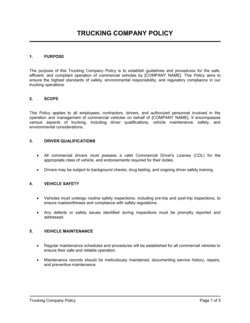
A Transport Policy is a formal organizational document that defines the rules, standards, and procedures governing how a company manages its transportation activities β€” including vehicle selection and assignment, driver eligibility, routing, fuel management, accident reporting, and environmental obligations. This free Word download gives fleet operators, logistics firms, and field-service businesses a structured, ready-to-edit policy they can tailor and distribute to staff in a single session.
When you need it
Use it when your organization operates a vehicle fleet of any size, when employees drive on company business, or when a regulator, insurer, or client requires documented transport procedures as a condition of contract or compliance.
What's inside
Scope and eligibility rules, vehicle selection and assignment criteria, driver licensing and vetting requirements, fuel and cost management procedures, safety and maintenance standards, accident and incident reporting protocols, and environmental considerations β€” all organized into numbered sections your team can reference immediately.

What is a Transport Policy?

A Transport Policy is a formal organizational document that defines the standards, rules, and procedures governing all work-related transportation activities β€” from who is authorized to drive and what vehicles may be used, to how fuel is managed, how accidents are reported, and what environmental commitments the fleet must meet. It applies to company-owned vehicles and, where employees drive personal vehicles on business errands, to grey-fleet journeys as well. A well-structured transport policy replaces ad-hoc driver briefings and verbal instructions with a single written reference that every authorized driver, fleet manager, and HR team member can consult.

Why You Need This Document

Without a documented transport policy, organizations face compounding risks on several fronts simultaneously. An employee involved in an accident while driving on company business β€” whether in a company vehicle or their own car β€” can expose the employer to significant liability if there is no evidence of a documented safety program. Insurers may decline or reduce claims where no formal driver authorization or incident reporting process existed. Fleet costs run higher when there are no fuel logging or maintenance scheduling requirements to enforce. Regulators and enterprise clients in logistics, construction, and healthcare increasingly require sight of a written transport policy as a condition of contract award or audit sign-off. This template gives you a structured, immediately usable starting point that covers every material aspect of transport governance β€” so you can put a signed, distributed policy in place today rather than after the first incident.

Which variant fits your situation?

If your situation is…Use this template
Governing personal use of company vehicles by employeesCompany Vehicle Use Policy
Setting rules for employees who use their own vehicles for workVehicle Reimbursement Policy
Managing a large distribution or delivery fleetFleet Management Policy
Documenting driver health and fatigue management proceduresDriver Fatigue Management Policy
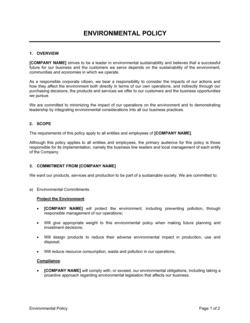
Covering environmental commitments specific to transport emissionsEnvironmental Sustainability Policy
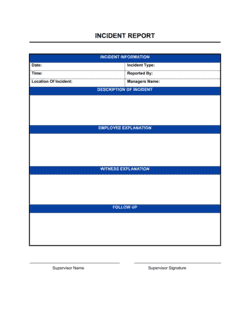
Responding to a specific vehicle incident or accidentIncident Report Form
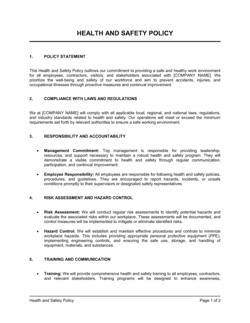
Broader workplace health and safety frameworkHealth and Safety Policy

Common mistakes to avoid

❌ Excluding grey-fleet (personal) vehicles from scope

Why it matters: An employee injured while driving their own car on a business errand is still covered by the employer's duty of care. An insurer or court will scrutinize whether the employer had a documented policy covering that journey.

Fix: Explicitly include privately owned vehicles used for business travel in the scope section and require grey-fleet drivers to provide proof of business-use insurance cover annually.

❌ No annual driving-license re-check requirement

Why it matters: An employee disqualified for drink-driving after onboarding may continue to drive company vehicles for months or years if checks are only performed at hire. An accident in that period creates significant employer liability.

Fix: Schedule annual electronic license checks for all authorized drivers and suspend vehicle access immediately for any driver whose license status changes.

❌ Vague incident reporting timelines

Why it matters: Requiring reports 'as soon as possible' leads to delays of days or weeks. Late notification can breach commercial motor insurance conditions and result in a declined claim.

Fix: State a specific numeric deadline β€” for example, notify the fleet manager within 4 hours and submit the completed incident report within 2 working days.

❌ Sustainability section with no measurable targets

Why it matters: Aspirational language about reducing emissions satisfies no reporting framework and gives auditors or clients no basis to assess progress.

Fix: Include at least one quantified target with a deadline β€” for example, 'reduce fleet average CO2 emissions to [X]g/km by [YEAR]' β€” and name the role responsible for tracking it.

❌ Ambiguous maintenance responsibility between driver and fleet manager

Why it matters: When both the driver and the fleet manager believe the other is responsible for booking the annual service, the service gets missed β€” creating a roadworthiness and insurance validity risk.

Fix: State in one sentence who books servicing (the fleet manager), who confirms the appointment to the driver (the fleet manager), and who is responsible for delivering the vehicle on the day (the driver).

❌ No stated consequence for policy breaches

Why it matters: A policy without an enforcement clause is advisory, not binding. Managers have no clear authority to act when a driver uses a handheld phone or falsifies a mileage log.

Fix: Add a compliance section that states breaches are handled under the company's disciplinary procedure and that serious or repeated breaches may result in withdrawal of driving authorization or termination.

The 9 key sections, explained

Purpose, scope, and definitions

Driver eligibility and authorization

Vehicle selection, allocation, and use

Fuel management and cost control

Safety standards and driver conduct

Vehicle maintenance and pre-trip inspections

Accident, incident, and near-miss reporting

Environmental and sustainability obligations

Policy compliance, review, and enforcement

How to fill it out

  1. 1

    Define scope and insert company details

    Replace all [COMPANY NAME] placeholders and confirm whether the policy covers owned vehicles only, grey fleet, or both. State which geographic locations or business units are in scope.

    πŸ’‘ If your fleet spans multiple countries, note it in the scope section and flag that local road traffic law supplements this policy β€” rather than trying to capture every jurisdiction's rules in the body.

  2. 2

    Set driver eligibility criteria

    Specify the license class required for each vehicle type in your fleet, the maximum penalty points permitted, the minimum age, and the name of the approving role. Decide whether annual license checks are required or only at onboarding.

    πŸ’‘ Many insurers require annual driving-license checks for fleet vehicles β€” confirm your insurer's requirement before finalizing this section to ensure the policy satisfies your policy conditions.

  3. 3

    Document vehicle allocation and personal-use rules

    List vehicle categories (van, car, HGV) and the roles entitled to each. State clearly whether personal use outside work hours is permitted, and if so, whether it generates a taxable benefit.

    πŸ’‘ Check with your payroll team before permitting personal use β€” benefit-in-kind rules differ between the US, UK, Canada, and Australia, and getting it wrong creates retrospective tax liability.

  4. 4

    Configure the fuel and mileage logging process

    Specify whether drivers use a fuel card, petty cash, or a reimbursement claim. Set the mileage log format (paper logbook, fleet app, or telematics system) and state how often logs must be submitted.

    πŸ’‘ Telematics systems that auto-populate mileage logs reduce manual entry errors by more than 80% compared to paper logs β€” if you have telematics, reference the system name directly in this section.

  5. 5

    Specify safety conduct rules and consequences

    List all required behaviours (speed compliance, hands-free devices, alcohol and drug prohibition, seatbelts, fatigue breaks) and state the disciplinary tier for each category of breach.

    πŸ’‘ Link fatigue management directly to maximum continuous driving hours β€” for example, no more than 2 continuous hours without a 15-minute break β€” so supervisors have a specific, auditable standard.

  6. 6

    Attach or reference the pre-trip inspection checklist

    Either embed the checklist as an appendix to the policy or reference the form number of a standalone checklist. Include tyre condition, lights, fluid levels, load security, and documentation checks.

    πŸ’‘ A digital checklist submitted via a mobile app creates an automatic timestamp and photo record β€” far more defensible in an insurance or liability dispute than a paper form that may be lost.

  7. 7

    Set the accident reporting timeline and notification chain

    Name the specific role to be notified (e.g., fleet manager), set a maximum notification time (e.g., within 4 hours of the incident), and link to the Incident Report Form by reference number.

    πŸ’‘ Most commercial motor insurers require notification within 24–48 hours of an incident as a policy condition β€” check your insurer's requirement and use the shorter of the two timeframes in this section.

  8. 8

    Assign ownership and set the review date

    Name the role responsible for the policy (typically fleet manager or head of operations), set the next review date 12 months from today, and note that an unscheduled review is triggered by any major incident or regulatory change.

    πŸ’‘ Calendar the review date in your team's project management tool on the day you publish the policy β€” policies without a scheduled review are consistently the ones that go stale.

Frequently asked questions

What is a transport policy?

A transport policy is a formal document that sets out an organization's rules and procedures for all work-related transportation activities β€” covering who is authorized to drive, how vehicles are selected and maintained, how fuel and costs are managed, what safety standards apply, and how accidents are reported. It applies to company-owned vehicles and typically also to employees driving personal vehicles on business errands.

Who needs a transport policy?

Any organization that operates a vehicle fleet, sends employees to customer sites, or reimburses personal vehicle use for business purposes should have a documented transport policy. This includes logistics and delivery companies, field-service operators, construction firms, utilities, healthcare providers with mobile staff, and any employer with more than one company vehicle.

What should a transport policy cover?

A complete transport policy covers scope and definitions, driver eligibility and authorization, vehicle selection and allocation, fuel and cost management, safety conduct standards, vehicle maintenance and pre-trip inspections, accident and incident reporting, environmental obligations, and compliance and enforcement. Missing any of these creates operational gaps that surface in audits, insurance claims, or incidents.

Does a transport policy cover personal vehicles used for work?

Yes β€” or it should. Vehicles not owned by the company but used regularly for business travel are called grey fleet, and the employer's duty of care extends to those journeys. A well-drafted transport policy explicitly includes grey-fleet vehicles and requires employees to maintain valid business-use insurance, a roadworthy vehicle, and a current driving license as conditions of authorization.

How often should a transport policy be reviewed?

Annual review is the standard minimum. An unscheduled review should be triggered by any serious vehicle incident, a significant change in fleet size or vehicle type (such as introducing EVs), a change in applicable road transport regulations, or feedback from an insurer or regulator audit. A policy written for a diesel van fleet may be materially wrong for an electric vehicle fleet with different maintenance and charging procedures.

What is the difference between a transport policy and a vehicle use policy?

A vehicle use policy focuses narrowly on the rules for using company vehicles β€” permitted users, personal use allowances, and prohibited conduct. A transport policy is broader, covering the full lifecycle of the organization's transport function: fleet selection, driver management, fuel and cost control, safety, maintenance, environmental impact, and incident reporting. Organizations with larger or more complex fleets typically need the full transport policy.

How do we handle employees who breach the transport policy?

The policy should state that breaches are handled under the company's standard disciplinary procedure, and that the severity of the disciplinary action will reflect the nature of the breach. Using a handheld phone while driving or driving under the influence are typically treated as gross misconduct warranting immediate suspension of driving authorization and potential termination. Minor procedural breaches β€” such as a late mileage log submission β€” may warrant a written warning on first occurrence.

How this compares to alternatives

vs Health and Safety Policy

A health and safety policy sets the organization's overarching framework for managing all workplace risks β€” including but not limited to transport. A transport policy is a subordinate document that applies the same risk-management principles specifically to vehicle operations and driver conduct. Most organizations need both, with the transport policy referenced from the health and safety policy.

vs Environmental Policy

An environmental policy covers the full range of the organization's environmental commitments β€” waste, energy, water, and emissions. A transport policy addresses emissions and fuel efficiency in the specific context of fleet operations. The two documents should be cross-referenced: transport emission targets should align with the broader environmental policy goals.

vs Expense Reimbursement Policy

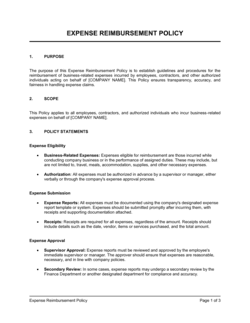
An expense reimbursement policy covers the process for claiming and approving all business costs, including mileage for personal vehicle use. A transport policy governs the safety, legal compliance, and operational standards of all work-related driving β€” reimbursement rates and claim processes are a subset of that broader framework, not a substitute for it.

vs Incident Report Form

An incident report form is the tool a driver or manager completes after a vehicle accident or near-miss. A transport policy is the governing document that defines when an incident must be reported, to whom, and within what timeframe. The policy drives the process; the form captures the data. Both are needed for an effective accident management system.

Industry-specific considerations

Logistics and distribution

Route optimization requirements, load security standards, HGV tachograph compliance, and driver hours regulations specific to commercial transport.

Construction and field services

Mixed fleet of passenger vehicles and specialist plant, tool and material transport rules, and site-access vehicle requirements for contractor compliance.

Healthcare and community services

Mobile care workers using grey-fleet vehicles, patient transport obligations, lone-worker journey check-in requirements, and clinical waste transport restrictions.

Retail and e-commerce

Last-mile delivery fleet management, proof-of-delivery documentation, multi-drop route scheduling, and courier contractor compliance standards.

Template vs pro β€” what fits your needs?

PathBest forCostTime
Use the templateFleet operators and field-service businesses that need a documented transport policy quickly without specialist consultantsFree2–3 hours to complete and distribute
Template + professional reviewOrganizations subject to transport regulatory audits, large HGV fleets, or businesses with cross-border operations$300–$800 for a fleet safety consultant or employment lawyer review3–5 business days
Custom draftedRegulated carriers, logistics companies operating under specific transport licenses, or businesses requiring ISO 39001 road safety management alignment$1,500–$5,000+ for a specialist transport compliance consultant2–4 weeks

Glossary

Fleet
The total set of vehicles owned, leased, or regularly operated by an organization for business purposes.
Driver Eligibility
The minimum criteria β€” valid license class, driving record, age, and training β€” an employee must meet before operating a company vehicle.
Duty of Care
The legal and ethical obligation an employer has to take reasonable steps to protect employees and third parties from harm during work-related transport.
Pre-Trip Inspection
A documented check of a vehicle's condition β€” tyres, lights, fluids, brakes, and load security β€” completed by the driver before each journey.
Total Cost of Ownership (TCO)
The full lifetime cost of a vehicle including purchase price, fuel, insurance, maintenance, and disposal, used to compare fleet options objectively.
Fuel Card
A payment card issued to drivers for purchasing fuel that automatically records volume, cost, and location data for fleet management reporting.
Load Security
The methods and equipment β€” straps, dunnage, cages β€” used to prevent cargo from shifting, falling, or causing injury during transit.
Incident Report
A formal written record of a vehicle accident, near-miss, or transport-related injury, used for insurance claims, corrective action, and regulatory compliance.
Telematics
GPS and onboard diagnostics technology fitted to vehicles to track location, speed, idling time, and driving behavior in real time.
Grey Fleet
Privately owned vehicles used by employees for business travel, which still fall under the employer's duty of care even though the company does not own them.

Part of your Business Operating System

This document is one of 3,000+ business & legal templates included in Business in a Box.

  • Fill-in-the-blanks β€” ready in minutes
  • 100% customizable Word document
  • Compatible with all office suites
  • Export to PDF and share electronically

Create your document in 3 simple steps.

From template to signed document β€” all inside one Business Operating System.
1
Download or open template

Access over 3,000+ business and legal templates for any business task, project or initiative.

2
Edit and fill in the blanks with AI

Customize your ready-made business document template and save it in the cloud.

3
Save, Share, Send, Sign

Share your files and folders with your team. Create a space of seamless collaboration.

Save time, save money, and create top-quality documents.

β˜…β˜…β˜…β˜…β˜…

"Fantastic value! I'm not sure how I'd do without it. It's worth its weight in gold and paid back for itself many times."

Managing Director Β· Mall Farm
Robert Whalley
Managing Director, Mall Farm Proprietary Limited
β˜…β˜…β˜…β˜…β˜…

"I have been using Business in a Box for years. It has been the most useful source of templates I have encountered. I recommend it to anyone."

Business Owner Β· 4+ years
Dr Michael John Freestone
Business Owner
β˜…β˜…β˜…β˜…β˜…

"It has been a life saver so many times I have lost count. Business in a Box has saved me so much time and as you know, time is money."

Owner Β· Upstate Web
David G. Moore Jr.
Owner, Upstate Web

Run your business with a system β€” not scattered tools

Stop downloading documents. Start operating with clarity. Business in a Box gives you the Business Operating System used by over 250,000 companies worldwide to structure, run, and grow their business.

Free Forever PlanΒ Β·Β No credit card required