Company Driver Policy Template

Free Word download β€’ Edit online β€’ Save & share with Drive β€’ Export to PDF

4 pagesβ€’20–30 min to fillβ€’Difficulty: Standard
Learn more ↓
FreeCompany Driver Policy Template

At a glance

What it is
A Company Driver Policy is an internal operational document that sets the rules, eligibility requirements, and responsibilities governing employees who drive company-owned, leased, or rented vehicles for business purposes. This free Word download gives you a ready-to-edit template covering licensing, vehicle care, fuel use, incident reporting, and prohibited behaviors β€” export as PDF and distribute to your fleet or driving staff in minutes.
When you need it
Use it before assigning any employee to drive a company vehicle, when expanding a fleet, or when formalizing ad hoc driving arrangements that have grown without documented rules. Any organization that reimburses personal-vehicle mileage or provides take-home vehicles should have this policy on file.
What's inside
Eligibility and license verification requirements, authorized-use definitions, driver obligations for daily inspections and fuel management, accident and incident reporting procedures, prohibited conduct such as distracted driving and personal use limits, and consequences for policy violations.

What is a Company Driver Policy?

A Company Driver Policy is an internal operational document that defines who is authorized to drive company-owned, leased, or rented vehicles, the rules those drivers must follow, and the consequences for violations. It covers driver eligibility criteria, license verification schedules, authorized and prohibited uses, vehicle inspection requirements, fuel and expense procedures, accident reporting steps, and the disciplinary process for non-compliance. By putting these rules in writing and collecting a signed acknowledgment from each driver, an organization establishes a documented standard of care that protects it from negligent-entrustment claims, insurance disputes, and liability arising from employee driving behavior.

Why You Need This Document

Without a written driver policy, your organization has no enforceable standard against which to measure driver conduct or take disciplinary action after a vehicle incident. If an employee causes an accident while driving a company vehicle and no policy governed their authorization or behavior, the company's exposure under vicarious liability and negligent-entrustment theories is significantly higher than it would be with a documented, signed policy in place. Fleet insurers regularly require evidence of a formal driver policy as a coverage condition β€” and in a claim investigation, the absence of one signals a lack of due diligence. A well-structured policy also reduces accidents before they happen by setting clear expectations around distracted driving, inspection requirements, and incident reporting. This template gives you a complete, customizable starting point that takes under two hours to adapt and distribute β€” far less time than a single insurance claim or employment dispute will cost you.

Which variant fits your situation?

If your situation is…Use this template
Managing a large fleet of delivery or service vehiclesFleet Management Policy
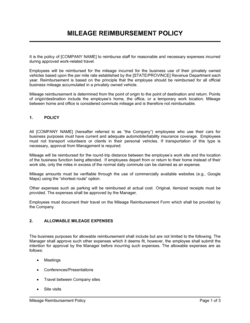
Reimbursing employees who use personal vehicles for businessMileage Reimbursement Policy
Providing take-home vehicles to executives or senior staffCompany Vehicle Assignment Agreement
Governing the use of rental vehicles during business travelBusiness Travel Policy
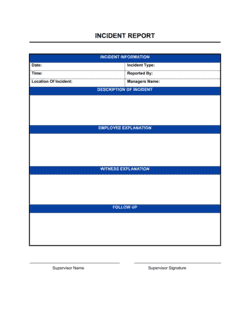
Documenting a post-accident investigation and corrective actionIncident Report
Setting rules for a specific driver safety training programSafety Training Policy
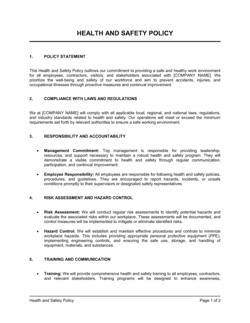
Covering broader workplace safety obligations including vehiclesHealth and Safety Policy

Common mistakes to avoid

❌ One-time MVR check with no annual re-verification

Why it matters: A driver's record can deteriorate after hiring β€” DUI convictions, license suspensions, or accumulating violations create negligent-entrustment liability that the company remains unaware of.

Fix: Schedule automatic annual MVR pulls for all authorized drivers and revoke driving privileges immediately if a record falls outside the policy's eligibility thresholds.

❌ Vague personal-use language

Why it matters: Phrases like 'minimal personal use is acceptable' are unenforceable and expose the company to unlimited personal-use mileage, higher insurance premiums, and uncollected IRS imputed income.

Fix: Define personal use explicitly β€” for example, 'commuting to and from home is permitted; any other personal use requires prior written approval' β€” and state who is responsible for tracking it.

❌ No signed driver acknowledgment

Why it matters: Without evidence that an employee received and understood the policy, discipline for violations can be challenged as unfair, and the policy provides no protection in a negligence claim.

Fix: Collect a signed acknowledgment from every authorized driver before issuing vehicle access, and re-collect signatures each time the policy is materially updated.

❌ Accident reporting procedure that lists only an office phone number

Why it matters: Accidents frequently occur outside business hours. A driver who cannot reach anyone defaults to no reporting, which delays the insurance notification and may void time-sensitive claim requirements.

Fix: Provide a 24-hour emergency contact β€” manager's mobile, a fleet management hotline, or an insurer's claims line β€” in the accident-reporting section.

❌ Discipline scale that is not linked to the HR process

Why it matters: A stand-alone disciplinary ladder in the driver policy that differs from the employee handbook creates inconsistency and exposes the company to wrongful-termination claims.

Fix: Explicitly cross-reference the company's standard progressive discipline policy and ensure a consistent review process applies to driver-policy violations.

❌ Publishing the policy without a version-control date

Why it matters: When an incident occurs, the policy in force at the time of the event is what matters legally. An undated policy makes it impossible to prove which version applied.

Fix: Add a version number and effective date to the header or footer of every page, and retain archived copies of all previous versions.

The 10 key sections, explained

Purpose and scope

Driver eligibility and license verification

Authorized use and personal use limits

Vehicle inspection and maintenance

Fuel, tolls, and expenses

Safe driving rules and prohibited conduct

Accident and incident reporting

Traffic violations and fines

Consequences for policy violations

Employee acknowledgment

How to fill it out

  1. 1

    Customize the scope and effective date

    Replace [COMPANY NAME] with your registered entity name and set the effective date. Decide whether the policy covers owned vehicles only, or also leased and rented vehicles, and update the scope statement accordingly.

    πŸ’‘ Explicitly listing vehicle types (sedans, vans, trucks, forklifts) in the scope section prevents ambiguity when an incident involves an unusual vehicle.

  2. 2

    Set the MVR eligibility thresholds

    Choose the maximum number of moving violations and the look-back period (typically 36 months) that disqualify a driver. Align these thresholds with your insurer's requirements β€” many insurers set their own MVR standards as a coverage condition.

    πŸ’‘ Request your fleet insurer's written underwriting guidelines before setting thresholds. Your policy cannot be more permissive than the insurer's requirements without risking a coverage denial.

  3. 3

    Define personal use limits clearly

    Decide whether employees may use company vehicles for commuting, personal errands, or family members. If any personal use is allowed, state the specific boundaries and document any associated IRS imputed-income reporting obligations.

    πŸ’‘ For take-home vehicles, consult your payroll team about IRS Publication 15-B rules on fringe benefit valuation before finalizing this section.

  4. 4

    Attach the vehicle inspection checklist

    Complete the pre-trip inspection checklist in Appendix A with the specific items relevant to your vehicle types β€” fluid levels, tire pressure, lights, mirrors, seatbelts. A checklist drivers can sign and date is far more enforceable than a general inspection requirement.

    πŸ’‘ Tailor the checklist to vehicle type. A cargo van checklist should include cargo-door latches and load-securing points that do not apply to a sedan.

  5. 5

    Fill in reporting contacts and timelines

    Replace [FLEET MANAGER / SUPERVISOR] with the actual name and contact details of the person drivers must notify after an incident. Confirm the reporting timeline (2 hours for notification, 24 hours for written report) is achievable given your operation's shift structure.

    πŸ’‘ Include an after-hours emergency contact number. Accidents happen outside business hours; a policy that only lists an office phone number leaves drivers without guidance when they need it most.

  6. 6

    Set the violation and discipline thresholds

    Define the number of moving violations in a rolling 12-month window that triggers a review or suspension of driving privileges. Cross-reference these thresholds with your HR disciplinary policy to ensure consistency.

    πŸ’‘ Document the review process β€” who reviews, what evidence is considered, and the timeline for a decision β€” so the discipline cannot be challenged as arbitrary.

  7. 7

    Collect signed acknowledgments before issuing vehicle keys

    Print or email the acknowledgment page to each authorized driver and retain the signed copy in their HR file before they operate any company vehicle. For existing drivers, collect signatures when the policy is first issued or updated.

    πŸ’‘ Use an e-signature tool to collect acknowledgments from remote or field-based drivers without requiring a return visit to the office.

  8. 8

    Schedule an annual policy review

    Set a calendar reminder to review the policy every 12 months β€” or sooner after any serious accident, change in fleet composition, or update to traffic law in your operating jurisdiction.

    πŸ’‘ Align the annual review with your fleet insurance renewal date so you can update MVR thresholds and coverage requirements at the same time.

Frequently asked questions

What is a company driver policy?

A company driver policy is an internal document that defines who is authorized to drive company vehicles, the rules they must follow, and the consequences for violations. It covers license eligibility, authorized use, vehicle inspection, accident reporting, prohibited behaviors such as handheld phone use or driving under the influence, and the disciplinary process. It protects the organization from liability and gives employees clear expectations before they get behind the wheel.

Who needs a company driver policy?

Any organization that owns, leases, or rents vehicles for employee use needs a written driver policy. This includes companies with delivery fleets, field service technicians, sales representatives who drive to client sites, construction crews using company trucks, and nonprofits with organization-owned vans. Even a single company vehicle warrants a policy β€” without one, the employer has no documented standard of care if an accident occurs.

Does a company driver policy need to be signed by employees?

Yes. A signed acknowledgment is the single most important element of the policy from an enforcement standpoint. It proves the employee received and understood the rules, which is essential for consistent discipline and for defending the company in a negligence or wrongful-termination claim. Collect signatures before issuing vehicle access and re-collect them whenever the policy is materially updated.

How often should the company driver policy be updated?

Review the policy at least annually and after any significant event β€” a serious accident, a change in fleet composition, new distracted-driving legislation in your operating area, or a change in insurance requirements. Align the annual review with your fleet insurance renewal so MVR thresholds and coverage requirements can be updated simultaneously. Archive each prior version with its effective date.

Can employees use company vehicles for personal trips?

That depends on what your policy permits. Some organizations allow commuting or limited personal errands; others restrict use entirely to business purposes. Any personal use must be explicitly defined in the policy. Unlimited or undefined personal use increases insurance premiums and creates IRS imputed-income tax obligations for both the employee and the employer. Consult your fleet insurer and payroll team before permitting personal use.

What should be included in the accident reporting section?

The accident reporting section should specify the immediate steps a driver must take β€” securing the scene, calling emergency services if needed, and notifying a named company contact within a set timeframe (typically 2 hours). It should include a 24-hour emergency contact number, a deadline for submitting a written accident report (typically 24 hours), and instructions to cooperate with law enforcement and the insurer. A standard accident report form attached as an appendix ensures drivers collect consistent information at the scene.

What is negligent entrustment and how does a driver policy reduce it?

Negligent entrustment is a legal theory under which a company is liable for damages caused by a driver it should not have permitted to operate a vehicle β€” for example, a driver with a suspended license or a history of serious violations. A written driver policy reduces this risk by documenting eligibility thresholds, annual MVR checks, and a formal authorization process. If the company follows its own policy and an accident still occurs, it has evidence of due diligence.

Should the driver policy cover employees using personal vehicles for work?

A separate mileage reimbursement policy typically covers personal-vehicle business use, but your company driver policy should at minimum reference that scenario and clarify that personal-vehicle use for business is governed elsewhere. For employees who regularly use personal vehicles on company business, consider requiring proof of adequate personal auto insurance and stating the minimum coverage limits the company requires.

How is a company driver policy different from a fleet management policy?

A company driver policy focuses on the people β€” who can drive, what behaviors are required, and what happens when rules are broken. A fleet management policy focuses on the vehicles β€” acquisition, maintenance schedules, fuel card management, GPS tracking, and vehicle retirement criteria. Larger organizations maintain both documents; smaller ones often combine them. If you have more than five vehicles or more than ten drivers, keeping them separate makes each document easier to update and enforce.

How this compares to alternatives

vs Mileage Reimbursement Policy

A mileage reimbursement policy governs employees who drive their own vehicles for business and need to be compensated at a per-mile rate. A company driver policy governs employees operating organization-owned or leased vehicles. Both documents may be needed if staff use a mix of personal and company vehicles, but they address different liability and tax obligations.

vs Health and Safety Policy

A health and safety policy sets the broad framework for workplace hazard identification and employee protection across all operations. A company driver policy is a focused sub-policy that applies those safety principles specifically to vehicle operation. In most organizations, the driver policy is issued under the authority of the broader health and safety framework.

vs Incident Report

An incident report is a form completed after a specific event β€” accident, near-miss, or property damage β€” to document what happened, who was involved, and what corrective action was taken. A company driver policy is the standing set of rules that governs driver behavior and references the incident report as a required output when an accident occurs. The two documents work together.

vs Employee Handbook

An employee handbook is a comprehensive document covering all workplace policies β€” conduct, benefits, leave, and general expectations. A company driver policy is a standalone operational document that may be referenced or reproduced in the handbook but provides the detailed rules, checklists, and disciplinary scales that a handbook's general language cannot accommodate. Organizations with significant fleet operations typically maintain both.

Industry-specific considerations

Construction and trades

Crew trucks, equipment haulers, and site vehicles operated by multiple drivers across rotating shifts require strict pre-trip inspection logs and clear rules on authorized drivers per vehicle.

Logistics and delivery

High daily mileage and time pressure make distracted-driving rules and telematics integration especially critical; incident reporting timelines must account for drivers far from the home office.

Field services and utilities

Technicians operating specialized service vehicles need vehicle-type-specific inspection checklists and clear rules on transporting tools, equipment, and hazardous materials.

Nonprofit and social services

Grant agreements and insurance bonds often mandate a written driver policy; volunteer driver authorization and minimum personal auto insurance requirements are common additions.

Template vs pro β€” what fits your needs?

PathBest forCostTime
Use the templateSmall and mid-sized businesses formalizing vehicle-use rules for a fleet of up to 20 vehiclesFree1–2 hours to customize and distribute
Template + professional reviewCompanies with take-home vehicles, cross-state operations, or MVR requirements tied to insurance coverage conditions$150–$400 for an HR advisor or risk management review1–3 days
Custom draftedLarge fleets in regulated industries (utilities, hazmat transport, healthcare), or organizations with union agreements that govern vehicle use$500–$2,000 for a risk management consultant or employment lawyer1–2 weeks

Glossary

Authorized Driver
An employee or contractor who has been formally approved by the company to operate a company vehicle after passing license verification.
Motor Vehicle Record (MVR)
An official report from a state or provincial licensing authority showing a driver's license status, endorsements, and history of violations or suspensions.
Personal Use
Any vehicle trip that is not directly connected to a business purpose, including commuting, personal errands, or use by a family member.
Negligent Entrustment
Legal liability that arises when a company allows an unqualified or high-risk driver to operate a company vehicle and that driver causes an accident.
Fleet Policy
The broader set of rules governing acquisition, maintenance, fuel management, and retirement of an organization's vehicle fleet β€” of which a driver policy is one component.
Distracted Driving
Operating a vehicle while engaged in a secondary activity β€” such as using a handheld phone, eating, or adjusting navigation β€” that diverts attention from the road.
Preventable Accident
A collision or near-miss in which the driver had the last clear opportunity to avoid the incident through reasonable action but failed to do so.
Vicarious Liability
Legal principle under which an employer can be held responsible for the negligent acts of an employee performed in the course of employment, including driving.
Take-Home Vehicle
A company vehicle assigned to a specific employee for commuting as well as business use, creating both personal-use tax implications and additional liability considerations.
Telematics
GPS and onboard diagnostic technology installed in vehicles to monitor location, speed, braking behavior, idling time, and mileage for fleet management purposes.

Part of your Business Operating System

This document is one of 3,000+ business & legal templates included in Business in a Box.

  • Fill-in-the-blanks β€” ready in minutes
  • 100% customizable Word document
  • Compatible with all office suites
  • Export to PDF and share electronically

Create your document in 3 simple steps.

From template to signed document β€” all inside one Business Operating System.
1
Download or open template

Access over 3,000+ business and legal templates for any business task, project or initiative.

2
Edit and fill in the blanks with AI

Customize your ready-made business document template and save it in the cloud.

3
Save, Share, Send, Sign

Share your files and folders with your team. Create a space of seamless collaboration.

Save time, save money, and create top-quality documents.

β˜…β˜…β˜…β˜…β˜…

"Fantastic value! I'm not sure how I'd do without it. It's worth its weight in gold and paid back for itself many times."

Managing Director Β· Mall Farm
Robert Whalley
Managing Director, Mall Farm Proprietary Limited
β˜…β˜…β˜…β˜…β˜…

"I have been using Business in a Box for years. It has been the most useful source of templates I have encountered. I recommend it to anyone."

Business Owner Β· 4+ years
Dr Michael John Freestone
Business Owner
β˜…β˜…β˜…β˜…β˜…

"It has been a life saver so many times I have lost count. Business in a Box has saved me so much time and as you know, time is money."

Owner Β· Upstate Web
David G. Moore Jr.
Owner, Upstate Web

Run your business with a system β€” not scattered tools

Stop downloading documents. Start operating with clarity. Business in a Box gives you the Business Operating System used by over 250,000 companies worldwide to structure, run, and grow their business.

Free Forever PlanΒ Β·Β No credit card required