1
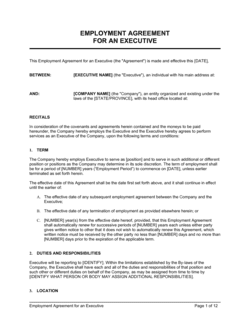
Identify both parties and confirm the employment relationship
Enter the employer's full registered legal name, the employee's legal name, their job title, department, and the original employment start date. Confirm which prior agreements (employment contract, NDA, IP assignment) remain operative.
💡 Cross-reference the employer's corporate registry name — using a trade name instead of the registered entity creates an enforceability gap if the agreement is ever litigated.
2
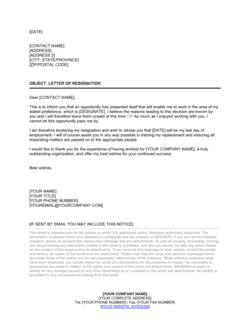
Set the resignation effective date and handover milestones
State the last day of employment and list the specific handover tasks — knowledge transfer, client introductions, documentation — the employee must complete before that date. Tie the release of any severance or consulting fees to completion.
💡 Build at least 10 business days between the signing date and the effective date so both parties have time to raise concerns before obligations are triggered.
3
Complete Schedule A — prior inventions
List every invention, code base, creative work, or IP the employee developed independently before joining the employer. Be specific: include project names, approximate dates, and a one-line description of each item.
💡 A blank Schedule A can later be interpreted as the employee having no prior inventions — include a statement that the list is exhaustive and dated at signing.
4
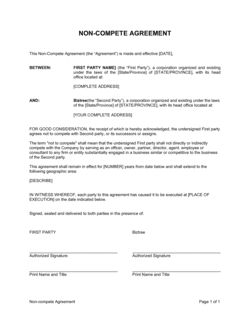
Define the non-compete scope and geography
Set the geographic scope to the markets the employee actually worked in, and the duration to a period proportionate to their seniority — 6 months for junior roles, up to 18 months for senior executives or sales leaders with direct client relationships.
💡 Define 'Competing Business' by industry code or specific activity description, not just company names — competitors change, but market categories remain stable.
5
Draft the non-solicitation clause with customer and employee sub-clauses
Limit the client non-solicitation to customers the employee had material contact with in the 24 months before exit. Set the employee non-solicitation to apply to all direct reports and peer colleagues, not the entire company.
💡 In Canada and the UK, non-solicitation terms above 18 months for non-senior roles are frequently struck down as disproportionate. Start at 12 months and increase only for demonstrably senior positions.
6
Complete Schedule B if a consulting arrangement is included
Detail the services, expected hours per month, deliverables, compensation rate, payment schedule, and termination notice period. State explicitly that the individual is an independent contractor during the consulting period.
💡 Include an IP assignment clause within the consulting schedule — any work product created during the consulting period should have clearly assigned ownership, separate from the employment-era IP clause.
7
Review the mutual release for unwaivable claims
Confirm with employment counsel that the release language does not attempt to waive claims that cannot legally be released in the governing jurisdiction — including statutory discrimination rights, pension entitlements, and workers' compensation.
💡 In the US, employees over 40 must receive 21 days to consider a release and 7 days to revoke under the Older Workers Benefit Protection Act — build this timeline into your signing process.
8
Execute before the last day of employment
Both parties must sign the agreement, and any consulting schedule, before or on the employee's final day. Post-exit signatures may require fresh consideration in common-law jurisdictions to be enforceable.
💡 Use a timestamped eSignature platform to log the exact time of execution and store the fully executed copy immediately — disputes about signature sequence are common in contested departures.