Letter of Resignation Template

Free Word download β€’ Edit online β€’ Save & share with Drive β€’ Export to PDF

1 pageβ€’15–20 min to fillβ€’Difficulty: Standard
Learn more ↓
FreeLetter of Resignation Template

At a glance

What it is
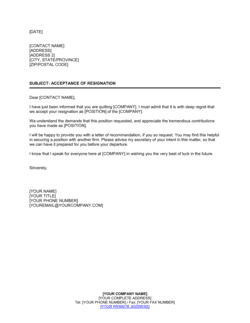
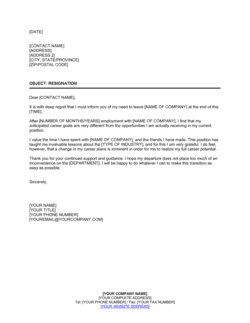
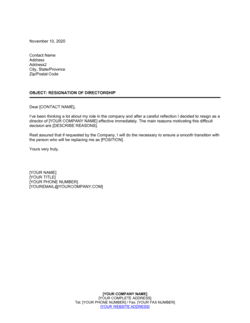
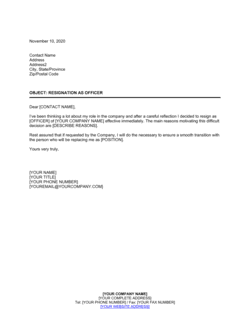
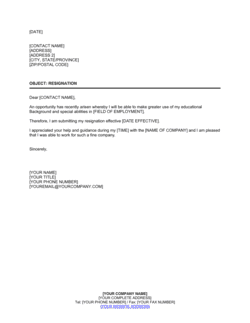
A Letter of Resignation is a formal written notice an employee submits to their employer to announce their intention to leave a position. This free Word download gives you a professionally worded, single-page template you can edit online and export as PDF or send by email in minutes.
When you need it
Use it whenever you are leaving a job β€” whether voluntarily, to accept a new role, or for personal reasons β€” and want to exit professionally while satisfying any contractual or policy notice requirements.
What's inside
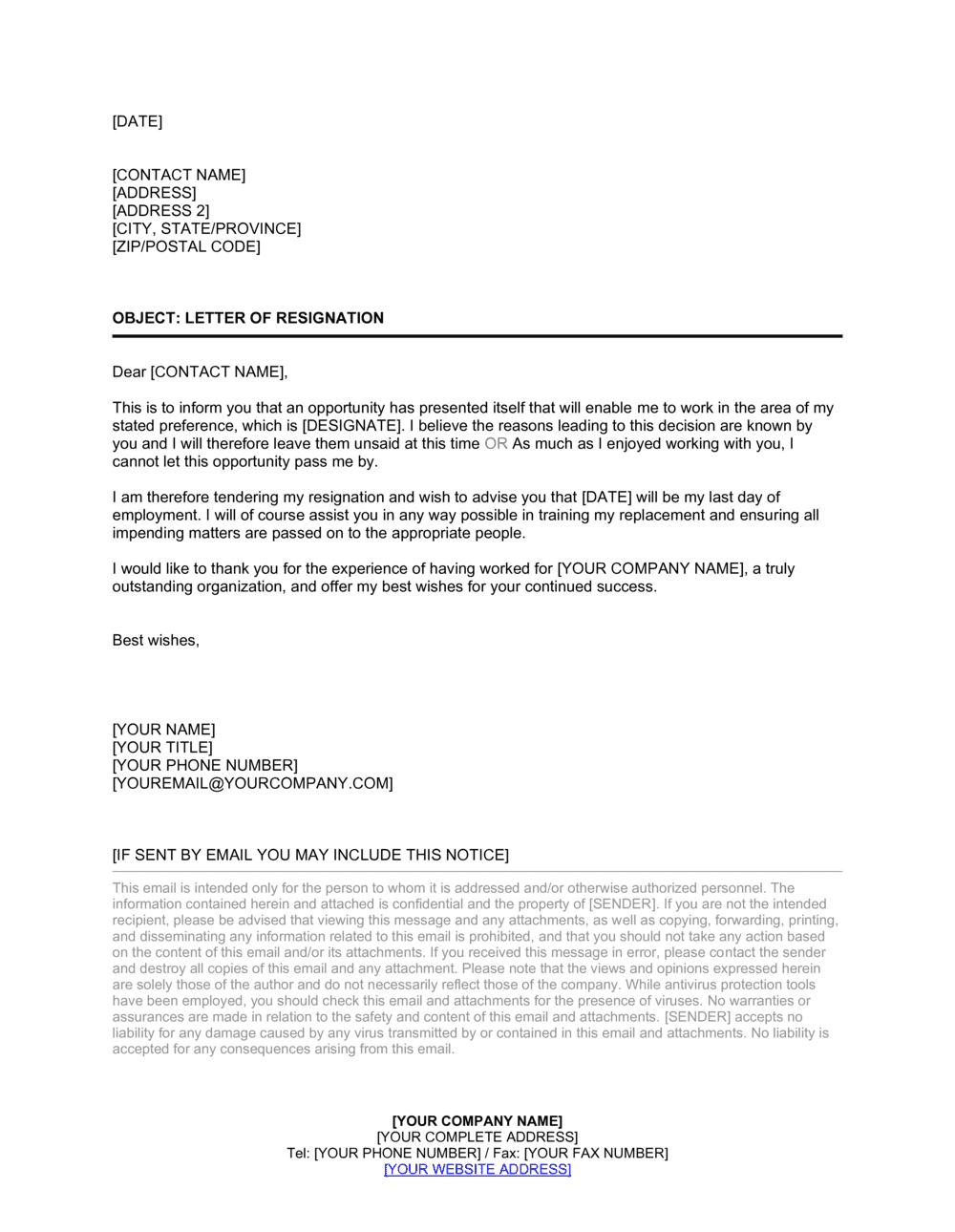
A formal opening statement of resignation, your stated last working day, a brief expression of gratitude, an offer to assist with handover, and a professional closing β€” all formatted as a standard business letter.

What is a Letter of Resignation?

A Letter of Resignation is a formal written notice an employee submits to their employer to announce their intention to leave a position. It records the date notice was given, the employee's last working day, and a professional acknowledgment of the employment relationship β€” creating a clear, timestamped record that satisfies contractual notice requirements and initiates the offboarding process. Unlike a verbal conversation, a written letter is the authoritative document HR and payroll departments use to process a departure, calculate final pay, and begin the replacement search.

Why You Need This Document

Resigning without a written letter creates practical and professional problems that outlast the moment. Without a dated, written record, disputes can arise over when notice was formally given β€” affecting your final paycheck, accrued vacation payout, and eligibility for benefits that run to the last day of employment. A professional letter also protects your reputation: it signals that you are taking the transition seriously and gives your manager something concrete to point to when asked about your departure. Employers and future references remember how people leave as much as how they performed β€” a one-page, professionally worded resignation letter takes ten minutes to complete and can influence the quality of every reference you receive for years afterward.

Which variant fits your situation?

If your situation is…Use this template
Leaving with the standard two weeks' noticeTwo Weeks Notice Letter
Leaving immediately without serving a notice periodImmediate Resignation Letter
Resigning from a board or volunteer roleBoard Resignation Letter
Resigning due to a hostile or unsafe work environmentConstructive Dismissal Resignation Letter
Retiring from a long-tenured positionRetirement Letter
Accepting a counteroffer and withdrawing a resignationResignation Withdrawal Letter
Resigning from a senior executive or C-suite positionExecutive Resignation Letter

Common mistakes to avoid

❌ Giving inadequate notice

Why it matters: Falling short of your contractual notice period can constitute a breach of contract, potentially forfeiting accrued vacation pay, bonus eligibility, or employer pension contributions depending on your jurisdiction.

Fix: Calculate your last working day from the letter date β€” not from the date you plan to tell your manager verbally β€” and confirm it meets the contract requirement.
❌ Including negative comments about colleagues or management

Why it matters: Criticism in a resignation letter becomes a permanent part of your personnel file and can reach prospective employers through background checks or informal reference calls.

Fix: If you have genuine grievances, address them in a separate exit interview or HR conversation β€” not in the resignation letter itself.

❌ Not stating a specific last working day

Why it matters: Phrases like 'in approximately two weeks' or 'at the end of the month' create scheduling ambiguity and complicate payroll, benefits termination, and offboarding logistics.

Fix: Always write the exact calendar date β€” day, month, and year β€” so there is no room for misinterpretation.

❌ Sending the letter without telling your manager first

Why it matters: A manager who learns about your resignation by reading an email β€” rather than in a conversation β€” is more likely to give a lukewarm reference and less likely to facilitate a smooth handover.

Fix: Have the conversation with your manager before or on the same day you submit the written letter, even if only by phone or video call.

The 8 key clauses, explained

Date and recipient details

In plain language: The date the letter is written, the manager's name and title, and the company's address β€” formatted as a standard business letter header.

Sample language
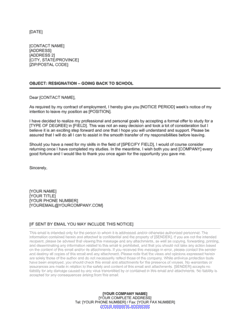
[DATE] [MANAGER FULL NAME] [MANAGER TITLE] [COMPANY NAME] [COMPANY ADDRESS]

Common mistake: Using just the manager's first name or omitting the date entirely β€” both make the letter look informal and create ambiguity about when notice was formally given.

Formal opening and statement of resignation

In plain language: The first paragraph clearly states that you are resigning from your position and identifies your job title.

Sample language
Dear [MANAGER FULL NAME], I am writing to formally notify you of my resignation from my position as [JOB TITLE] at [COMPANY NAME], effective [LAST WORKING DAY].

Common mistake: Burying the resignation intent halfway through the letter. The opening sentence must state the resignation unambiguously so there is no confusion about the letter's purpose.

Last working day and notice period

In plain language: States the specific date of your last day and, by implication, confirms that you are serving the required notice period.

Sample language
My last day of work will be [DATE], providing [X weeks'] notice in accordance with my employment agreement.

Common mistake: Not calculating the notice period correctly from the letter date. A notice period that falls short of your contractual requirement can expose you to breach-of-contract claims or forfeiture of accrued benefits.

Brief reason for leaving (optional)

In plain language: A short, neutral sentence explaining why you are leaving β€” career development, personal reasons, or a new opportunity β€” if you choose to share it.

Sample language
I have accepted a position that aligns more closely with my long-term career goals.

Common mistake: Including detailed criticism of management, colleagues, or company culture. Negative remarks in a resignation letter become a permanent record and can damage references.

Expression of gratitude

In plain language: Acknowledges positive experiences, professional growth, or specific opportunities the employer provided during your tenure.

Sample language
I am grateful for the opportunities [COMPANY NAME] has provided me over the past [X years / months], particularly [SPECIFIC EXPERIENCE OR PROJECT].

Common mistake: Skipping this paragraph entirely to keep the letter brief. A single sentence of genuine thanks costs nothing and substantially improves the tone of your departure.

Offer to assist with handover

In plain language: Signals your willingness to document your work, train a replacement, and support the team through the transition period.

Sample language
During my remaining time, I am committed to completing outstanding work and assisting with the transition as smoothly as possible. Please let me know how I can best support the handover process.

Common mistake: Making no mention of the transition. Leaving this out signals indifference to the team's continuity and can negatively influence the reference you receive.

Professional closing

In plain language: A brief, courteous closing line that reaffirms good will toward the employer and expresses hope for a continued professional relationship.

Sample language
I wish [COMPANY NAME] and the team continued success. I hope to stay in touch and look forward to maintaining our professional relationship.

Common mistake: Ending on a flat 'regards' with no closing sentiment after a difficult tenure. Even a neutral, professional closing line protects your reputation far better than a curt sign-off.

Signature block

In plain language: Your full name, typed below the complimentary close, with your signature above it if sending a printed copy.

Sample language
Sincerely, [YOUR SIGNATURE] [YOUR FULL NAME] [YOUR CONTACT EMAIL OR PHONE β€” optional]

Common mistake: Using only a first name or a casual sign-off like 'Thanks' in a formal resignation letter. The full name in the signature block gives the document a complete, professional record.

How to fill it out

  1. 1

    Confirm your notice period before writing

    Check your employment contract or employee handbook for the required notice period. Calculate your last working day from today's date and confirm it meets or exceeds that requirement.

    πŸ’‘ If your contract requires four weeks' notice and you want to leave in two, negotiate separately β€” do not simply write a shorter notice period in the letter without agreement.

  2. 2

    Address the letter to your direct manager

    Use your manager's full name and title, not just a first name. If HR also requires a copy, add them as a CC after the signature block.

    πŸ’‘ Sending a copy to HR at the same time as your manager avoids the awkward situation where HR hears about your resignation informally first.

  3. 3

    State your resignation and last day in the opening paragraph

    Write your job title, the company name, and the specific last working day in the first paragraph. Do not bury either piece of information further down the letter.

    πŸ’‘ Use the exact job title as it appears on your employment contract β€” it eliminates any ambiguity about which role you are resigning from.

  4. 4

    Keep the reason for leaving neutral and brief

    If you choose to give a reason, limit it to one sentence. 'A new opportunity aligned with my career goals' is sufficient. You are not obligated to explain further.

    πŸ’‘ Anything you write about your reason for leaving can be read by HR, future managers, and anyone who reviews your personnel file β€” keep it evergreen.

  5. 5

    Add a genuine line of thanks

    Reference one specific project, skill, or experience from your time at the company. Generic thanks feel hollow; a single specific detail demonstrates sincerity.

    πŸ’‘ Think of this as the opening sentence of your reference conversation β€” it sets the tone for what your manager will say about you.

  6. 6

    Offer concrete handover support

    State that you will document your current projects and assist with the transition during your notice period. If you already have a handover plan in mind, reference it briefly.

    πŸ’‘ Sending a separate handover document alongside the resignation letter signals professionalism and makes the conversation with your manager much easier.

  7. 7

    Export as PDF or send by email

    Save the completed letter as a PDF to preserve formatting, then send it to your manager and HR. Keep a copy for your own records with the send timestamp.

    πŸ’‘ If you deliver the resignation verbally first β€” which is best practice β€” send the written letter the same day to create a clear paper record of the date and terms.

Frequently asked questions

What should a letter of resignation include?

A resignation letter should include your job title, the company name, your intended last working day, an optional brief reason for leaving, a line of thanks, and an offer to assist with the handover. It should be addressed to your direct manager, dated, and signed. Keeping it concise β€” one page or fewer β€” is standard professional practice.

How much notice do I need to give when resigning?

The required notice period is set by your employment contract or company policy β€” typically two weeks in the United States, four weeks in the United Kingdom, and two to four weeks in Canada depending on tenure and province. If no notice period is specified and you are employed at-will in the US, two weeks is the widely accepted professional standard. Always check your contract before writing the letter.

Do I need to give a reason for resigning?

No. You are not legally required to explain why you are leaving in most jurisdictions. A brief, neutral statement β€” such as pursuing a new opportunity β€” is courteous but entirely optional. Avoid detailed explanations in the letter itself; save substantive feedback for an exit interview if you choose to provide it.

Can I resign by email?

Yes. Resigning by email is widely accepted and creates a clear timestamp record. For remote workers or situations where an in-person handover is not practical, email is the standard method. Attach the signed letter as a PDF to preserve formatting. Whenever possible, combine the email with a prior verbal conversation with your manager on the same day.

What is the difference between a letter of resignation and a two weeks notice letter?

They refer to the same document. A two weeks notice letter is a letter of resignation in which the stated notice period is specifically two weeks. The terms are used interchangeably in most contexts. The underlying structure, tone, and required elements are identical.

Should I resign verbally before submitting the letter?

Yes, in almost all cases. Telling your manager in person or by phone before submitting the written letter is professional best practice. It gives your manager the opportunity to respond privately before HR is formally notified, and it sets a more constructive tone for the notice period that follows. Submit the written letter the same day as the conversation.

Can my employer refuse to accept my resignation?

No. In most jurisdictions, an employer cannot legally compel someone to continue working against their will. Once a resignation is submitted, it is generally irrevocable without the employer's consent, though some employers will accept a withdrawal if requested promptly. If you change your mind after resigning, speak to your manager immediately and confirm any agreement to rescind it in writing.

Does a letter of resignation need to be signed?

A handwritten or digital signature is a professional touch and confirms the document is intentional, but in most jurisdictions a resignation letter is valid without a physical signature β€” particularly when sent by email from a verifiable work address. For printed letters delivered in person or by post, always sign above your typed name.

How this compares to alternatives

vs Two Weeks Notice Letter

A two weeks notice letter is a specific type of resignation letter in which the notice period is exactly two weeks. The structure and content are identical. Use the two weeks notice template when your contract or employer policy specifies a two-week notice period; use the standard resignation letter when your notice period is longer or unspecified.

vs Retirement Letter

A retirement letter communicates permanent departure from the workforce rather than a move to a new employer. The tone is typically warmer and more reflective, often including a longer look back at career milestones. Use a retirement letter when you are ending your career entirely; use a resignation letter when you are simply leaving one employer for another opportunity.

vs Employee Dismissal Letter

An employee dismissal letter is issued by the employer to terminate an employee's position. A letter of resignation is issued by the employee to terminate their own employment voluntarily. The two documents represent opposite sides of the same separation event and should never be confused or used interchangeably.

vs Resignation Acceptance Letter

A resignation acceptance letter is the employer's formal written response to a resignation β€” confirming the last working day, any conditions of the notice period, and next steps for offboarding. The resignation letter triggers the process; the acceptance letter closes it. Both should be retained in the employee's personnel file.

Industry-specific considerations

Technology

Handover of code repositories, credentials, and project documentation is critical; offer to complete sprint commitments or document outstanding tickets during the notice period.

Healthcare

Extended notice periods of four to twelve weeks are common to allow patient continuity of care; the letter should reference compliance with any professional registration obligations.

Education

Resignations are most effective at natural academic breaks; the letter should confirm the last teaching day and offer to complete grading and handover lesson plans.

Professional Services

Client relationship handover is the primary concern; the letter should acknowledge the importance of client continuity and confirm cooperation with the transition plan.

Template vs pro β€” what fits your needs?

PathBest forCostTime
Use the templateAny employee resigning from a standard role under normal circumstancesFree10 minutes
Template + professional reviewSenior employees with complex severance, garden leave, or non-compete obligations$150–$400 (employment lawyer review)1–2 days
Custom draftedExecutives negotiating departure terms, equity vesting, or constructive dismissal claims$500–$2,000+3–7 days

Glossary

Notice Period
The span of time between submitting a resignation and the last working day, as required by an employment contract or company policy.
Last Working Day
The specific calendar date on which the employee will complete their final shift and employment formally ends.
Handover
The process of documenting and transferring ongoing tasks, client relationships, and institutional knowledge to a colleague or successor before departure.
Garden Leave
A notice period during which an employee is paid but asked not to attend work, often used to protect sensitive information or client relationships.
Constructive Dismissal
A situation where an employer's conduct is so unreasonable that an employee is effectively forced to resign β€” the resignation may be treated legally as a termination.
At-Will Employment
A US employment arrangement allowing either party to end the relationship at any time for any lawful reason, with no required notice period unless contractually specified.
Severance Agreement
A contract offered by an employer at separation that provides payment or benefits in exchange for the employee's release of claims.
Non-Disparagement Clause
A provision β€” often in a separation agreement β€” prohibiting the departing employee from making negative public statements about the employer.
Reference Letter
A written endorsement from a former employer confirming an employee's tenure, role, and performance for prospective employers.
Effective Date
The date on which the resignation formally takes effect, typically the last working day stated in the letter.

Part of your Business Operating System

This document is one of 3,000+ business & legal templates included in Business in a Box.

  • Fill-in-the-blanks β€” ready in minutes
  • 100% customizable Word document
  • Compatible with all office suites
  • Export to PDF and share electronically

Create your document in 3 simple steps.

From template to signed document β€” all inside one Business Operating System.
1
Download or open template

Access over 3,000+ business and legal templates for any business task, project or initiative.

2
Edit and fill in the blanks with AI

Customize your ready-made business document template and save it in the cloud.

3
Save, Share, Send, Sign

Share your files and folders with your team. Create a space of seamless collaboration.

Save time, save money, and create top-quality documents.

β˜…β˜…β˜…β˜…β˜…

"Fantastic value! I'm not sure how I'd do without it. It's worth its weight in gold and paid back for itself many times."

Managing Director Β· Mall Farm
Robert Whalley
Managing Director, Mall Farm Proprietary Limited
β˜…β˜…β˜…β˜…β˜…

"I have been using Business in a Box for years. It has been the most useful source of templates I have encountered. I recommend it to anyone."

Business Owner Β· 4+ years
Dr Michael John Freestone
Business Owner
β˜…β˜…β˜…β˜…β˜…

"It has been a life saver so many times I have lost count. Business in a Box has saved me so much time and as you know, time is money."

Owner Β· Upstate Web
David G. Moore Jr.
Owner, Upstate Web

Run your business with a system β€” not scattered tools

Stop downloading documents. Start operating with clarity. Business in a Box gives you the Business Operating System used by over 250,000 companies worldwide to structure, run, and grow their business.

Start freeΒ Β·Β No credit card required