- Lease Termination
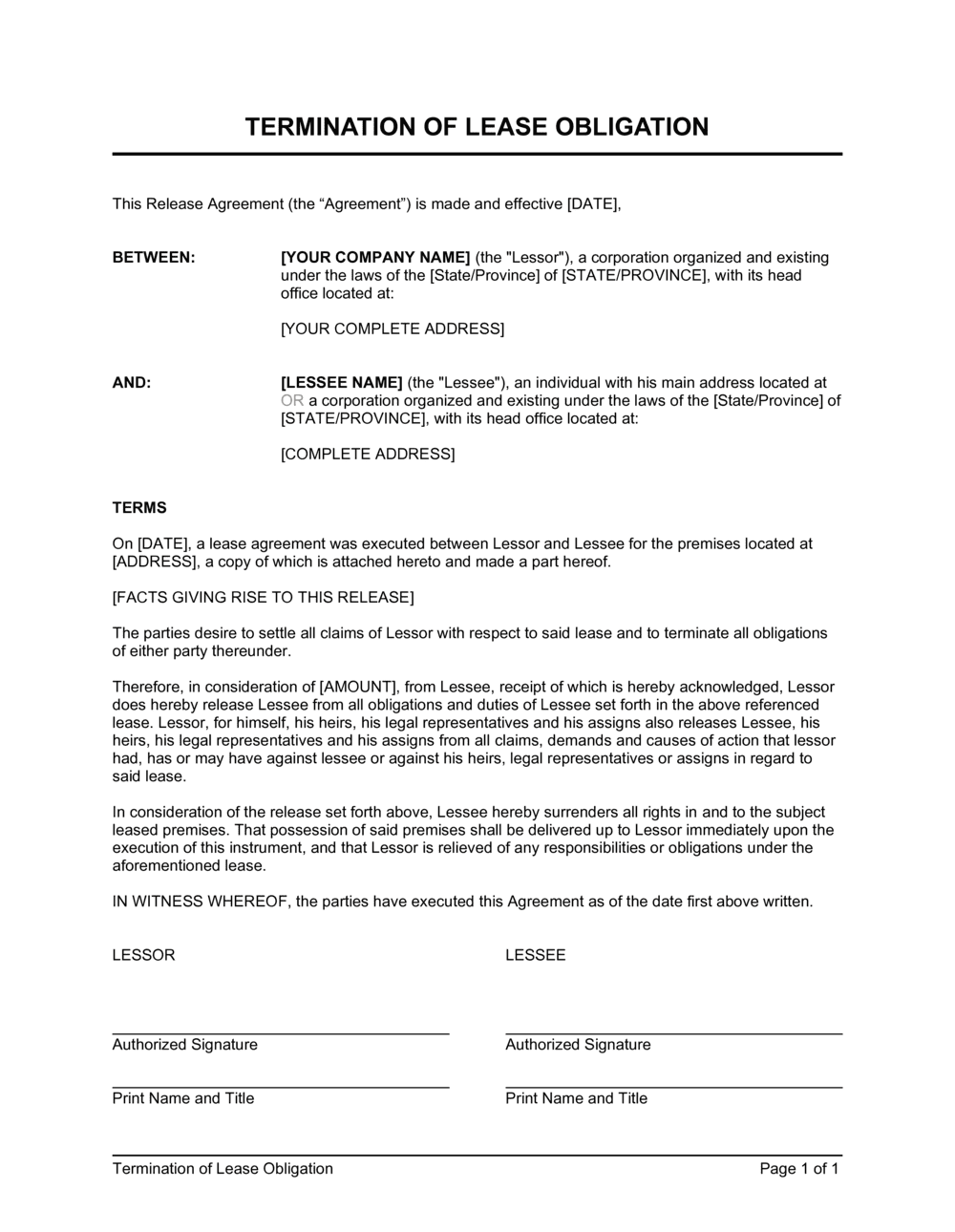
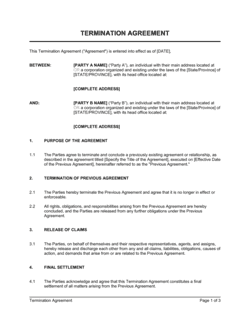
- The formal ending of a lease agreement before or at its scheduled expiry date, releasing both parties from further obligations under the original contract.
- Mutual Release
- A clause in which both the landlord and tenant agree to waive all claims against each other arising from or related to the tenancy.
- Security Deposit
- A sum paid by the tenant at the start of a tenancy, held by the landlord and returned — minus any lawful deductions — upon termination.
- Surrender of Lease
- The voluntary handing back of a leased property by the tenant to the landlord, extinguishing the tenant's remaining rights and obligations.
- Holdover Tenant
- A tenant who remains in a property after the lease term has ended without the landlord's consent, typically subject to higher rent or legal proceedings.
- Dilapidations
- Physical damage or deterioration to a property beyond normal wear and tear, for which the tenant may be liable upon vacating.
- Break Clause
- A contractual provision in a lease allowing either party to terminate the agreement early by giving a specified period of notice.
- Indemnification
- A contractual obligation by one party to compensate the other for specific losses, damages, or liabilities arising from the termination or underlying tenancy.
- Privity of Contract
- The legal relationship between the original parties to a contract; relevant in lease assignments, where the original tenant may retain residual liability unless formally released.
- Termination Date
- The specific calendar date on which the lease and all obligations under it are agreed to end, as stated in the termination agreement.
- Vacancy Condition
- The agreed state in which the tenant must leave the property at handover — typically broom-clean, with all fixtures intact and personal property removed.