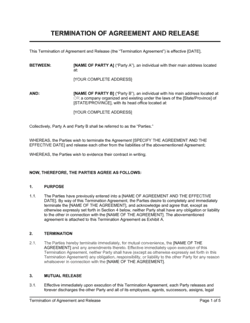
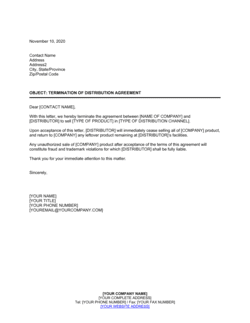
- Mutual Termination
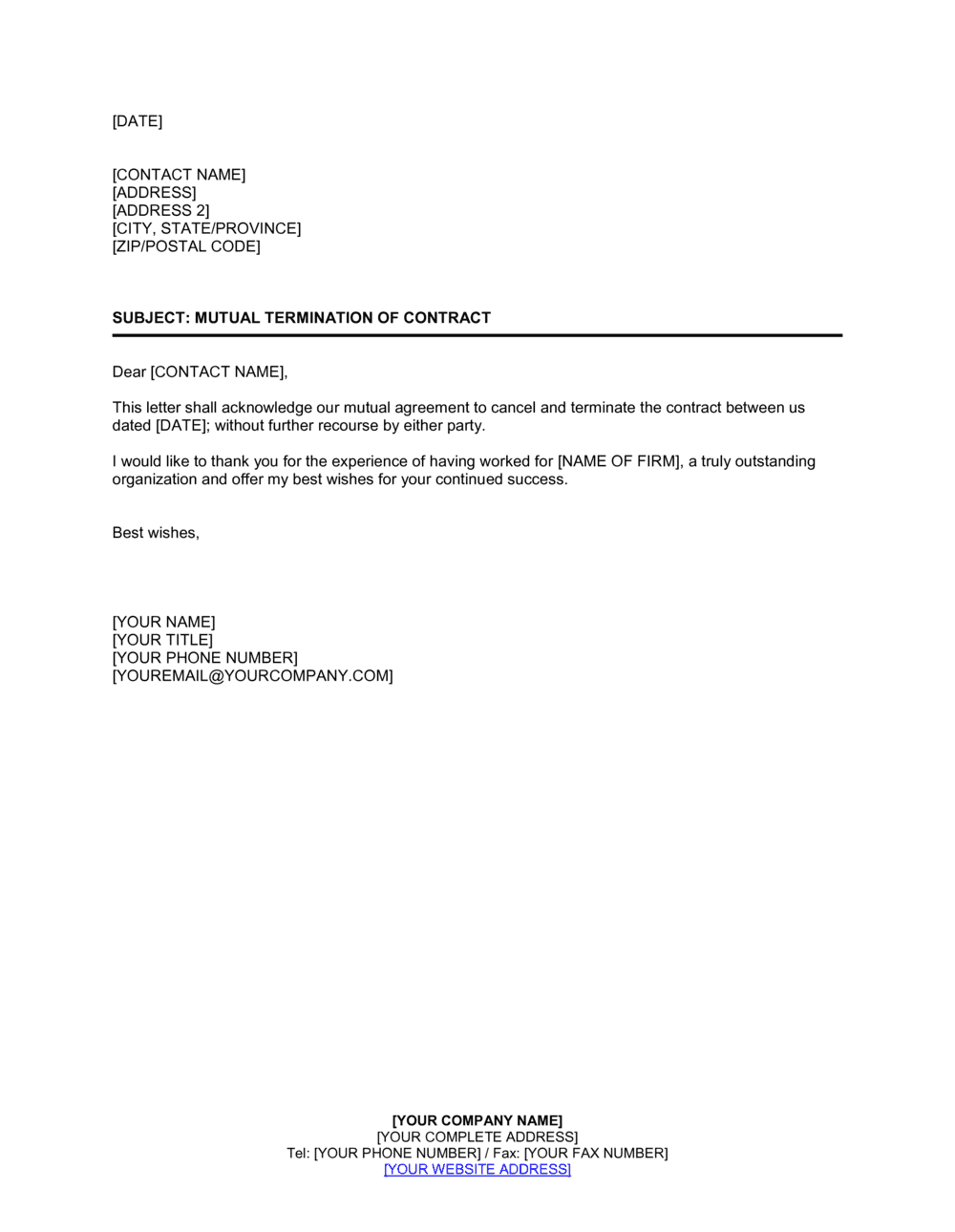
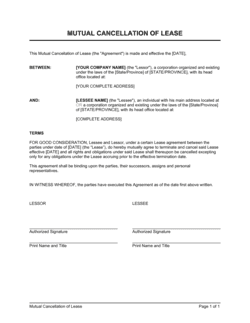
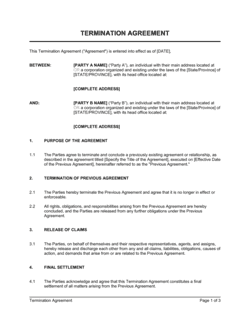
- The consensual ending of a contract by agreement of all parties, as opposed to a unilateral exit or termination for breach.
- Effective Date
- The specific calendar date on which the termination takes legal effect and the parties' obligations under the original contract cease.
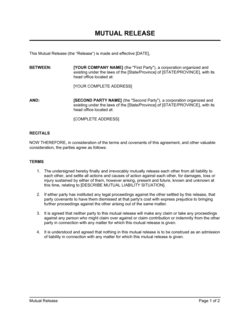
- Mutual Release
- A provision where each party gives up the right to bring claims against the other arising from the original contract, as of the termination date.
- Surviving Provisions
- Clauses in the original contract — typically confidentiality, IP assignment, non-solicitation, or dispute resolution — that remain enforceable after the agreement is terminated.
- Outstanding Obligations
- Payments, deliverables, or duties owed by either party that have accrued before the termination date and must be settled as a condition of clean exit.
- Integration Clause
- A provision stating that the termination agreement is the complete and final understanding between the parties, superseding all prior negotiations and the original contract.
- Consideration
- The legal requirement that each party gives something of value for a contract to be binding — in a termination, mutual release of claims typically constitutes consideration.
- Accord and Satisfaction
- A legal concept where parties agree to accept different terms than originally contracted — relevant when a termination includes a negotiated settlement of outstanding amounts.
- Novation
- The substitution of a new contract or new party for an old one, extinguishing the original — distinct from termination, which simply ends the agreement rather than replacing it.
- Indemnification Carve-Out
- A clause that excludes specific claims — such as fraud, gross negligence, or pre-termination IP infringement — from the scope of the mutual release.