- Security Deposit
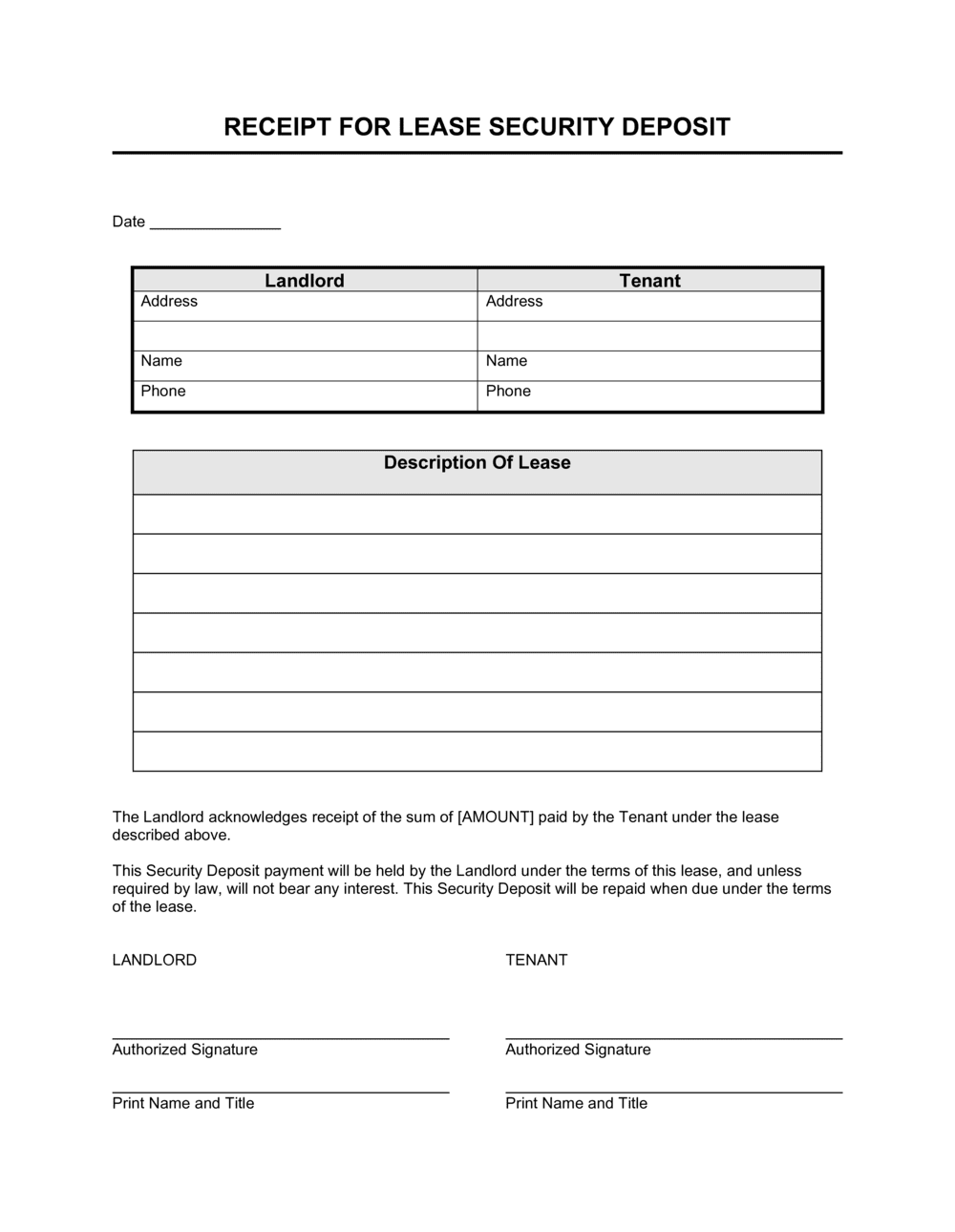
- A sum of money a tenant pays to a landlord before or at lease signing, held as financial protection against unpaid rent, damage beyond normal wear and tear, or other lease violations.
- Normal Wear and Tear
- The minor, expected deterioration of a rental property through ordinary use — such as small nail holes or faded paint — for which a landlord cannot lawfully deduct from a security deposit.
- Escrow Account
- A dedicated bank account, separate from the landlord's personal or operating funds, in which security deposits must be held in many jurisdictions.
- Itemized Deduction Statement
- A written list provided by the landlord after move-out, detailing each repair or cost deducted from the security deposit with a corresponding dollar amount.
- Statutory Deadline
- The legally mandated number of days within which a landlord must return a security deposit or provide an itemized deduction statement — varies by jurisdiction and typically ranges from 14 to 45 days.
- Last Month's Rent
- A separate prepayment equal to one month's rent, sometimes collected alongside a security deposit to cover the final month of tenancy — treated differently from a security deposit under many statutes.
- Holdover Tenant
- A tenant who remains in a rental unit after the lease term expires without a new agreement, often shifting the tenancy to a month-to-month arrangement.
- Constructive Eviction
- A condition where a landlord's failure to maintain the premises makes the unit uninhabitable, effectively forcing the tenant to vacate — which can affect deposit return obligations.
- Move-In Inspection Report
- A written record, signed by both landlord and tenant at the start of tenancy, documenting the property's condition and serving as the baseline for assessing damage at move-out.
- Double Damages
- A statutory penalty in some jurisdictions requiring a landlord to pay the tenant twice the wrongfully withheld deposit amount, plus attorney's fees, for failing to return or account for the deposit within the legal deadline.