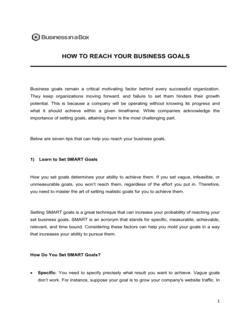
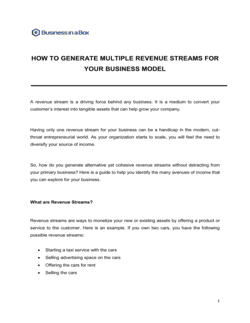
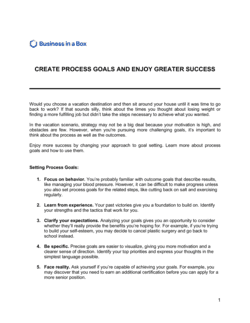
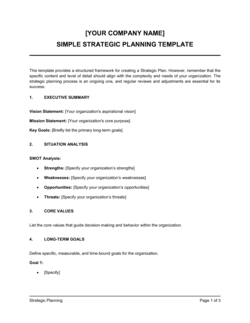
Techniques For Juggling Multiple Goals Template

Free download β€’ Use as a template β€’ Print or share

2 pagesβ€’20–30 min to useβ€’Difficulty: Standardβ€’Signature requiredβ€’Legal review recommended
Learn more ↓
FreeTechniques For Juggling Multiple Goals Template

At a glance

What it is
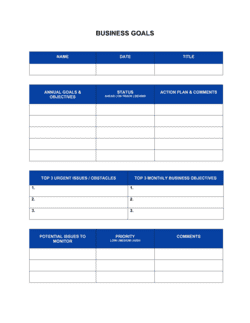
A Techniques For Juggling Multiple Goals document is a structured planning and accountability framework that formally captures how an individual, team, or organization will identify, prioritize, resource, and track progress across several concurrent objectives. This free Word download gives you a ready-to-use template you can edit online and export as PDF to share with stakeholders, managers, or direct reports.
When you need it
Use it when you or your team are simultaneously pursuing three or more distinct goals with overlapping deadlines, shared resources, or competing priorities. It is especially valuable at the start of a new quarter, during an annual planning cycle, or after an organizational restructure that adds new objectives without retiring old ones.
What's inside
Goal inventory and ranking criteria, resource and capacity mapping, milestone sequencing with deadlines, accountability assignments, conflict resolution protocols for competing priorities, and a progress review cadence β€” all structured into a single cohesive reference document.

What is a Techniques For Juggling Multiple Goals Document?

A Techniques For Juggling Multiple Goals document is a structured planning and accountability framework that formally captures how an individual, team, or organization will prioritize, resource, sequence, and track progress across several concurrent objectives. It moves the decisions that are usually made informally β€” which goal comes first, who owns it, how much time it gets, and what "done" looks like β€” into a written, signed reference document that all stakeholders can rely on throughout the planning period. By making trade-offs explicit before execution begins, it eliminates the ambiguity that causes high-performing teams to waste weeks in priority debates rather than delivering results.

Why You Need This Document

Without a formalized approach to managing multiple goals, the default is whoever shouts loudest wins the resources β€” and the goals that matter most strategically often lose to the goals that feel most urgent in the moment. The organizational cost is concrete: competing priorities left unresolved delay product launches, miss revenue targets, burn out the most capable team members, and make performance conversations contentious because no one agreed in writing on what success looked like. A signed goals document gives managers a factual basis for resource allocation conversations, gives employees clarity on what they are accountable for, and gives the organization a paper trail that supports fair, evidence-based performance reviews. This template provides the complete structure β€” from goal inventory and prioritization scoring through milestone scheduling, accountability assignment, and conflict resolution β€” so you can turn a list of competing objectives into an executable, auditable plan.

Which variant fits your situation?

If your situation is…Use this template
Setting and tracking goals for an entire organizationStrategic Planning Template
Aligning individual employee goals with company objectivesEmployee Performance Review Template
Managing a single large project with many workstreamsProject Management Plan
Prioritizing tasks at the daily or weekly levelAction Plan Template
Tracking quarterly OKRs across teamsOKR Template
Mapping resource allocation against multiple initiativesResource Allocation Plan
Documenting a time-boxed plan for a specific goal sprint30-60-90 Day Plan

Common mistakes to avoid

❌ Setting more goals than available capacity supports

Why it matters: When every goal is top priority, execution quality degrades across all of them simultaneously β€” teams report being busy while nothing meaningful advances.

Fix: Cap active goals at three to five per person or team for any 90-day period and formally defer the rest to the next cycle.

❌ Skipping intermediate milestones and tracking only final deadlines

Why it matters: Without checkpoints, an off-track goal is invisible until the due date, at which point it is too late to recover without delaying other goals.

Fix: Require at least three dated milestones for any goal with a timeline longer than four weeks, and review milestone status at every cadence meeting.

❌ Assigning shared ownership to a single goal

Why it matters: Two owners means neither owns it β€” when a blocker arises, each assumes the other is handling it, and the goal stalls.

Fix: Name one accountable owner per goal; list others as contributors or reviewers using a RACI structure.

❌ Omitting a formal amendment procedure for mid-cycle changes

Why it matters: Informal scope or deadline changes agreed verbally or in chat are rarely visible to all stakeholders, causing the plan to diverge from reality within weeks.

Fix: Require all goal amendments to be documented in the Goal Change Log with the original term, revised term, rationale, and approver signature.

❌ Allocating 100% of capacity to planned goals

Why it matters: Reactive work β€” urgent requests, incidents, and unplanned meetings β€” consumes 15–25% of most knowledge workers' weeks; ignoring this makes every plan optimistic by definition.

Fix: Reserve at least 15% of capacity as an unallocated buffer and treat any underspend as a bonus resource, not a sign of underplanning.

❌ Failing to define measurable completion criteria before the planning period starts

Why it matters: Without agreed acceptance criteria, goal owners and reviewers frequently disagree at the end of the period on whether a goal was actually achieved, wasting review time and damaging trust.

Fix: Write two to four specific, measurable completion criteria for every goal before the document is signed, and confirm that the approver has reviewed and accepted them.

The 9 key clauses, explained

Goal inventory and classification

In plain language: Lists every active goal in one place and assigns each a category β€” strategic, operational, or developmental β€” so stakeholders share a common understanding of what is in scope.

Sample language
The following goals are currently active for [TEAM / INDIVIDUAL] as of [DATE]: [GOAL 1] (Strategic), [GOAL 2] (Operational), [GOAL 3] (Developmental). Goals outside this inventory are not subject to the prioritization framework herein.

Common mistake: Including stretch goals alongside committed goals in the same inventory without labeling them β€” this causes teams to treat aspirational targets as binding commitments and overextend capacity.

Prioritization criteria and ranking

In plain language: Defines the specific criteria β€” impact, urgency, cost of delay, strategic alignment β€” used to rank goals, and records the resulting priority order.

Sample language
Goals shall be ranked using the following criteria weighted as indicated: Strategic Alignment ([X]%), Revenue Impact ([X]%), Urgency ([X]%), Resource Feasibility ([X]%). Current ranking: 1st β€” [GOAL NAME], 2nd β€” [GOAL NAME], 3rd β€” [GOAL NAME].

Common mistake: Ranking by gut feeling without documenting the criteria β€” when priorities shift, the absence of a recorded rationale makes it impossible to adjudicate disagreements objectively.

Resource allocation and capacity mapping

In plain language: Documents how available time, budget, and personnel are distributed across active goals, making trade-offs explicit and visible.

Sample language
[ACCOUNTABLE PERSON] has [X] hours per week available. Allocation: [GOAL 1] β€” [X]%, [GOAL 2] β€” [X]%, [GOAL 3] β€” [X]%. Total budget for the period: $[AMOUNT], allocated as follows: [GOAL 1] β€” $[X], [GOAL 2] β€” $[X].

Common mistake: Allocating 100% of capacity to goals without reserving a buffer for unplanned work β€” in practice, 15–20% of a knowledge worker's week is consumed by reactive tasks not tied to any planned goal.

Milestone schedule and deadlines

In plain language: Breaks each goal into dated milestones so progress can be tracked and schedule conflicts between goals are visible before they occur.

Sample language
Goal: [GOAL NAME] | Milestone 1: [DESCRIPTION] β€” Due [DATE] | Milestone 2: [DESCRIPTION] β€” Due [DATE] | Final Completion: [DATE]. Milestone dates are firm unless renegotiated in writing with [APPROVER NAME / ROLE].

Common mistake: Setting milestones only at the goal's final due date rather than at intermediate checkpoints β€” this means problems are discovered too late to course-correct without affecting other goals.

Accountability and ownership assignments

In plain language: Names a single accountable owner for each goal and distinguishes their role from contributors or reviewers, using a RACI-style structure.

Sample language
Goal: [GOAL NAME] | Accountable Owner: [NAME] | Contributors: [NAMES] | Reviewer / Approver: [NAME]. The Accountable Owner is responsible for progress reporting at each cadence checkpoint and for escalating blockers within [X] business days of identification.

Common mistake: Listing multiple 'owners' for a single goal without a clear tiebreaker β€” shared ownership diffuses accountability and consistently produces the slowest execution of any item in the plan.

Conflict resolution protocol for competing priorities

In plain language: Establishes the decision-making process when two goals compete for the same resource or when an unplanned demand threatens the schedule of a ranked goal.

Sample language
In the event that [GOAL A] and [GOAL B] compete for the same resource simultaneously, the Accountable Owner shall escalate to [DECISION-MAKER NAME / ROLE] within [X] business days. The decision-maker shall apply the prioritization criteria in Section [X] and communicate the outcome in writing within [X] business days.

Common mistake: Omitting a conflict resolution clause entirely β€” when competing priorities arise (and they will), the absence of a documented escalation path guarantees delays as stakeholders debate informally rather than decide formally.

Progress review cadence and reporting format

In plain language: Defines how often goal progress is reviewed, who attends, what data is reported, and what format the status update takes.

Sample language
Progress reviews shall occur [weekly / bi-weekly / monthly] on [DAY]. Each Accountable Owner shall submit a status report in [FORMAT] no later than [X] hours before the review. Status classifications: On Track (green), At Risk (amber), Off Track (red). Any At Risk or Off Track goal requires a written recovery plan within [X] business days.

Common mistake: Scheduling reviews so infrequently that off-track goals are discovered only when deadlines have already passed β€” for goals with 90-day timelines, a bi-weekly cadence is the minimum effective interval.

Goal adjustment and amendment procedure

In plain language: Specifies how goals, milestones, or resource allocations may be formally changed mid-cycle, and who must approve the amendment.

Sample language
Any change to a goal's scope, deadline, resource allocation, or priority ranking requires written approval from [APPROVER NAME / ROLE]. Amendments shall be documented in Schedule A (Goal Change Log) with the original term, the revised term, the rationale, and the date of approval.

Common mistake: Allowing informal goal changes via Slack or email without updating the governing document β€” undocumented amendments cause misalignment at review meetings when different stakeholders recall different versions of the plan.

Completion criteria and sign-off

In plain language: Defines the specific, measurable conditions that constitute successful completion of each goal and records the sign-off process.

Sample language
Goal [GOAL NAME] shall be deemed complete when: [CRITERION 1], [CRITERION 2], and [CRITERION 3] have been met and verified by [VERIFIER NAME / ROLE]. Sign-off shall be documented in writing by [APPROVER] within [X] business days of criteria being met.

Common mistake: Defining completion as 'deliverable submitted' rather than 'deliverable accepted' β€” submission without acceptance criteria leaves the goal technically open and consumes ongoing tracking overhead.

How to fill it out

  1. 1

    List every active goal in the inventory

    Write down all current goals β€” strategic, operational, and developmental β€” in the goal inventory section. Include a one-sentence description of each and its target completion date.

    πŸ’‘ If you cannot list every active goal from memory, your list is already too long to manage β€” treat the inventory exercise itself as a forcing function to retire or defer low-priority items.

  2. 2

    Assign a category and priority score to each goal

    Classify each goal by type (strategic, operational, developmental) and score it against your chosen criteria β€” impact, urgency, strategic alignment, and resource feasibility. Record both the raw scores and the resulting rank.

    πŸ’‘ Use a 1–5 scale for each criterion and multiply by the weight assigned in Section 2. A spreadsheet in an appendix makes rescoring quick when priorities shift.

  3. 3

    Map available resources against the goal list

    Enter the total available hours, budget, and personnel for the planning period. Allocate each resource across goals by percentage, making sure the total does not exceed 80–85% of capacity to preserve a reactive buffer.

    πŸ’‘ Color-code the resource table: green if a goal is fully resourced, amber if below the minimum needed, red if no resource has been assigned.

  4. 4

    Break each goal into dated milestones

    For each goal, define three to five intermediate milestones with specific due dates. Enter them in the milestone schedule and check for date conflicts with milestones from other goals.

    πŸ’‘ If two milestones from different goals fall within the same week and share the same owner, move one before finalizing β€” don't assume the owner can absorb the collision.

  5. 5

    Assign a single accountable owner per goal

    Name one person as the accountable owner for each goal. List contributors and reviewers separately. Make clear that the owner is responsible for escalating blockers β€” not just for doing the work.

    πŸ’‘ If you feel the need to list two co-owners, pick the one who will be held accountable in a performance review β€” that is your actual owner.

  6. 6

    Define the conflict resolution escalation path

    Name the decision-maker who will arbitrate when two goals compete for the same resource. Set a maximum response time β€” typically two to three business days β€” and document the communication channel.

    πŸ’‘ The escalation path should bypass consensus-seeking and go directly to one named decision-maker. Committees resolve priority conflicts slowly and inconsistently.

  7. 7

    Set the review cadence and status format

    Choose a review frequency appropriate to the goal timelines β€” weekly for 30-day goals, bi-weekly for 90-day goals β€” and define the status format (traffic light plus written summary). Schedule the first review before you distribute the document.

    πŸ’‘ Block the recurring review on all owners' calendars at the same time you share the final document. A cadence that requires re-scheduling every cycle will drift and eventually stop.

  8. 8

    Define completion criteria and obtain sign-off

    For each goal, write two to four specific, measurable acceptance criteria. Name the person authorized to sign off on completion. Distribute the finalized document and collect signatures from all accountable owners before the planning period begins.

    πŸ’‘ Ask each owner to read their goal's completion criteria aloud before signing β€” ambiguities surface immediately at this stage and are far cheaper to resolve than at the end of the period.

Frequently asked questions

What is a techniques for juggling multiple goals document?

A techniques for juggling multiple goals document is a structured planning framework that captures how an individual, team, or organization will prioritize, resource, and track progress across several concurrent objectives. It formalizes the decisions β€” which goal comes first, who owns it, how much capacity it receives, and what done looks like β€” that are otherwise made informally and inconsistently. Having them in writing creates a shared reference that survives personnel changes and meeting-room debates.

How many goals can one person or team realistically manage at once?

Research on cognitive load and execution quality consistently points to three to five active goals per person or team as the practical ceiling for any 90-day period. Beyond five, execution quality degrades because context-switching cost rises faster than any efficiency gain from parallelism. The document helps you make the trade-off explicit β€” listing everything, scoring it, and formally deferring what doesn't make the cut.

What is the difference between a goal and a milestone?

A goal is the outcome you are trying to achieve β€” measurable, time-bound, and connected to a strategic or operational objective. A milestone is a dated checkpoint that marks meaningful progress toward that goal. A single goal typically has three to five milestones. Tracking milestones instead of just the final deadline is what allows you to detect schedule risk early enough to act on it.

How do you prioritize when all goals seem equally important?

Score each goal against a defined set of criteria β€” typically strategic alignment, revenue or cost impact, urgency, and resource feasibility β€” using a weighted formula. The resulting scores almost always differentiate goals that felt equivalent before the exercise. If two goals genuinely score within one point of each other, the tiebreaker is cost of delay: which goal loses more value for every week it is deprioritized?

What should I do when two goals compete for the same resource?

The conflict resolution clause in this document designates a named decision-maker and a maximum response time β€” typically two to three business days. The decision-maker applies the prioritization criteria already recorded in the document and communicates the outcome in writing. This process avoids the weeks-long informal negotiation that typically occurs when no escalation path exists.

How often should I review progress against multiple goals?

Match the review cadence to the shortest goal timeline in the active set. For goals with 30-day timelines, weekly reviews are appropriate. For 90-day goals, bi-weekly is the minimum interval that allows meaningful course correction. Monthly reviews are typically too infrequent β€” by the time an off-track goal is identified, recovery options are limited.

Can this template be used for personal goals as well as business goals?

Yes. The same prioritization, resource allocation, milestone, and accountability structures that make this document effective for teams apply equally to individual personal or professional development goals. The primary adaptation is replacing team-based accountability (owner plus reviewer) with a self-reporting or accountability-partner structure.

Is this document legally binding?

When signed by the relevant parties β€” manager and direct report, or cross-functional team leads β€” the goal commitments, resource allocations, and deadlines in this document are generally enforceable as internal agreements in most jurisdictions. They are commonly used in performance management contexts where failure to meet documented goals can support disciplinary or compensation decisions. Consider consulting a legal or HR professional before using signed goal documents in a formal employment or performance management context.

What is the best way to handle a goal that becomes irrelevant mid-cycle?

Use the goal adjustment and amendment procedure in the document. Document the original goal, the reason for retirement, and the approval from the designated approver in the Goal Change Log. Formally retiring a goal is just as important as completing one β€” it releases allocated resources and removes a tracking obligation that would otherwise generate noise in every subsequent review meeting.

How this compares to alternatives

vs Strategic Planning Template

A strategic plan defines where the organization is going over three to five years and what initiatives will get it there. A techniques for juggling multiple goals document is an execution-layer tool β€” it takes the goals that a strategic plan identifies and structures the day-to-day prioritization, resource allocation, and accountability needed to advance several of them at once. Use the strategic plan to set direction; use this document to manage the operational complexity of pursuing multiple strategic goals simultaneously.

vs Action Plan Template

An action plan breaks a single goal into a sequence of tasks with owners and due dates. A multiple goals document sits one level above β€” it manages the relationships, trade-offs, and resource conflicts between several action plans running in parallel. If you have one goal, use an action plan. If you have three or more competing goals with shared resources, you need the full juggling-multiple-goals framework.

vs Project Management Plan

A project management plan governs a single defined project β€” scope, schedule, budget, risk, and stakeholder communication. A multiple goals document is not project-specific; it manages the portfolio of concurrent objectives a person or team is accountable for, including goals that are not formal projects. The two documents are complementary: each project gets its own plan, while the goals document manages priority conflicts between projects.

vs Employee Performance Review Form

A performance review form evaluates what was accomplished against agreed goals at a fixed point in time. A techniques for juggling multiple goals document is a live planning tool used throughout the performance period to keep multiple objectives on track. The goals document feeds the performance review β€” the signed commitments and completion criteria become the evidence base for the evaluation conversation.

Industry-specific considerations

Technology / SaaS

Engineering, product, and go-to-market goals frequently compete for the same senior talent; a formal prioritization framework prevents the most vocal team from capturing all available capacity.

Professional Services

Client delivery, business development, and internal capability-building goals run simultaneously; resource allocation must account for billable utilization targets alongside non-billable investments.

Healthcare

Regulatory compliance, patient experience, and operational efficiency goals often carry conflicting timelines and competing staffing demands that require a documented escalation path.

Manufacturing

Production throughput, quality improvement, and capital investment goals compete for floor supervisor time and maintenance crews; milestone scheduling must account for shift constraints and planned downtime.

Jurisdictional notes

United States

Signed goal documents used in a performance management context can support or undermine at-will termination defenses depending on how completion criteria and consequences are worded. In California, any document that appears to modify at-will status requires careful drafting. Ensure that the document does not inadvertently create implied contract terms that limit the employer's ability to terminate. Consult employment counsel before using signed goal agreements in disciplinary proceedings.

Canada

In Canada, documented goal agreements that tie directly to termination decisions can be scrutinized as part of wrongful dismissal claims, particularly in Ontario and British Columbia where common-law notice obligations are significant. Quebec employers must ensure any French-language requirements are met for documents used in the workplace. Performance-linked goal documents should align with the employer's existing progressive discipline policy.

United Kingdom

Under UK employment law, goal documents used in a performance improvement context must follow ACAS Code of Practice on disciplinary and grievance procedures to be relied upon in an Employment Tribunal. Unreasonable or unachievable goals documented in a signed plan can constitute a breach of the implied duty of trust and confidence, potentially supporting a constructive dismissal claim. Goals tied to variable pay should align with the terms of the applicable bonus or commission policy.

European Union

EU member states with strong worker protection frameworks β€” France, Germany, the Netherlands β€” require that performance expectations be reasonable and that employees have meaningful input into agreed goals. GDPR applies to any goal document stored digitally that contains personal performance data; ensure data is stored securely and retained only as long as necessary. Works council consultation may be required in Germany and the Netherlands before implementing a formalized goal-tracking system across a workforce.

Template vs lawyer β€” what fits your deal?

PathBest forCostTime
Use the templateTeams and individuals managing internal goal-setting and execution planning without formal legal or HR enforcement implicationsFree30–60 minutes
Template + legal reviewOrganizations using signed goal documents as part of a formal performance management or compensation process$200–$500 for an HR or employment counsel review1–3 business days
Custom draftedExecutive goal agreements with tied compensation, equity vesting milestones, or cross-jurisdictional employment arrangements$1,000–$3,000+1–2 weeks

Glossary

Goal Hierarchy
A ranked ordering of objectives that establishes which goals take precedence when resources or time are constrained.
Priority Matrix
A two-axis framework β€” typically urgency versus importance β€” used to categorize and sequence competing tasks or goals.
Resource Allocation
The process of assigning available time, budget, personnel, or tools across multiple goals based on their relative priority.
Milestone
A defined, measurable checkpoint that marks meaningful progress toward a goal, with a specific completion date attached.
Accountability Owner
The named individual responsible for driving progress on a specific goal and reporting status to stakeholders.
Bottleneck
A constraint β€” a person, process, or resource β€” that limits the rate at which progress can be made across one or more goals simultaneously.
Competing Priorities
Two or more goals that require the same limited resource at the same time, forcing a trade-off decision.
Cadence
The regular, recurring schedule for reviewing goal progress β€” daily standups, weekly check-ins, or monthly reviews.
Scope Creep
The gradual expansion of a goal's requirements beyond its original definition, consuming resources intended for other objectives.
Key Result
A specific, measurable outcome that indicates a goal has been achieved, distinct from the activities or outputs produced along the way.
Dependency
A relationship between two goals or tasks where one cannot begin or complete until the other has reached a defined state.

Part of your Business Operating System

This document is one of 3,000+ business & legal templates included in Business in a Box.

  • Fill-in-the-blanks β€” ready in minutes
  • 100% customizable Word document
  • Compatible with all office suites
  • Export to PDF and share electronically

Create your document in 3 simple steps.

From template to signed document β€” all inside one Business Operating System.
1
Download or open template

Access over 3,000+ business and legal templates for any business task, project or initiative.

2
Edit and fill in the blanks with AI

Customize your ready-made business document template and save it in the cloud.

3
Save, Share, Send, Sign

Share your files and folders with your team. Create a space of seamless collaboration.

Save time, save money, and create top-quality documents.

β˜…β˜…β˜…β˜…β˜…

"Fantastic value! I'm not sure how I'd do without it. It's worth its weight in gold and paid back for itself many times."

Managing Director Β· Mall Farm
Robert Whalley
Managing Director, Mall Farm Proprietary Limited
β˜…β˜…β˜…β˜…β˜…

"I have been using Business in a Box for years. It has been the most useful source of templates I have encountered. I recommend it to anyone."

Business Owner Β· 4+ years
Dr Michael John Freestone
Business Owner
β˜…β˜…β˜…β˜…β˜…

"It has been a life saver so many times I have lost count. Business in a Box has saved me so much time and as you know, time is money."

Owner Β· Upstate Web
David G. Moore Jr.
Owner, Upstate Web

Run your business with a system β€” not scattered tools

Stop downloading documents. Start operating with clarity. Business in a Box gives you the Business Operating System used by over 250,000 companies worldwide to structure, run, and grow their business.

Start freeΒ Β·Β No credit card required