Create Process Goals and Enjoy Greater Success

Free Word download β€’ Edit online β€’ Save & share with Drive β€’ Export to PDF

2 pagesβ€’25–30 min to fillβ€’Difficulty: Standardβ€’Signature requiredβ€’Legal review recommended
Learn more ↓
FreeCreate Process Goals and Enjoy Greater Success Template

At a glance

What it is
A Process Goals Agreement is a binding document that formally defines the specific process-oriented objectives a party commits to pursuing β€” focusing on controllable actions and behaviors rather than outcome targets alone. This free Word download lets you edit the template online, customize each goal clause to your context, and export as PDF for signing and distribution.
When you need it
Use it when formalizing performance expectations between an employer and employee, between business partners, or between a coach or consultant and a client β€” wherever documenting agreed process steps and accountability measures is necessary to drive and sustain meaningful progress.
What's inside
Defined parties and purpose, specific process goal commitments, milestones and review intervals, accountability mechanisms, success metrics tied to process behaviors, confidentiality obligations, amendment procedures, and governing law and dispute resolution.

What is a Process Goals Agreement?

A Process Goals Agreement is a binding document that formalizes the specific behavioral and procedural commitments one or more parties make in the pursuit of a defined objective β€” placing accountability on the actions within each party's direct control rather than on end results that depend on external variables. Unlike a standard performance contract that measures only outcomes, this agreement identifies exactly what each party will do, how often, how that activity will be documented, and what happens when a commitment is not met. It is used in employment performance management, executive coaching engagements, business partnerships, and cross-functional operational initiatives wherever consistent process adherence is as important as the final result.

Why You Need This Document

Without a signed, specific process goals agreement, accountability conversations rely on memory, interpretation, and goodwill β€” all of which erode under pressure. When a coaching client stops following through, a sales rep's activity drops, or a partner drifts from agreed workflows, the absence of a documented commitment means there is no objective baseline to return to and no enforceable remediation path. Managers lose hours in circular performance conversations; coaches struggle to hold clients accountable without appearing arbitrary; partners dispute whether any process commitment was ever made. A properly drafted process goals agreement eliminates all of that ambiguity before it starts β€” creating a shared record of what was agreed, a measurable standard for evaluating compliance, and a defined escalation path when commitments slip. This template gives you a professionally structured starting point you can customize, sign, and put to work in under 30 minutes.

Which variant fits your situation?

If your situation is…Use this template
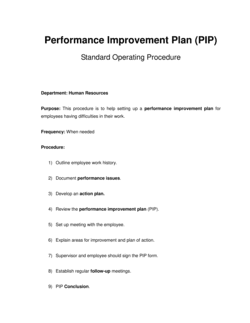
Setting individual employee performance and development goalsEmployee Performance Improvement Plan
Establishing measurable KPIs for an entire departmentKPI Dashboard and Tracking Plan
Documenting outcome-based targets for a sales teamSales Plan Template
Setting strategic goals at the company level for the yearStrategic Planning Template
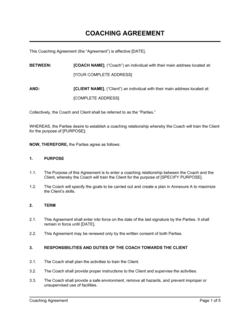
Capturing a coaching engagement scope and client commitmentsCoaching Agreement
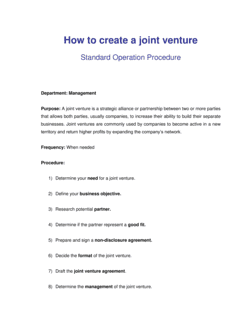
Formalizing partner accountability in a joint ventureJoint Venture Agreement
Tracking project milestones and deliverable deadlinesProject Plan Template

Common mistakes to avoid

❌ Writing outcome goals instead of process goals

Why it matters: Outcome goals depend on variables outside the party's control β€” market conditions, customer decisions, competitor actions β€” making fair accountability impossible and disputes inevitable.

Fix: Rewrite every goal as a specific, observable behavior with a frequency and a documentation method. If the party can control it directly, it qualifies as a process goal.

❌ No interim milestones

Why it matters: Without checkpoints, a party can fall behind in month one and not surface the problem until the final review, by which point remediation is impractical.

Fix: Insert at least two milestone dates between the start and end of the agreement and define observable progress criteria for each.

❌ Subjective success metrics

Why it matters: Language like 'meaningful effort' or 'regular engagement' is unenforceable because neither party can objectively determine whether the threshold was met.

Fix: Replace qualitative language with specific numbers: frequency, percentage, deadline compliance rate, or documented count, tied to a named tracking system.

❌ No amendment clause allowing only written modifications

Why it matters: Informal verbal goal changes are common in coaching and management relationships. Without a written-only amendment rule, the operative goals become disputed when the relationship sours.

Fix: Add a written-amendment-only clause and use a Schedule A attachment for goal updates, signed by both parties each time goals change.

❌ Omitting a termination provision

Why it matters: Without a termination clause, parties disagree about whether they remain bound after the relationship changes β€” for example, after an employee changes roles or a coaching engagement is paused.

Fix: Include a mutual notice-based termination clause specifying a minimum notice period and what obligations survive termination.

❌ Signing after the goal period has already started

Why it matters: In common-law jurisdictions, consideration must be exchanged at or before execution. A post-start signature raises questions about whether restrictive or accountability clauses are enforceable from the beginning of the period.

Fix: Execute the agreement before or on the agreed start date. If circumstances require a later signature, document a specific additional benefit provided as fresh consideration.

The 10 key clauses, explained

Parties and purpose

In plain language: Identifies each party by full legal name, describes the nature of their relationship, and states the document's purpose of formalizing process goal commitments.

Sample language
This Process Goals Agreement ('Agreement') is entered into on [DATE] between [PARTY A FULL NAME] ('Company') and [PARTY B FULL NAME] ('Participant'). The purpose of this Agreement is to document the specific process-oriented goals Participant commits to pursuing during the period from [START DATE] to [END DATE].

Common mistake: Using informal names or job titles instead of full legal entity names β€” this creates ambiguity about who is actually bound when the agreement is enforced.

Definition of process goals

In plain language: Sets out each specific process goal in clear, behavioral terms, distinguishing actions the party controls from outcome targets that depend on external variables.

Sample language
Participant commits to the following process goals during the Agreement term: (a) conducting [X] outreach calls per business day; (b) completing [TASK] by [DAY] of each week; (c) submitting a written progress summary to [SUPERVISOR/COACH] every [FRIDAY] by [TIME].

Common mistake: Writing goals in outcome language ('increase sales by 20%') rather than process language ('make 15 prospecting calls per day') β€” outcome goals shift focus away from controllable behaviors and make accountability harder to measure.

Milestones and timeline

In plain language: Establishes specific checkpoints at which progress will be assessed, with defined dates and the criteria that constitute acceptable progress at each stage.

Sample language
Milestone 1 ([DATE]): Participant shall have completed [SPECIFIC ACTION] and documented results in [TRACKING TOOL]. Milestone 2 ([DATE]): Participant shall demonstrate [MEASURABLE BEHAVIOR] at the rate specified in Section 2 for [X] consecutive [weeks/days].

Common mistake: Setting a single end-of-term milestone with no interim checkpoints β€” problems accumulate undetected until the final review, making course correction impossible.

Review and reporting obligations

In plain language: Defines how often progress is formally reviewed, who is responsible for preparing and sharing progress reports, and how review meetings are documented.

Sample language
Parties shall conduct formal progress reviews on the following schedule: [WEEKLY / BI-WEEKLY / MONTHLY] on [DAY] at [TIME]. Participant shall submit a written progress report to [REVIEWER NAME/ROLE] no later than [X] hours before each review. Notes from each review shall be signed by both parties and retained for [RETENTION PERIOD].

Common mistake: Leaving the review cadence undefined β€” without a scheduled mechanism, accountability conversations happen inconsistently or only when problems escalate.

Success metrics

In plain language: Lists the specific, quantifiable indicators that will be used to determine whether each process goal is being fulfilled as agreed.

Sample language
Success for each process goal shall be measured as follows: (a) [GOAL A]: minimum [X] documented instances per [PERIOD] as recorded in [TRACKING SYSTEM]; (b) [GOAL B]: completion rate of no less than [X]% across each review period; (c) [GOAL C]: submission by [DEADLINE] in [X] of [Y] scheduled reporting intervals.

Common mistake: Using subjective success criteria such as 'significant improvement' or 'consistent effort' β€” without numerical benchmarks, disputes about whether goals were met are nearly impossible to resolve objectively.

Accountability and remediation

In plain language: States what happens when a goal is missed β€” the steps the party must take to remediate, and the escalation path if the situation does not improve.

Sample language
If Participant fails to meet a process goal in any review period, Participant shall: (a) acknowledge the shortfall in writing within [X] business days; (b) submit a written remediation plan within [X] business days; and (c) implement the remediation plan during the following review period. Repeated failure to meet goals for [X] consecutive periods shall constitute a material breach of this Agreement.

Common mistake: No remediation clause at all β€” when a goal is missed, neither party knows what the next step is, which leads to unproductive conversations and unresolved performance gaps.

Confidentiality

In plain language: Restricts both parties from disclosing the contents of the agreement or the goal-related data exchanged under it to third parties without consent.

Sample language
Each party agrees to keep the terms of this Agreement and all progress reports, tracking data, and review notes confidential and shall not disclose them to any third party without the prior written consent of the other party, except as required by law or legal process.

Common mistake: Omitting confidentiality entirely when the agreement involves sensitive performance data or coaching content β€” this can expose personal or proprietary information to competitors or future employers.

Amendment procedure

In plain language: Specifies that changes to goals, timelines, or metrics must be made in writing and signed by both parties to be effective β€” preventing informal verbal modifications.

Sample language
This Agreement may be amended only by a written instrument signed by both parties. No oral modification, waiver, or course of dealing shall alter the terms of this Agreement. Amended goals shall be attached as an updated Schedule A and incorporated by reference.

Common mistake: Allowing goals to be informally adjusted by email or verbal agreement without a written amendment β€” this creates disputes about which version of the goals is operative.

Term and termination

In plain language: States the agreement's start and end date, conditions under which either party may terminate early, and what happens to obligations upon termination.

Sample language
This Agreement commences on [START DATE] and terminates on [END DATE], unless earlier terminated. Either party may terminate this Agreement with [X] days' written notice. Termination does not relieve Participant of obligations accrued before the termination date, including submission of outstanding progress reports.

Common mistake: No termination provision at all β€” without one, parties may disagree about whether they remain bound after the relationship changes, leading to disputes about residual obligations.

Governing law and dispute resolution

In plain language: Identifies the jurisdiction whose law governs the agreement and sets out how disputes will be resolved β€” mediation, arbitration, or litigation.

Sample language
This Agreement is governed by the laws of [STATE / PROVINCE / COUNTRY]. Any dispute arising under this Agreement shall first be submitted to good-faith mediation. If unresolved within [30] days, disputes shall be resolved by binding arbitration administered by [AAA / JAMS / applicable body] in [CITY], except claims for injunctive relief.

Common mistake: Selecting a governing jurisdiction that has no connection to where either party operates β€” courts in the parties' actual locations may decline to enforce the agreement or apply local law regardless.

How to fill it out

  1. 1

    Identify and name the parties correctly

    Enter each party's full legal name β€” the registered business entity or individual's legal name as it appears on government-issued ID or corporate documents. Include the party's role (e.g., 'Company' and 'Participant') and the agreement date.

    πŸ’‘ If one party is a business entity, confirm the exact registered name before signing β€” a mismatch with payroll or contract records can complicate enforcement.

  2. 2

    Define each process goal in behavioral terms

    Write each goal as a specific, observable action: what the party will do, how often, and by when. Avoid outcome language. Replace 'improve customer satisfaction' with 'conduct three client check-in calls per week and log notes in [CRM] within 24 hours.'

    πŸ’‘ Limit the initial agreement to three to five process goals β€” more than that dilutes focus and makes accountability conversations unwieldy.

  3. 3

    Set milestones and a review calendar

    Assign at least two interim milestone dates between the start and end of the agreement term. For each, write one or two sentences describing what observable progress looks like at that point.

    πŸ’‘ Align milestone dates with existing calendar events β€” quarterly business reviews, monthly one-on-ones β€” so reviews don't require scheduling additional meetings.

  4. 4

    Define quantifiable success metrics for each goal

    Attach a number to every goal: frequency, completion rate, submission deadline compliance percentage, or a documented count. Enter these in the success metrics clause so both parties agree upfront on what 'done' looks like.

    πŸ’‘ Use the same tracking tool you already use β€” CRM, project management software, or a shared spreadsheet β€” rather than creating a new system solely for this agreement.

  5. 5

    Complete the accountability and remediation clause

    Specify what happens when a goal is missed: how quickly the party must acknowledge the shortfall in writing, how many days they have to submit a remediation plan, and how many consecutive missed periods constitute a material breach.

    πŸ’‘ A two-strikes structure β€” a remediation plan after the first miss, a consequence after the second β€” is more enforceable and fairer than a zero-tolerance policy.

  6. 6

    Set the term, governing law, and dispute resolution method

    Enter the start and end dates, select the governing jurisdiction (use the state or province where the primary party operates), and choose between mediation-then-arbitration or court as the dispute resolution path.

    πŸ’‘ Mediation-then-arbitration is almost always faster and cheaper than litigation for goal-related disagreements β€” reserve court access for injunctive relief only.

  7. 7

    Sign before the goals take effect

    Both parties must sign the agreement before the start date. A signed copy should be stored in a secure, accessible location β€” both parties should receive a fully-executed PDF copy immediately.

    πŸ’‘ Use an eSign tool to timestamp execution and create an irrefutable record of when each party signed β€” critical if the agreement's enforceability is later questioned.

  8. 8

    Schedule the first review meeting at signing

    Don't leave the review cadence to chance. Before the meeting ends, lock the first three review dates in both parties' calendars and confirm the reporting format.

    πŸ’‘ Send a calendar invitation with the agreement attached β€” this embeds the document in the ongoing workflow rather than letting it sit in a folder unread.

Frequently asked questions

What is a process goals agreement?

A process goals agreement is a binding document that records the specific behavioral commitments one or more parties make in pursuit of a larger objective β€” focusing on controllable actions rather than end results alone. It defines what each party will do, how often, how progress will be tracked, and what happens when a commitment is missed. Businesses use it in coaching relationships, employee development plans, partnership accountability structures, and operational process improvement programs.

What is the difference between a process goal and an outcome goal?

A process goal defines a specific action within the party's direct control β€” such as completing five client calls per day or submitting a weekly report by Friday. An outcome goal defines a desired end result β€” such as closing $50,000 in new business per month β€” that depends on external factors the party cannot fully control. Process goals are more useful in accountability agreements because compliance is objectively measurable and is not subject to market variables outside the party's influence.

Is a process goals agreement legally binding?

A process goals agreement is generally enforceable as a binding contract when it includes the core elements of a valid agreement: offer, acceptance, and consideration, signed by parties with legal capacity. The enforceability of specific remedies β€” such as clawback of compensation or access restrictions β€” depends on how the agreement is drafted and the laws of the governing jurisdiction. Consider having a lawyer review the agreement when material financial consequences or employment relationships are involved.

Who should sign a process goals agreement?

Both parties to the commitment should sign β€” typically the individual taking on the process goals (the participant, employee, or client) and the party holding accountability (the employer, manager, coach, or business partner). If the agreement involves a business entity on either side, the signatory should be an authorized representative with the authority to bind that entity. Both parties should receive a fully-executed copy immediately after signing.

How specific do process goals need to be?

Goals need to be specific enough that a neutral third party β€” someone with no context about the relationship β€” could determine objectively whether each goal was met in any given review period. That typically means including the action, the frequency, the documentation method, and the deadline. Vague language like 'work on communication skills' or 'be more proactive' fails this test and should be replaced with observable behavioral language before signing.

How many process goals should the agreement cover?

Three to five process goals is the practical range for most agreements. Fewer than three may not create meaningful accountability; more than five tends to dilute focus and make review meetings unwieldy. If a party has more than five areas requiring process improvement, consider prioritizing the three most critical for the initial agreement term and adding others through a written amendment once the first set is consistently met.

Can a process goals agreement be amended after signing?

Yes, but amendments should always be made in writing and signed by both parties to be effective. The agreement should include a clause stating that oral modifications are not binding. A standard practice is to attach amended goals as an updated Schedule A, both parties initial it, and the amendment date is recorded. This prevents disputes about which version of the goals is operative at any point in the agreement term.

What happens if a party consistently misses their process goals?

The agreement should specify a defined escalation path: acknowledgment of the shortfall in writing, submission of a remediation plan, and a consequence if goals are missed for a specified number of consecutive review periods. In an employment context, repeated failure to meet documented process goals can support a performance-based termination decision. In a coaching or partnership context, it may trigger termination of the arrangement. The specific consequences depend on how the accountability clause is drafted and the nature of the underlying relationship.

Do I need a lawyer to create a process goals agreement?

For straightforward coaching or internal performance documentation purposes, a well-structured template is typically sufficient. A lawyer review is advisable when the agreement involves financial consequences tied to goal performance, employment termination triggers, equity or partnership rights, or parties in jurisdictions with strong employment protections such as Canada, the UK, or EU member states. A one-hour template review typically costs $150–$400 and is worthwhile when material obligations are at stake.

How this compares to alternatives

vs Performance Improvement Plan

A performance improvement plan (PIP) is a corrective HR document issued after documented performance failure, typically as a precursor to termination if goals are not met. A process goals agreement is a proactive commitment tool used at the start of a relationship or development cycle. The PIP is remedial; the process goals agreement is forward-looking and voluntary.

vs Coaching Agreement

A coaching agreement defines the scope, fees, and terms of a coaching engagement between coach and client. A process goals agreement documents the specific behavioral commitments the client will pursue during that engagement. The two documents are complementary β€” the coaching agreement governs the relationship; the process goals agreement governs the work.

vs Strategic Planning Template

A strategic plan defines an organization's high-level goals, initiatives, and resource allocation over a 3–5 year horizon. A process goals agreement documents the day-to-day behavioral commitments of specific individuals that support those strategic objectives. The strategic plan sets the direction; the process goals agreement creates individual accountability for the steps that get there.

vs Employment Contract

An employment contract establishes the legal terms of the employment relationship β€” compensation, duties, IP, confidentiality, and termination rights. A process goals agreement supplements the employment contract by documenting specific behavioral commitments for a defined period. The employment contract is the governing document; the process goals agreement operates within it as a performance tool.

Industry-specific considerations

Professional services

Billable activity targets β€” calls per day, proposals submitted per week β€” documented in process goals agreements between managers and fee earners.

Financial services

Compliance-driven process adherence requirements, such as mandatory documentation steps and client contact frequencies, formalized in signed accountability agreements.

Technology / SaaS

Developer and sales team process commitments β€” code review frequency, demo-to-close ratios, and pipeline hygiene behaviors β€” tracked against agreed cadences.

Healthcare

Patient follow-up protocols, documentation compliance rates, and training completion requirements formalized between clinical managers and staff.

Retail / E-commerce

Customer service response time commitments, inventory audit frequencies, and loss prevention checklists documented as signed process standards.

Coaching and consulting

Client accountability agreements specifying weekly practice commitments, reflection journal submissions, and session preparation requirements.

Jurisdictional notes

United States

Process goals agreements are enforceable as contracts in all US states when supported by consideration and signed by both parties. When tied to employment, state-specific at-will rules apply β€” California, for instance, scrutinizes documents that could be interpreted as creating an implied just-cause termination obligation. Arbitration clauses in employment-related goal agreements are subject to the Federal Arbitration Act and state-level restrictions in California and New York.

Canada

In Canada, process goals agreements connected to employment must comply with provincial Employment Standards Act minimums. Courts in Ontario and British Columbia have found that performance documentation used to support termination requires procedural fairness β€” notice, opportunity to respond, and a genuine remediation period. Quebec requires documents in French for provincially regulated employers. Arbitration clauses must be expressly agreed upon and may not override statutory employment rights.

United Kingdom

In the UK, process goals documents used in employment contexts must align with ACAS Code of Practice on disciplinary and grievance procedures to be relied upon in an Employment Tribunal. Employees with two or more years' continuous service have unfair dismissal protections requiring a fair process, of which documented goals and a genuine improvement opportunity form a part. Non-employment process goals agreements are enforceable as standard contracts under English law.

European Union

EU member states generally provide strong employee protections that require documented and proportionate performance management processes before any adverse employment action. GDPR applies to any personal performance data collected and stored under the agreement β€” consent or legitimate interest must be established, and data retention periods must be defined. Non-employment process goals agreements are enforced under the law of the applicable member state, which varies significantly across France, Germany, Spain, and the Netherlands.

Template vs lawyer β€” what fits your deal?

PathBest forCostTime
Use the templateCoaches, managers, and small business owners documenting individual process commitments with no financial penalties attachedFree20–30 minutes
Template + legal reviewAgreements tied to employment performance management, compensation adjustments, or partnership accountability with financial stakes$150–$4001–2 days
Custom draftedExecutive-level accountability structures, cross-jurisdictional teams, or agreements where goal failure triggers termination or equity consequences$800–$2,500+1–2 weeks

Glossary

Process Goal
An objective defined by specific actions or behaviors within a party's direct control, rather than by an end result that depends on external factors.
Outcome Goal
A target focused on the end result β€” such as revenue or market share β€” rather than on the controllable steps that lead there.
Accountability Mechanism
A documented procedure β€” such as scheduled check-ins, progress reports, or escalation steps β€” that ensures parties honor their commitments.
Milestone
A defined checkpoint within a goal's timeline at which measurable progress is evaluated against agreed criteria.
Review Interval
The agreed cadence β€” weekly, monthly, or quarterly β€” at which goal progress is formally assessed and documented.
Success Metric
A specific, quantifiable indicator used to measure whether a process behavior or action is being performed as agreed.
Amendment Clause
A provision that defines how and when the terms of an agreement may be modified, and what form that modification must take to be binding.
Governing Law
The jurisdiction whose laws are chosen to interpret and enforce the agreement in the event of a dispute.
Entire Agreement Clause
A provision stating that the written document represents the full and final agreement between the parties, superseding all prior oral or written understandings.
Breach
A failure by one party to fulfill a commitment specified in the agreement, which may trigger remedies such as remediation steps or termination of the arrangement.
Good Faith Obligation
An implied or express duty to act honestly and fairly in performing one's obligations under an agreement, without attempting to undermine the other party's reasonable expectations.

Part of your Business Operating System

This document is one of 3,000+ business & legal templates included in Business in a Box.

  • Fill-in-the-blanks β€” ready in minutes
  • 100% customizable Word document
  • Compatible with all office suites
  • Export to PDF and share electronically

Create your document in 3 simple steps.

From template to signed document β€” all inside one Business Operating System.
1
Download or open template

Access over 3,000+ business and legal templates for any business task, project or initiative.

2
Edit and fill in the blanks with AI

Customize your ready-made business document template and save it in the cloud.

3
Save, Share, Send, Sign

Share your files and folders with your team. Create a space of seamless collaboration.

Save time, save money, and create top-quality documents.

β˜…β˜…β˜…β˜…β˜…

"Fantastic value! I'm not sure how I'd do without it. It's worth its weight in gold and paid back for itself many times."

Managing Director Β· Mall Farm
Robert Whalley
Managing Director, Mall Farm Proprietary Limited
β˜…β˜…β˜…β˜…β˜…

"I have been using Business in a Box for years. It has been the most useful source of templates I have encountered. I recommend it to anyone."

Business Owner Β· 4+ years
Dr Michael John Freestone
Business Owner
β˜…β˜…β˜…β˜…β˜…

"It has been a life saver so many times I have lost count. Business in a Box has saved me so much time and as you know, time is money."

Owner Β· Upstate Web
David G. Moore Jr.
Owner, Upstate Web

Run your business with a system β€” not scattered tools

Stop downloading documents. Start operating with clarity. Business in a Box gives you the Business Operating System used by over 250,000 companies worldwide to structure, run, and grow their business.

Free Forever PlanΒ Β·Β No credit card required