1
Confirm corporate details before drafting
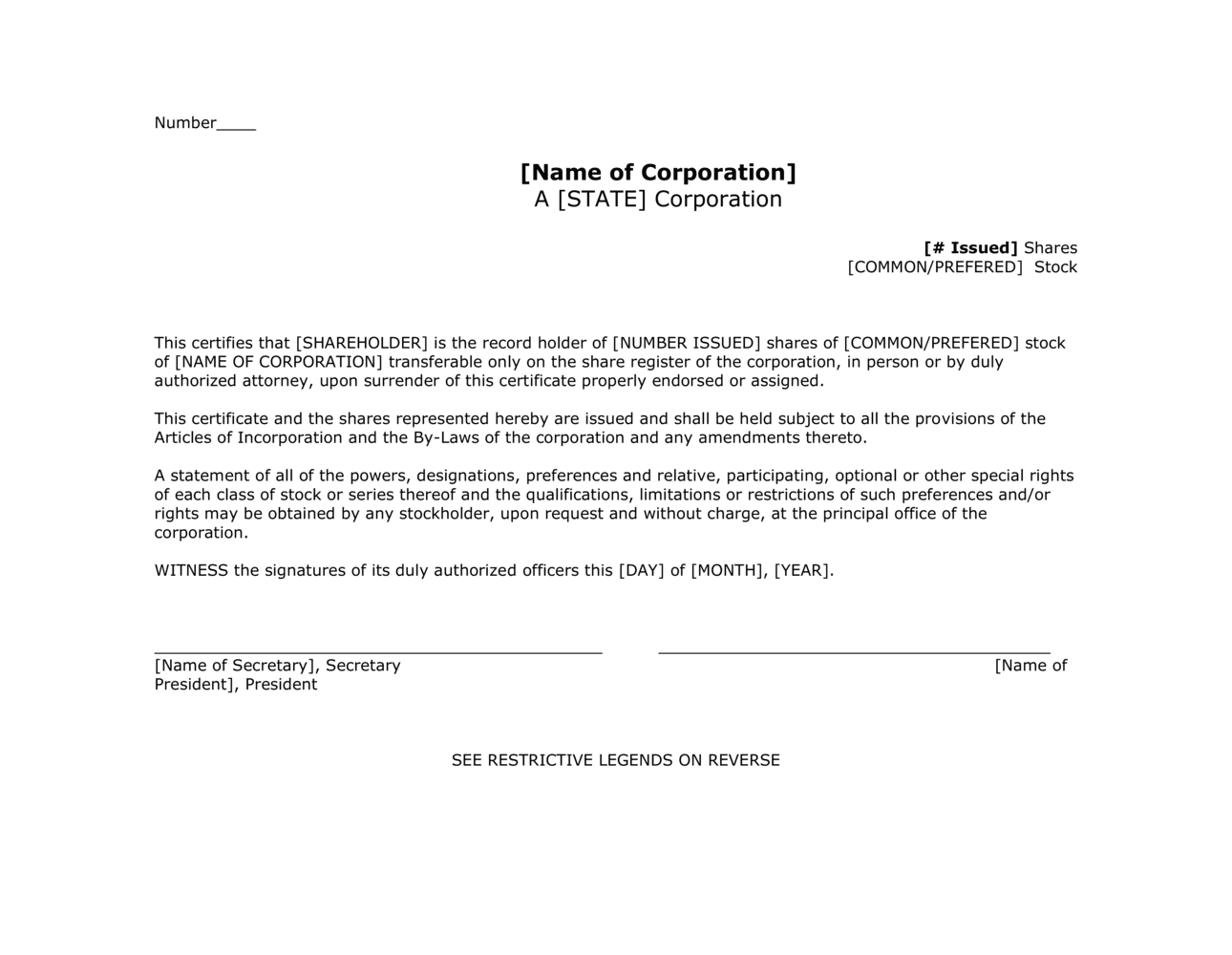
Retrieve the corporation's exact legal name, state of incorporation, authorized share structure, and par value from the filed articles or certificate of incorporation. These must match verbatim.
💡 Download a certified copy of your articles from the Secretary of State portal before you start — discrepancies discovered at funding due diligence are expensive to fix retroactively.
2
Assign a unique certificate number
Enter a sequential certificate number in your stock ledger and on the certificate itself. Use a format like CERT-001, CERT-002. Log the number in your corporate stock ledger before issuing.
💡 Maintain a physical or digital stock ledger as the authoritative record — the ledger, not the certificate, is the controlling document for ownership disputes.
3
Enter the shareholder's full legal name
Use the shareholder's name exactly as it appears on a government-issued ID for individuals, or the full registered entity name for corporate shareholders. Avoid nicknames, abbreviations, or assumed business names.
💡 For trust or LLC shareholders, name the trust or LLC as the registered owner, not the individual trustee or member — this preserves the liability protection and simplifies future transfers.
4
State the share class, quantity, and par value
Enter the number of shares in both numeric and written form to prevent alteration. Specify the share class (e.g., Class A Common Stock) and the par value per share as stated in the articles.
💡 If this is the first issuance, cross-check that the number of shares issued does not exceed the authorized share count in your articles — exceeding authorized shares voids the issuance.
5
Insert all required securities legends
Add the Section 1933 Act legend for all privately issued shares. If shares are subject to a repurchase right or vesting schedule, add the applicable legend referencing the governing agreement by name and date.
💡 Check your state's blue sky laws — some states require an additional state securities legend alongside the federal legend.
6
Reference transfer restrictions and ancillary agreements
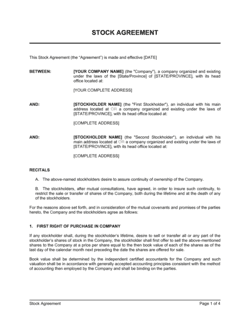
If a shareholders agreement, right of first refusal, or co-sale agreement governs these shares, name the agreement and its date in the transfer restriction clause. Attach or cross-reference a copy.
💡 The transfer restriction is only enforceable if the referenced agreement is actually signed by the shareholder before or simultaneously with certificate issuance.
7
Execute with authorized officer signatures
Have the required officers sign and date the certificate on the issuance date — before the shareholder's first day of employment or the closing date of any investment transaction.
💡 Apply a corporate seal impression if your state or bylaws require it. If your bylaws call for dual signatures, do not shortcut to one — it voids the certificate.
8
Log the issuance in the stock ledger and store the certificate
Record the certificate number, shareholder name, share class, quantity, issuance date, and consideration paid in your stock ledger immediately after signing. Deliver the original to the shareholder and retain a countersigned copy.
💡 For electronically issued certificates using book-entry registration, generate a PDF version signed with a digital signature tool and store it in a secure corporate records folder alongside the ledger entry.