Software Company Business Plan 2 Template

Free Word download β€’ Edit online β€’ Save & share with Drive β€’ Export to PDF

34 pagesβ€’2h 50m – 3h 50m to fillβ€’Difficulty: Expert
Learn more ↓
FreeSoftware Company Business Plan 2 Template

At a glance

What it is
A Software Company Business Plan is a structured document that maps a software business's product vision, target market, competitive positioning, go-to-market strategy, team, and financial projections into a single investor- or lender-ready file. This free Word download gives you a software-specific framework β€” covering SaaS metrics, product development milestones, and recurring revenue modeling β€” that you can edit online and export as PDF in minutes.
When you need it
Use it when raising a seed or Series A round, applying for a software-focused bank loan or grant, onboarding a co-founder or key executive who needs a strategic north star, or re-aligning an existing software team around a revised 3-year operating strategy.
What's inside
Executive summary, company overview and mission, market analysis with TAM and SAM, competitive landscape, product and technology description, marketing and sales strategy, operational plan, management team profiles, and a full financial model including MRR growth, burn rate, and funding requirements.

What is a Software Company Business Plan?

A Software Company Business Plan is a structured planning document that maps a software or SaaS business's product vision, target market, competitive positioning, go-to-market strategy, and financial projections into a single investor- or lender-ready file. Unlike a generic business plan, it is built around the financial mechanics of recurring revenue β€” modeling MRR growth, monthly churn, CAC payback, and net revenue retention rather than one-time sales volume. This free Word download gives founders and software executives a purpose-built framework they can complete, edit online, and export as PDF for investor meetings, bank loan applications, or internal strategic planning.

Why You Need This Document

Without a written software business plan, capital conversations stall at the first follow-up request, accelerator applications are rejected for missing financial detail, and leadership teams execute against conflicting assumptions about which customer segment to pursue first. A software-specific plan forces you to stress-test your MRR growth assumptions against realistic churn and CAC figures before spending real money on sales and marketing. Investors evaluating SaaS companies immediately model your downside scenario β€” a plan that anticipates that scrutiny with sensitivity analysis and bottoms-up unit economics closes rounds faster than one that doesn't. This template provides the structure so your time goes toward the market research and financial modeling that actually requires original thinking.

Which variant fits your situation?

If your situation is…Use this template
Building a general SaaS product for SMB customersSoftware Company Business Plan
Quick internal planning for an early-stage software ideaOne-Page Business Plan
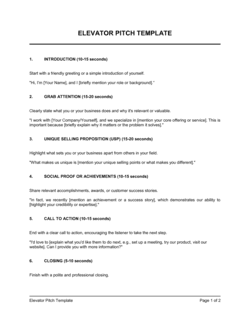
Pitching a software product to venture investors in 20 minutesElevator Pitch Template
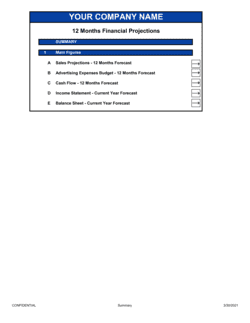
Projecting MRR, churn, and runway for a 12-month horizonFinancial Projections (12 Months)
Launching a new software product line within an existing companyNew Product Launch Plan
Aligning engineering and product teams around a 3-year strategyStrategic Planning Template
Raising a Series A or later round with institutional diligenceInvestor Business Plan

Common mistakes to avoid

❌ Using total cloud market TAM without a reachable segment estimate

Why it matters: Citing a '$500B cloud market' with a 1% share goal implies reaching millions of customers with no acquisition plan to support it. Investors dismiss the market analysis and question the founder's judgment.

Fix: Build a bottom-up segment estimate: count the companies in your ICP by size and vertical, multiply by your ACV, and use that figure as your SAM. The top-down TAM provides context; the bottom-up SAM is what you defend.

❌ Projecting MRR growth with no churn assumption

Why it matters: A model that shows 10% monthly MRR growth without accounting for monthly churn of even 2–3% overstates ARR by 30–50% by Month 24. Investors catch this in the first five minutes of model review.

Fix: Model gross new MRR additions, monthly churn, and expansion revenue as three separate line items. Net MRR growth is the residual β€” and the number you defend.

❌ Describing the product with a feature list instead of customer outcomes

Why it matters: A product section that reads like a spec sheet fails to establish why the market will pay for the software. Investors and lenders fund solutions to defined problems, not technical capabilities.

Fix: Lead every product paragraph with a customer result β€” '40% reduction in onboarding time,' '$12K average revenue saved per account per year' β€” then describe the feature that produces it.

❌ Omitting cloud infrastructure cost from the operations plan

Why it matters: Software plans that ignore hosting and infrastructure costs routinely understate COGS by 15–30%, making gross margin projections unreliable. Enterprise buyers also ask about uptime and security before signing.

Fix: Include a per-customer cloud cost estimate at current and projected scale. Add your SLA commitment and any compliance certifications in progress.

❌ Requesting funding without milestone targets

Why it matters: A capital ask of '$1.5M for growth' with no specific output milestones signals the founder hasn't planned beyond the raise. Investors fund milestones, not burn.

Fix: Attach at least three specific, time-bound milestones to the funding ask β€” ARR target, customer count, hiring plan, or compliance certification β€” with a projected completion date for each.

❌ Writing the executive summary first

Why it matters: An executive summary written before the body sections will contradict market sizing, financial, and team details added later. Investors read the summary first and flag any inconsistency with the rest of the plan.

Fix: Complete every other section, finalize the financial model, then write the executive summary as a distillation of the finished document.

The 10 key sections, explained

Executive Summary

Company Overview and Mission

Market Analysis

Competitive Analysis

Product and Technology

Marketing and Sales Strategy

Operations Plan

Management Team

Financial Projections

Funding Requirements and Use of Funds

How to fill it out

  1. 1

    Define your company and mission

    Enter the legal entity name, founding date, incorporation state, and a one-sentence mission that names the customer, the problem, and the software outcome. This anchors every subsequent section.

    πŸ’‘ Write the mission before anything else β€” teams that skip this step produce plans where the product description, ICP, and market analysis all describe slightly different customers.

  2. 2

    Build market sizing from the bottom up

    Start with a credible count of reachable companies or users in your ICP, multiply by your target ACV, and compare the result against two independent top-down industry reports. They should land within 30% of each other.

    πŸ’‘ Use sources your investors will recognize β€” Gartner, IDC, or a well-cited trade association. Citing a generic Google search result undermines the whole section.

  3. 3

    Map at least four competitors with specific pricing and weaknesses

    Include direct software competitors, workflow substitutes (e.g., spreadsheets or incumbent tools), and any well-funded entrants. For each, note their pricing tier, primary customer segment, and one specific gap your product addresses.

    πŸ’‘ A 2Γ—2 positioning matrix with axes relevant to your market (e.g., ease of setup vs. enterprise depth) makes the competitive section scannable in 30 seconds.

  4. 4

    Describe the product with outcomes, not features

    Lead each product section paragraph with the customer result β€” time saved, error rate reduced, revenue generated β€” before describing the technical mechanism. Include the current development stage and a 12-month roadmap with specific quarter targets.

    πŸ’‘ If a reader who has never seen your product can describe the core use case after reading this section, the writing is clear enough.

  5. 5

    Define your ICP and two to three primary acquisition channels

    Write a one-paragraph ICP profile (role, company size, vertical, trigger event). Then pick two or three channels, estimate CAC and payback period for each, and tie those numbers directly to the MRR growth assumptions in your financial model.

    πŸ’‘ CAC payback beyond 18 months for an SMB SaaS product is a red flag. Acknowledge it explicitly and show the path to improvement β€” investors notice evasion immediately.

  6. 6

    Build the financial model from unit economics up

    Model new logo additions per month, average ACV, monthly churn rate, and expansion revenue separately. Sum them into net new MRR, then project P&L, cash flow, and balance sheet monthly for Year 1 and annually for Years 2–3.

    πŸ’‘ Include a sensitivity table showing 70%-of-plan revenue with the same cost structure. This one addition signals financial maturity and pre-empts the first stress-test question in every investor meeting.

  7. 7

    State the funding ask with specific milestones and a use-of-funds breakdown

    Enter the total raise amount, instrument type, and at least three specific milestones the capital funds (e.g., 'reach 500 paying customers,' 'complete SOC 2 Type II,' 'hire VP Sales'). Break spending into product, sales/marketing, and G&A buckets with dollar amounts.

    πŸ’‘ Tie each spending bucket to a measurable output β€” '$400K in product engineering to ship [FEATURE] and reduce churn from 3% to 1.5% monthly' beats 'product development.'

  8. 8

    Write the executive summary last

    Pull the single strongest data point from each section β€” market size, traction metric, team credential, key financial milestone β€” and compress them into one to two pages. The summary is a trailer for the full plan.

    πŸ’‘ If the summary runs longer than two pages, cut it. Most investors read the summary and the financial model first; the body sections are diligence, not the hook.

Frequently asked questions

What is a software company business plan?

A software company business plan is a structured document that defines a software or SaaS company's product vision, target market, competitive positioning, go-to-market strategy, team, and financial projections β€” typically covering three years. It differs from a generic business plan by incorporating software-specific metrics: MRR, ARR, churn, CAC payback, net revenue retention, and a recurring revenue financial model.

What sections should a software company business plan include?

A complete software business plan covers ten core sections: executive summary, company overview and mission, market analysis with TAM and SAM, competitive analysis, product and technology description, marketing and sales strategy, operations plan (including cloud cost and compliance), management team, financial projections with MRR modeling, and funding requirements with use-of-funds breakdown. Plans for investors typically run 20–30 pages plus a financial model appendix.

How is a SaaS business plan different from a standard business plan?

A SaaS business plan emphasizes recurring revenue metrics β€” MRR growth, churn rate, net revenue retention, and CAC payback β€” rather than one-time revenue and gross transaction volume. The financial model centers on subscription cohort analysis and burn rate against runway, not inventory turnover or per-transaction margin. Investors evaluating SaaS businesses weight these metrics heavily alongside the product roadmap and go-to-market motion.

What financial projections should a software business plan include?

At minimum: monthly MRR and ARR projections for Year 1, annual P&L for Years 2–3, a cash flow statement showing net burn and runway, gross margin broken out between hosting/infrastructure and support costs, and a funding requirements schedule. Investors also expect a unit economics summary β€” CAC, LTV, LTV:CAC ratio, and CAC payback period β€” and a sensitivity analysis showing performance at 70% of plan.

How long should a software company business plan be?

For investor or lender audiences, 20–30 pages plus a financial model appendix is the accepted range. An accelerator application may require a condensed 10–15 page version. Internal operating plans can run longer. A one-page plan works for early ideation but is insufficient for any capital raise. The executive summary should never exceed two pages, regardless of total plan length.

Can I use this template for a mobile app or developer tool startup?

Yes. The template structure applies to any software business β€” SaaS platforms, mobile apps, developer tools, marketplace software, and embedded technology products. Adapt the product and technology section to reflect your specific architecture and delivery model, and replace per-seat SaaS pricing language with the appropriate model β€” usage-based, transactional, or freemium β€” for your business.

Do I need a financial model before filling out the business plan?

Building the financial model in parallel with the plan is the most efficient approach. The market analysis and go-to-market sections directly inform your MRR growth assumptions, CAC estimates, and headcount plan. Starting the model after the narrative sections are complete often surfaces assumption gaps that require revisions to the market and strategy sections.

How long does it take to complete a software company business plan?

First-time founders typically spend 30–60 hours over two to four weeks on a complete plan. The recurring revenue financial model alone takes 8–12 hours to build from scratch if you are modeling cohort churn and expansion revenue properly. Using a structured template cuts the formatting and structural work by roughly 60%, freeing time for the market research and financial modeling that require original thinking.

Should I hire a consultant to write my software business plan?

For most seed-stage raises up to $500K, a well-completed template is sufficient. Engage a business plan consultant or fractional CFO when raising a Series A or above, when institutional lenders require audited projections, or when the SaaS financial model involves complex multi-tier pricing and cohort retention analysis. A typical consultant engagement for a software business plan runs $2,000–$8,000 depending on the financial model depth required.

How this compares to alternatives

vs General Business Plan

A general business plan covers any industry and uses revenue, gross margin, and net income as its primary financial metrics. A software company business plan is built around recurring revenue mechanics β€” MRR, churn, CAC payback, and net revenue retention β€” that a generic template does not model. Use the software-specific template whenever your revenue model is subscription or usage-based.

vs Elevator Pitch Template

An elevator pitch is a 10–15 slide visual summary designed for a 20-minute investor meeting. A software business plan is the full diligence document β€” 20–30 pages with a financial model β€” provided after the pitch generates interest. The pitch deck gets you in the room; the business plan closes the round.

vs One-Page Business Plan

A one-page plan is a rapid-alignment tool for internal teams or early-stage ideation. It lacks the financial depth, market evidence, competitive analysis, and SaaS metric modeling that investors and lenders require. Use the one-page format to validate the concept, then build the full plan before any capital raise or loan application.

vs Financial Projections (12 Months)

A financial projections template is a standalone spreadsheet modeling revenue, expenses, and cash flow. A software business plan contextualizes those numbers with market analysis, product strategy, team credibility, and a funding narrative β€” the story that explains why the projections are achievable. Investors never evaluate a financial model in isolation from the business context.

Industry-specific considerations

SaaS / Cloud Software

Per-seat and usage-based pricing models, MRR cohort analysis, net revenue retention benchmarks, and cloud infrastructure cost scaling.

Fintech

Regulatory licensing requirements, payment processing cost as a COGS line item, and compliance certifications (PCI-DSS, SOC 2) as plan milestones.

Healthcare Technology

HIPAA compliance timeline, EHR integration complexity, longer enterprise sales cycles, and reimbursement code strategy in the go-to-market section.

E-commerce / Retail Technology

GMV-based pricing models, platform fee structure, seasonal traffic cost spikes in cloud infrastructure, and marketplace channel partner strategy.

Professional Services Technology

Workflow automation ROI framing for the product section, billable-hour displacement as the core value metric, and professional association partnerships as a primary acquisition channel.

Manufacturing / Industrial Software

On-premise and hybrid deployment options alongside SaaS, longer implementation timelines, and compliance with industry standards such as ISO or IEC in the operations section.

Template vs pro β€” what fits your needs?

PathBest forCostTime
Use the templateEarly-stage SaaS founders, accelerator applicants, and seed raises up to $500KFree2–4 weeks (30–60 hours)
Template + professional reviewPre-Series A raises, first institutional bank loan, or plans requiring a validated SaaS financial model$500–$2,500 for a fractional CFO or advisor review3–5 weeks
Custom draftedSeries A and above, complex multi-product SaaS, regulated verticals (fintech, healthtech), or institutional lender diligence$3,000–$10,000 for a professional business plan writer or fractional CFO4–8 weeks

Glossary

MRR (Monthly Recurring Revenue)
Predictable revenue recognized each month from active subscription customers, excluding one-time fees.
ARR (Annual Recurring Revenue)
MRR multiplied by 12 β€” the annualized value of all active subscriptions at a point in time.
Churn Rate
The percentage of customers or revenue lost in a given period, typically expressed monthly or annually.
Net Revenue Retention (NRR)
Revenue retained from existing customers after accounting for churn, downgrades, and expansion β€” a figure above 100% indicates net growth from the existing base.
CAC (Customer Acquisition Cost)
Total sales and marketing spend divided by the number of new customers acquired in the same period.
LTV (Customer Lifetime Value)
The total gross profit expected from a single customer over the full duration of the relationship.
Burn Rate
Monthly net cash outflow β€” how quickly a software company spends its capital before reaching profitability or closing the next funding round.
Runway
Months of operation remaining at the current burn rate before cash is exhausted, assuming no new revenue or external funding.
Product-Market Fit
The point at which a software product satisfies a strong market demand, typically evidenced by low churn, high NPS, and organic referral growth.
Go-to-Market Strategy
The specific channels, pricing model, and sequencing a software company uses to acquire its first customers and scale to a revenue target.
Technical Debt
The accumulated cost of shortcuts taken during software development that must eventually be refactored, slowing future feature delivery.

Part of your Business Operating System

This document is one of 3,000+ business & legal templates included in Business in a Box.

  • Fill-in-the-blanks β€” ready in minutes
  • 100% customizable Word document
  • Compatible with all office suites
  • Export to PDF and share electronically

Create your document in 3 simple steps.

From template to signed document β€” all inside one Business Operating System.
1
Download or open template

Access over 3,000+ business and legal templates for any business task, project or initiative.

2
Edit and fill in the blanks with AI

Customize your ready-made business document template and save it in the cloud.

3
Save, Share, Send, Sign

Share your files and folders with your team. Create a space of seamless collaboration.

Save time, save money, and create top-quality documents.

β˜…β˜…β˜…β˜…β˜…

"Fantastic value! I'm not sure how I'd do without it. It's worth its weight in gold and paid back for itself many times."

Managing Director Β· Mall Farm
Robert Whalley
Managing Director, Mall Farm Proprietary Limited
β˜…β˜…β˜…β˜…β˜…

"I have been using Business in a Box for years. It has been the most useful source of templates I have encountered. I recommend it to anyone."

Business Owner Β· 4+ years
Dr Michael John Freestone
Business Owner
β˜…β˜…β˜…β˜…β˜…

"It has been a life saver so many times I have lost count. Business in a Box has saved me so much time and as you know, time is money."

Owner Β· Upstate Web
David G. Moore Jr.
Owner, Upstate Web

Run your business with a system β€” not scattered tools

Stop downloading documents. Start operating with clarity. Business in a Box gives you the Business Operating System used by over 250,000 companies worldwide to structure, run, and grow their business.

Start freeΒ Β·Β No credit card required