Software Company Business Plan Template

Free Word download β€’ Edit online β€’ Save & share with Drive β€’ Export to PDF

27 pagesβ€’2h 20m – 3h 10m to fillβ€’Difficulty: Expert
Learn more ↓
FreeSoftware Company Business Plan Template

At a glance

What it is
A Software Company Business Plan is a structured document that maps a software or SaaS venture's product vision, target market, go-to-market strategy, technology architecture, team, and 3–5 year financial projections into a single investor- or lender-ready package. This free Word download gives you a purpose-built starting point for a software business β€” not a generic plan retrofitted to tech β€” covering MRR models, CAC and LTV assumptions, and product roadmap milestones. Edit online and export as PDF.
When you need it
Use it when raising a pre-seed, seed, or Series A round, applying for a technology-focused loan or grant, onboarding a co-founder or key executive hire, or realigning an existing software business around a concrete growth strategy.
What's inside
Executive summary, company overview, market analysis with TAM/SAM/SOM, product description and roadmap, competitive landscape, go-to-market and sales strategy, operations and technology infrastructure, management team, and three-statement financial projections with SaaS-specific metrics including MRR, churn, CAC, and LTV.

What is a Software Company Business Plan?

A Software Company Business Plan is a structured document that maps a software or SaaS venture's product vision, target market, competitive positioning, go-to-market strategy, technology infrastructure, management team, and 3–5 year financial projections into a single investor- or lender-ready package. Unlike a generic business plan, it is built around the metrics that define software business performance β€” MRR, ARR, monthly churn, CAC payback period, and net revenue retention β€” alongside a product roadmap that ties engineering milestones to customer outcomes and revenue inflection points. It functions as both an internal operating roadmap and an external document for raising equity or securing financing.

Why You Need This Document

Without a software-specific business plan, capital conversations stall at the first request for a financial model, accelerator applications are declined for missing competitive analysis, and co-founders or key executives join with misaligned expectations about the product roadmap and go-to-market priorities. A generic business plan fails software investors because it omits the unit economics β€” CAC, LTV, churn, gross margin by tier β€” that they use to benchmark every opportunity. Building this plan forces you to stress-test your pricing model, customer acquisition assumptions, and infrastructure costs before committing real capital to them. The Business in a Box software company business plan template gives you a purpose-built starting point that covers every section investors expect, structured so you can complete it in weeks rather than months.

Which variant fits your situation?

If your situation is…Use this template
Building a subscription SaaS product with recurring revenueSaaS Business Plan
Pitching to investors in a 20-minute meetingPitch Deck / Elevator Pitch
Quick internal planning or early-stage ideationOne-Page Business Plan
Launching a mobile app as the core productMobile App Business Plan
Selling a software product to enterprise clientsIT Services Business Plan
General business planning outside the software verticalStandard Business Plan
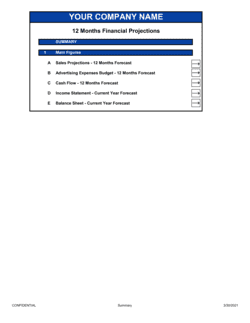
Planning financial performance for the next 12 monthsFinancial Projections (12 Months)

Common mistakes to avoid

❌ Writing the executive summary first

Why it matters: A summary written before the body will contradict details in the plan, making the document feel uncoordinated and unvetted.

Fix: Complete every other section, then distill the executive summary from the finished plan so all figures and claims are consistent.

❌ Using top-down market sizing without a bottom-up check

Why it matters: Claiming 1% of a $10B market sounds easy until you count the accounts needed to get there β€” if the math requires 50,000 customers and you have no path to 50,000, the projection is fiction.

Fix: Build a bottom-up model: reachable accounts in ICP Γ— win rate Γ— ACV = your realistic SAM. Both estimates should appear side by side.

❌ Feature-listing in the product section instead of outcome-framing

Why it matters: A list of 14 features tells investors nothing about why customers pay. It signals that the founder has not yet identified the core value driver.

Fix: Lead with the customer outcome ('reduces infrastructure spend by 30%'), then list only the features that directly deliver that outcome.

❌ Projecting revenue without building from customer-level assumptions

Why it matters: Hockey-stick projections with no supporting unit economics model lose credibility in the first five minutes of investor review.

Fix: Build revenue from monthly new customer additions Γ— ACV, layered with expansion and churn. Show every assumption in a separate model tab.

❌ Omitting the operations and infrastructure section

Why it matters: Skipping operations signals to B2B investors that you have not modeled cloud costs, support headcount, or compliance requirements β€” all of which materially affect gross margin.

Fix: Include at minimum: cloud cost per customer at current and projected scale, support model, and the compliance certifications required for your target market.

❌ Vague funding ask with no milestone attached

Why it matters: Asking for $2M with no breakdown or target outcome tells investors you have not thought through execution β€” or that the plan was written to impress rather than to operate.

Fix: Specify the instrument, the spending breakdown by bucket (product, sales, ops, G&A), and the ARR or customer milestone the capital funds, with a projected date.

The 10 key sections, explained

Executive Summary

Company Overview

Market Analysis

Product Description and Roadmap

Competitive Analysis

Go-to-Market and Sales Strategy

Operations and Technology Infrastructure

Management Team

Financial Projections

Funding Requirements and Use of Funds

How to fill it out

  1. 1

    Complete the company overview and mission

    Enter the legal entity name, incorporation details, and a one-sentence mission that identifies the software product, the target customer, and the outcome delivered. This section anchors the framing for every section that follows.

    πŸ’‘ Write the mission before anything else β€” if you cannot state it in one sentence, the plan's scope will drift.

  2. 2

    Build market analysis from the bottom up

    Research TAM using at least two independent sources (e.g., Gartner and a trade association report). Validate with a bottom-up calculation: number of reachable accounts in your ICP Γ— average contract value = your SAM estimate.

    πŸ’‘ Bottom-up and top-down estimates should land within 30% of each other. A larger gap signals a flawed assumption that investors will catch immediately.

  3. 3

    Describe the product with outcomes, not features

    Explain what the software does and what specific problem it solves, then include pricing tiers and the product roadmap with dates. Describe each roadmap milestone in terms of the customer outcome it unlocks, not the engineering task it represents.

    πŸ’‘ If a reader unfamiliar with your product cannot understand what it does in two sentences, simplify the description before adding roadmap detail.

  4. 4

    Map the competitive landscape honestly

    List at least four direct or indirect competitors with their pricing, strengths, and weaknesses. Write one specific paragraph on your differentiated advantage and why it is defensible β€” network effects, switching costs, proprietary data, or a patent.

    πŸ’‘ A 2Γ—2 positioning matrix with axes matching your key differentiators makes this section scannable for busy investors.

  5. 5

    Define the go-to-market motion and unit economics

    Choose one primary sales motion (self-serve, inside sales, or enterprise) and two to three acquisition channels. For each channel, estimate CAC, conversion rate, and payback period. Tie these numbers directly to the revenue model.

    πŸ’‘ If CAC payback exceeds 18 months, flag it explicitly and describe the specific lever β€” price increase, reduced churn, or expanded seats β€” that brings it below 18 months.

  6. 6

    Build the SaaS financial model from unit economics up

    Model monthly new customer additions, starting MRR, expansion MRR, churned MRR, and net new MRR for Year 1 month by month. Then roll up to annual P&L, cash flow, and balance sheet for Years 1–5.

    πŸ’‘ Include a sensitivity table showing the effect of churn increasing by 1–2 percentage points. This is the first scenario every SaaS investor will run.

  7. 7

    State the funding ask with specific milestones

    Enter the total amount, the instrument, the spending breakdown by bucket, and the specific ARR or customer milestones the capital funds. Tie each bucket to a measurable output.

    πŸ’‘ Express the ask in terms of outcomes: '$1.2M to reach $600K ARR with 14 months of runway at $85K monthly burn' is more fundable than '$1.2M for operations.'

  8. 8

    Write the executive summary last

    Pull the single strongest data point from each section and compress them into 1–2 pages. Lead with the problem and the market size, then the solution, traction, team, and ask.

    πŸ’‘ If the summary runs longer than two pages, cut it. Investors read the summary and the financial model first β€” everything else is diligence.

Frequently asked questions

What is a software company business plan?

A software company business plan is a structured document that defines a software or SaaS venture's product vision, target market, competitive positioning, go-to-market strategy, technology infrastructure, management team, and 3–5 year financial projections. Unlike a generic business plan, it is built around software-specific metrics β€” MRR, ARR, churn, CAC, and LTV β€” that investors and lenders use to evaluate the business model's scalability and capital efficiency.

How is a software business plan different from a standard business plan?

A standard business plan covers general financials and operations. A software company plan adds product roadmap milestones, SaaS unit economics (CAC payback, NRR, gross margin by revenue tier), infrastructure cost modeling, and a compliance posture section covering SOC 2 or GDPR requirements. Investors in software companies benchmark these metrics against sector norms β€” a plan that presents only revenue and expenses without underlying SaaS metrics signals a founder unfamiliar with how the business will be valued.

What financial metrics should a software business plan include?

At minimum: MRR and ARR projections, monthly churn rate, gross margin, CAC by channel, LTV, CAC payback period, net revenue retention, burn rate, and runway. These metrics should flow from the customer-level model in the financial section and tie directly to the go-to-market assumptions in the strategy section. A three-statement model (P&L, cash flow, balance sheet) is also required for any institutional investor or lender.

How long should a software company business plan be?

For investor or lender audiences, 20–35 pages plus a financial model appendix is the accepted range. The plan should be long enough to address every investor question before it is asked, and short enough to be read in under an hour. A one-page plan is insufficient for any capital raise above an informal friends-and-family round.

Do I need a business plan to raise a seed round for a software company?

Most seed-stage investors in software accept a pitch deck for an initial meeting but request a full plan and financial model before making a term sheet. Accelerator programs and many angel networks require a written plan as part of the application. Even if investors do not explicitly ask for a plan, building one forces you to stress-test assumptions β€” catching problems before you spend real money on them.

What sales model should I describe in the go-to-market section?

Choose one primary motion β€” self-serve (product-led growth), inside sales (SDR/AE model), or enterprise field sales β€” and describe it in enough detail that a reader can model the headcount and cost implications. Presenting all three motions as equally weighted signals indecision. Early-stage software companies with ACV below $5,000 typically fit self-serve; ACV between $5,000 and $50,000 fits inside sales; above $50,000 typically requires a field sales or channel model.

How should I handle churn in the financial projections?

Model churn explicitly as a monthly customer-level assumption, not as a revenue adjustment at the end of the year. Show gross churn (customers lost) separately from net revenue retention (which captures expansion revenue from existing accounts). Include a sensitivity table showing the effect of churn increasing by one and two percentage points β€” investors will run this scenario themselves, so surfacing it proactively demonstrates financial discipline.

Can I use this template for a non-SaaS software business?

Yes. The template structure applies to any software company, including licensed software, marketplace platforms, and managed software services. For non-subscription models, replace MRR and ARR with the relevant revenue metric β€” license fee per seat, transaction volume, or services revenue β€” and adjust the unit economics section to reflect your actual cost and margin structure. The market analysis, competitive analysis, and product roadmap sections apply regardless of the revenue model.

How often should a software company update its business plan?

Update the plan before every significant fundraising conversation and after any material change to the business model, pricing, or market assumptions. For operating businesses, a full annual review aligned to the fiscal year is standard. Monthly tracking of MRR, churn, and CAC against the plan's assumptions is good practice β€” if actuals diverge by more than 20% from projections, update the forward model before the next investor or board conversation.

How this compares to alternatives

vs Standard Business Plan

A standard business plan covers any industry with generic revenue and cost modeling. A software company plan is built around SaaS-specific metrics β€” MRR, churn, CAC payback, and NRR β€” and includes a product roadmap and infrastructure cost model that a general plan omits. Use the software-specific template for any technology venture raising capital from investors who benchmark against sector norms.

vs Pitch Deck

A pitch deck is 10–15 slides for a 20-minute meeting β€” it generates interest and secures a follow-up. A business plan is the full diligence document requested after the deck. The deck gets you in the room; the plan closes the round. Both should be built from the same underlying financial model and assumptions.

vs One-Page Business Plan

A one-page plan is a rapid-alignment tool for internal teams or early ideation. It lacks the SaaS unit economics, financial model depth, and competitive analysis that investors and lenders require. Use it to test ideas quickly, then build the full software company plan before any capital raise or formal loan application.

vs Financial Projections Template

A financial projections template is a standalone model covering revenue, expenses, and cash flow. A software company business plan contextualizes those numbers with market analysis, product strategy, and team narrative β€” the story that explains why the projections are credible. Investors never evaluate a financial model in isolation from the underlying business assumptions.

Industry-specific considerations

SaaS / Cloud Software

MRR/ARR model, monthly churn rate, net revenue retention, and tiered pricing with per-seat or usage-based billing structures.

Fintech

Regulatory licensing requirements, PCI-DSS and SOC 2 compliance timelines, and transaction-volume-based unit economics alongside subscription revenue.

Healthcare / HealthTech

HIPAA compliance posture, regulatory pathway for clinical software (FDA SaMD), reimbursement code references, and longer enterprise sales cycles reflected in the revenue model.

E-commerce / Retail Tech

GMV-based or transaction-fee pricing models, seasonal revenue patterns, and integration ecosystem depth as a competitive moat in the product section.

Template vs pro β€” what fits your needs?

PathBest forCostTime
Use the templateEarly-stage software founders, accelerator applications, and internal strategic planningFree2–4 weeks (40–80 hours)
Template + professional reviewSeed raises up to $1M, first institutional loan, or founders without a financial modeling background$500–$2,500 for a financial model review or startup advisor session3–5 weeks
Custom draftedSeries A raises, enterprise SaaS with complex multi-year contract modeling, or regulated verticals (fintech, healthtech)$3,000–$10,000 for a professional business plan writer with SaaS experience4–8 weeks

Glossary

MRR (Monthly Recurring Revenue)
The predictable revenue a SaaS or subscription business expects to collect every month from active paying customers.
ARR (Annual Recurring Revenue)
MRR multiplied by 12 β€” a standard top-line metric used to compare subscription businesses and anchor valuations.
Churn Rate
The percentage of customers or revenue lost in a given period, typically expressed monthly or annually.
CAC (Customer Acquisition Cost)
Total sales and marketing spend divided by the number of new customers acquired in the same period.
LTV (Customer Lifetime Value)
The total gross profit expected from a single customer over the entire duration of the relationship.
CAC Payback Period
The number of months required to recover the cost of acquiring a customer from that customer's gross margin contribution.
Net Revenue Retention (NRR)
Revenue from existing customers at the end of a period divided by revenue from those same customers at the start β€” captures expansion and churn together.
Burn Rate
Monthly net cash outflow β€” how quickly a startup consumes its capital before reaching profitability or raising additional funding.
Runway
The number of months a company can operate at its current burn rate before exhausting its cash, assuming no new revenue or funding.
Product-Market Fit
The stage at which a software product satisfies a strong market demand, evidenced by measurable retention, organic growth, or NPS above 40.
Go-to-Market Strategy
The specific channels, pricing model, and sequencing a software company uses to acquire its first customers and scale revenue.
TAM / SAM / SOM
Total Addressable Market, Serviceable Addressable Market, and Serviceable Obtainable Market β€” three nested measures of market size and realistic near-term reach.

Part of your Business Operating System

This document is one of 3,000+ business & legal templates included in Business in a Box.

  • Fill-in-the-blanks β€” ready in minutes
  • 100% customizable Word document
  • Compatible with all office suites
  • Export to PDF and share electronically

Create your document in 3 simple steps.

From template to signed document β€” all inside one Business Operating System.
1
Download or open template

Access over 3,000+ business and legal templates for any business task, project or initiative.

2
Edit and fill in the blanks with AI

Customize your ready-made business document template and save it in the cloud.

3
Save, Share, Send, Sign

Share your files and folders with your team. Create a space of seamless collaboration.

Save time, save money, and create top-quality documents.

β˜…β˜…β˜…β˜…β˜…

"Fantastic value! I'm not sure how I'd do without it. It's worth its weight in gold and paid back for itself many times."

Managing Director Β· Mall Farm
Robert Whalley
Managing Director, Mall Farm Proprietary Limited
β˜…β˜…β˜…β˜…β˜…

"I have been using Business in a Box for years. It has been the most useful source of templates I have encountered. I recommend it to anyone."

Business Owner Β· 4+ years
Dr Michael John Freestone
Business Owner
β˜…β˜…β˜…β˜…β˜…

"It has been a life saver so many times I have lost count. Business in a Box has saved me so much time and as you know, time is money."

Owner Β· Upstate Web
David G. Moore Jr.
Owner, Upstate Web

Run your business with a system β€” not scattered tools

Stop downloading documents. Start operating with clarity. Business in a Box gives you the Business Operating System used by over 250,000 companies worldwide to structure, run, and grow their business.

Start freeΒ Β·Β No credit card required