IT Company Business Plan Template

Free Word download β€’ Edit online β€’ Save & share with Drive β€’ Export to PDF

31 pagesβ€’2h 35m – 3h 30m to fillβ€’Difficulty: Expert
Learn more ↓
FreeIT Company Business Plan Template

At a glance

What it is
An IT Company Business Plan is a structured document that outlines the strategic, operational, and financial roadmap for an information technology business β€” whether a managed services provider, software development firm, IT consulting practice, or cloud solutions company. This free Word download gives you a fully formatted, investor-ready template you can edit online and export as PDF in minutes.
When you need it
Use it when launching a new IT venture, applying for a business loan or grant, pitching to technology investors, or realigning an existing IT business around a new service line or growth strategy.
What's inside
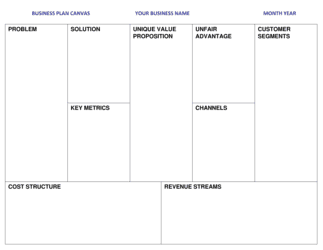
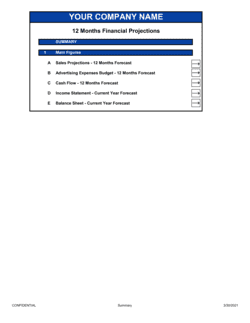
Executive summary, company overview, technology services and product offerings, market analysis and competitive landscape, go-to-market and sales strategy, operational and delivery model, management team profiles, and three-to-five year financial projections including P&L, cash flow, and funding requirements.

What is an IT Company Business Plan?

An IT Company Business Plan is a structured strategic and financial document that maps the full business model of an information technology company β€” whether a managed services provider, software development firm, IT consulting practice, or cloud solutions business. It covers target market definition, competitive positioning, service offerings and pricing, delivery operations, management team, and three-to-five year financial projections including MRR growth, churn assumptions, gross margin, and funding requirements. Unlike a generic business plan, it is built around the metrics and operational realities specific to technology businesses: recurring revenue, SLA commitments, technician-to-client ratios, and scalable delivery infrastructure.

Why You Need This Document

Without a written IT company business plan, capital conversations stall the moment an investor or loan officer asks for supporting financials, and internal teams execute against conflicting assumptions about which client segments to pursue and how to price services. The planning process itself forces you to model how many clients at what contract value produce a profitable business β€” and at what churn rate the model breaks. Lenders require a formal plan for any SBA loan, and technology accelerators will not advance an application without one. A complete, well-structured plan signals operational discipline to clients, partners, and hires as much as it does to investors. This template gives you the structure and section-by-section guidance to produce a credible, investor-ready IT business plan in a fraction of the time it would take to build from a blank document.

Which variant fits your situation?

If your situation is…Use this template
Launching a managed services provider (MSP) targeting SMBsIT Company Business Plan
Building a SaaS product with a subscription revenue modelSaaS Business Plan
Pitching a technology concept to angel investors in a single meetingOne-Page Business Plan
Starting a cybersecurity consulting practiceIT Consulting Business Plan
Applying for an SBA loan for IT infrastructure expansionBank Loan Business Plan
Launching a new software product line within an existing IT firmNew Product Launch Plan
Seeking Series A funding for a scaling technology companyInvestor Business Plan

Common mistakes to avoid

❌ Feature-focused service descriptions

Why it matters: Describing what the technology does rather than what the client gains makes it impossible for a non-technical investor or lender to evaluate the business value.

Fix: Rewrite every service description as an outcome statement: 'Clients experience fewer than 4 hours of unplanned downtime per year' rather than '24/7 network monitoring with automated alerts.'

❌ Omitting churn from the financial model

Why it matters: An IT services business projecting 20% MRR growth while ignoring a 4% monthly churn rate is modeling a company that is effectively shrinking on a net basis.

Fix: Add a churn assumption to every revenue projection and show net MRR β€” new MRR minus churned MRR β€” as the primary growth metric.

❌ Claiming no competition

Why it matters: Every IT client currently manages the problem somehow β€” with an internal hire, a break-fix vendor, or manual processes. Ignoring these alternatives signals poor market research.

Fix: Identify the top four alternatives your target clients use today and write one specific sentence on why each is inferior for your target segment.

❌ No operations or delivery model section

Why it matters: IT investors specifically evaluate whether the delivery model is scalable β€” a business that requires one technician per five clients has a fundamentally different margin ceiling than one requiring one per fifty.

Fix: Include your technician-to-client ratio, tooling stack, SLA tiers, and the specific investment or hire required to double your client base.

❌ Vague funding ask with no milestone linkage

Why it matters: Asking for $500K without specifying what it funds and what it achieves tells investors you have not thought through execution β€” and raises concerns about financial discipline.

Fix: Break the funding ask into four buckets (product, sales, staffing, G&A) with a dollar amount and a specific deliverable tied to each.

❌ Team bios without quantified IT achievements

Why it matters: Listing certifications (CISSP, AWS Solutions Architect) without connecting them to business results makes a technically qualified team look commercially unproven.

Fix: Lead each bio with one quantified achievement relevant to the role: 'Grew an MSP from 12 to 85 clients in 24 months' is more persuasive than a list of credentials.

The 10 key sections, explained

Executive Summary

Company Overview

Technology Services and Product Offerings

Market Analysis

Competitive Analysis

Marketing and Sales Strategy

Operations and Delivery Model

Management Team

Financial Projections

Funding Requirements and Use of Funds

How to fill it out

  1. 1

    Complete the company overview and mission

    Enter your legal company name, entity type, founding date, headquarters, and a one-sentence mission statement that names your client type and the IT problem you solve.

    πŸ’‘ Avoid describing the technology β€” describe the client outcome. 'We eliminate unplanned downtime for 50-person manufacturing firms' outperforms 'We provide proactive network monitoring.'

  2. 2

    Define and price each service line

    List every service or product with a plain-English description, delivery model (remote, on-site, or hybrid), pricing structure, and current status (live, beta, or in development).

    πŸ’‘ Bundle services into named tiers (e.g., Essential, Professional, Enterprise) rather than listing features Γ  la carte β€” tiered packaging maps directly to your financial model's revenue assumptions.

  3. 3

    Build market sizing from the bottom up

    Research TAM using two independent sources (e.g., Gartner and an industry association report). Then calculate a bottom-up SAM: number of reachable target clients in your geography multiplied by your average contract value.

    πŸ’‘ Bottom-up and top-down estimates should land within 30% of each other. A wider gap signals a flawed assumption in one of the models.

  4. 4

    Map competitors and articulate your differentiation

    Identify at least four competitors β€” including national MSPs, regional IT firms, and in-house IT teams as indirect alternatives. For each, note their pricing, strengths, and a specific weakness your offering addresses.

    πŸ’‘ One sentence of specific differentiation ('4-hour on-site SLA vs. the industry standard of next-business-day') is worth more than a paragraph of generic claims.

  5. 5

    Define your ideal client profile and acquisition channels

    Specify the target client by employee count, industry, geography, and current IT pain point. Then select two to three primary acquisition channels, estimate CAC for each, and tie those numbers to your financial projections.

    πŸ’‘ For IT services, referral and partner channels (accounting firms, insurance brokers) typically produce CAC 40–60% lower than outbound cold outreach.

  6. 6

    Build the financial model from unit economics

    Start with clients Γ— monthly contract value = MRR, then layer in churn, upsell assumptions, gross margin, and headcount costs. Model monthly for Year 1 and annually for Years 2–5.

    πŸ’‘ Include a scenario where churn runs 2Γ— your base assumption. If the business still reaches breakeven within 18 months under that scenario, your model is credible.

  7. 7

    Write the executive summary last

    Pull the single strongest data point from each section β€” market size, key traction metric, gross margin target, and funding ask β€” and compress them into one to two pages.

    πŸ’‘ Investors in IT services companies read the executive summary and financial model first. If those two sections are not compelling independently, the rest of the plan will not be read.

Frequently asked questions

What is an IT company business plan?

An IT company business plan is a structured document that outlines the strategy, services, market opportunity, operations, team, and financial projections for an information technology business. It covers everything from the specific IT services offered and target client profiles to three-to-five year revenue models and funding requirements. It serves both as an internal operating roadmap and as the primary document presented to investors, lenders, and strategic partners.

What sections should an IT company business plan include?

A complete IT business plan covers ten core areas: executive summary, company overview, technology services and product offerings, market analysis, competitive landscape, marketing and sales strategy, operations and delivery model, management team, financial projections (P&L, cash flow, and balance sheet), and funding requirements with use-of-funds breakdown. The financial model should include MRR growth, churn, gross margin, and a monthly Year 1 detail.

How is an IT company business plan different from a generic business plan?

An IT-specific plan addresses metrics and considerations unique to technology businesses β€” MRR and ARR, churn rate, net revenue retention, technician-to-client staffing ratios, SLA structures, and cloud infrastructure cost models. Generic business plans lack these frameworks and often produce financial projections that do not reflect how IT services businesses actually scale. An IT-specific template ensures the right questions are answered for a technically informed audience.

What financial metrics matter most for an IT services business plan?

The five metrics investors and lenders scrutinize most for IT services businesses are monthly recurring revenue (MRR) and its growth rate, monthly churn rate, gross margin (target 60–75% for MSPs, higher for SaaS), customer acquisition cost (CAC) and payback period, and net revenue retention (NRR). A plan that models all five clearly will be taken more seriously than one that only shows a top-line revenue projection.

Do I need a business plan to start an IT consulting company?

No law requires a formal business plan to launch an IT consulting firm, but the planning process itself prevents costly mistakes. Working through the competitive analysis forces you to define your specific niche rather than competing on price with every MSP in your market. The financial model reveals how many clients you need to cover costs before you sign your first contract. For any business seeking a loan, an SBA program, or accelerator funding, a written plan is a hard requirement.

How long should an IT company business plan be?

For investor or lender audiences, 20–30 pages plus a financial model appendix is appropriate. Internal operating plans can be shorter. A one-page plan is useful for initial ideation but lacks the financial depth and competitive evidence that banks and technology investors require. The executive summary and financial projections are the two sections read most carefully β€” make sure both can stand alone.

What makes investors reject IT company business plans?

The four most common rejection points for IT business plans are: financial projections that ignore churn and show only gross MRR growth, a competitive analysis that dismisses in-house IT teams and national MSPs as non-competitors, service descriptions written for a technical audience rather than a business outcome audience, and a funding ask with no milestone breakdown. Any one of these signals a founder who has not stress-tested their own model.

Can I use this template for an MSP, software firm, and IT consulting practice?

Yes. The template is structured to accommodate all three IT business models. For MSPs, the operations section covers SLA tiers and technician ratios. For software firms, the products section covers development stage and subscription pricing. For IT consulting practices, the sales strategy section covers billable utilization rates and project-based revenue. Adapt the financial model section to the revenue structure of your specific model β€” recurring, project-based, or hybrid.

How often should an IT company business plan be updated?

Update the plan before any new capital raise, loan application, or major strategic pivot. For operational use, a full annual review aligned to your fiscal year is standard, with a mid-year checkpoint to update the financial model against actual MRR, churn, and gross margin. A plan more than 18 months old no longer reflects the current competitive landscape in IT β€” a fast-moving sector where new entrants and platform shifts change the market materially each year.

How this compares to alternatives

vs General Business Plan

A general business plan covers the standard strategy and financial sections applicable to any industry. An IT company business plan replaces generic revenue and cost line items with IT-specific metrics β€” MRR, churn, gross margin, and SLA structure. Use the IT-specific template when your audience understands technology business models and will scrutinize those metrics directly.

vs One-Page Business Plan

A one-page plan is a rapid internal alignment tool suitable for early ideation and team discussions. It lacks the financial depth, competitive evidence, and delivery model detail that investors and lenders require. Use the one-page format to test an idea, then build the full IT company plan before any external capital conversation.

vs IT Strategic Plan

An IT strategic plan focuses on internal technology roadmap decisions β€” infrastructure upgrades, platform migrations, and security posture improvements β€” for an established organization's IT department. An IT company business plan is an external-facing document for a company that sells IT services or products to clients. The audience, purpose, and financial structure are fundamentally different.

vs New Product Launch Plan

A product launch plan covers the go-to-market execution for a single new offering β€” pricing, channels, launch timeline, and success metrics. An IT company business plan encompasses the full company strategy, including all service lines, financial history or projections, team, and funding structure. Use the launch plan when adding a new service to an existing IT business; use the full business plan when presenting the company as a whole to an investor or lender.

Industry-specific considerations

Managed Services (MSP)

Recurring contract revenue model, technician-to-client ratios, SLA tiers, RMM and PSA tooling costs, and client churn assumptions are the core financial drivers.

SaaS and Software Development

MRR, ARR, net revenue retention, CAC payback, and cloud infrastructure cost as a percentage of revenue are the defining metrics for a software-focused IT business plan.

Cybersecurity Services

Regulatory compliance requirements (SOC 2, ISO 27001, HIPAA), incident response SLA commitments, and the growing demand from cyber insurers drive differentiation and pricing.

Healthcare IT

HIPAA Business Associate Agreement obligations, EHR integration expertise, and strict uptime requirements for clinical systems are non-negotiable client expectations that shape the service and operations sections.

Template vs pro β€” what fits your needs?

PathBest forCostTime
Use the templateIT founders, MSP owners, and consultants building a plan for internal strategy, SBA loans under $350K, or accelerator applicationsFree2–4 weeks (30–60 hours)
Template + professional reviewSeed raises up to $500K, first bank loan, or plans requiring a validated financial model and market sizing review$500–$2,500 for a business advisor or fractional CFO review3–5 weeks
Custom draftedSeries A raises, acquisition targets, or IT companies in regulated sectors (healthcare IT, fintech infrastructure) requiring institutional-grade diligence documents$3,000–$10,000 for a professional business plan writer with IT sector experience4–8 weeks

Glossary

Managed Services Provider (MSP)
An IT company that delivers ongoing technology support, monitoring, and management to clients under a recurring monthly contract.
MRR (Monthly Recurring Revenue)
Predictable revenue generated each month from active subscriptions or managed service contracts β€” the primary health metric for IT service businesses.
SLA (Service Level Agreement)
A contractual commitment specifying response times, uptime guarantees, and remediation procedures between an IT provider and a client.
Total Addressable Market (TAM)
The total revenue opportunity available for an IT company's services or products if it captured 100% of the target market.
CAC (Customer Acquisition Cost)
Total sales and marketing spend divided by the number of new customers acquired in the same period.
LTV (Customer Lifetime Value)
The total gross profit expected from a single client over the entire business relationship, used to validate the cost of acquisition.
Churn Rate
The percentage of clients or recurring revenue lost within a given period β€” a critical metric for MSPs and SaaS companies.
Gross Margin
Revenue minus the direct cost of delivering a service or product, expressed as a percentage of revenue β€” a primary indicator of IT business scalability.
Technology Stack
The combination of software, platforms, frameworks, and infrastructure tools an IT company uses internally or delivers to clients.
Runway
Months of operation remaining at the current burn rate before cash is exhausted, assuming no new revenue or outside funding.
Net Revenue Retention (NRR)
The percentage of recurring revenue retained from existing clients after accounting for churn, downgrades, and upsells β€” values above 100% indicate net expansion.

Part of your Business Operating System

This document is one of 3,000+ business & legal templates included in Business in a Box.

  • Fill-in-the-blanks β€” ready in minutes
  • 100% customizable Word document
  • Compatible with all office suites
  • Export to PDF and share electronically

Create your document in 3 simple steps.

From template to signed document β€” all inside one Business Operating System.
1
Download or open template

Access over 3,000+ business and legal templates for any business task, project or initiative.

2
Edit and fill in the blanks with AI

Customize your ready-made business document template and save it in the cloud.

3
Save, Share, Send, Sign

Share your files and folders with your team. Create a space of seamless collaboration.

Save time, save money, and create top-quality documents.

β˜…β˜…β˜…β˜…β˜…

"Fantastic value! I'm not sure how I'd do without it. It's worth its weight in gold and paid back for itself many times."

Managing Director Β· Mall Farm
Robert Whalley
Managing Director, Mall Farm Proprietary Limited
β˜…β˜…β˜…β˜…β˜…

"I have been using Business in a Box for years. It has been the most useful source of templates I have encountered. I recommend it to anyone."

Business Owner Β· 4+ years
Dr Michael John Freestone
Business Owner
β˜…β˜…β˜…β˜…β˜…

"It has been a life saver so many times I have lost count. Business in a Box has saved me so much time and as you know, time is money."

Owner Β· Upstate Web
David G. Moore Jr.
Owner, Upstate Web

Run your business with a system β€” not scattered tools

Stop downloading documents. Start operating with clarity. Business in a Box gives you the Business Operating System used by over 250,000 companies worldwide to structure, run, and grow their business.

Start freeΒ Β·Β No credit card required