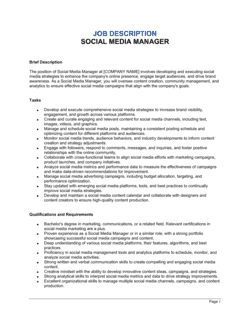
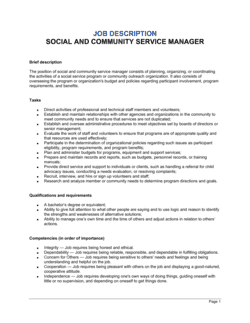
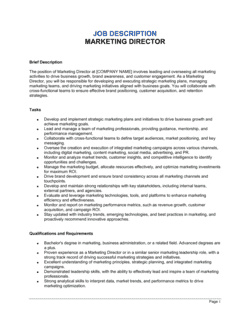
- Job Description
- A formal document outlining the duties, qualifications, reporting relationships, and performance expectations for a specific role within an organization.
- KPI (Key Performance Indicator)
- A measurable metric used to evaluate whether an employee or function is meeting defined performance targets — e.g., follower growth rate, engagement rate, or cost per lead from social channels.
- Engagement Rate
- The percentage of an audience that interacts with a post — calculated as total interactions (likes, comments, shares) divided by total reach or impressions.
- Organic Reach
- The number of unique users who see a piece of social content without paid promotion behind it.
- Paid Social
- Advertising on social media platforms — such as Meta Ads, LinkedIn Campaign Manager, or TikTok Ads — where budget is allocated to amplify content or generate leads.
- Content Calendar
- A scheduling tool that maps planned social media posts across platforms by date, format, topic, and campaign, ensuring consistent publishing cadence.
- Brand Voice
- The consistent tone, language style, and personality a company uses across all communications, including social media channels.
- Community Management
- The practice of monitoring, responding to, and moderating audience interactions — comments, messages, and mentions — on social media platforms.
- Social Listening
- Tracking brand mentions, competitor activity, and industry conversations across social platforms to inform strategy and identify opportunities or risks.
- At-Will Employment
- An employment relationship in most US states where either party may end the arrangement at any time for any lawful reason, without advance notice unless the contract specifies otherwise.
- FLSA (Fair Labor Standards Act)
- US federal law establishing minimum wage, overtime pay, and exempt vs. non-exempt employee classifications — relevant when determining whether a social media manager qualifies as exempt from overtime.