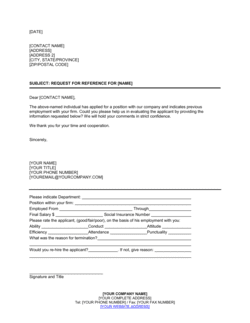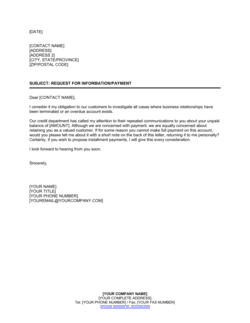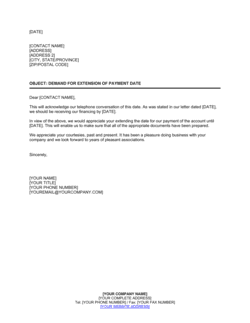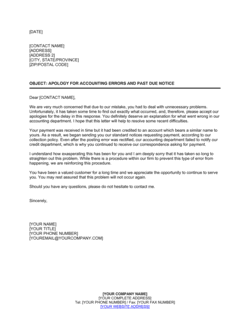
Request for Instructions on Deferred Collections Template

Free Word download β€’ Edit online β€’ Save & share with Drive β€’ Export to PDF

1 pageβ€’15–20 min to fillβ€’Difficulty: Standard
Learn more ↓
FreeRequest for Instructions on Deferred Collections Template

At a glance

What it is
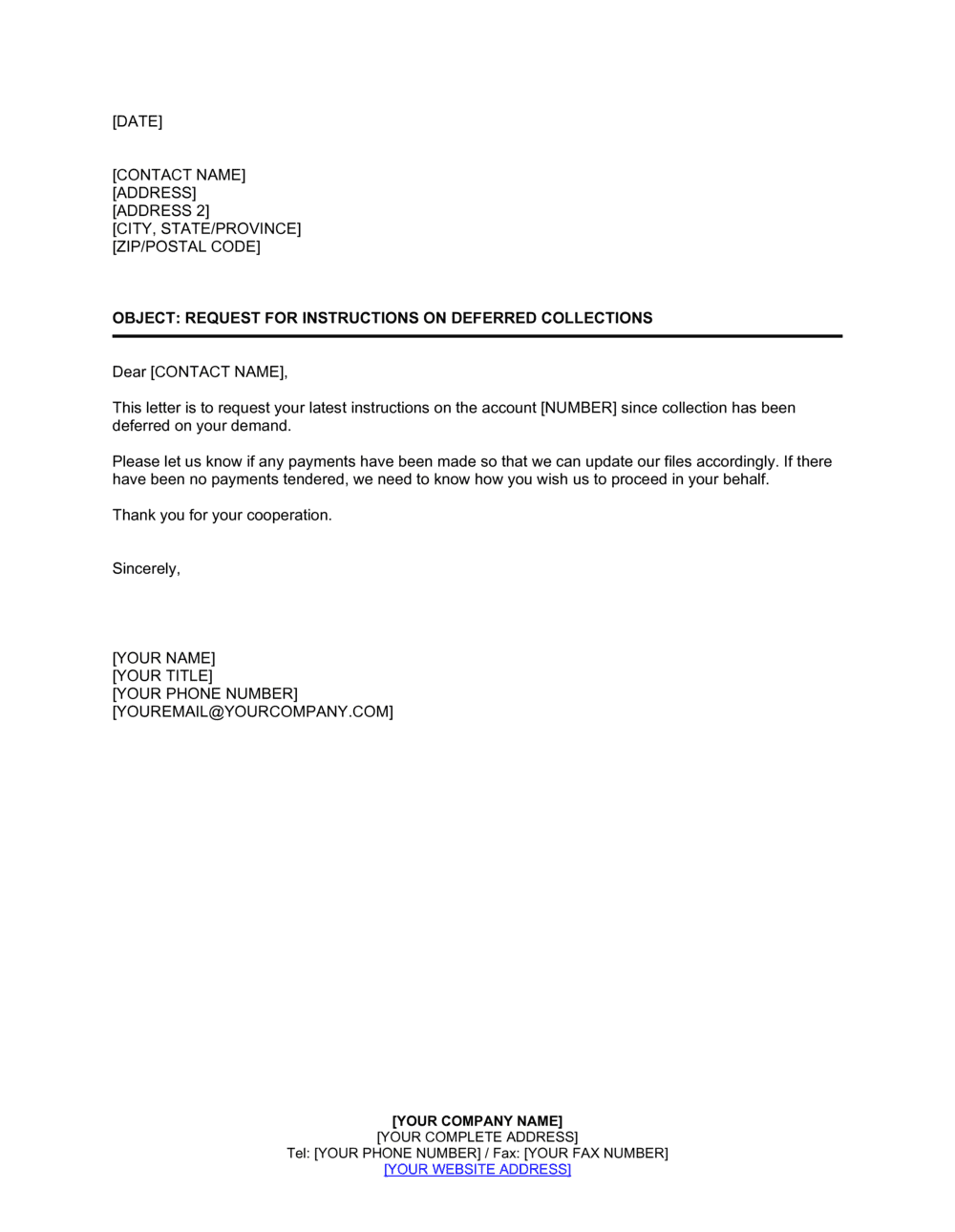
A Request For Instructions On Deferred Collections is a formal business letter sent by a creditor, collections agent, or accounts receivable manager to a client, debtor, or internal department to confirm that collection activity on a specific account has been deferred β€” and to formally request guidance on next steps. This free Word download is ready to edit online and export as PDF in minutes.
When you need it
Use it when collection action on an outstanding account has been paused β€” due to a dispute, a payment arrangement, a legal hold, or an internal policy decision β€” and you need written confirmation of how to proceed. It creates a documented paper trail that protects all parties and keeps the collections process moving.
What's inside
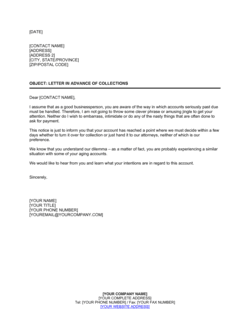
A date and reference block, identification of the account and outstanding balance, a clear statement of the deferral and its reason, a specific request for instructions, a response deadline, and sender contact details for follow-up.

What is a Request For Instructions On Deferred Collections?

A Request For Instructions On Deferred Collections is a formal business letter used to notify a relevant party β€” a client, debtor, collections agency, or internal department β€” that active collection activity on a specific outstanding account has been deliberately paused, and to formally request written guidance on how to proceed. It identifies the account and outstanding balance, states the reason for the deferral, and sets a clear deadline for a response. Unlike a demand for payment or a past due notice, this letter is a process management tool: it documents a hold that is already in place and moves the account forward by prompting a decision from the appropriate party.

Why You Need This Document

Without a written record of a collections deferral, accounts can stall indefinitely with no documented reason for the pause and no clear path to resolution. Collections staff, creditors, and debtors each operate from their own records β€” and without a formal letter in the file, disputes about whether a hold was authorized, when it started, and what instructions were given are nearly impossible to resolve cleanly. This template ensures the deferral is documented with a specific effective date, a factual reason, and a response deadline, giving all parties a shared reference point. It also protects the sender: if a debtor later claims collection action continued during a hold, or if an auditor questions why an overdue account was not pursued, the letter provides the paper trail that explains the decision. Using a professionally structured template takes less than ten minutes and eliminates the ambiguity that routinely extends collections cycles by weeks.

Which variant fits your situation?

If your situation is…Use this template
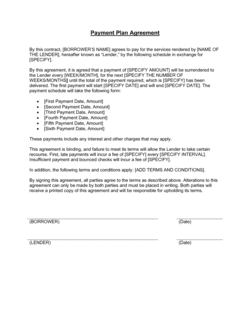
Deferring collection while a formal payment plan is negotiatedPayment Plan Agreement
Placing an account on hold due to an active billing disputeDispute Resolution Letter
Notifying a debtor of an overdue balance for the first timePast Due Notice Letter
Formally demanding full payment of an outstanding amountDemand for Payment Letter
Confirming agreed terms after deferral instructions are receivedPayment Agreement Confirmation Letter
Writing off an uncollectable account after exhausting deferral optionsDebt Write-Off Notice

Common mistakes to avoid

❌ No response deadline

Why it matters: Without a deadline, recipients routinely deprioritize the request and the account sits in limbo β€” extending the collections cycle unnecessarily.

Fix: Always state a specific calendar date and include a default action that triggers automatically if the deadline passes without a response.
❌ Missing account or invoice reference numbers

Why it matters: Vague letters referencing 'your outstanding balance' force the recipient to search their system, slowing the process and creating grounds to dispute which debt is being discussed.

Fix: Include the exact account number and all relevant invoice numbers and dates in both the reference line and the body of the letter.

❌ Omitting the reason for the deferral

Why it matters: Recipients who do not understand why collection was paused are more likely to dispute the deferral, escalate the matter, or ignore the letter entirely.

Fix: Provide a brief, factual one-sentence explanation β€” 'collection has been deferred pending resolution of a disputed charge' β€” so the context is clear.

❌ Sending to a general department email with no named recipient

Why it matters: Letters addressed to 'Accounts Payable' or 'Collections Department' are frequently delayed, misfiled, or left unactioned because no individual owns the response.

Fix: Identify the specific person responsible for the account and address the letter to them by name and title.

The 8 key clauses, explained

Date, reference, and address block

In plain language: Identifies when the letter was written, assigns a unique reference number, and addresses it to the correct individual and entity.

Sample language
[DATE] | Re: Account No. [ACCOUNT NUMBER] β€” [DEBTOR FULL NAME] | Dear [RECIPIENT NAME],

Common mistake: Using a generic salutation like 'To Whom It May Concern' when the recipient is known β€” this reduces accountability and makes follow-up harder to trace.

Account identification and outstanding balance

In plain language: States the specific account or invoice in question and the exact amount outstanding so there is no ambiguity about which debt is being discussed.

Sample language
This letter concerns the outstanding balance of $[AMOUNT] on Account No. [ACCOUNT NUMBER], relating to Invoice(s) [INVOICE NUMBERS] dated [DATE(S)].

Common mistake: Omitting invoice numbers or dates, which forces the recipient to search their records and delays their response.

Statement of deferral

In plain language: Clearly states that active collection on the account has been deferred and as of what date, so all parties share the same understanding.

Sample language
Please be advised that collection activity on the above-referenced account has been deferred effective [DATE], pending [REASON FOR DEFERRAL].

Common mistake: Describing the deferral vaguely as 'on hold' without stating an effective date, leaving the recipient unsure whether the deferral is already in effect.

Reason for deferral

In plain language: Briefly explains why collection was paused β€” e.g., a disputed invoice, an active payment arrangement negotiation, or a legal or compliance hold.

Sample language
The deferral has been initiated due to [REASON β€” e.g., a pending billing dispute / an in-progress payment arrangement / a compliance review].

Common mistake: Providing excessive detail about internal disputes or legal strategy in this section β€” keep it factual and brief to avoid creating admissions.

Request for instructions

In plain language: The core ask: explicitly requests that the recipient provide written instructions on how to proceed with the account.

Sample language
We respectfully request that you provide written instructions regarding the preferred course of action for this account no later than [RESPONSE DEADLINE DATE].

Common mistake: Leaving the request open-ended with no specified deadline β€” recipients without a deadline routinely fail to respond promptly.

Options or suggested next steps

In plain language: Optionally presents two or three possible outcomes β€” continue deferral, initiate a payment plan, or escalate to formal collections β€” to prompt a concrete decision from the recipient.

Sample language
Please indicate your preferred course of action: (a) extend the deferral period to [DATE]; (b) proceed with a formal payment arrangement; or (c) authorize escalation to [NEXT COLLECTIONS STEP].

Common mistake: Omitting this clause entirely and asking for unstructured instructions β€” providing clear options significantly improves response rates and decision quality.

Response deadline and consequences of non-response

In plain language: States the date by which instructions must be received and explains what default action will be taken if no response arrives by that date.

Sample language
If we do not receive your written instructions by [DATE], we will proceed with [DEFAULT ACTION β€” e.g., resuming standard collection procedures / escalating the file] unless otherwise notified.

Common mistake: Failing to state a default action β€” without one, non-response stalls the process indefinitely with no clear path forward.

Contact information and closing

In plain language: Provides the sender's full name, title, direct phone number, and email address so the recipient can respond quickly and to the right person.

Sample language
Please direct your response or any questions to [SENDER NAME], [TITLE], at [PHONE NUMBER] or [EMAIL ADDRESS]. We look forward to your prompt reply.

Common mistake: Providing only a general company phone number or department inbox β€” specific contact details reduce friction and speed up the response.

How to fill it out

  1. 1

    Enter the date and reference information

    Add today's date at the top, then include the account number and any relevant invoice numbers in the reference line. Address the letter to the specific individual responsible for the account.

    πŸ’‘ Use the same account or reference number that appears in your accounting system so the recipient can match the letter to their records instantly.

  2. 2

    State the outstanding balance clearly

    Enter the exact dollar amount owed and the invoice numbers and dates it relates to. Do not round or estimate β€” the amount must match your records exactly.

    πŸ’‘ Attach a copy of the outstanding invoice(s) to eliminate any 'I never received it' objection.

  3. 3

    Declare the deferral and its effective date

    State explicitly that collection has been deferred and give the date it took effect. Use plain, direct language β€” 'collection activity has been deferred effective [DATE]' β€” so there is no ambiguity.

    πŸ’‘ If the deferral was communicated verbally before this letter, note that in the body β€” 'as discussed on [DATE]' β€” to tie the written record to the prior conversation.

  4. 4

    Briefly explain the reason for the deferral

    Include one or two sentences on why collection was paused β€” a dispute, a payment negotiation, or a compliance hold. Keep it factual and avoid internal commentary.

    πŸ’‘ Do not reference any ongoing legal proceedings in specific terms β€” a general reference to a 'pending review' is sufficient and limits exposure.

  5. 5

    Set the response deadline

    Choose a specific calendar date for the recipient to respond β€” 7 to 14 business days is standard. State what action will be taken automatically if no reply is received.

    πŸ’‘ Deadlines of 10 business days strike the right balance β€” long enough to be reasonable, short enough to keep the account moving.

  6. 6

    Add your contact details and send

    Include your full name, title, direct phone, and email in the closing. Save as PDF before sending and retain a copy in the account file with a note of the send date.

    πŸ’‘ Send via email with read receipt requested and follow up with a physical copy by certified mail for high-value accounts.

Frequently asked questions

What is a request for instructions on deferred collections?

A request for instructions on deferred collections is a formal business letter notifying a relevant party β€” a client, debtor, or internal department β€” that collection activity on a specific account has been paused, and formally asking them to provide direction on how to proceed. It creates a written record of the deferral decision and ensures that all parties agree on the status of the account and the next steps.

When should I send a deferred collections instruction request?

Send it as soon as a decision to pause collection activity is made β€” whether due to a billing dispute, an in-progress payment arrangement negotiation, a legal hold, or an internal policy review. The sooner the letter is sent, the sooner you have a documented record of the deferral and a clear deadline for receiving instructions.

Who typically sends this type of letter?

Accounts receivable managers, credit managers, collections agencies, and finance department staff most commonly use this letter. A collections agency may send it to the creditor client who assigned the file, asking for direction. A business may send it directly to the debtor to confirm the hold and request a response on repayment terms.

Does this letter legally stop collection activity?

The letter itself confirms an internal decision to defer β€” it does not create a new legal obligation to pause collection unless supported by a separate agreement or regulatory requirement. Its primary value is documentation: it records that a deferral was in place and that the recipient was notified, which protects all parties if a dispute arises later about the timeline or terms of the collections process.

What should I do if I receive no response by the deadline?

If no response is received by the stated deadline, follow through on the default action described in the letter β€” typically resuming standard collection procedures or escalating the file. Send a brief follow-up letter or email confirming that the deadline has passed and the default action has been initiated, and retain both letters in the account file.

How is this letter different from a demand for payment?

A demand for payment is an assertive notice requiring a debtor to settle an outstanding balance by a specific date or face further action. A request for instructions on deferred collections, by contrast, is a process letter β€” it confirms a pause in collection activity and requests guidance on next steps rather than issuing an ultimatum. The two letters serve different stages of the collections workflow.

Should the letter be sent by email, mail, or both?

Email provides speed and a timestamp; certified mail provides formal delivery confirmation. For standard accounts, email is sufficient. For high-value accounts, disputed files, or situations where legal escalation is possible, send both β€” email for immediacy and certified mail for a verifiable delivery record. Keep copies of both in the account file.

Can a small business use this letter without a collections department?

Yes. Small business owners frequently use this letter to manage overdue accounts professionally without dedicated collections staff. The template structures the communication clearly and ensures the key information β€” balance, deferral reason, deadline, and default action β€” is included, reducing back-and-forth and demonstrating professionalism to the debtor.

How this compares to alternatives

vs Demand for payment letter

A demand for payment letter is an assertive notice requiring a debtor to settle an outstanding balance by a fixed date or face escalation. A request for instructions on deferred collections, by contrast, confirms that collection has been paused and asks for direction β€” it is a process management letter, not a collection demand. Use the demand letter when you are ready to escalate; use this letter when you need to document a hold and get instructions first.

vs Past due notice

A past due notice alerts a debtor that a balance is overdue and prompts them to pay. It is an active collections tool. A deferred collections instruction request is used after an active collections decision has been made β€” it confirms a deliberate pause rather than initiating collection. The past due notice comes earlier in the collections workflow; this letter comes after a deferral decision is already in place.

vs Payment plan agreement

A payment plan agreement is a binding document that sets out agreed installment terms for repaying a debt. This letter typically precedes that agreement β€” it is the communication that pauses collections while a payment plan is being negotiated and requests instructions on how to proceed. Once instructions are received and terms agreed, a payment plan agreement is executed.

vs Collections status report

A collections status report is an internal document summarizing the status of multiple accounts across a portfolio. A request for instructions on deferred collections is an external or cross-functional letter focused on a single specific account. Use the status report for portfolio oversight; use this letter when you need a documented instruction from a specific party on one account.

Industry-specific considerations

Financial Services

Used by lenders and credit issuers to document regulatory or compliance holds on delinquent accounts before proceeding with formal recovery action.

Healthcare

Healthcare billing departments use it to pause collections on accounts under insurance review or active patient dispute while awaiting insurer adjudication.

Professional Services

Law firms and consulting agencies use it to document a hold on overdue client invoices while a scope-of-work dispute or fee negotiation is being resolved.

Retail and Wholesale

Wholesalers and distributors use it to defer collections on trade accounts where a shipment dispute or credit application is under review.

Template vs pro β€” what fits your needs?

PathBest forCostTime
Use the templateSmall businesses, accounts receivable staff, and collections agencies managing standard account holdsFree5–10 minutes per letter
Template + professional reviewHigh-value accounts, disputed files, or situations where legal escalation is being considered$50–$150 for a brief legal or compliance review1–2 hours
Custom draftedRegulated industries, complex multi-party debt arrangements, or accounts involving litigation$200–$6001–3 days

Glossary

Deferred Collection
The deliberate pausing of active collection activity on an outstanding account for a defined or open-ended period.
Outstanding Balance
The total amount owed by a debtor on an account that has not yet been paid, including any accrued interest or fees.
Collection Hold
An administrative instruction to suspend collection calls, letters, or legal action on a specific account until further notice.
Accounts Receivable
Money owed to a business by customers for goods or services already delivered but not yet paid for.
Reference Number
A unique identifier assigned to an account or invoice used to match correspondence to the correct file in both parties' records.
Payment Arrangement
A mutually agreed plan for a debtor to repay an outstanding balance in installments rather than a single lump sum.
Creditor
The party owed money β€” typically the business or lender that issued an invoice or extended credit.
Debtor
The party that owes money β€” typically the customer, client, or borrower who has not yet settled an outstanding balance.
Paper Trail
A documented sequence of written communications that records the history of an account, decision, or transaction for audit and legal purposes.
Response Deadline
The specific date by which the recipient of a letter is asked to reply with instructions or a decision.

Part of your Business Operating System

This document is one of 3,000+ business & legal templates included in Business in a Box.

  • Fill-in-the-blanks β€” ready in minutes
  • 100% customizable Word document
  • Compatible with all office suites
  • Export to PDF and share electronically

Create your document in 3 simple steps.

From template to signed document β€” all inside one Business Operating System.
1
Download or open template

Access over 3,000+ business and legal templates for any business task, project or initiative.

2
Edit and fill in the blanks with AI

Customize your ready-made business document template and save it in the cloud.

3
Save, Share, Send, Sign

Share your files and folders with your team. Create a space of seamless collaboration.

Save time, save money, and create top-quality documents.

β˜…β˜…β˜…β˜…β˜…

"Fantastic value! I'm not sure how I'd do without it. It's worth its weight in gold and paid back for itself many times."

Managing Director Β· Mall Farm
Robert Whalley
Managing Director, Mall Farm Proprietary Limited
β˜…β˜…β˜…β˜…β˜…

"I have been using Business in a Box for years. It has been the most useful source of templates I have encountered. I recommend it to anyone."

Business Owner Β· 4+ years
Dr Michael John Freestone
Business Owner
β˜…β˜…β˜…β˜…β˜…

"It has been a life saver so many times I have lost count. Business in a Box has saved me so much time and as you know, time is money."

Owner Β· Upstate Web
David G. Moore Jr.
Owner, Upstate Web

Run your business with a system β€” not scattered tools

Stop downloading documents. Start operating with clarity. Business in a Box gives you the Business Operating System used by over 250,000 companies worldwide to structure, run, and grow their business.

Start freeΒ Β·Β No credit card required