Request for Reference Template

Free Word download • Edit online • Save & share with Drive • Export to PDF

1 page20–25 min to fillDifficulty: Standard
Learn more ↓
FreeRequest for Reference Template

At a glance

What it is
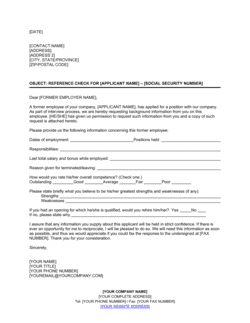
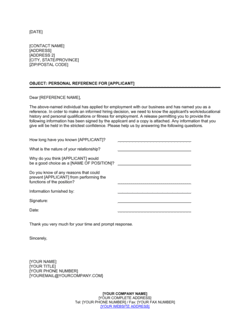
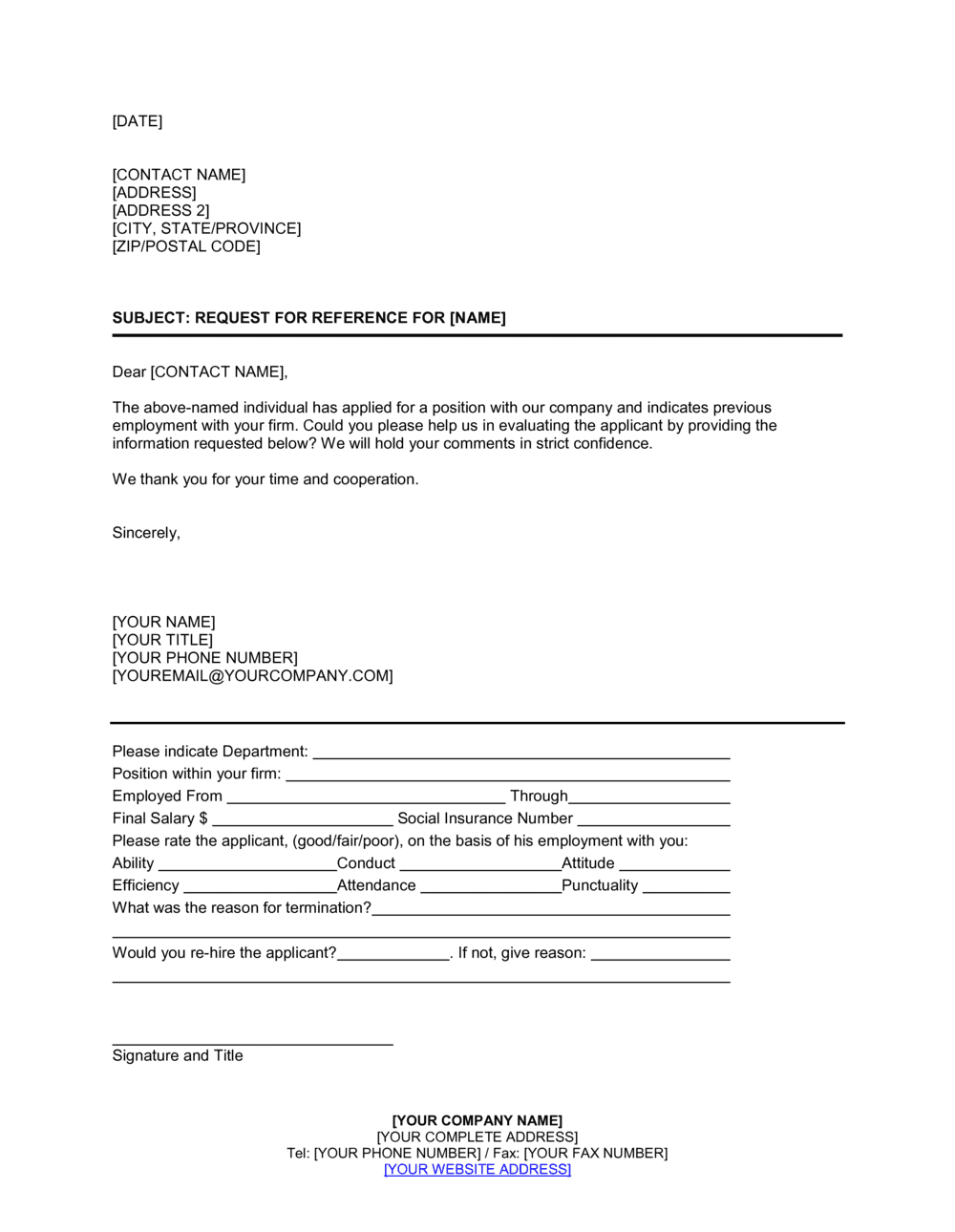
A Request for Reference is a formal letter sent to a former employer, supervisor, colleague, or professional contact asking them to provide a written or verbal reference on your behalf. This free Word download gives you a polished, professionally structured starting point you can edit and send in minutes.
When you need it
Use it when applying for a new job, academic program, professional certification, or business opportunity that requires one or more references. Sending a formal written request — rather than a casual email — signals professionalism and gives the referee the context they need to respond effectively.
What's inside
A professional salutation, a clear statement of the request, context about the role or opportunity you are pursuing, a brief reminder of your working relationship, any specific talking points you would like addressed, logistical details such as the deadline and contact information, and a courteous closing.

What is a Request for Reference?

A Request for Reference is a formal letter sent to a former employer, supervisor, colleague, or professional contact asking them to provide a written or verbal reference on your behalf. It identifies the opportunity you are applying for, reminds the referee of your working relationship, suggests specific skills or accomplishments to highlight, and provides the logistical details they need to respond — including the deadline and submission method. Unlike a casual verbal ask, a written request gives the referee everything they need in one place and signals that you take both the application and their time seriously.

Why You Need This Document

Asking for a reference without a formal letter leaves your referee without context, which almost always produces a generic, lukewarm response that does little to distinguish your application. A poorly timed or underprepared reference can actively hurt your candidacy — hiring managers and admissions committees notice when a referee sounds vague or caught off guard. This template ensures your request is professional, complete, and considerate: it gives the referee the role details, talking points, and a clear deadline they need to write or speak on your behalf with confidence. Used consistently, it also preserves professional relationships by showing respect for the referee's time — making it far more likely they will say yes, and say something genuinely useful.

Which variant fits your situation?

If your situation is…Use this template
Asking a former direct manager for a job application referenceRequest for Reference (Employment)
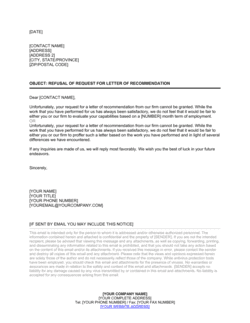
Requesting a written letter of recommendation from a professorRequest for Letter of Recommendation
Asking a past client to serve as a business referenceRequest for Client Reference
Following up when a reference has not yet respondedReference Request Follow-Up Letter
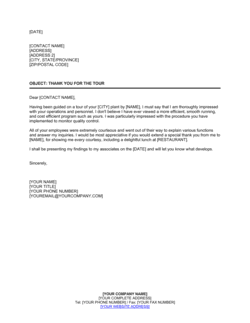
Formally thanking a referee after they have provided a referenceThank You Letter for Reference
Providing a reference on behalf of someone elseLetter of Recommendation

Common mistakes to avoid

❌ Giving less than two weeks' notice

Why it matters: Referees have their own commitments — a tight deadline often results in a rushed, generic response or a polite refusal that leaves you scrambling.

Fix: Send the request at least two to three weeks before the submission deadline and state the exact due date prominently in the letter.
❌ Providing no context about the opportunity

Why it matters: A referee who does not know what role or program you are targeting cannot tailor their remarks, producing a reference that may not address the qualities the evaluator cares about most.

Fix: Include the job title, organization name, and two to three key requirements from the posting so the referee can focus their response on what matters.

❌ Not suggesting specific talking points

Why it matters: Without guidance, referees default to general praise — 'a pleasure to work with' — which adds little weight to an application compared to a specific, quantified example.

Fix: Identify one or two concrete achievements or skills and suggest them politely, along with any supporting context the referee might not recall in detail.

❌ Omitting the opt-out acknowledgment

Why it matters: A referee who feels trapped may agree but provide an unenthusiastic reference, which can actively damage an application.

Fix: Include a sentence explicitly giving the referee permission to decline — this protects you from a reluctant reference and preserves the professional relationship.

The 10 key clauses, explained

Date and recipient address block

In plain language: Opens the letter with the date it is written and the referee's full name, title, and mailing or email address.

Sample language
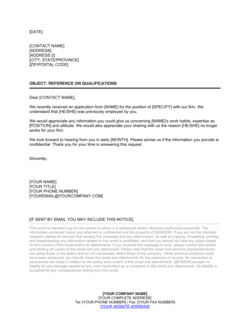
May 2, 2026 [REFEREE FULL NAME] [REFEREE TITLE] [ORGANIZATION NAME] [ADDRESS / EMAIL]

Common mistake: Using only a first name or omitting the title — a fully addressed letter demonstrates professionalism and ensures it reaches the right person.

Salutation

In plain language: A formal greeting addressing the referee by name.

Sample language
Dear [MR. / MS. / DR. LAST NAME],

Common mistake: Writing 'To Whom It May Concern' when you know the referee personally — this makes the letter feel generic and impersonal, reducing the likelihood of a warm response.

Opening statement of the request

In plain language: Clearly states upfront that you are asking for a reference and briefly identifies the opportunity you are pursuing.

Sample language
I am writing to ask whether you would be willing to serve as a professional reference for me as I apply for the position of [JOB TITLE] at [COMPANY NAME].

Common mistake: Burying the actual request in the second or third paragraph — the referee should understand what is being asked within the first two sentences.

Context about the opportunity

In plain language: Provides enough detail about the role, program, or opportunity so the referee understands what qualities and experience are most relevant.

Sample language
The role focuses on [KEY RESPONSIBILITIES] and requires [RELEVANT SKILLS / EXPERIENCE]. I believe my background in [AREA] — particularly the work we did together on [PROJECT / INITIATIVE] — is directly relevant.

Common mistake: Providing no context at all, forcing the referee to write a generic reference that may not align with what the hiring organization is looking for.

Reminder of the working relationship

In plain language: Briefly refreshes the referee's memory of how and when you worked together, which is especially important if significant time has passed.

Sample language
As you may recall, I worked with you as [YOUR ROLE] at [ORGANIZATION] from [START DATE] to [END DATE], where I was responsible for [KEY RESPONSIBILITIES].

Common mistake: Assuming the referee remembers every detail of your work — a polite reminder reduces the chance of a vague or inaccurate reference.

Specific talking points

In plain language: Suggests one or two specific skills, accomplishments, or qualities you would like the referee to address, making it easier for them to write or speak effectively.

Sample language
If possible, I would appreciate it if you could speak to my [SPECIFIC SKILL] and my contribution to [PROJECT / OUTCOME], which I feel are most relevant to this opportunity.

Common mistake: Not providing any talking points and expecting the referee to guess what to emphasize — this often results in a well-intentioned but unhelpfully general reference.

Logistical details

In plain language: States the deadline, how the reference should be submitted (online form, direct email, or written letter), and who to contact.

Sample language
The reference is due by [DATE]. You may submit it directly to [CONTACT NAME] at [EMAIL ADDRESS / PORTAL URL]. Please do not hesitate to reach out to me at [YOUR PHONE / EMAIL] if you need any additional information.

Common mistake: Giving the referee less than two weeks' notice — short deadlines create pressure and frequently result in rushed, lower-quality references or polite declines.

Offer to provide supporting materials

In plain language: Offers to share your résumé, CV, portfolio, or a summary of the role to help the referee prepare.

Sample language
I have attached my current résumé and a brief description of the role for your reference. Please let me know if there is any other information I can provide to make this easier.

Common mistake: Asking the referee to look up your background themselves — sending materials up front shows respect for their time and produces a more specific, relevant reference.

Opt-out acknowledgment

In plain language: Gives the referee a graceful way to decline if they are not comfortable, without making the request feel pressured.

Sample language
I completely understand if your schedule does not permit this or if you feel another colleague might be better placed to speak to my work. Please feel free to let me know either way.

Common mistake: Omitting this entirely — a referee who feels unable to decline may provide a lukewarm reference rather than a genuine one, which can harm your application.

Closing and signature

In plain language: A warm, professional closing that expresses gratitude and provides your full contact details.

Sample language
Thank you sincerely for considering my request. I truly value your support and look forward to hearing from you. Warm regards, [YOUR FULL NAME] [YOUR TITLE / ORGANIZATION] [YOUR PHONE / EMAIL]

Common mistake: Ending abruptly without a thank-you — expressing genuine gratitude encourages a positive response and preserves the professional relationship regardless of outcome.

How to fill it out

  1. 1

    Identify the right referee

    Choose someone who has directly observed your work in a relevant capacity — a former supervisor, client, or senior colleague — and who you expect will speak positively about you.

    💡 Ask someone from within the last three to five years when possible; a referee who worked with you recently will provide more specific and credible information.

  2. 2

    Enter the date and referee's contact details

    Fill in today's date and the referee's full name, title, organization, and mailing or email address in the header block.

    💡 Verify the referee's current title and organization before sending — people change roles and a letter addressed to an outdated title can make a poor first impression.

  3. 3

    State your request clearly in the opening paragraph

    In the first one or two sentences, name the opportunity you are applying for and ask directly whether they would be willing to serve as a reference.

    💡 Mention the company or program name specifically — it makes the request feel considered rather than a bulk ask sent to many people.

  4. 4

    Provide context about the role or opportunity

    Add two to three sentences describing the position, program, or application — the key responsibilities, required skills, or selection criteria — so the referee can tailor their response.

    💡 Copy a short excerpt from the job description or program requirements directly into this section to save the referee from having to research it themselves.

  5. 5

    Remind them of your shared work and suggest talking points

    Briefly describe when and how you worked together and identify one or two specific achievements or skills you would like them to highlight.

    💡 Frame talking points as suggestions, not instructions — phrases like 'if you feel it is appropriate' keep the tone collaborative rather than directive.

  6. 6

    Add logistical details and attach supporting materials

    State the submission deadline, the submission method (direct email, online form, or posted letter), and attach your current résumé and a summary of the role.

    💡 Give the referee at least two weeks from the date of the letter — anything shorter significantly increases the risk of a late or declined reference.

  7. 7

    Include an opt-out and close with a thank-you

    Add a sentence that explicitly gives the referee permission to decline, then close warmly with your full name and contact details.

    💡 Follow up with a brief email or call within 48 hours of sending the letter to confirm receipt and answer any questions — this personal touch meaningfully increases response rates.

Frequently asked questions

What is a request for reference?

A request for reference is a formal letter or written communication asking a former employer, supervisor, colleague, or professional contact to provide a reference on your behalf. It outlines the opportunity you are pursuing, the relationship you share with the referee, and any specific qualities or achievements you would like them to highlight. Sending a written request is more professional than a casual verbal ask and gives the referee the information they need to respond effectively.

Who should I ask to be a reference?

Choose someone who has directly observed your work in a context relevant to the opportunity — typically a former direct manager, a senior colleague, or a long-term client. Academic references may come from professors or research supervisors. Avoid personal friends or family unless the application specifically asks for a character reference. The stronger the referee's professional standing and the more specific their knowledge of your work, the more credible the reference.

How far in advance should I send a reference request?

Send your request at least two to three weeks before the reference deadline. This gives the referee enough time to write a thoughtful, specific response without feeling rushed. For formal letters of recommendation — especially for academic programs or competitive positions — four to six weeks is more considerate. Always state the exact deadline in the letter so the referee can plan accordingly.

Should I ask before listing someone as a reference?

Yes, always. Listing someone as a reference without asking first is unprofessional and risks an unprepared or negative response. A formal request letter serves as both the ask and the briefing document. If the referee agrees, they are prepared; if they decline, you have time to find an alternative before the application deadline.

What should I include when asking for a reference?

At minimum: a clear statement of what you are asking, the name of the role or program you are applying for, a brief description of the opportunity and its key requirements, a reminder of your working relationship, one or two specific talking points you would like addressed, the submission deadline and method, your current résumé or CV, and a graceful opt-out for the referee. Leaving out any of these reduces the quality of the reference you are likely to receive.

What is the difference between a reference and a letter of recommendation?

A reference typically involves the referee being contacted directly by the hiring organization — by phone, email, or an online form — and asked structured questions about a candidate. A letter of recommendation is a formal written document prepared by the referee and submitted as part of an application, often required by academic programs or competitive professional positions. A request for reference letter can be used to initiate either type.

Can I send a reference request by email?

Yes, and for most professional contexts email is the standard and preferred method — it is faster, easier to track, and allows you to attach your résumé and relevant materials directly. A formal letter format within the email body (or as an attachment) maintains professionalism. Reserve a posted letter for highly formal situations, such as academic applications or senior executive positions.

What should I do after sending the request?

Follow up with a brief, friendly message — email or a quick call — within 48 hours to confirm the referee received your request and to answer any questions. If you have not received a response within a week, a polite follow-up is appropriate. Once the reference has been submitted, send a thank-you note regardless of the outcome — maintaining the relationship is as important as the reference itself.

How this compares to alternatives

vs Letter of Recommendation

A letter of recommendation is written by the referee and submitted on the candidate's behalf — it is the document produced in response to a reference request. A request for reference is the letter the candidate sends to initiate that process. Both documents are part of the same workflow; you send the request first, and the referee produces the recommendation.

vs Thank You Letter for Reference

A thank-you letter for reference is sent after the referee has provided the reference, to express gratitude and maintain the professional relationship. A request for reference comes before — it is how you initiate the ask. Together, these two letters bookend the reference process professionally.

vs Job Application Cover Letter

A cover letter is addressed to the prospective employer and argues why you are the right candidate for a role. A request for reference is addressed to your referee and asks them to support that application. They serve different audiences and different purposes, but are typically prepared and sent around the same time.

vs Employment Verification Letter

An employment verification letter confirms objective facts — job title, dates of employment, and salary — and is typically issued by HR. A reference letter speaks to character, performance, and potential, and is written by an individual who knows the candidate's work. Both may be required in the same application process but serve distinct purposes.

Industry-specific considerations

Professional Services

References are routinely required for partner-track candidates, client-facing hires, and consultants onboarding with new firms where reputation and prior client relationships are closely evaluated.

Healthcare

Credentialing bodies, hospital systems, and licensing boards typically require formal reference letters from licensed supervisors as a prerequisite for practice privileges or certification.

Education

Graduate school applications, academic appointments, and teaching roles universally require formal letters of recommendation, often submitted through secure portals with strict deadlines.

Financial Services

Regulated roles requiring FINRA registration or FCA approval often involve background and reference checks conducted through formal written requests as part of compliance vetting.

Template vs pro — what fits your needs?

PathBest forCostTime
Use the templateAnyone asking a former employer, colleague, or academic contact for a reference for a job, program, or certificationFree10–15 minutes
Template + professional reviewSenior professionals or executives requesting references for board positions, regulated roles, or high-stakes academic programs$50–$150 (career coach or professional writing review)1–2 hours
Custom draftedC-suite candidates working with an executive recruiter or career advisor who manages the full reference process on their behalf$200–$500 (executive career services)1–2 days

Glossary

Referee
The person being asked to provide a reference — typically a former employer, supervisor, colleague, client, or mentor.
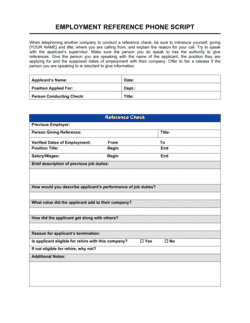
Reference Check
A process used by employers, academic institutions, or credentialing bodies to verify a candidate's background by contacting named referees.
Letter of Recommendation
A formal written document in which a referee endorses a candidate's qualifications, character, and suitability for a specific role or program.
Professional Reference
A reference provided by someone who has worked directly with the candidate in a professional capacity — as opposed to a personal or character reference.
Character Reference
A reference that speaks to a person's personal qualities, integrity, and character rather than specific professional skills or job performance.
Talking Points
Specific skills, achievements, or qualities the candidate asks the referee to highlight when providing the reference.
Waiver of Access
A statement — common in academic applications — where the applicant gives up their right to read the reference letter, often considered to increase its credibility.
Reference Deadline
The date by which the hiring organization or institution requires the reference to be submitted or available, which should be communicated clearly to the referee.

Part of your Business Operating System

This document is one of 3,000+ business & legal templates included in Business in a Box.

  • Fill-in-the-blanks — ready in minutes
  • 100% customizable Word document
  • Compatible with all office suites
  • Export to PDF and share electronically

Create your document in 3 simple steps.

From template to signed document — all inside one Business Operating System.
1
Download or open template

Access over 3,000+ business and legal templates for any business task, project or initiative.

2
Edit and fill in the blanks with AI

Customize your ready-made business document template and save it in the cloud.

3
Save, Share, Send, Sign

Share your files and folders with your team. Create a space of seamless collaboration.

Save time, save money, and create top-quality documents.

★★★★★

"Fantastic value! I'm not sure how I'd do without it. It's worth its weight in gold and paid back for itself many times."

Managing Director · Mall Farm
Robert Whalley
Managing Director, Mall Farm Proprietary Limited
★★★★★

"I have been using Business in a Box for years. It has been the most useful source of templates I have encountered. I recommend it to anyone."

Business Owner · 4+ years
Dr Michael John Freestone
Business Owner
★★★★★

"It has been a life saver so many times I have lost count. Business in a Box has saved me so much time and as you know, time is money."

Owner · Upstate Web
David G. Moore Jr.
Owner, Upstate Web

Run your business with a system — not scattered tools

Stop downloading documents. Start operating with clarity. Business in a Box gives you the Business Operating System used by over 250,000 companies worldwide to structure, run, and grow their business.

Start free · No credit card required