Request for Information in Advance of Purchase Order Template

Free Word download β€’ Edit online β€’ Save & share with Drive β€’ Export to PDF

1 pageβ€’15–20 min to fillβ€’Difficulty: Standard
Learn more ↓
FreeRequest for Information in Advance of Purchase Order Template

At a glance

What it is
A Request For Information In Advance Of Purchase Order is a formal business letter a buyer sends to a prospective supplier to gather the specific details needed before committing to a purchase order. This free Word download gives you a structured, professional template you can edit online and export as PDF β€” covering product specifications, pricing, lead times, payment terms, and any conditions required to finalize procurement.
When you need it
Use it when you have identified a potential supplier but need specific technical, commercial, or logistical details before your procurement team can issue an official purchase order. It is also appropriate when evaluating multiple vendors in parallel and you need comparable information from each.
What's inside
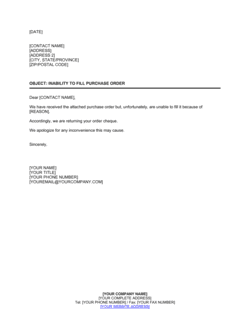
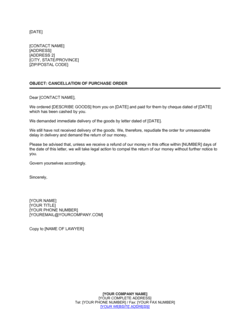
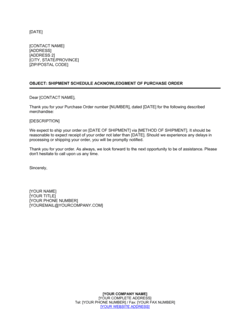
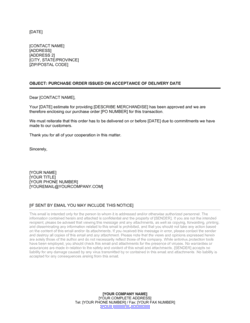
A formal salutation and introduction explaining the purchase intent, a numbered list of specific information requests covering specs, pricing, availability, and terms, a response deadline, and a closing that confirms the next steps toward issuing a purchase order upon satisfactory response.

What is a Request For Information In Advance Of Purchase Order?

A Request For Information In Advance Of Purchase Order is a formal business letter a buyer sends to a prospective supplier to collect the specific details needed before committing to a purchase order. It covers product specifications, unit pricing at relevant quantities, minimum order quantities, lead times, available shipping terms, and payment conditions. Unlike a purchase order, the RFI creates no binding obligation on either side β€” its purpose is to give the buyer's procurement and finance teams the concrete data required to evaluate the supplier, confirm budget alignment, and move forward to a formal purchase commitment with confidence.

Why You Need This Document

Issuing a purchase order without first gathering complete supplier information creates downstream problems that are expensive to unwind β€” unexpected lead times that delay production, pricing that doesn't match the approved budget, or minimum order quantities that exceed your storage capacity. A formal RFI letter signals genuine purchase intent, which motivates suppliers to provide accurate and complete responses rather than forwarding a generic brochure. It also creates a written record of the information the supplier represented before the PO was issued, giving you a factual basis for follow-up if the delivered goods or terms differ from what was confirmed. This template gives you a structured, professional format that takes under 15 minutes to complete and ensures your procurement team has everything it needs before a single dollar is committed.

Which variant fits your situation?

If your situation is…Use this template
Formally inviting multiple vendors to bid on a contractRequest For Proposal (RFP)
Requesting a formal price quote for specific goods or servicesRequest For Quotation (RFQ)
Issuing the actual order to the supplier after information is receivedPurchase Order
Following up on an overdue supplier response or pending informationFollow-Up Letter to a Supplier
Notifying a supplier that their proposal was not selectedRejection of Vendor Proposal Letter
Confirming agreed terms with a supplier before a long-term contractVendor Agreement

Common mistakes to avoid

❌ Open-ended information requests with no specific questions

Why it matters: Suppliers respond to vague requests with a product brochure rather than the pricing, lead times, and terms your team actually needs to make a decision.

Fix: Replace free-form requests with a numbered list of specific questions, each requiring a concrete answer your procurement team can act on directly.

❌ No response deadline

Why it matters: Without a deadline, suppliers treat the request as low priority and respond days or weeks after your internal approval window has closed.

Fix: Always state a specific calendar date β€” typically 5–10 business days out β€” and note that non-response will result in evaluation of alternative suppliers.

❌ Addressing the letter to a generic company name or department

Why it matters: Letters without a named recipient are routed to general inboxes, re-routed internally, or simply missed during the response window.

Fix: Research the correct named contact at the supplier before sending, and address the letter to that individual by name and title.

❌ Failing to signal purchase intent or order volume

Why it matters: Suppliers who cannot gauge your seriousness or volume will provide list-price responses and minimal detail rather than their best commercial terms.

Fix: Include an approximate quantity, order value, or timeframe for the anticipated purchase order in the opening paragraph.

The 8 key clauses, explained

Date and addressee block

In plain language: States the date of the letter and the full name, title, company, and address of the supplier contact being addressed.

Sample language
[DATE] | [SUPPLIER CONTACT NAME] | [TITLE] | [SUPPLIER COMPANY NAME] | [ADDRESS], [CITY], [STATE/PROVINCE] [POSTAL CODE]

Common mistake: Addressing the letter to the company name only without a named contact. Letters without a named recipient are often routed to a general inbox and sit unanswered past your deadline.

Subject line

In plain language: A brief, specific header identifying the letter as a pre-purchase-order information request and referencing the product or project by name.

Sample language
RE: Request For Information In Advance Of Purchase Order β€” [PRODUCT/PROJECT NAME]

Common mistake: Using a generic subject like 'Inquiry' or 'Questions.' A vague subject line is deprioritized by supplier sales teams who process dozens of inbound inquiries daily.

Opening and purchase intent

In plain language: Introduces the buyer's company, states the context for the letter, and signals genuine purchase intent to motivate a thorough response.

Sample language
[BUYER COMPANY NAME] is currently evaluating suppliers for [PRODUCT/SERVICE DESCRIPTION] in connection with [PROJECT OR OPERATIONAL NEED]. We are interested in placing a purchase order with a qualified supplier and are writing to request specific information before proceeding.

Common mistake: Opening with vague interest like 'we may need your product.' Suppliers deprioritize speculative inquiries β€” stating clear purchase intent produces faster and more complete responses.

Information request list

In plain language: A numbered or bulleted list of the specific technical, commercial, and logistical details the buyer needs to evaluate the supplier and issue a PO.

Sample language
Please provide the following information: 1. Product specifications for [ITEM/SKU], including dimensions, materials, and compliance certifications. 2. Unit pricing at quantities of [X], [Y], and [Z]. 3. Minimum order quantity. 4. Current lead time for [QUANTITY] units from date of PO. 5. Available shipping terms (FOB Origin / FOB Destination). 6. Accepted payment terms.

Common mistake: Sending an open-ended request like 'please send us your product information.' Suppliers respond with a brochure rather than the specific data your procurement team needs to act.

Confidentiality note (optional)

In plain language: Advises the supplier that any pricing, technical, or commercial information shared in response will be treated as confidential and used solely for evaluation purposes.

Sample language
All information provided in response to this request will be treated as confidential and used solely for the purpose of evaluating a potential purchase order with [BUYER COMPANY NAME].

Common mistake: Omitting this note when requesting sensitive pricing or proprietary specifications. Suppliers may withhold their best pricing without assurance that it will not be shared with competitors.

Response deadline

In plain language: States a specific calendar date by which the supplier must respond, and explains what will happen if no response is received by that date.

Sample language
Please respond to this request no later than [DATE]. If we do not receive a response by this date, we will proceed with evaluating alternative suppliers.

Common mistake: Not including a deadline at all. Without one, suppliers treat the request as low priority and respond weeks later β€” long after internal budget or project timelines have moved on.

Next steps and purchase order reference

In plain language: Confirms that a satisfactory response will lead to the issuance of a formal purchase order, and identifies who will issue it.

Sample language
Upon receipt of the requested information and internal approval, [BUYER COMPANY NAME] intends to issue a formal purchase order to the selected supplier. Questions regarding this request should be directed to [CONTACT NAME] at [EMAIL / PHONE].

Common mistake: Failing to name a specific internal contact for supplier questions. Suppliers who cannot reach someone with clarifying questions often submit incomplete responses or none at all.

Closing and signature block

In plain language: A professional closing statement thanking the supplier for their time, followed by the sender's name, title, company, and contact details.

Sample language
We appreciate your time and look forward to your response. Sincerely, [SENDER NAME] | [TITLE] | [BUYER COMPANY NAME] | [EMAIL] | [PHONE]

Common mistake: Signing with a first name only or omitting the sender's title and company. Suppliers use this information to route the response to the right sales contact and to verify the buyer's legitimacy.

How to fill it out

  1. 1

    Identify the correct supplier contact

    Find the name and title of the appropriate contact at the supplier β€” typically a sales representative, account manager, or procurement liaison. Avoid generic 'Sales Team' addresses.

    πŸ’‘ Check LinkedIn or the supplier's website for the relevant contact. A named recipient increases response rates substantially compared to a generic address.

  2. 2

    Write a specific subject line referencing the product or project

    Include the product name, SKU, or project reference in the RE line so the supplier can route the letter to the right person immediately.

    πŸ’‘ If you are sending the same request to multiple suppliers, number them internally (RFI-2026-001, RFI-2026-002) to track responses systematically.

  3. 3

    State your purchase intent clearly in the opening paragraph

    Identify your company, describe what you intend to purchase, and confirm that you are actively evaluating suppliers for an imminent purchase order.

    πŸ’‘ Mention an approximate order value or quantity if you can. Suppliers allocate more resources to buyers who signal meaningful purchase volume.

  4. 4

    Build a numbered information request list

    List every specific data point your procurement or finance team needs before issuing a PO β€” specs, pricing tiers, MOQ, lead time, shipping terms, and payment terms. Use a numbered list, not a paragraph.

    πŸ’‘ Keep the list to 8 items or fewer. Longer lists reduce response rates; if you need more data, schedule a call for the follow-up.

  5. 5

    Add a confidentiality note if requesting pricing or proprietary specs

    Insert a one-sentence confidentiality assurance if you are asking for non-public pricing or technical data. This removes a common reason suppliers withhold their best information.

    πŸ’‘ If a formal NDA is required before sharing specs, attach it with the letter and reference it explicitly in the body.

  6. 6

    Set a specific response deadline

    Choose a date 5–10 business days from the letter date β€” enough time for the supplier to gather accurate information without losing urgency. State what happens if the deadline passes.

    πŸ’‘ Align the deadline with your internal procurement calendar, not an arbitrary date. If your PO approval meeting is on the 15th, set the RFI deadline on the 10th.

  7. 7

    Name a contact and confirm next steps

    Specify who the supplier should send their response to and confirm that a PO will follow a satisfactory reply. This closes the letter with a clear action path for both sides.

    πŸ’‘ Include both email and phone for the contact. Some suppliers prefer to call with clarifying questions before preparing a detailed response.

Frequently asked questions

What is a Request For Information In Advance Of Purchase Order?

It is a formal business letter a buyer sends to a prospective supplier to collect the specific technical, commercial, and logistical details needed before issuing a purchase order. It signals genuine purchase intent while giving the procurement team the information required to evaluate the supplier, confirm budget alignment, and proceed to a formal PO.

What is the difference between an RFI and an RFP?

An RFI (Request For Information) gathers factual data from suppliers β€” pricing tiers, lead times, specs, MOQ β€” before a purchasing decision is made. An RFP (Request For Proposal) invites suppliers to propose a full solution to a defined problem and is typically used for complex services or high-value contracts. Use an RFI when you need supplier details to qualify a source; use an RFP when you need competing vendors to design and price a solution.

What is the difference between an RFI and an RFQ?

An RFQ (Request For Quotation) requests a binding price quote for a specific quantity of defined goods β€” it is closer to a purchasing commitment. An RFI is a broader information-gathering step that may include pricing but also covers specifications, availability, terms, and vendor qualifications. RFIs typically precede RFQs in the procurement cycle.

Is an RFI legally binding?

No. An RFI is a non-binding information request. Neither the buyer nor the supplier incurs a purchase or supply obligation as a result of the letter. The binding commitment is created only when a formal purchase order is issued and accepted by the supplier.

How long should I give a supplier to respond to an RFI?

Five to ten business days is the standard response window for a pre-PO RFI covering standard commercial goods. For complex technical products or custom-engineered items, 10–15 business days is more realistic. Set the deadline to align with your internal procurement approval meeting so you have responses in hand before the decision is required.

Should I send an RFI to multiple suppliers at the same time?

Yes, sending the same RFI to two or three qualified suppliers simultaneously is standard procurement practice and produces comparable data for evaluation. Assign each RFI an internal reference number to track responses. You are not obligated to purchase from any supplier that responds, but treating all respondents professionally preserves future sourcing relationships.

Do I need to sign an RFI letter?

A handwritten signature is not required for the letter to be effective, but including the sender's full name, title, company, email, and phone number in a signature block adds credibility and gives the supplier a clear path to respond or ask clarifying questions. Unsigned or anonymized requests are often treated as lower priority or not genuine.

What happens after the supplier responds to the RFI?

Review the responses against your procurement criteria β€” pricing, lead time, MOQ, and terms. If the supplier's information meets your requirements and your team approves the purchase, issue a formal purchase order referencing the agreed details. If the information is incomplete, follow up with a targeted clarification request before committing.

How this compares to alternatives

vs Request For Proposal (RFP)

An RFP invites suppliers to design and price a full solution to a defined problem β€” it is used for complex services or high-value contracts where the buyer needs competing proposals. An RFI simply gathers factual information about a supplier's products, pricing, and terms. Use an RFI when you know what you want to buy and need supplier details; use an RFP when you need vendors to propose how to meet a need.

vs Purchase Order

A purchase order is a binding commercial document that authorizes and commits the buyer to a specific purchase at agreed prices and terms. An RFI is a non-binding preliminary letter that collects the information needed before a PO can be issued. The RFI precedes the PO in the procurement sequence β€” never replaces it.

vs Vendor Agreement

A vendor agreement is a formal contract establishing the ongoing terms of a supply relationship β€” pricing schedules, quality standards, liability, and exclusivity. An RFI is a one-time letter sent to gather information before even a single purchase is committed. Use an RFI for a first-contact or one-off procurement; use a vendor agreement when formalizing a recurring supplier relationship.

vs Request For Quotation (RFQ)

An RFQ requests a binding price quote for a defined quantity of specific goods and is closer to a purchasing commitment. An RFI is broader β€” it gathers specs, availability, terms, and pricing at the same time without committing to any quantity. In a standard procurement cycle, an RFI precedes an RFQ, which precedes the purchase order.

Industry-specific considerations

Manufacturing

Used to gather material specs, compliance certifications, and bulk pricing tiers from component suppliers before production run purchase orders.

Construction

Sent to equipment and materials vendors to confirm availability, delivery schedules, and pricing before project procurement phases begin.

Retail and E-commerce

Used to request wholesale pricing, MOQs, lead times, and labeling requirements from product suppliers before placing initial inventory orders.

Professional Services

Sent to technology vendors and subcontractors to confirm service scope, pricing structures, and SLA terms before issuing a formal engagement order.

Template vs pro β€” what fits your needs?

PathBest forCostTime
Use the templateProcurement managers, operations teams, and business owners requesting information from standard commercial suppliersFree10–15 minutes per letter
Template + professional reviewHigh-value or sole-source procurement where the RFI sets the terms framework for a subsequent contract$100–$300 for a procurement advisor review1–2 hours
Custom draftedGovernment or regulated-industry procurement with formal RFI requirements and mandatory disclosure rules$500–$2,0001–3 days

Glossary

Request For Information (RFI)
A preliminary procurement document used to collect factual details from suppliers before a formal purchasing decision is made.
Purchase Order (PO)
A binding commercial document issued by a buyer to a supplier authorizing the purchase of specific goods or services at agreed prices and terms.
Lead Time
The number of days or weeks between placing an order and receiving the goods or services at the buyer's designated location.
Specification
A precise description of the technical, physical, or functional requirements a product or service must meet to be acceptable to the buyer.
MOQ (Minimum Order Quantity)
The smallest quantity a supplier is willing to sell in a single order, below which they will not fulfill the purchase.
Payment Terms
The agreed conditions under which the buyer will pay the supplier β€” such as Net 30, 50% deposit with balance on delivery, or payment on invoice.
Vendor Qualification
The process of evaluating a potential supplier against defined criteria β€” quality, capacity, financial stability, and compliance β€” before adding them to an approved supplier list.
FOB (Free On Board)
A shipping term indicating the point at which title and risk of goods transfer from seller to buyer β€” either at the supplier's dock (FOB Origin) or the buyer's location (FOB Destination).
RFQ (Request For Quotation)
A document requesting a formal, binding price quote for a defined quantity of goods or services β€” more specific than an RFI and closer to a purchasing commitment.
Procurement Cycle
The end-to-end process of identifying a need, sourcing suppliers, gathering information, issuing a PO, receiving goods, and processing payment.

Part of your Business Operating System

This document is one of 3,000+ business & legal templates included in Business in a Box.

  • Fill-in-the-blanks β€” ready in minutes
  • 100% customizable Word document
  • Compatible with all office suites
  • Export to PDF and share electronically

Create your document in 3 simple steps.

From template to signed document β€” all inside one Business Operating System.
1
Download or open template

Access over 3,000+ business and legal templates for any business task, project or initiative.

2
Edit and fill in the blanks with AI

Customize your ready-made business document template and save it in the cloud.

3
Save, Share, Send, Sign

Share your files and folders with your team. Create a space of seamless collaboration.

Save time, save money, and create top-quality documents.

β˜…β˜…β˜…β˜…β˜…

"Fantastic value! I'm not sure how I'd do without it. It's worth its weight in gold and paid back for itself many times."

Managing Director Β· Mall Farm
Robert Whalley
Managing Director, Mall Farm Proprietary Limited
β˜…β˜…β˜…β˜…β˜…

"I have been using Business in a Box for years. It has been the most useful source of templates I have encountered. I recommend it to anyone."

Business Owner Β· 4+ years
Dr Michael John Freestone
Business Owner
β˜…β˜…β˜…β˜…β˜…

"It has been a life saver so many times I have lost count. Business in a Box has saved me so much time and as you know, time is money."

Owner Β· Upstate Web
David G. Moore Jr.
Owner, Upstate Web

Run your business with a system β€” not scattered tools

Stop downloading documents. Start operating with clarity. Business in a Box gives you the Business Operating System used by over 250,000 companies worldwide to structure, run, and grow their business.

Start freeΒ Β·Β No credit card required