Purchase Order Letter Template

Free Word download β€’ Edit online β€’ Save & share with Drive β€’ Export to PDF

1 pageβ€’15–25 min to fillβ€’Difficulty: Standard
Learn more ↓
FreePurchase Order Letter Template

At a glance

What it is
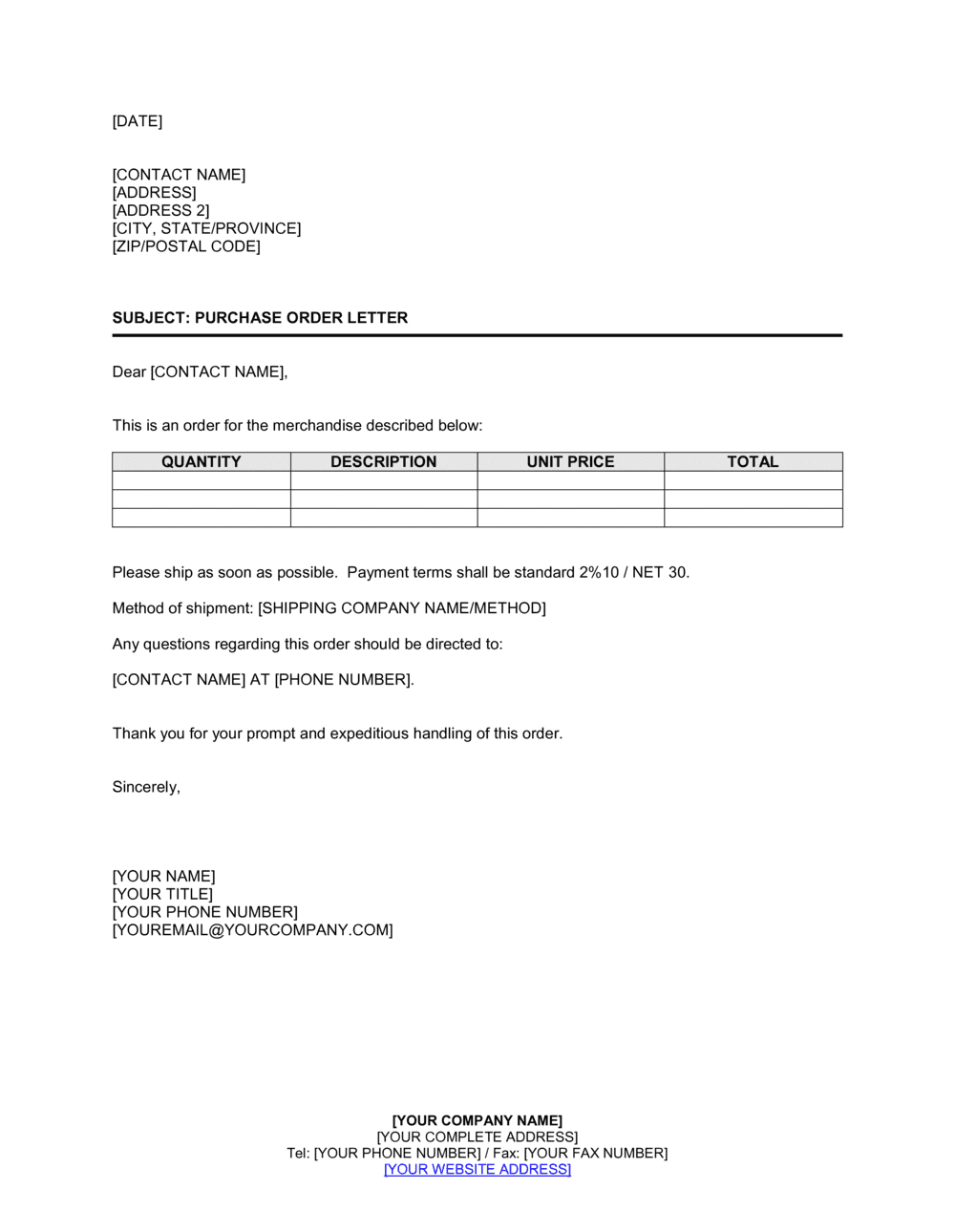
A Purchase Order Letter is a formal business letter a buyer sends to a supplier to confirm intent to purchase goods or services, reference the supplier's quote or proposal, and state the agreed quantities, unit prices, delivery schedule, and payment terms in writing. This free Word download gives you a ready-to-edit template you can complete in minutes and export as PDF to send directly to your supplier.
When you need it
Use it when you need written confirmation of a purchase commitment before a formal purchase order system is available, when a supplier requires a signed letter to begin production or fulfillment, or when your organization's procurement process calls for a letter format rather than a structured PO form.
What's inside
Buyer and supplier details, reference to the original quote or proposal, itemized description of goods or services with quantities and agreed pricing, delivery address and schedule, payment terms, and a formal authorization statement from the buyer.

What is a Purchase Order Letter?

A Purchase Order Letter is a formal business letter a buyer sends to a supplier to confirm a purchasing commitment in writing. It references the supplier's original quote or proposal, itemizes the goods or services being ordered with agreed quantities and unit prices, states the delivery schedule and payment terms, and is authorized by a representative of the buying organization. Unlike a system-generated purchase order form, a purchase order letter uses narrative letter format β€” making it the right choice when a supplier requires a signed document before beginning production, when no ERP or procurement system is in place, or when the transaction falls outside standard procurement workflows.

Why You Need This Document

Placing an order by email or phone call leaves both parties exposed: without a written record of the agreed quantities, pricing, delivery date, and payment terms, any discrepancy becomes a credibility dispute rather than a contract question. Suppliers who receive an ambiguous order may ship the wrong quantity, invoice at a different price, or miss the delivery date without penalty. For the buyer, an undocumented purchase creates problems at the invoice-matching stage and weakens any claim against a supplier who fails to deliver. A clearly worded purchase order letter creates a shared reference point that both parties can consult β€” eliminating pricing surprises, confirming delivery expectations before production begins, and giving your accounts-payable team the documentation they need to process the supplier's invoice without delay. This template gives you a ready-to-complete letter that covers every essential element in under 15 minutes.

Which variant fits your situation?

If your situation is…Use this template
Placing a structured, system-generated order for recurring purchasesPurchase Order
Requesting a price quote from a supplier before committing to buyRequest for Quotation
Confirming receipt and acceptance of delivered goodsGoods Receipt Note
Following up on an overdue or unfulfilled orderPurchase Order Follow-Up Letter
Cancelling a previously issued purchase orderPurchase Order Cancellation Letter
Requesting changes to quantity, price, or delivery on an existing orderPurchase Order Amendment Letter
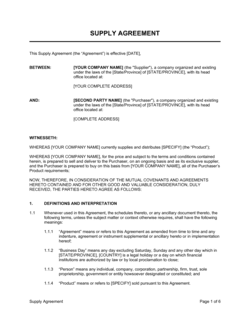
Outlining broad supply terms for multiple future ordersSupply Agreement

Common mistakes to avoid

❌ No quote reference in the letter

Why it matters: Without a quote reference, the supplier cannot confirm which pricing and specifications apply, opening the door to invoicing at a different rate than agreed.

Fix: Always cite the supplier's quote number and date in the reference line at the top of the letter and repeat it in the opening authorization paragraph.

❌ Vague item descriptions

Why it matters: Generic descriptions like 'printing supplies' allow the supplier to fulfill the order with a different product than intended, and give you no basis to reject a substitution.

Fix: Use the exact product name, SKU, and specification from the supplier's quote β€” copy and paste rather than paraphrase.

❌ Missing currency on the total

Why it matters: Cross-border orders with an unstated currency create disputes at the invoicing stage β€” a $10,000 USD order billed in CAD or GBP produces an immediate shortfall or overpayment.

Fix: State the three-letter ISO currency code (USD, GBP, EUR) next to every price and the grand total.

❌ Signed by someone without purchasing authority

Why it matters: An order letter signed by a person who lacks authorization can be disowned by the buying organization, leaving the supplier with an unfulfilled commitment and no legal recourse.

Fix: Check your organization's delegated authority policy before routing for signature, and include the signatory's title in the signature block so the supplier can verify authorization.

The 9 key clauses, explained

Header and reference line

In plain language: Identifies the letter as a purchase order, assigns it a reference number, states the date, and cites the supplier's quote or proposal number being acted upon.

Sample language
Purchase Order Letter | PO Ref: [PO NUMBER] | Date: [DATE] | Re: Quotation No. [QUOTE NUMBER] dated [QUOTE DATE]

Common mistake: Omitting the supplier's quote reference number. Without it, the supplier cannot match your letter to their pricing record, which creates room for pricing disputes.

Buyer and supplier details

In plain language: States the full legal names, addresses, and contact persons for both the buying organization and the supplier.

Sample language
From: [BUYER COMPANY NAME], [ADDRESS], Attn: [BUYER CONTACT NAME] | To: [SUPPLIER COMPANY NAME], [ADDRESS], Attn: [SUPPLIER CONTACT NAME]

Common mistake: Using a department name instead of the legal entity name for the buyer. The supplier needs the correct legal name to issue a valid invoice.

Opening authorization statement

In plain language: The first paragraph formally states the buyer's intent to purchase, referencing the quote and confirming the order is being placed on the terms discussed.

Sample language
We are pleased to confirm our order with [SUPPLIER COMPANY NAME] in accordance with your quotation dated [DATE], reference [QUOTE NUMBER], on the terms and conditions set out below.

Common mistake: Writing a vague opening like 'please find our order enclosed.' A clear authorization statement removes ambiguity about whether the letter is an inquiry or a confirmed commitment.

Itemized description of goods or services

In plain language: Lists each item ordered with a description, item code or SKU, quantity, and unit price so both parties have a shared record of exactly what is being purchased.

Sample language
Item: [PRODUCT NAME / SKU] | Description: [BRIEF DESCRIPTION] | Quantity: [QTY] | Unit Price: [PRICE] | Line Total: [TOTAL]

Common mistake: Describing items loosely without SKUs or specification references. Vague descriptions like 'office supplies' lead to incorrect shipments and invoice discrepancies.

Total order value

In plain language: States the aggregate value of the order, including any applicable taxes, shipping, or other charges, in the relevant currency.

Sample language
Total Order Value: [CURRENCY] [AMOUNT], inclusive of [TAX TYPE] at [RATE]% and shipping charges of [AMOUNT].

Common mistake: Not specifying the currency. When the buyer and supplier operate in different countries, an unstated currency creates disputes that hold up both fulfillment and payment.

Delivery instructions

In plain language: Specifies the delivery address, the required delivery date, any partial-delivery preferences, and the shipping method or Incoterms if applicable.

Sample language
Please deliver to: [DELIVERY ADDRESS] by [DELIVERY DATE]. Shipping method: [METHOD]. Incoterms: [FOB DESTINATION / EXW / OTHER]. Partial deliveries [ARE / ARE NOT] acceptable.

Common mistake: Stating only 'deliver to our warehouse' without a full address and a named receiving contact. Deliveries without a contact name are frequently delayed or rejected at the dock.

Payment terms

In plain language: States when and how payment will be made β€” the credit period, the payment method, and any early-payment discount or late-payment penalty.

Sample language
Payment terms: Net [30] days from the date of invoice. Payment will be made by [BANK TRANSFER / CHECK]. Early payment discount: [X]% if settled within [10] days.

Common mistake: Omitting payment terms entirely and leaving them to be resolved later. Suppliers may proceed on different assumptions, causing invoice disputes that delay future orders.

Acceptance and acknowledgement request

In plain language: Asks the supplier to confirm in writing that they accept the order on the stated terms and can meet the delivery date.

Sample language
Please confirm your acceptance of this order and your ability to deliver by [DATE] by signing and returning a copy of this letter or by written email confirmation to [CONTACT EMAIL] within [X] business days.

Common mistake: Not requesting acknowledgement at all. Without a supplier confirmation, the buyer has no evidence the order was accepted and cannot escalate if delivery fails.

Closing authorization and signature block

In plain language: Formally closes the letter with the authorized signatory's name, title, and signature, confirming the buyer's commitment.

Sample language
Authorized by: [SIGNATORY NAME] | Title: [TITLE] | [BUYER COMPANY NAME] | Date: [DATE] | Signature: _______________________

Common mistake: Having the letter signed by someone without purchasing authority. If the signatory lacks authorization, the commitment may be unenforceable and could be repudiated by the buyer organization.

How to fill it out

  1. 1

    Enter buyer and supplier details

    Fill in the full legal name, address, and accounts-payable or procurement contact for both your organization and the supplier. Confirm the supplier's correct legal trading name against their quote header.

    πŸ’‘ Ask the supplier for their registered company name if the quote only shows a trading name β€” you need the legal entity for invoice matching.

  2. 2

    Assign a PO reference number and cite the supplier's quote

    Create a unique PO reference number using your internal sequence (e.g., PO-2026-0042) and record the supplier's quote number and date. This cross-reference ties the letter to the agreed pricing.

    πŸ’‘ A format that includes the year (PO-YYYY-NNNN) keeps references sortable and prevents numbering collisions across years.

  3. 3

    List every item with SKU, quantity, and unit price

    Add one row per item with the product name or service description, any item code or SKU from the supplier's quote, the quantity ordered, the unit price, and the line total.

    πŸ’‘ Copy descriptions directly from the supplier's quote to eliminate ambiguity β€” paraphrasing creates room for the supplier to substitute a different specification.

  4. 4

    State the total order value and currency

    Sum all line totals, add applicable taxes and shipping, and state the grand total with the currency code (USD, CAD, GBP, EUR, etc.). Make sure the total matches the supplier's quoted amount.

    πŸ’‘ If the total differs from the quote even by a small amount, note the reason (e.g., quantity adjustment) rather than leaving a silent discrepancy.

  5. 5

    Specify delivery address, date, and shipping terms

    Enter the full delivery address including a named receiving contact, the required delivery date, the preferred shipping method, and whether partial deliveries are acceptable.

    πŸ’‘ Build in two to three business days of buffer on the delivery date β€” carriers and customs delays are common and a tight deadline triggers expedite fees.

  6. 6

    Confirm payment terms

    State the payment period (e.g., Net 30 from invoice date), the method (bank transfer, check, or card), and any early-payment discount terms you have negotiated.

    πŸ’‘ If your accounts-payable team has a standard processing cycle, set payment terms that align β€” promising Net 15 when AP runs Net 30 creates unnecessary friction.

  7. 7

    Have the authorized signatory sign and send

    Route the completed letter to the person with purchasing authority for your organization, obtain their signature, and send by email as a PDF. Request written acknowledgement from the supplier within a defined number of business days.

    πŸ’‘ Follow up if you do not receive supplier acknowledgement within two business days β€” silence is not confirmation, and production lead times may have already started counting.

Frequently asked questions

What is a purchase order letter?

A purchase order letter is a formal written communication from a buyer to a supplier that confirms the buyer's intent to purchase specific goods or services at agreed prices and terms. It references the supplier's original quote, itemizes quantities and unit prices, states the delivery schedule and payment terms, and is signed by an authorized representative of the buying organization. It functions as either a substitute for or a formal cover document accompanying a structured purchase order form.

What is the difference between a purchase order letter and a purchase order?

A purchase order (PO) is typically a structured form generated by a procurement or ERP system with standardized fields and numbering. A purchase order letter conveys the same commercial intent in formal letter format β€” useful when a supplier requires a signed document, when the buyer has no PO system in place, or when the transaction falls outside a standard procurement workflow. Both serve as written authorization to proceed; the letter format is more flexible and relationship-oriented.

Is a purchase order letter legally binding?

A purchase order letter can constitute a legally binding contract when it meets the basic elements of offer, acceptance, and consideration β€” meaning the buyer offers to purchase on specific terms, the supplier accepts, and money changes hands for goods or services. In practice, enforceability depends on how clearly the terms are stated and whether the supplier has acknowledged acceptance. Always request written acknowledgement from the supplier to create a clear record of mutual agreement.

Does a purchase order letter need to be signed?

Technically, a signature is not always required for a purchase order letter to be acted upon, but it is strongly recommended. A signature by an authorized representative confirms that the organization has approved the purchase and provides clear evidence of commitment if a dispute arises. Many suppliers require a signed letter before releasing goods or beginning production.

What should a purchase order letter include?

At minimum: buyer and supplier legal names and addresses, a unique PO reference number, the supplier's quote reference, the date, an itemized list of goods or services with quantities and unit prices, the total order value with currency, delivery address and required date, payment terms, a request for written acknowledgement, and the signature and title of the authorized buyer.

When should I use a purchase order letter instead of a standard PO form?

Use a purchase order letter when your organization does not have a formal procurement system that generates PO forms, when a supplier specifically requests a signed letter before proceeding, when the purchase is a one-off or project-specific transaction outside normal procurement channels, or when you need a more formal written record than an email confirmation provides. Larger organizations with ERP systems typically use structured PO forms for routine purchases and reserve letters for special circumstances.

How do I number purchase order letters?

Use a sequential numbering system consistent with your wider procurement records β€” for example, PO-2026-0001 through PO-2026-9999. A format that includes the year prevents number collisions across periods and keeps records sortable. Store a copy of every issued letter against its PO number so you can match it to the supplier's invoice when payment is due.

What happens if the supplier does not acknowledge the purchase order letter?

If a supplier does not acknowledge within the timeframe you specified, follow up by phone or email before assuming the order is in progress. Silence is not acceptance β€” the supplier may have missed the letter, may have questions about the terms, or may be unable to fulfill the order on the stated delivery date. Always obtain written confirmation before committing downstream resources or customer delivery promises to the order.

How this compares to alternatives

vs Purchase Order

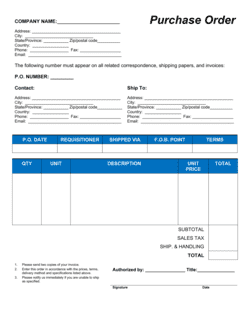
A purchase order is a structured form β€” usually system-generated β€” with standardized fields and a formal numbering sequence integrated into an ERP or accounting system. A purchase order letter conveys the same commercial intent in narrative letter format. Use the structured PO for routine, recurring procurement; use the letter when a supplier requires a signed document or when no PO system is available.

vs Request for Quotation

A request for quotation (RFQ) is sent before a purchase decision β€” it asks the supplier to propose pricing, lead times, and terms. A purchase order letter comes after the decision β€” it confirms the buyer is accepting the supplier's quote and placing the order. The RFQ opens the negotiation; the purchase order letter closes it.

vs Supply Agreement

A supply agreement governs an ongoing commercial relationship β€” defining terms, volume commitments, and pricing structures for multiple future orders over a set period. A purchase order letter covers a single, specific transaction. Use a supply agreement when you expect to order from the same supplier repeatedly; use the purchase order letter for one-off or occasional purchases.

vs Purchase Order Cancellation Letter

A purchase order cancellation letter formally withdraws a previously issued order, states the reason for cancellation, and addresses any costs or restocking fees that apply. A purchase order letter initiates the transaction. If circumstances change after sending the purchase order letter, the cancellation letter is the correct follow-up document.

Industry-specific considerations

Manufacturing

Specifies raw material grades, tolerances, and batch quantities, and references the supplier's production lead time to set a realistic delivery date.

Retail and E-commerce

Covers SKU-level quantities, seasonal delivery windows, and packaging requirements tied to the buyer's warehouse receiving schedule.

Construction and Trades

References project site addresses as the delivery point, ties delivery dates to construction milestones, and includes material specification references from the build schedule.

Professional Services

Confirms the scope and deliverables from the supplier's proposal, sets milestone-based payment terms, and specifies the authorized contact for approving completed work.

Template vs pro β€” what fits your needs?

PathBest forCostTime
Use the templateSmall businesses, startups, and individual buyers placing straightforward domestic purchase ordersFree10–15 minutes per letter
Template + professional reviewOrders above $10,000, cross-border purchases, or transactions involving custom specifications and delivery penalties$50–$150 (accountant or procurement advisor review)30–60 minutes
Custom draftedHigh-value contracts with complex delivery milestones, liquidated damages clauses, or international Incoterms negotiations$300–$1,000+ (legal or commercial advisor)1–3 days

Glossary

Purchase Order (PO)
A formal buyer-issued document authorizing a supplier to deliver specified goods or services at agreed prices and terms.
Quote Reference Number
The unique identifier from a supplier's quotation document, cited in the purchase order letter to tie the order back to the agreed pricing.
Unit Price
The agreed cost of a single item or unit of service, as stated in the supplier's quote and confirmed in the purchase order letter.
Delivery Schedule
The specific date or date range by which the supplier is expected to deliver the ordered goods or complete the service.
Payment Terms
The conditions under which the buyer will pay β€” for example, Net 30 from invoice date, or 50% upfront and 50% on delivery.
FOB (Free on Board)
A shipping term specifying the point at which ownership and risk transfer from seller to buyer β€” FOB Origin means at the seller's dock; FOB Destination means at the buyer's receiving point.
Lead Time
The period between placing an order and receiving the goods or completed service, used to set a realistic delivery date.
Authorized Signatory
The person within the buying organization who has the authority to legally commit the organization to a purchase.
Incoterms
Internationally recognized trade terms published by the International Chamber of Commerce that define delivery obligations, risk transfer, and cost responsibilities between buyer and seller.
Acknowledgement
A written confirmation from the supplier that they have received and accepted the purchase order letter and will fulfill the order on the stated terms.

Part of your Business Operating System

This document is one of 3,000+ business & legal templates included in Business in a Box.

  • Fill-in-the-blanks β€” ready in minutes
  • 100% customizable Word document
  • Compatible with all office suites
  • Export to PDF and share electronically

Create your document in 3 simple steps.

From template to signed document β€” all inside one Business Operating System.
1
Download or open template

Access over 3,000+ business and legal templates for any business task, project or initiative.

2
Edit and fill in the blanks with AI

Customize your ready-made business document template and save it in the cloud.

3
Save, Share, Send, Sign

Share your files and folders with your team. Create a space of seamless collaboration.

Save time, save money, and create top-quality documents.

β˜…β˜…β˜…β˜…β˜…

"Fantastic value! I'm not sure how I'd do without it. It's worth its weight in gold and paid back for itself many times."

Managing Director Β· Mall Farm
Robert Whalley
Managing Director, Mall Farm Proprietary Limited
β˜…β˜…β˜…β˜…β˜…

"I have been using Business in a Box for years. It has been the most useful source of templates I have encountered. I recommend it to anyone."

Business Owner Β· 4+ years
Dr Michael John Freestone
Business Owner
β˜…β˜…β˜…β˜…β˜…

"It has been a life saver so many times I have lost count. Business in a Box has saved me so much time and as you know, time is money."

Owner Β· Upstate Web
David G. Moore Jr.
Owner, Upstate Web

Run your business with a system β€” not scattered tools

Stop downloading documents. Start operating with clarity. Business in a Box gives you the Business Operating System used by over 250,000 companies worldwide to structure, run, and grow their business.

Start freeΒ Β·Β No credit card required