Request Bank to Stop-Payment Template

Free Word download β€’ Edit online β€’ Save & share with Drive β€’ Export to PDF

1 pageβ€’15–20 min to fillβ€’Difficulty: Standard
Learn more ↓
FreeRequest Bank to Stop-Payment Template

At a glance

What it is
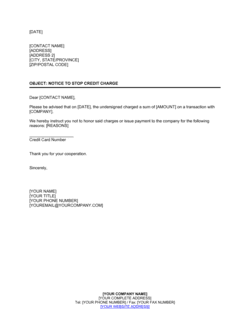
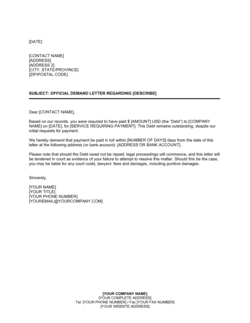
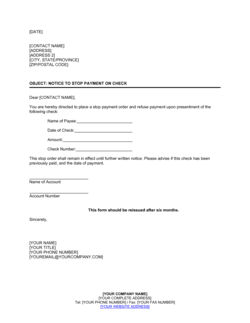
A Request Bank To Stop Payment is a formal written notice submitted to a financial institution instructing it to refuse payment on a specific check, ACH transfer, or scheduled transaction before it clears. This free Word download gives you a ready-to-edit letter you can complete in minutes and submit to your bank by mail, fax, or secure message portal.
When you need it
Use it when a check has been lost, stolen, or issued in error, when a vendor dispute requires you to freeze payment pending resolution, or when an unauthorized debit is scheduled and must be blocked before it processes.
What's inside
Account holder identification, precise payment details (check number, amount, payee, and date), the reason for the stop payment request, instructions for bank action, and an authorization signature block.

What is a Request Bank To Stop Payment?

A Request Bank To Stop Payment is a formal written notice an account holder submits to their financial institution directing it to refuse payment on a specific check, ACH debit, or scheduled transaction before the funds are transferred. It identifies the payment precisely β€” by check number, payee, issue date, and exact dollar amount β€” so the bank can flag the instrument in its payment processing system and return it unpaid if presented. The letter also records the reason for the request, states how long the order should remain active, and includes an indemnification acknowledgment that most banks require before acting.

Why You Need This Document

A phone call to your bank starts the stop payment process, but without written confirmation, you have no record that the instruction was given, no reference number to cite if the check clears anyway, and no documentation to support a dispute if the bank fails to honor the order. Submitting a formal letter creates a timestamped paper trail that protects you on both sides: it gives the bank everything it needs to act accurately and quickly, and it gives you evidence of a timely, correctly formatted request if the payment processes in error. For business accounts where payments are large, disputes are common, and auditors review disbursement records, a properly prepared stop payment letter is not optional β€” it is standard financial controls practice. This template puts the correct format, required fields, and precise language in your hands in under ten minutes.

Which variant fits your situation?

If your situation is…Use this template
Stopping a paper check issued to a vendorRequest Bank To Stop Payment
Disputing an unauthorized ACH debit already processedACH Debit Dispute Letter
Notifying a vendor that payment is being withheld pending disputePayment Dispute Letter
Requesting a refund after a duplicate payment clearedRefund Request Letter
Formally terminating a vendor's payment authorizationRevocation of Payment Authorization

Common mistakes to avoid

❌ Providing an approximate payment amount

Why it matters: Banks match stop payment orders against the exact dollar amount of the check. An amount off by even one cent means the system fails to identify the instrument and the check clears.

Fix: Locate the check stub or the check image in your online banking portal and enter the precise amount, including cents, before submitting the letter.
❌ Waiting too long to submit the request

Why it matters: A stop payment order submitted after the check has already been presented for payment cannot reverse the transaction. Once a check clears, recovering the funds requires a separate dispute or legal process.

Fix: Submit the stop payment request the same day the issue is identified. Most banks need two to four business hours to enter the order into their payment system.

❌ Failing to renew the order before it expires

Why it matters: Standard stop payment orders expire after six months. A check presented one day after expiration will clear normally, regardless of the original instruction.

Fix: Set a calendar reminder 30 days before expiration. If the check has not been destroyed or returned, contact the bank to renew the order for another term.

❌ Signing with a name not on the authorized signatory list

Why it matters: Banks verify signatures against their records. A stop payment signed by someone not authorized on the account will be rejected, costing critical processing time.

Fix: Confirm the authorized signatory list with your bank before submitting, especially after organizational changes such as ownership transfers or officer resignations.

The 8 key clauses, explained

Account holder and bank identification

In plain language: Opens the letter by identifying the account holder's full legal name, the bank name and branch, and the account number the stop payment applies to.

Sample language
[ACCOUNT HOLDER NAME] | Account Number: [ACCOUNT NUMBER] | [BANK NAME], [BRANCH ADDRESS] | Date: [DATE]

Common mistake: Providing only the last four digits of the account number. Banks processing stop orders by mail or secure message need the full account number to act accurately and quickly.

Subject line

In plain language: A brief one-line header identifying the letter as a stop payment request, including the check number or transaction reference for quick routing.

Sample language
Re: Stop Payment Request β€” Check No. [CHECK NUMBER] / Account No. [ACCOUNT NUMBER]

Common mistake: Omitting the subject line or writing a generic heading like 'Request.' Without a specific reference, the letter is routed as general correspondence and may not reach the payments desk in time.

Request statement

In plain language: The opening paragraph formally instructing the bank to stop payment, using clear, unambiguous language that leaves no room for interpretation.

Sample language
I/We hereby request that you immediately stop payment on the check described below, drawn on the above-referenced account.

Common mistake: Writing the request as a polite suggestion rather than a direct instruction β€” phrases like 'please consider stopping' introduce uncertainty about the account holder's intent.

Payment identification details

In plain language: Specifies the exact check number, payee name, issue date, and dollar amount so the bank can locate the correct instrument without ambiguity.

Sample language
Check No.: [CHECK NUMBER] | Payee: [PAYEE NAME] | Issue Date: [DATE] | Amount: $[AMOUNT]

Common mistake: Providing an approximate amount rather than the exact figure. Banks match stop payment orders by exact amount; a discrepancy of even one cent can cause the order to fail.

Reason for stop payment

In plain language: A brief, factual statement explaining why the stop payment is being requested β€” lost, stolen, issued in error, duplicate, or dispute.

Sample language
This stop payment is requested because [the above-referenced check has been lost / was issued in error / a duplicate payment was made / a billing dispute is pending resolution].

Common mistake: Writing a lengthy explanation of the underlying dispute in this section. Keep it to one sentence β€” the reason is for the bank's records, not for adjudicating the commercial disagreement.

Duration and renewal instruction

In plain language: States how long the stop payment order should remain in effect and whether the account holder wishes to be notified before it expires.

Sample language
Please maintain this stop payment order for [6 months / 12 months / the maximum period permitted] and notify the undersigned at [EMAIL / PHONE] prior to expiration.

Common mistake: Failing to address the order's duration. Most banks issue stop payment orders for six months; if the check could still be presented after that, the account holder must renew or risk the payment clearing.

Indemnification acknowledgment

In plain language: Acknowledges that the account holder accepts responsibility for any losses the bank incurs as a result of honoring the stop payment request, as required by most institutions.

Sample language
The undersigned agrees to indemnify and hold [BANK NAME] harmless from any loss, cost, or expense incurred as a result of honoring this stop payment request.

Common mistake: Deleting this clause thinking it weakens your position. Most banks will not process a stop payment without it, and removing it causes processing delays.

Authorized signature and contact

In plain language: The account holder's printed name, signature, title (if a business account), phone number, and email address for bank follow-up.

Sample language
Authorized Signature: _______________ | Printed Name: [NAME] | Title: [TITLE, IF APPLICABLE] | Phone: [PHONE] | Email: [EMAIL]

Common mistake: Signing with a name that does not match the authorized signatory on the account. Banks compare signatures against their records and will reject orders from unauthorized signatories.

How to fill it out

  1. 1

    Confirm your bank's stop payment submission process

    Before completing the letter, call your bank or check its online portal to confirm whether stop payment orders must be submitted in writing, by secure message, by fax, or in person. Some institutions accept phone requests but require written confirmation within 14 days.

    πŸ’‘ Ask the bank representative for a reference or confirmation number when you call β€” this timestamps your request and protects you if the check clears during processing.

  2. 2

    Enter your account and bank details

    Fill in the account holder's full legal name exactly as it appears on the account, the full account number, and the bank's name and branch address. For business accounts, use the registered entity name.

    πŸ’‘ Cross-check the account number against a recent statement rather than typing from memory β€” a single transposed digit routes the order to the wrong account.

  3. 3

    Complete the payment identification block

    Enter the exact check number, payee name as written on the check, the date the check was issued, and the precise dollar amount including cents. All four fields must match the instrument exactly.

    πŸ’‘ If you cannot locate the check stub, pull the check image from your online banking portal β€” most banks make images available within 24 hours of issue.

  4. 4

    State the reason briefly

    Select the most accurate one-sentence reason from the template options: lost, stolen, issued in error, duplicate payment, or pending dispute. Do not include background on the underlying commercial relationship.

    πŸ’‘ If the reason is a vendor dispute, document the dispute separately in a payment dispute letter β€” keep this letter focused solely on the bank instruction.

  5. 5

    Set the stop payment duration

    Specify the duration you want the order to remain active β€” typically six months, which is the standard bank window. If the check is more than three months old and still outstanding, request the maximum available period.

    πŸ’‘ Diarize a reminder one month before expiration so you can renew the order if the check has not been returned or destroyed.

  6. 6

    Sign as an authorized signatory

    Print your name and sign in the signature block exactly as your name appears on the account's authorized signatory list. Add your title for business accounts and your direct phone and email.

    πŸ’‘ If your bank requires two authorized signatories on payment instructions, obtain both signatures before submitting β€” a single signature on a dual-control account will be rejected.

Frequently asked questions

What is a stop payment request?

A stop payment request is a formal instruction from an account holder to their bank directing it to refuse payment on a specific check or scheduled electronic transaction before it is processed and funds are transferred. It is used when a check is lost, stolen, issued in error, or when a payment needs to be withheld during a dispute. The instruction is time-sensitive β€” it must be submitted before the check is presented for payment.

How long does a stop payment order stay in effect?

Most US banks maintain stop payment orders for six months from the date of the request. After six months, the order expires and the check can clear if presented. Account holders who need longer protection must contact their bank to renew the order for an additional term. Some banks offer 12-month orders for an additional fee β€” check your institution's specific policy.

Can a stop payment be reversed?

Yes. An account holder can cancel a stop payment order by contacting the bank and providing the same identifying details β€” account number, check number, payee, and amount. The bank will remove the order from its system, allowing the check to clear if subsequently presented. Cancellation requests should be submitted in writing for the same reasons the original request was.

What information does the bank need to process a stop payment?

At minimum: the full account number, the check number, the payee name exactly as written on the check, the issue date, and the precise dollar amount. Missing or approximate information β€” particularly the amount β€” can cause the bank's system to fail to match the instrument, allowing the check to clear despite the request.

Does a stop payment request guarantee the check won't clear?

No. Stop payment orders reduce the risk but do not guarantee the check will be blocked. If the check is presented and cleared before the order is entered into the bank's system, or if the identifying information does not exactly match the instrument, the payment may still process. Submitting the request as early as possible and confirming receipt with the bank minimizes this risk.

How much does a stop payment order cost?

Most US banks charge a fee of $15 to $35 per stop payment order, though some premium business accounts include a limited number of free stop payments per year. The fee is typically debited from the account at the time the order is entered. Check your account's fee schedule before submitting, as the fee is non-refundable even if the check never clears.

Can I stop payment on an ACH or electronic transfer?

Yes, but the process and timing differ from stopping a paper check. For ACH debits, you must notify your bank at least three business days before the scheduled settlement date. For recurring ACH debits (such as subscriptions or loan payments), you may also need to revoke the authorization directly with the originating company. A written stop payment letter submitted to the bank is the recommended approach for both one-time and recurring ACH transactions.

What happens if a check clears after I submitted a stop payment request?

If the check clears despite a valid and timely stop payment order, contact your bank immediately and provide the order confirmation number. The bank may be liable for honoring a payment it was instructed to block, and most institutions will reverse the transaction and investigate. Document everything β€” your letter, the bank's confirmation, and the clearing date β€” in case a formal dispute is required.

Do I need a lawyer to send a stop payment request to my bank?

No. A stop payment request is a routine banking instruction that requires no legal expertise to prepare. A clearly worded letter with accurate payment details is all a bank needs. Legal advice may be relevant if the underlying reason for stopping payment involves a contract dispute, fraud claim, or potential litigation β€” but the bank letter itself is a straightforward administrative document.

How this compares to alternatives

vs Payment Dispute Letter

A payment dispute letter is sent to the vendor or creditor β€” not the bank β€” to formally contest a charge or invoice and explain why payment is being withheld. A stop payment request is sent to the bank to block the instrument itself. Both documents are often used together: the stop payment blocks the check while the dispute letter addresses the underlying commercial issue.

vs Void Check Request

Voiding a check means canceling it before it leaves your possession β€” simply writing 'VOID' across the face. A stop payment request is needed when the check has already been issued to the payee and is no longer in your control. If the check has not been sent, voiding it is simpler and carries no bank fee.

vs ACH Debit Dispute Letter

An ACH dispute letter is used to challenge an electronic debit that has already cleared β€” typically an unauthorized or erroneous withdrawal. A stop payment request applies to transactions that have not yet cleared. For ACH transactions already processed, the dispute letter initiates the bank's error-resolution procedure rather than a pre-clearance block.

vs Revocation of Payment Authorization

A revocation of payment authorization is sent to the payee or billing company to cancel ongoing permission for recurring ACH debits β€” canceling future charges at the source. A stop payment request is a bank-level instruction to block a specific transaction. For recurring payments, both documents are typically needed: the revocation prevents future charges; the stop payment protects against the next scheduled debit while the revocation is processed.

Industry-specific considerations

Professional Services

Law firms and accounting practices use stop payment letters to cancel checks issued to vendors or clients when billing errors or engagement terminations arise mid-cycle.

Construction and Trades

Contractors stop payment on checks issued for materials or subcontractor work when deliveries are incomplete, defective, or subject to a lien dispute.

Retail and E-commerce

Retail businesses use stop payment requests to block duplicate supplier payments created by manual data-entry errors in accounts payable workflows.

Property Management

Property managers stop payment on maintenance or contractor checks when work is not completed as specified or when payment method changes from check to wire.

Template vs pro β€” what fits your needs?

PathBest forCostTime
Use the templateAny account holder stopping payment on a standard check or ACH transaction for routine reasons such as loss, error, or duplicate paymentFree (plus bank's stop payment fee, typically $15–$35)5–10 minutes
Template + professional reviewBusiness accounts with dual-control requirements or stop payments connected to an active vendor dispute$0–$100 (brief review by an accountant or office counsel)Same day
Custom draftedHigh-value transactions, fraud-related stops requiring concurrent legal action, or multi-bank accounts requiring coordinated instructions$150–$400 (attorney review and coordination)1–2 business days

Glossary

Stop Payment Order
An instruction from an account holder to their bank to refuse payment on a specific check or scheduled transaction before it is processed.
Check Number
The unique sequential identifier printed in the upper right corner of a check, used by the bank to locate and block the specific instrument.
ACH Transfer
An Automated Clearing House transaction β€” an electronic bank-to-bank payment processed through the US ACH network, including direct debits and credits.
Payee
The individual or business to whom a check or payment is made out β€” the party designated to receive the funds.
Account Holder
The individual or entity whose name appears on the bank account from which the payment is drawn.
Stop Payment Fee
A charge assessed by the bank for processing a stop payment order, typically ranging from $15 to $35 per request depending on the institution.
Stale Check
A check that has not been presented for payment within six months of its issue date, which most banks will refuse to honor regardless of a stop payment order.
Void Check
A check that has been canceled by the issuer before presentment, typically by writing 'VOID' across the face β€” distinct from a stop payment, which is a bank-level instruction.

Part of your Business Operating System

This document is one of 3,000+ business & legal templates included in Business in a Box.

  • Fill-in-the-blanks β€” ready in minutes
  • 100% customizable Word document
  • Compatible with all office suites
  • Export to PDF and share electronically

Create your document in 3 simple steps.

From template to signed document β€” all inside one Business Operating System.
1
Download or open template

Access over 3,000+ business and legal templates for any business task, project or initiative.

2
Edit and fill in the blanks with AI

Customize your ready-made business document template and save it in the cloud.

3
Save, Share, Send, Sign

Share your files and folders with your team. Create a space of seamless collaboration.

Save time, save money, and create top-quality documents.

β˜…β˜…β˜…β˜…β˜…

"Fantastic value! I'm not sure how I'd do without it. It's worth its weight in gold and paid back for itself many times."

Managing Director Β· Mall Farm
Robert Whalley
Managing Director, Mall Farm Proprietary Limited
β˜…β˜…β˜…β˜…β˜…

"I have been using Business in a Box for years. It has been the most useful source of templates I have encountered. I recommend it to anyone."

Business Owner Β· 4+ years
Dr Michael John Freestone
Business Owner
β˜…β˜…β˜…β˜…β˜…

"It has been a life saver so many times I have lost count. Business in a Box has saved me so much time and as you know, time is money."

Owner Β· Upstate Web
David G. Moore Jr.
Owner, Upstate Web

Run your business with a system β€” not scattered tools

Stop downloading documents. Start operating with clarity. Business in a Box gives you the Business Operating System used by over 250,000 companies worldwide to structure, run, and grow their business.

Free Forever PlanΒ Β·Β No credit card required