1
Identify and verify the duplicate transaction
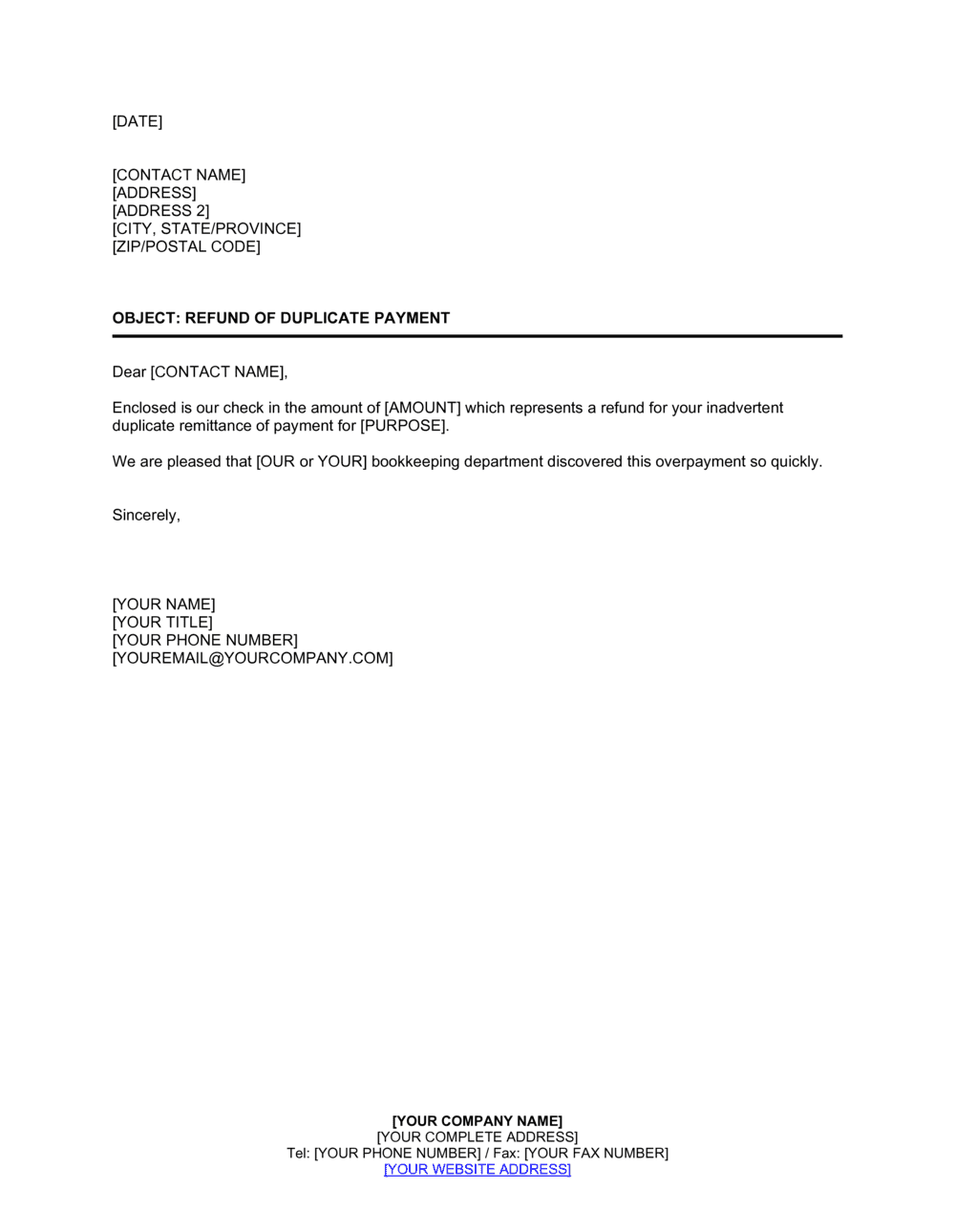
Pull both payment records — bank statements, remittance advices, and the original invoice — and confirm that both payments reference the same invoice number and obligation. Document the reference numbers for both transactions before opening the template.
💡 Reconcile against your bank statement, not just your accounting system — internal records sometimes lag by a day and can misidentify which transaction was the duplicate.
2
Enter full legal names and contact details for both parties
Use the registered legal entity name for each party, not a trade name or abbreviation. Include the accounts-payable or treasury contact name and email for each party so correspondence reaches the right person.
💡 Confirm the payee's legal name against the original contract or purchase order rather than the invoice header — vendors sometimes invoice under a trade name that differs from their registered entity.
3
Complete the original payment and duplicate payment sections
Enter the date, amount, payment method, and bank reference number for the legitimate first payment, then repeat for the erroneous duplicate. Reference the original invoice number in both descriptions to make the connection explicit.
💡 If the duplicate was processed by a third-party payment platform (e.g., a bank bill-pay system), retrieve the platform's transaction ID in addition to the internal reference — auditors will ask for it.
4
State the refund amount, currency, and return payment details
Enter the exact refund amount in the transaction currency. Provide full return payment instructions — bank name, account number, routing or SWIFT/IBAN, and the reference to include on the return transfer.
💡 For international refunds, specify whether the amount is the original duplicate sum or the equivalent at a specified exchange rate — leaving this open invites a shortfall dispute.
5
Set a specific refund deadline and late-payment consequences
Choose a calendar date that gives the payee reasonable processing time — typically 10–15 business days from the date of signing. Add an interest rate for late returns and confirm your right to offset future invoices if the deadline is missed.
💡 Check the applicable statutory interest rate in the governing jurisdiction — setting a contractual rate lower than the statutory rate means the statutory rate applies anyway.
6
Review and tailor the mutual release clause
Narrow the release to the specific duplicate transaction identified in the document. Remove or amend any language that could be read as releasing claims unrelated to this overpayment.
💡 If there are other open disputes between the parties, add a carve-out sentence explicitly excluding those matters from the release.
7
Execute before the refund is processed
Obtain wet or electronic signatures from authorized representatives of both parties before the payee initiates the return transfer. Signing after the funds arrive can create a 'past consideration' argument that weakens enforceability of the release.
💡 Use eSign to timestamp execution and store the countersigned copy automatically — courts accept electronic signatures in all major jurisdictions for commercial agreements of this type.
8
File the executed agreement with payment records
Retain the signed agreement, both original payment confirmations, and the refund confirmation in the same file for a minimum of 7 years to satisfy tax authority and audit requirements.
💡 Tag the file in your accounting system against the original invoice number so it surfaces immediately during any future audit query on that transaction.