Project Management Template

Free Excel download β€’ Edit online β€’ Save & share with Drive β€’ Export to PDF

6 pagesβ€’25–35 min to fillβ€’Difficulty: Complexβ€’Signature requiredβ€’Legal review recommended
Learn more ↓
FreeXLSProject Management Template

At a glance

What it is
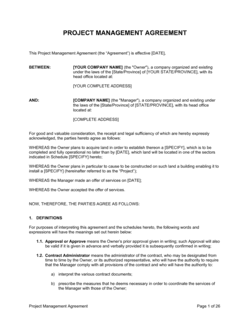
A Project Management Template is a binding agreement between a project manager or service provider and a client that defines the scope of work, deliverables, milestones, payment schedule, change control process, and each party's responsibilities for a defined engagement. This free Word download gives you a structured, enforceable starting point you can edit online and export as PDF to present to clients before any project kicks off.
When you need it
Use it whenever you are engaged to plan, execute, or oversee a defined project on behalf of a client β€” before work begins and before any milestone payments are authorized. It is particularly critical when the project spans multiple phases, involves subcontractors, or carries a budget above a threshold where an informal email chain creates unacceptable risk.
What's inside
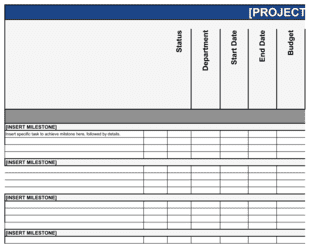
Scope of work and deliverables, project timeline and milestones, payment schedule and invoicing terms, change order process, acceptance criteria, intellectual property ownership, confidentiality obligations, limitation of liability, and termination conditions.

What is a Project Management Template?

A Project Management Template is a binding agreement between a project manager or service provider and a client that establishes the legal and operational framework for a defined project engagement. It sets out the scope of work and deliverables, project timeline and milestones, fee and payment schedule, change order process, acceptance criteria, intellectual property ownership, confidentiality obligations, and termination conditions β€” converting an informal project understanding into an enforceable contract that governs the engagement from kick-off through final delivery. Unlike a simple statement of work or an offer letter, a properly drafted project management agreement creates reciprocal obligations on both parties and provides a clear mechanism for resolving the disputes β€” scope creep, delayed approvals, withheld payments β€” that derail most projects.

Why You Need This Document

Without a signed project management agreement, you are exposed from the moment work begins. Clients add requirements beyond what was discussed, dispute whether verbal approvals counted, delay milestone sign-offs to extend payment timelines, and walk away from completed work claiming it did not meet expectations that were never defined in writing. The consequences are concrete: uncompensated work, cash flow gaps, and no legal basis to pursue payment for effort the client verbally authorized but refuses to acknowledge. A well-structured project agreement closes each of these gaps before the project starts β€” defining what you will deliver, when the client must respond, how changes get priced and approved, and exactly what happens if either party wants to exit. For project managers and agencies, it is the single document that separates professional engagements from costly misunderstandings.

Which variant fits your situation?

If your situation is…Use this template
Engaging an independent contractor to execute project tasksIndependent Contractor Agreement
Managing a construction or renovation project with milestone drawsConstruction Contract
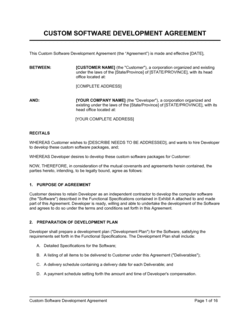
Defining the scope for a fixed-price software development projectSoftware Development Agreement
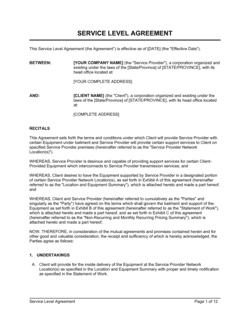
Providing ongoing managed services rather than a defined projectService Level Agreement (SLA)
Formalizing consulting advice without project execution responsibilityConsulting Agreement
Governing a joint venture where two parties co-manage a projectJoint Venture Agreement
Commissioning creative or design deliverables with IP transferCreative Services Agreement

Common mistakes to avoid

❌ Starting work before the agreement is signed

Why it matters: Work performed before signing gives the client the benefit of your effort with no contractual obligation to pay. If the engagement falls apart, you have no written basis for compensation.

Fix: Make it a firm policy that no work β€” including discovery, planning, or internal kick-off prep β€” begins until both parties have signed and the deposit invoice is paid.

❌ Vague scope with no explicit exclusions

Why it matters: A scope that says 'manage the software implementation' without listing deliverables or exclusions gives the client unlimited room to expand expectations. Every additional request becomes a credibility dispute rather than a change order.

Fix: Write each deliverable as a specific, measurable output and add an exclusions section listing at least three to five things the engagement does not include.

❌ No client review deadline in the milestone clause

Why it matters: Without a contractual review window and a deemed-acceptance provision, a client who delays approvals for weeks can hold milestone payments hostage while the project falls behind schedule.

Fix: Add a clause stating that deliverables not rejected in writing within 10 business days of submission are deemed accepted, and that client review delays extend the project timeline accordingly.

❌ Linking all payment to final delivery

Why it matters: A single end-of-project payment creates cash flow risk for the provider across the entire engagement and gives the client maximum leverage to dispute payment at the finish line.

Fix: Tie at least 30–40% of the total fee to interim milestones, with a deposit of 20–30% due at signing. Reserve no more than 20% for final delivery sign-off.

❌ Omitting a liability cap

Why it matters: Without a contractual cap, a project manager faces unlimited liability for a client's downstream losses β€” lost revenue, missed deadlines, or regulatory fines β€” that can vastly exceed the project fee.

Fix: Include a limitation of liability clause capping total exposure at 100% of fees paid and excluding consequential, indirect, and punitive damages.

❌ No change order clause or informal approval process

Why it matters: Allowing changes via email or verbal instruction creates fee disputes at project close when the client denies authorizing additional work or refuses to pay for effort beyond the original scope.

Fix: Require a signed written change order for any scope, timeline, or fee adjustment above a defined threshold. Stop work on the change until the order is executed.

The 10 key clauses, explained

Parties, recitals, and engagement

In plain language: Identifies the service provider and the client as legal entities, summarizes the purpose of the engagement, and confirms that both parties have agreed to proceed on the terms stated.

Sample language
This Project Management Agreement ('Agreement') is entered into as of [DATE] between [SERVICE PROVIDER LEGAL NAME], a [STATE/PROVINCE] [ENTITY TYPE] ('Project Manager'), and [CLIENT LEGAL NAME], a [STATE/PROVINCE] [ENTITY TYPE] ('Client'). Project Manager agrees to provide project management services as described in Schedule A.

Common mistake: Using a trade name instead of the registered legal entity name. If the entity name doesn't match the signatory's authority or registration, enforcing payment and IP clauses against the correct party becomes legally complex.

Scope of work and deliverables

In plain language: Defines precisely what the project manager will do, what outputs they will produce, and β€” equally important β€” what falls outside the engagement.

Sample language
Project Manager shall provide the services and deliver the outputs set out in Schedule A ('Scope of Work'). Any work not expressly described in Schedule A is outside the scope of this Agreement and requires a signed Change Order before work commences.

Common mistake: Writing a vague scope like 'manage the project to completion.' Without measurable deliverables and explicit exclusions, every additional client request becomes a scope dispute with no contractual resolution.

Project timeline and milestones

In plain language: Sets the project start date, end date, and intermediate milestones with specific calendar dates, linking each milestone to a client approval obligation or payment trigger.

Sample language
The project shall commence on [START DATE] and is expected to be completed by [END DATE], subject to timely receipt of client inputs. Milestones are set out in Schedule B. Client shall review and approve or reject each milestone deliverable within [10] business days of receipt.

Common mistake: Setting milestone dates without specifying client review deadlines. When client approval delays are not contractually limited, the project manager absorbs timeline risk caused by the client's own inaction.

Fees, payment schedule, and invoicing

In plain language: States the total project fee or rate, the payment schedule tied to milestones or calendar dates, invoicing frequency, accepted payment methods, and the consequence of late payment.

Sample language
Client shall pay Project Manager a fixed fee of $[AMOUNT], payable per the schedule in Schedule C. Invoices are due within [30] days of issue. Balances unpaid after [30] days accrue interest at [1.5]% per month. Project Manager may suspend work on accounts overdue by more than [15] days.

Common mistake: Linking all payment to final project completion. A single end-of-project payment creates serious cash flow risk for the provider and gives the client a structural incentive to delay sign-off indefinitely.

Change order process

In plain language: Establishes how scope changes are requested, priced, approved, and documented β€” requiring a signed written change order before any out-of-scope work begins.

Sample language
Any change to the Scope of Work, timeline, or fees must be documented in a written Change Order signed by both parties before work on the change commences. Project Manager shall provide a cost and schedule impact estimate within [5] business days of a change request.

Common mistake: Allowing verbal or email-only change approvals. Without a signed change order, clients routinely dispute whether a change was ever formally approved, leaving the project manager with uncompensated work.

Acceptance and sign-off

In plain language: Defines the criteria a deliverable must meet for the client to accept it, the process for requesting revisions, and the consequence of the client failing to respond within the review window.

Sample language
Client shall review each deliverable against the acceptance criteria in Schedule A within [10] business days. If Client does not provide written rejection with specific reasons within that period, the deliverable is deemed accepted. Client is entitled to [2] rounds of revisions per deliverable.

Common mistake: No deemed-acceptance clause. Without it, a client who simply ignores deliverables can stall payment indefinitely by claiming they never formally accepted the work.

Intellectual property ownership

In plain language: Allocates ownership of materials, methodologies, and outputs created during the project β€” typically granting the client ownership of custom deliverables while the provider retains proprietary tools and pre-existing IP.

Sample language
Upon receipt of full payment, Project Manager assigns to Client all rights in custom deliverables created specifically for this project. Project Manager retains all rights to its pre-existing tools, templates, methodologies, and background IP. Client receives a non-exclusive licence to use background IP solely to benefit from the deliverables.

Common mistake: Assigning all IP without carving out pre-existing tools and methodologies. A project manager who transfers all IP with every engagement eventually gives away the core assets that make future projects possible.

Confidentiality

In plain language: Prevents both parties from disclosing the other's non-public business information β€” client data, project details, pricing, and trade secrets β€” during and after the engagement.

Sample language
Each party shall keep the other's Confidential Information strictly confidential and shall not disclose it to any third party without prior written consent. 'Confidential Information' means any non-public technical, financial, or business information disclosed in connection with this Agreement.

Common mistake: One-sided confidentiality that only protects the client. Project managers share proprietary methodologies, pricing, and staffing information with clients β€” a mutual NDA protects both sides.

Limitation of liability and indemnification

In plain language: Caps the project manager's total financial exposure β€” typically at fees paid in the prior 12 months β€” and excludes consequential damages like lost profits, data loss, or business interruption.

Sample language
In no event shall Project Manager's total liability exceed the fees paid by Client in the [12] months preceding the claim. Neither party shall be liable for indirect, consequential, or punitive damages. Client shall indemnify Project Manager against third-party claims arising from Client's materials or instructions.

Common mistake: No liability cap at all. Without one, a project manager faces potentially unlimited exposure for a client's downstream losses β€” lost revenue, missed market windows, or regulatory penalties β€” that far exceed the project fee.

Termination and wind-down

In plain language: Sets the conditions and notice period for either party to end the agreement, the payment owed for work completed to date, and each party's obligations on winding down the project.

Sample language
Either party may terminate this Agreement with [30] days written notice. Upon termination, Client shall pay all fees earned through the termination date plus reasonable wind-down costs. Project Manager shall deliver all completed work product and return or destroy Client's confidential materials within [10] business days.

Common mistake: Allowing immediate termination without a notice period. This leaves the project manager with completed work and no payment mechanism, and leaves the client with an unfinished project and no transition plan.

How to fill it out

  1. 1

    Insert the legal entity names and engagement date

    Enter the full registered legal names of both the service provider and the client, along with the effective date of the agreement. Use the entity names as they appear on corporate registration documents.

    πŸ’‘ Confirm the client's legal entity name in writing before signing β€” a subsidiary, parent, or related company may be the correct contracting party, which affects where you can enforce payment.

  2. 2

    Complete Schedule A β€” scope of work and deliverables

    List every deliverable with a measurable description, and explicitly state what is not included. For each deliverable, define the acceptance criteria β€” the objective standard against which the client will review it.

    πŸ’‘ If you cannot describe a deliverable in one specific sentence, it is not defined precisely enough. Vague scope is the single biggest source of project disputes.

  3. 3

    Build Schedule B β€” milestones and timeline

    Map each deliverable to a calendar date or a trigger event (e.g., five business days after client provides brand assets). Include a client review window β€” typically 5–10 business days β€” for each milestone.

    πŸ’‘ Add a clause specifying that client delays in providing approvals, materials, or access extend the project timeline by the same number of business days β€” this protects you from absorbing client-caused delays.

  4. 4

    Complete Schedule C β€” fees and payment schedule

    Enter the total fee or hourly rate, and tie each payment to a milestone or calendar date. Include the invoicing frequency, payment due date (Net 15 or Net 30 is standard), and the late-payment interest rate.

    πŸ’‘ Structure at least 20–30% of the total fee as a non-refundable deposit due at signing. This covers mobilization costs and filters out uncommitted clients before you invest significant time.

  5. 5

    Set the change order threshold and process

    Specify how change requests are submitted, the turnaround for your cost estimate, and the minimum value that triggers a formal signed change order versus a simple email acknowledgment.

    πŸ’‘ Setting a change order threshold of $250–$500 prevents administrative overhead for tiny adjustments while ensuring every material scope expansion is documented in writing.

  6. 6

    Tailor the IP assignment and licence language

    Identify which outputs are custom deliverables (assigned to the client on full payment) and which are your pre-existing tools, templates, or methodologies (retained by you, licensed to the client). List background IP categories explicitly.

    πŸ’‘ If you reuse a proprietary framework, reporting template, or software tool across multiple clients, name it specifically as background IP β€” a generic carve-out may not protect it.

  7. 7

    Set the liability cap and confirm insurance coverage

    Enter the liability cap amount β€” typically 100% of fees paid in the prior 12 months β€” and confirm your professional indemnity and general liability insurance limits are at least equal to the cap.

    πŸ’‘ Some enterprise clients require liability caps of 2Γ— or 3Γ— annual fees. Negotiate this before signing β€” a cap that exceeds your insurance coverage creates unhedged personal exposure.

  8. 8

    Execute before project kick-off

    Both parties must sign the agreement and any attached schedules before the project start date and before any deposit invoice is issued. Store the fully executed copy in a secure, accessible location.

    πŸ’‘ Use an e-signature tool to timestamp execution and get counterpart signatures within 24–48 hours of sending β€” agreements that sit unsigned for more than a week frequently lose momentum and create ambiguity about whether informal work has already begun.

Frequently asked questions

What is a project management template?

A project management template is a binding agreement β€” sometimes called a project management agreement or project contract β€” between a project manager or agency and a client that defines the scope of work, deliverables, milestones, payment schedule, change control process, and each party's legal obligations for a defined engagement. It transforms an informal project understanding into an enforceable document that protects both parties if expectations diverge.

What should a project management agreement include?

At minimum: legal names of both parties, scope of work with specific deliverables and exclusions, project timeline and milestone dates, fee and payment schedule, change order process, acceptance criteria, intellectual property ownership, confidentiality obligations, limitation of liability, and termination conditions. Missing any of these creates gaps that courts fill with jurisdiction-specific defaults β€” typically more favorable to the client.

Is a project management agreement legally binding?

Yes β€” a signed project management agreement is generally enforceable as a contract in most jurisdictions when it identifies the parties, states the agreed services and fees, and is executed by authorized signatories. It creates enforceable payment obligations, IP assignment rights, and confidentiality duties. Consider having a lawyer review the agreement for complex or high-value engagements.

What is a change order and why does the agreement need one?

A change order is a written amendment authorizing work, cost, or timeline adjustments outside the original scope. Without a change order clause, scope expansions become credibility disputes β€” the client claims it was included in the original scope; the project manager claims it was additional. A signed change order creates a clear paper trail and prevents uncompensated work.

Who owns the IP created during a managed project?

Ownership depends on what the agreement says. A well-drafted project management template assigns custom deliverables to the client upon full payment, while the project manager retains pre-existing tools, templates, and methodologies. Without an explicit IP clause, default rules vary by jurisdiction β€” in the US and UK, the creator often retains copyright unless it is expressly assigned.

What is a deemed-acceptance clause and why does it matter?

A deemed-acceptance clause states that if the client does not reject a deliverable in writing within a specified review window β€” typically 5–10 business days β€” the deliverable is automatically considered accepted. Without it, a client who simply ignores a submission can delay milestone payments indefinitely, creating cash flow risk for the project manager with no contractual remedy.

Do I need a separate NDA or does the project agreement cover confidentiality?

A project management agreement with a mutual confidentiality clause typically provides sufficient protection for most engagements. A separate NDA is advisable when confidential information is exchanged before the project agreement is signed β€” during initial scoping or proposal discussions β€” or when the client's legal team requires a standalone NDA as part of their vendor onboarding process.

How should liability be limited in a project management contract?

The project manager's total liability is typically capped at 100% of fees paid in the prior 12 months, with consequential, indirect, and punitive damages excluded entirely. Some enterprise clients negotiate caps of 2Γ— or 3Γ— total fees. The cap should be at least equal to the project manager's professional indemnity insurance limit β€” otherwise the gap between the contractual exposure and the insurance coverage is borne personally.

What notice period should a project management agreement include for termination?

Thirty days is the most common notice period for professional services project agreements. For longer multi-phase projects, 45–60 days gives both parties time to wind down responsibly. The agreement should also state that all fees earned through the termination date are payable immediately, and that the project manager will deliver all completed work product within 10 business days of the termination effective date.

How this compares to alternatives

vs Independent Contractor Agreement

An independent contractor agreement governs the relationship between a business and a self-employed individual performing ongoing or recurring work β€” it defines the worker's status, rate, and general obligations. A project management agreement governs a specific, time-bound project with defined deliverables, milestones, and a structured change order process. Use the contractor agreement for flexible ongoing engagements; use the project agreement when the scope, timeline, and outputs are fixed in advance.

vs Consulting Agreement

A consulting agreement covers the provision of advice, analysis, or recommendations β€” the consultant delivers expertise, not a tangible output. A project management agreement obligates the provider to deliver specific outputs, manage a timeline, and coordinate resources to achieve a defined end state. If you are being paid for your thinking, use a consulting agreement; if you are being paid to produce and deliver something, use a project management agreement.

vs Service Level Agreement (SLA)

A service level agreement governs ongoing, repeating service delivery β€” uptime targets, response times, and performance metrics over a continuous period. A project management agreement governs a discrete engagement with a defined start, end, and milestone structure. Use the SLA for managed services or retainer arrangements; use the project agreement for one-time or phase-based projects with a clear completion point.

vs Software Development Agreement

A software development agreement is tailored specifically to the development and delivery of software β€” it adds source code ownership, version control, warranty obligations, and defect-resolution periods that general project management agreements do not include. If the project is a software build, use the software development agreement. If the project involves managing a broader initiative that includes but is not limited to software, the project management template is the right starting point.

Industry-specific considerations

Information Technology

Sprint-based deliverable cycles, acceptance testing protocols, software handoff and documentation requirements, and liability limitations tied to system uptime and data integrity.

Construction and Engineering

Progress billing tied to construction draws, subcontractor coordination obligations, change orders for unforeseen site conditions, and lien-waiver integration.

Marketing and Creative Services

Campaign deliverable schedules, revision limits per asset, third-party media spend pass-through terms, and IP assignment covering brand assets and creative output.

Professional Services and Consulting

Outcome-based milestones rather than time-and-materials billing, knowledge transfer obligations at project close, and confidentiality covering client business strategy and financial data.

Jurisdictional notes

United States

Contract law governing project agreements is primarily state-level, with significant variation in how courts interpret limitation-of-liability and consequential-damage exclusions. California courts scrutinize broad liability waivers and may narrow them even when signed. Non-compete provisions embedded in project agreements are unenforceable in California and several other states. Federal procurement projects have mandatory FAR clauses that override private agreement terms.

Canada

Common-law provinces (Ontario, BC, Alberta) apply contract principles similar to the US, but courts may imply a duty of good faith performance that limits how aggressively a party can invoke termination or penalty clauses. Quebec is a civil-law jurisdiction β€” contracts are interpreted under the Civil Code of Quebec, which imposes different rules on limitation-of-liability clauses and requires French-language contracts for provincially regulated entities. GST/HST must be accounted for in fee schedules.

United Kingdom

The Unfair Contract Terms Act 1977 and the Consumer Rights Act 2015 limit the enforceability of exclusion and limitation-of-liability clauses β€” they must satisfy a 'reasonableness' test. IR35 rules may apply if a project manager operates through a personal service company. The Late Payment of Commercial Debts (Interest) Act 1998 automatically entitles service providers to statutory interest on overdue invoices, even without a contractual late-fee clause.

European Union

EU member states apply national contract law, but several common principles apply broadly. GDPR obligations arise whenever the project involves processing personal data on behalf of the client β€” a data processing agreement is typically required alongside the project contract. The EU Late Payment Directive (2011/7/EU) entitles businesses to statutory interest after 30 days on B2B transactions. IP assignment must be explicit and specific under German, French, and Dutch copyright law β€” a general assignment clause may not transfer all rights without naming them.

Template vs lawyer β€” what fits your deal?

PathBest forCostTime
Use the templateFreelance project managers and small agencies running standard client engagements with fees under $50KFree30–60 minutes
Template + legal reviewProjects above $50K, multi-phase engagements, or clients in regulated industries with their own legal review process$300–$8002–5 days
Custom draftedEnterprise clients, government contracts, cross-border projects, or engagements where IP ownership is commercially critical$1,500–$5,000+1–3 weeks

Glossary

Scope of Work (SOW)
A written description of the specific tasks, deliverables, and boundaries of a project β€” what is included and explicitly what is not.
Deliverable
A specific, tangible output the project manager or service provider is contractually obligated to produce and hand off to the client.
Milestone
A defined checkpoint in the project schedule β€” typically tied to a payment trigger or a formal client approval β€” marking completion of a project phase.
Change Order
A written, signed amendment to the original project agreement authorizing additional work, cost, or timeline outside the original scope.
Acceptance Criteria
Pre-agreed, measurable standards a deliverable must meet before the client is contractually obligated to approve it and release the corresponding payment.
Scope Creep
The gradual expansion of project requirements beyond the original agreed scope, often without a corresponding adjustment to budget or timeline.
Limitation of Liability
A clause capping the maximum financial exposure of one or both parties β€” typically expressed as the total fees paid under the agreement.
Force Majeure
A clause excusing a party from performance obligations when a project is delayed or prevented by events outside their reasonable control β€” natural disasters, strikes, or government action.
Liquidated Damages
A pre-agreed financial penalty for specific breaches β€” such as missing a delivery date β€” calculated to approximate the likely loss rather than requiring proof of actual damages.
Work Breakdown Structure (WBS)
A hierarchical decomposition of the total project scope into individually manageable tasks and sub-tasks, used to assign responsibility and estimate effort.
PMO (Project Management Office)
An internal department or function that standardizes project governance, templates, and reporting across an organization's portfolio of active projects.
Critical Path
The sequence of dependent project tasks whose combined duration determines the earliest possible project completion date β€” any delay on the critical path delays the whole project.

Part of your Business Operating System

This document is one of 3,000+ business & legal templates included in Business in a Box.

  • Fill-in-the-blanks β€” ready in minutes
  • 100% customizable Word document
  • Compatible with all office suites
  • Export to PDF and share electronically

Create your document in 3 simple steps.

From template to signed document β€” all inside one Business Operating System.
1
Download or open template

Access over 3,000+ business and legal templates for any business task, project or initiative.

2
Edit and fill in the blanks with AI

Customize your ready-made business document template and save it in the cloud.

3
Save, Share, Send, Sign

Share your files and folders with your team. Create a space of seamless collaboration.

Save time, save money, and create top-quality documents.

β˜…β˜…β˜…β˜…β˜…

"Fantastic value! I'm not sure how I'd do without it. It's worth its weight in gold and paid back for itself many times."

Managing Director Β· Mall Farm
Robert Whalley
Managing Director, Mall Farm Proprietary Limited
β˜…β˜…β˜…β˜…β˜…

"I have been using Business in a Box for years. It has been the most useful source of templates I have encountered. I recommend it to anyone."

Business Owner Β· 4+ years
Dr Michael John Freestone
Business Owner
β˜…β˜…β˜…β˜…β˜…

"It has been a life saver so many times I have lost count. Business in a Box has saved me so much time and as you know, time is money."

Owner Β· Upstate Web
David G. Moore Jr.
Owner, Upstate Web

Run your business with a system β€” not scattered tools

Stop downloading documents. Start operating with clarity. Business in a Box gives you the Business Operating System used by over 250,000 companies worldwide to structure, run, and grow their business.

Start freeΒ Β·Β No credit card required