- Scope of Work (SOW)
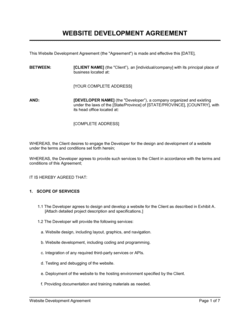
- A detailed description of the software features, deliverables, and technical specifications the developer is contracted to produce.
- Milestone
- A defined stage in the development schedule at which a specific portion of the software is delivered and subject to client acceptance testing.
- Acceptance Criteria
- The measurable conditions a deliverable must satisfy before the client is obligated to approve it and release the associated payment.
- IP Assignment
- A clause transferring ownership of all custom code, designs, and work product from the developer to the client upon final payment.
- Change Order
- A written amendment to the original scope of work that documents agreed changes to features, timeline, or cost before additional work begins.
- Work for Hire
- A US copyright doctrine under which work created by an employee or contracted party under certain conditions is owned by the commissioning party from creation.
- Escrow (Source Code)
- An arrangement where the developer deposits source code with a neutral third party, released to the client if the developer ceases operations or defaults.
- Limitation of Liability
- A clause capping the maximum damages either party can recover from the other, typically expressed as the total fees paid under the agreement.
- Warranty Period
- A defined period — typically 30 to 90 days after acceptance — during which the developer must fix defects in the delivered software at no additional charge.
- Liquidated Damages
- A pre-agreed sum payable for a specific breach — such as missing a delivery deadline — set at contract execution rather than assessed by a court after the fact.
- Background IP
- Pre-existing intellectual property owned by the developer — such as libraries, frameworks, or tools — that is incorporated into the custom software but not assigned to the client.
- Agile / Fixed-Price Contract
- Two contrasting engagement models: agile contracts bill by sprint or time-and-materials with flexible scope; fixed-price contracts lock scope and cost but shift risk to the developer.