Business Use Case Template

Free Word download β€’ Edit online β€’ Save & share with Drive β€’ Export to PDF

3 pagesβ€’20–30 min to fillβ€’Difficulty: Standardβ€’Signature requiredβ€’Legal review recommended
Learn more ↓
FreeBusiness Use Case Template

At a glance

What it is
A Business Use Case is a structured document that captures a specific business scenario, its actors, triggering conditions, step-by-step process flows, expected outcomes, and the binding obligations each party accepts when executing or approving the use case. This free Word download gives you a ready-to-sign template you can edit online and export as PDF for use in IT projects, software procurement, vendor agreements, and internal process approvals.
When you need it
Use it when a project, system, or process change requires documented stakeholder sign-off, when a vendor or technology partner must agree to defined scope and success criteria, or when an internal approval authority needs a formal record of what is being authorized and on what terms.
What's inside
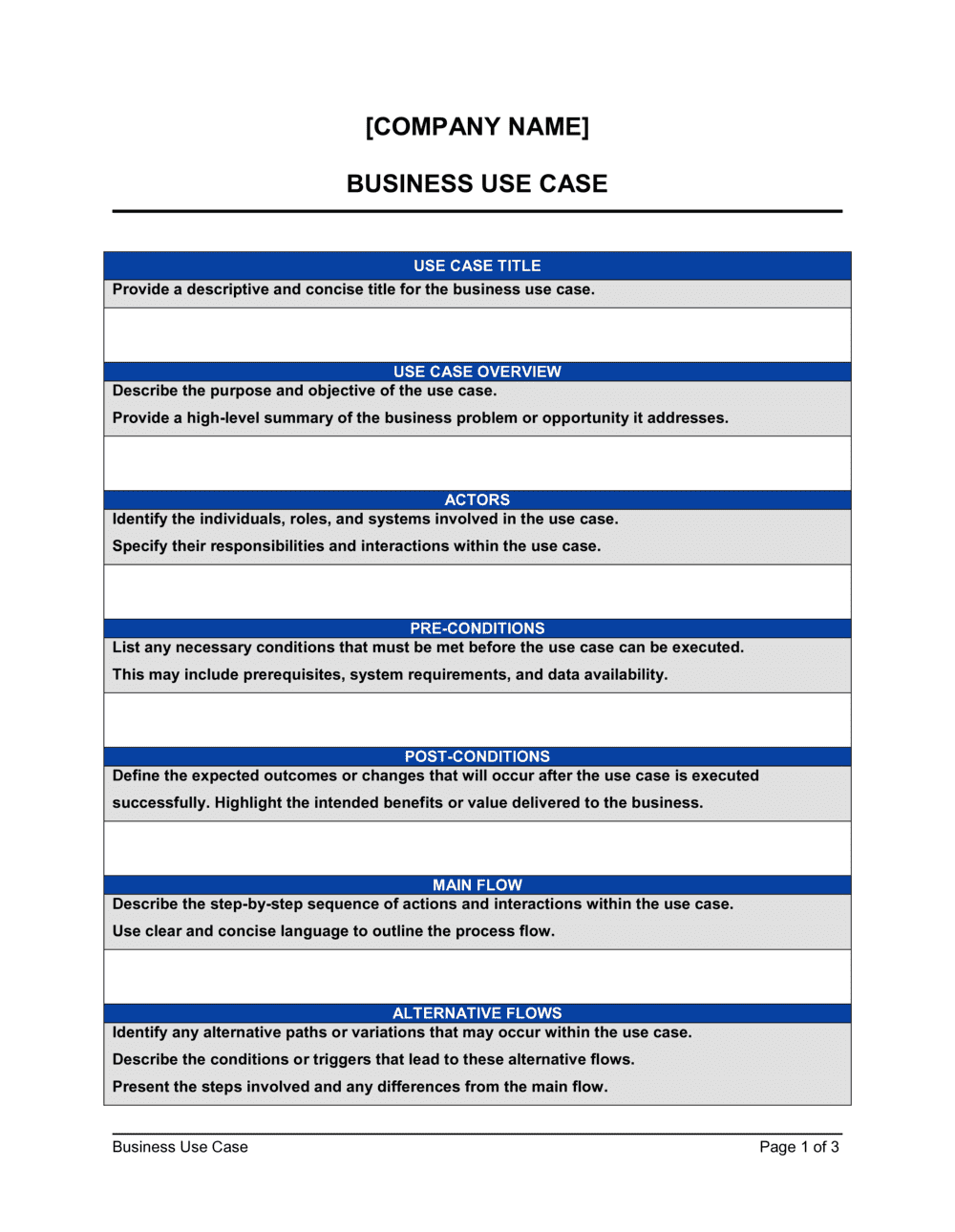
Parties and roles, use case description and objectives, triggering events, step-by-step primary and alternate flows, pre- and post-conditions, acceptance criteria, assumptions and constraints, and a signature block binding all approving parties to the documented terms.

What is a Business Use Case?

A Business Use Case is a structured document that defines a specific business scenario in binding, executable terms β€” identifying the actors involved, the triggering event that starts the process, the step-by-step primary and alternate flows, the preconditions that must be met before the process begins, and the measurable acceptance criteria that confirm it has been completed successfully. Unlike an informal process diagram or a project brief, a properly executed business use case includes a signature block through which all approving parties formally accept the documented terms, making it enforceable as part of a broader contractual framework. It is used across IT project management, software procurement, vendor onboarding, internal process governance, and regulated business operations.

Why You Need This Document

Without a signed business use case, scope disputes are resolved by whoever has the better memory or the louder voice. Development teams build features the client never approved; vendors claim deliverables are complete when acceptance criteria were never agreed; process changes roll out without a verifiable record of who authorized them. The financial consequences are concrete: rework costs, contract disputes, failed audits, and regulatory penalties when data-handling steps were never formally documented. A signed business use case eliminates each of these risks by establishing, before work begins, exactly what each party is responsible for, what success looks like in measurable terms, and what happens when the process deviates from plan. This template gives you the complete structure β€” from trigger event to signature block β€” to capture those obligations in under three hours.

Which variant fits your situation?

If your situation is…Use this template
Documenting an IT or software system interaction for developmentSystem Use Case Specification
Justifying a project investment to leadership or a boardBusiness Case Template
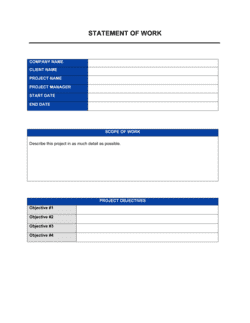
Defining scope and deliverables for a vendor engagementStatement of Work
Outlining functional requirements for a new software productSoftware Requirements Specification
Capturing high-level user stories for agile sprint planningUser Story Template
Formalizing process changes that require regulatory approvalChange Request Form
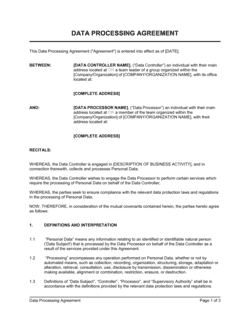
Documenting data processing activities for GDPR complianceData Processing Agreement

Common mistakes to avoid

❌ Subjective acceptance criteria

Why it matters: Criteria like 'the system should be fast' or 'the process works correctly' cannot be tested or verified, leaving disputes about completion unresolvable without external arbitration.

Fix: Replace every subjective criterion with a quantified threshold, a named verification method, and a responsible role β€” for example, 'API response time under 1.5 seconds confirmed by [TOOL] load test, signed off by the IT Director.'

❌ Documenting only the primary flow

Why it matters: Exceptions and alternate paths are precisely where failures and disputes occur. A use case that covers only the happy path provides no guidance β€” or obligation β€” when something deviates.

Fix: For each step in the primary flow, explicitly ask what can go wrong and document at least one alternate or exception flow, including who is responsible and how escalation works.

❌ Using personal names instead of organizational roles

Why it matters: When the named individual leaves the organization or changes position, the document's approval structure becomes invalid and amendments are required before work can continue.

Fix: Reference roles throughout β€” 'Project Sponsor,' 'IT Director,' 'Vendor Account Manager' β€” and include a separate role directory that maps current names to roles as a living attachment.

❌ No governing agreement reference or governing law clause

Why it matters: Without a reference to an overarching agreement or a governing law clause, the use case has no dispute resolution mechanism, and courts in different jurisdictions may apply conflicting rules.

Fix: Add a governing terms clause citing the master services agreement, project charter, or applicable law, and include the jurisdiction where disputes will be resolved.

The 10 key clauses, explained

Parties, roles, and use case identifier

In plain language: Identifies all participating parties β€” including the initiating organization, any vendor or system provider, and key internal stakeholders β€” and assigns a unique identifier to the use case for traceability.

Sample language
This Business Use Case (ID: [USE CASE ID]) is entered into between [ORGANIZATION NAME], a [ENTITY TYPE] ('Owner'), and [VENDOR / PARTNER NAME] ('Provider'), effective [DATE]. The following roles are recognized: [ROLE 1], [ROLE 2], [ROLE 3].

Common mistake: Listing job titles instead of organizational roles. When personnel change, a title-specific clause becomes unenforceable without an amendment.

Use case description and objectives

In plain language: States what the use case is designed to accomplish, the business problem it solves, and the measurable outcomes that define success.

Sample language
This use case describes the process by which [ACTOR] will [ACTION] in order to [OBJECTIVE]. The expected business outcome is [OUTCOME], measured by [METRIC] no later than [DATE].

Common mistake: Writing objectives so broadly that no metric can confirm completion β€” for example, 'improve efficiency' instead of 'reduce processing time by 20% within 90 days.'

Triggering event and preconditions

In plain language: Documents the specific event that initiates the use case and all conditions that must be true before the process can begin.

Sample language
This use case is triggered when [TRIGGER EVENT]. Preconditions that must be satisfied before initiation: (a) [PRECONDITION 1], (b) [PRECONDITION 2], (c) [PRECONDITION 3].

Common mistake: Omitting preconditions entirely, which causes disputes when a party claims they could not perform because a prerequisite was never met.

Primary flow of events

In plain language: A numbered, step-by-step sequence describing the normal successful path through the use case, identifying the responsible actor at each step.

Sample language
Step 1: [ACTOR A] initiates [ACTION] via [CHANNEL/SYSTEM]. Step 2: [SYSTEM/ACTOR B] responds with [RESPONSE] within [TIMEFRAME]. Step 3: [ACTOR A] confirms [CONFIRMATION ACTION]. Step [N]: Use case ends with [POSTCONDITION].

Common mistake: Combining multiple actors' actions into a single step, making it impossible to assign accountability when a step fails.

Alternate flows and exception handling

In plain language: Documents all known deviations from the primary flow β€” including error conditions, optional paths, and fallback procedures β€” with the steps to resolve each.

Sample language
Alternate Flow A (triggered at Step [N] if [CONDITION]): [ACTOR] shall [ACTION]. If unresolved within [TIMEFRAME], escalate to [ROLE]. Alternate Flow B (triggered if [CONDITION]): [ACTION].

Common mistake: Documenting only the happy path and leaving exceptions undefined. Parties dispute responsibility precisely in the edge cases the document never addressed.

Postconditions and acceptance criteria

In plain language: States the verifiable end state of the process after successful completion and the specific criteria all parties must agree are met before sign-off.

Sample language
Upon successful completion, the following postconditions shall be true: (a) [POSTCONDITION 1], (b) [POSTCONDITION 2]. Acceptance criteria: [CRITERION 1] verified by [METHOD]; [CRITERION 2] confirmed by [ROLE] within [TIMEFRAME].

Common mistake: Using subjective acceptance criteria like 'the system performs well' rather than a quantified threshold like 'response time under 2 seconds for 99% of requests.'

Assumptions, constraints, and dependencies

In plain language: Lists the assumptions each party is relying on, any technical or regulatory constraints that limit the process, and external dependencies outside the parties' direct control.

Sample language
Assumptions: (a) [SYSTEM] will remain available during [HOURS]; (b) [DATA] will be provided in [FORMAT] by [DATE]. Constraints: [CONSTRAINT]. Dependencies: [DEPENDENCY] managed by [THIRD PARTY].

Common mistake: Treating assumptions as implicit background knowledge rather than documented terms. Undocumented assumptions become disputed facts when something goes wrong.

Scope boundary and exclusions

In plain language: Explicitly defines what is within the scope of the use case and what is excluded, preventing scope creep and establishing the limits of each party's obligations.

Sample language
In Scope: [ITEM 1], [ITEM 2], [ITEM 3]. Out of Scope: [EXCLUSION 1], [EXCLUSION 2]. Any change to the in-scope items requires a written change request approved by [ROLE].

Common mistake: Defining only what is in scope without listing exclusions. Parties routinely interpret silence as inclusion, leading to scope creep and cost overruns.

Governing terms and change control

In plain language: States which overarching agreement or policy governs the use case, the process for requesting changes, and the approval authority required for amendments.

Sample language
This Use Case is governed by the [MASTER AGREEMENT / POLICY NAME] dated [DATE]. Changes to any clause require a written Change Request Form signed by [ROLE] and [ROLE] before implementation.

Common mistake: Not referencing a governing agreement. When the use case is the only document, parties lack a dispute resolution mechanism and governing law anchor.

Signature and approval block

In plain language: Captures the binding approval of all sign-off authorities, confirming they have reviewed and accepted the use case as documented.

Sample language
By signing below, each party confirms they have read, understood, and agreed to the terms of this Business Use Case (ID: [USE CASE ID]) as of [DATE]. [PARTY A NAME]: _________________ Title: [TITLE] Date: ___ [PARTY B NAME]: _________________ Title: [TITLE] Date: ___

Common mistake: Having only one party sign or using email approval without a formal signature block. Single-party execution creates ambiguity about whether the counterparty is bound.

How to fill it out

  1. 1

    Assign a unique use case identifier and list all parties

    Create a sequential identifier (e.g., UC-2026-014) and enter the full legal name and role of every organization and individual whose approval the document will require. Use organizational roles, not personal titles.

    πŸ’‘ Match the party names exactly to any governing master agreement or vendor contract β€” discrepancies between documents create enforceability gaps.

  2. 2

    Write a specific, measurable objective statement

    State what the use case is designed to accomplish, the business problem it addresses, and the metric by which success will be measured. Tie the metric to a specific date or milestone.

    πŸ’‘ If you cannot express the objective in terms of a measurable outcome, the use case is not ready to be documented β€” resolve the ambiguity before drafting.

  3. 3

    Define the trigger and all preconditions

    Document the exact event or condition that starts the use case. Then list every precondition that must be satisfied before the process begins, assigning responsibility for each to a named role.

    πŸ’‘ Walk the process backward from the first step to find hidden preconditions β€” system availability, data readiness, and authorization are the three most commonly missed.

  4. 4

    Map the primary flow step by step

    Number each step sequentially. For each step, name the responsible actor, describe the action taken, identify the system or channel involved, and state the expected response or output. One actor per step.

    πŸ’‘ Use active voice with a named subject: 'The Approver logs into [SYSTEM] and submits the request' β€” not 'The request is submitted.'

  5. 5

    Document all alternate flows and exceptions

    For every step in the primary flow, ask: what can go wrong? What optional paths exist? Document each deviation with its trigger condition, the steps to handle it, and the escalation path if it cannot be resolved.

    πŸ’‘ Number alternate flows by the primary step they branch from β€” e.g., 'AF-3a' for an alternate at Step 3. This makes cross-referencing fast during disputes.

  6. 6

    Write quantified acceptance criteria

    For each postcondition, specify the measurable threshold that confirms it is met, the method of verification, and the role responsible for confirming acceptance. Avoid subjective language.

    πŸ’‘ If acceptance depends on test results, name the specific test protocol or test tool in the criteria β€” generic references like 'standard testing' are not enforceable.

  7. 7

    List assumptions, constraints, and out-of-scope exclusions

    Explicitly document every assumption each party is relying on, any regulatory or technical constraints, and a named exclusions list. Have each party review and confirm the assumptions apply before signing.

    πŸ’‘ Send the assumptions list to each stakeholder separately before the document is finalized β€” silent acceptance of undisclosed assumptions is the most common dispute trigger.

  8. 8

    Circulate for signature before work begins

    Route the completed use case to all sign-off authorities and collect signatures before any related work, development, or procurement activity starts. Store the executed document in a version-controlled repository.

    πŸ’‘ Use a named version tag (e.g., v1.0-APPROVED) in the file name the moment all signatures are collected to distinguish it from any draft versions circulated for review.

Frequently asked questions

What is a business use case?

A business use case is a structured document that describes a specific business scenario β€” who initiates it, what steps are followed, what exceptions can occur, and what conditions must be true for the process to be considered successfully completed. In a legal context, it also includes a binding signature block through which all approving parties accept the documented terms. It is used in IT projects, software procurement, vendor engagements, and internal process approvals.

What is the difference between a business use case and a business case?

A business case justifies a project investment β€” it presents the problem, options, costs, benefits, and a recommended course of action for a decision-maker to approve. A business use case documents the operational process within that project β€” the actors, flows, triggers, and acceptance criteria that define how a specific scenario will work in practice. The business case asks 'should we do this?'; the business use case asks 'how exactly will this work and who is responsible?'

When should a business use case be signed?

The use case should be signed before any related development, procurement, or process change activity begins. A use case executed after work starts documents history rather than obligations and provides no enforceable scope boundary. Collecting signatures before kickoff establishes shared understanding, prevents scope creep, and creates a verifiable record of what each party agreed to deliver or accept.

How detailed should the primary flow be?

Each step should be granular enough that a new team member could follow it without additional context β€” typically 6 to 15 numbered steps for a standard business process. Each step should name one responsible actor, one action, and one expected output or response. Combining multiple actors or decisions into a single step makes accountability impossible to assign when something fails.

Does a business use case need a lawyer to be enforceable?

For standard internal process approvals and straightforward IT project sign-offs, a well-completed template is generally sufficient. Legal review is recommended when the use case governs a vendor relationship with financial exposure, when it processes personal data subject to GDPR or HIPAA, or when it forms part of a regulated procurement process. A brief legal review typically costs $200–$500 and is worthwhile for any use case where non-performance has material financial consequences.

What is the difference between a use case and a statement of work?

A statement of work (SOW) defines deliverables, timelines, pricing, and commercial obligations between a client and a vendor. A business use case defines the functional interaction model β€” what actors do, in what order, under what conditions β€” that the SOW's deliverables must support. The two documents complement each other: the SOW governs the commercial relationship; the use case governs how the agreed system or process actually operates. For IT engagements, both are typically required.

How should alternate flows be numbered?

Number alternate flows by reference to the primary step they branch from. For example, 'AF-4a' is the first alternate flow branching from Step 4, and 'AF-4b' is the second. This convention makes it immediately clear where a deviation enters the primary flow, simplifies cross-referencing during testing or dispute resolution, and keeps the document auditable across versions.

Can a business use case be amended after signing?

Yes, but amendments require a formal change request approved and signed by all original sign-off authorities. Unilateral changes β€” updating the document and redistributing without new signatures β€” are not binding on the other parties and can void the original acceptance. The governing terms clause should specify the change control process and the turnaround time within which parties must respond to a change request.

What happens if a precondition is not met when the use case is triggered?

If a precondition is not satisfied, the use case should not proceed and the triggering party must notify the responsible role within the timeframe stated in the document. Proceeding without preconditions met is typically treated as a breach of the agreed process, shifting liability for any resulting failures to the party who initiated despite the unsatisfied condition. Documenting preconditions explicitly is the primary protection against this scenario.

How this compares to alternatives

vs Statement of Work

A statement of work governs the commercial relationship between a client and vendor β€” deliverables, pricing, milestones, and liability. A business use case defines the functional interaction model that those deliverables must support β€” who does what, in what order, under what conditions. For IT and service engagements, both documents are typically required: the SOW sets the commercial terms; the use case sets the operational terms.

vs Business Case Template

A business case justifies a project investment to a decision-maker by presenting options, costs, benefits, and a recommendation. A business use case documents how a specific approved process will operate β€” actors, flows, and acceptance criteria. The business case precedes project approval; the business use case governs execution after approval.

vs Change Request Form

A change request form documents a proposed modification to an existing system, process, or contract and routes it through an approval chain. A business use case documents the full operating model of a process from initiation. Change requests reference and amend existing use cases; they do not replace them. For a new process, write the use case first; for changes to an existing one, issue a change request.

vs Data Processing Agreement

A data processing agreement (DPA) governs the legal obligations of a data controller and processor under privacy law β€” GDPR, CCPA, or equivalent. A business use case may document the operational steps of a data processing workflow, but it does not satisfy the legal requirements of a DPA. When a use case involves personal data, a separate DPA is required; the use case should reference the DPA in its governing terms clause.

Industry-specific considerations

Technology / SaaS

Software integration use cases must document API interaction sequences, authentication preconditions, rate limits, error codes, and data format requirements as binding acceptance criteria.

Financial Services

Use cases governing payment flows, credit decisioning, or client onboarding must reference applicable regulatory obligations β€” AML, KYC, PCI-DSS β€” and include audit trail postconditions.

Healthcare / MedTech

Use cases involving patient data must incorporate HIPAA (US) or equivalent data protection preconditions, access control steps, and breach notification flows as alternate paths.

Manufacturing and Supply Chain

Procurement and inventory use cases require supplier dependency documentation, lead-time constraints, and quality inspection acceptance criteria tied to specific ISO or internal standards.

Professional Services

Client-engagement use cases define service delivery steps, milestone-based acceptance criteria, and escalation flows β€” forming the operational backbone of the broader statement of work.

Government and Public Sector

Regulated procurement processes require use cases that document authorization chains, compliance checkpoints, and audit-ready postconditions aligned to specific procurement codes or standards.

Jurisdictional notes

United States

US courts will generally enforce a signed business use case as a binding contract if it contains offer, acceptance, and consideration. In software and IT procurement, use cases often form exhibits to master services agreements governed by state contract law. For use cases involving personal data, CCPA (California) and sector-specific regulations such as HIPAA may impose additional documentation requirements beyond the use case itself.

Canada

Canadian contract law requires clear offer, acceptance, and consideration for a use case to be binding. In Quebec, documents intended to bind provincially regulated entities must be available in French. PIPEDA and provincial privacy legislation impose additional requirements when use cases govern the collection or processing of personal information. Federal procurement use cases must comply with the Government Contracts Regulations.

United Kingdom

Under English law, a signed business use case is enforceable as a contract if supported by consideration and clear terms. For public sector engagements, use cases may need to comply with the Procurement Act 2023 and associated guidance. Use cases involving personal data must align with UK GDPR requirements and should reference a separate data processing agreement where applicable.

European Union

In EU member states, business use cases are enforceable under national contract law, which varies by jurisdiction. Where a use case involves the processing of personal data, GDPR Article 28 requires a formal data processing agreement β€” the use case alone does not satisfy this requirement. Certain regulated sectors, including financial services and healthcare, require use case documentation to meet specific compliance standards set by national regulators.

Template vs lawyer β€” what fits your deal?

PathBest forCostTime
Use the templateInternal process approvals, IT project sign-offs, and straightforward vendor use cases with limited financial exposureFree1–3 hours
Template + legal reviewVendor engagements with financial penalties for non-performance, use cases involving personal data, or regulated procurement processes$200–$6001–3 days
Custom draftedComplex multi-party IT integrations, regulated industries with compliance obligations, or use cases forming part of a high-value contract$1,000–$4,000+1–2 weeks

Glossary

Actor
Any person, system, or external entity that interacts with the use case by initiating or participating in the defined process.
Primary Flow
The step-by-step sequence of actions that describes the normal, successful execution of the use case from start to finish.
Alternate Flow
A documented deviation from the primary flow that handles exceptions, errors, or optional paths while still achieving the use case objective.
Precondition
A condition that must be true before the use case can begin β€” for example, a user must be authenticated or a system must be online.
Postcondition
The guaranteed state of the system or process after the use case completes successfully, used to verify that the objective was achieved.
Trigger
The specific event, action, or condition that initiates the use case β€” such as a user request, a scheduled time, or a system signal.
Acceptance Criteria
Measurable conditions that all parties agree must be satisfied for the use case to be considered complete and approved.
Stakeholder
Any individual or group with an interest in the outcome of the use case, whether as a decision-maker, end user, or affected party.
Scope Boundary
An explicit statement of what is and is not included in the use case, preventing scope creep and clarifying party obligations.
Sign-Off Authority
The individual or role with formal power to approve and bind the organization to the terms documented in the use case.
Use Case Identifier
A unique alphanumeric reference code assigned to each use case for traceability across project documentation, change logs, and audits.

Part of your Business Operating System

This document is one of 3,000+ business & legal templates included in Business in a Box.

  • Fill-in-the-blanks β€” ready in minutes
  • 100% customizable Word document
  • Compatible with all office suites
  • Export to PDF and share electronically

Create your document in 3 simple steps.

From template to signed document β€” all inside one Business Operating System.
1
Download or open template

Access over 3,000+ business and legal templates for any business task, project or initiative.

2
Edit and fill in the blanks with AI

Customize your ready-made business document template and save it in the cloud.

3
Save, Share, Send, Sign

Share your files and folders with your team. Create a space of seamless collaboration.

Save time, save money, and create top-quality documents.

β˜…β˜…β˜…β˜…β˜…

"Fantastic value! I'm not sure how I'd do without it. It's worth its weight in gold and paid back for itself many times."

Managing Director Β· Mall Farm
Robert Whalley
Managing Director, Mall Farm Proprietary Limited
β˜…β˜…β˜…β˜…β˜…

"I have been using Business in a Box for years. It has been the most useful source of templates I have encountered. I recommend it to anyone."

Business Owner Β· 4+ years
Dr Michael John Freestone
Business Owner
β˜…β˜…β˜…β˜…β˜…

"It has been a life saver so many times I have lost count. Business in a Box has saved me so much time and as you know, time is money."

Owner Β· Upstate Web
David G. Moore Jr.
Owner, Upstate Web

Run your business with a system β€” not scattered tools

Stop downloading documents. Start operating with clarity. Business in a Box gives you the Business Operating System used by over 250,000 companies worldwide to structure, run, and grow their business.

Free Forever PlanΒ Β·Β No credit card required