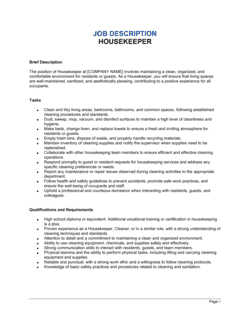
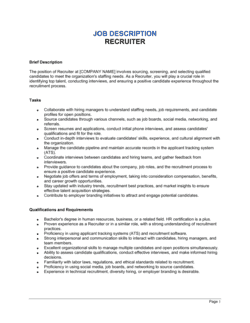
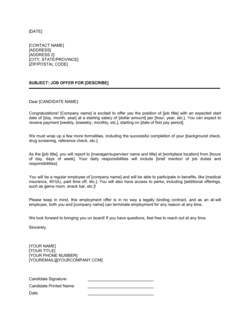
Personal Assistant Job Description Template

Free Word download • Edit online • Save & share with Drive • Export to PDF

2 pages20–30 min to fillDifficulty: StandardSignature requiredLegal review recommended
Learn more ↓
FreePersonal Assistant Job Description Template

At a glance

What it is
A Personal Assistant Job Description is a binding employment document that defines the scope of work, reporting structure, core duties, required qualifications, and employment terms for a personal assistant or executive PA role. This free Word download gives employers a structured, legally grounded starting point they can edit online and export as PDF to attach to an offer letter or employment contract.
When you need it
Use it when hiring a personal assistant for the first time, replacing an existing PA, or standardizing role expectations across multiple support staff positions. It is also required by most employment contracts and referenced in performance reviews and termination procedures.
What's inside
Role title and reporting line, position summary, detailed duties and responsibilities, required and preferred qualifications, working hours and location, confidentiality obligations, compensation range, and an acknowledgment signature block.

What is a Personal Assistant Job Description?

A Personal Assistant Job Description is a formal employment document that defines the title, reporting structure, core duties, required qualifications, working conditions, confidentiality obligations, and termination terms for a personal assistant role. Unlike a casual verbal arrangement or a brief email summary, a properly drafted job description creates a written record of agreed expectations that is enforceable as part of the employment contract — used in performance reviews, disciplinary procedures, and termination decisions. When signed by both employer and employee and attached as a schedule to the employment agreement, it becomes a binding reference document for the full duration of the working relationship.

Why You Need This Document

Operating with an informal or undocumented PA arrangement exposes employers to three compounding risks. First, without a written duties clause, there is no objective standard against which to assess performance or justify a termination-for-cause decision — employment tribunals consistently require documented expectations before upholding dismissals. Second, personal assistants routinely access financial accounts, travel schedules, medical information, and family details; without a defined confidentiality clause, the employer has no contractual remedy if sensitive information is disclosed during or after employment. Third, PAs often hold keys, access cards, employer credit cards, and login credentials — without a documented return-of-property obligation, recovering these items after a contested exit is legally uncertain and practically difficult. This template gives employers a structured, jurisdiction-aware starting point that closes all three gaps in under 30 minutes, with clear guidance on where local legal review is warranted.

Which variant fits your situation?

If your situation is…Use this template
Hiring a PA for a senior executive or C-suite officerExecutive Assistant Job Description
Engaging a PA for administrative tasks only, no personal errandsAdministrative Assistant Job Description
Hiring a PA for a private household or high-net-worth individualHousehold Manager Job Description
Engaging a part-time or freelance PA rather than a permanent hireIndependent Contractor Agreement
Combining the job description with a full employment offerEmployment Agreement (At-Will Employee)
Hiring a PA for a fixed project period or maternity coverFixed-Term Employment Contract
Onboarding a remote PA working from a different location or countryRemote Work Employment Agreement

Common mistakes to avoid

❌ Vague or omitted duties clause

Why it matters: A job description that lists three generic bullet points provides no basis for performance management, disciplinary action, or a termination-for-cause decision. Employment tribunals and courts require documented expectations.

Fix: Write at least 10 specific, action-verb duties. Where professional and personal tasks both apply, list them in separate sub-sections to prevent scope disputes later.

❌ No confidentiality clause or a single-sentence version

Why it matters: Personal assistants routinely access financial accounts, travel itineraries, medical information, and family details. A missing or unenforceable confidentiality clause leaves the employer with no contractual remedy for disclosure.

Fix: Include a defined confidentiality clause specifying the categories of information covered, the obligation's duration after termination, and the consequences of breach.

❌ Omitting after-hours and on-call expectations

Why it matters: PAs are frequently contacted outside standard hours for urgent scheduling, travel disruptions, or personal emergencies. Undocumented expectations create wage-and-hour liability in jurisdictions that require overtime pay for non-exempt employees.

Fix: State explicitly whether after-hours availability is required, how it will be compensated, and what constitutes a reasonable response time.

❌ Collecting the signed acknowledgment after the start date

Why it matters: In common-law jurisdictions, adding new binding obligations after employment begins requires fresh consideration. A post-start-date signature on confidentiality and termination terms may be unenforceable.

Fix: Execute the signed acknowledgment on or before the employee's first day, and attach it as a schedule to the employment contract at the same time.

❌ Listing preferred qualifications as required

Why it matters: Overstating minimum requirements narrows the candidate pool, may create disparate-impact discrimination exposure, and can lead to inflated salary expectations that the employer cannot meet.

Fix: Divide qualifications into two distinct lists — Required and Preferred — and verify each required item is genuinely necessary for the role to function.

❌ No return-of-property clause on termination

Why it matters: PAs typically hold physical keys, building access cards, employer credit cards, login credentials, and personal devices. Without a documented return obligation, recovering these items after a contentious exit is legally and practically difficult.

Fix: Include a termination clause requiring return of all employer property, devices, and credentials by the last day of employment, and maintain an asset register of items issued.

The 10 key clauses, explained

Role Title and Reporting Structure

In plain language: Identifies the exact job title and states who the personal assistant reports to directly, including backup reporting lines when the primary manager is unavailable.

Sample language
Position Title: Personal Assistant. Reports to: [EMPLOYER NAME / TITLE], [COMPANY NAME]. In the absence of [EMPLOYER NAME], the Employee shall take direction from [ALTERNATE CONTACT / TITLE].

Common mistake: Using a generic title like 'Assistant' without specifying 'Personal' or 'Executive' — this creates ambiguity about the role's scope and complicates classification for payroll and benefits purposes.

Position Summary

In plain language: A 3–5 sentence overview of the role's primary purpose, the type of support provided, and the context in which the PA operates — professional, personal, or both.

Sample language
[EMPLOYER NAME] is seeking a highly organized Personal Assistant to provide comprehensive administrative and personal support. The role involves managing schedules, correspondence, travel arrangements, and ad hoc tasks to enable [EMPLOYER NAME] to focus on [PRIMARY OBJECTIVES].

Common mistake: Writing a position summary that describes the ideal candidate rather than the role — confusing what the person will do with what kind of person you want.

Core Duties and Responsibilities

In plain language: An itemized list of the specific tasks the PA is expected to perform regularly, distinguishing between professional duties and personal or household tasks where both apply.

Sample language
Duties include, but are not limited to: managing calendar and scheduling for [EMPLOYER NAME]; coordinating domestic and international travel including flights, accommodation, and itineraries; screening and prioritizing correspondence; [ADDITIONAL DUTIES AS APPLICABLE].

Common mistake: Using the phrase 'and other duties as assigned' as a substitute for specificity. Courts and employment tribunals have found that overly broad duty clauses can constitute constructive dismissal when material new tasks are added without consent.

Qualifications and Experience Requirements

In plain language: States the minimum required education, years of experience, software proficiency, and any role-specific certifications or licenses the candidate must hold.

Sample language
Required: [X] years of experience as a Personal or Executive Assistant; proficiency in [SOFTWARE — e.g., Microsoft 365, Google Workspace]; valid driver's license [IF APPLICABLE]. Preferred: [ADDITIONAL QUALIFICATIONS].

Common mistake: Listing preferred qualifications as required — this narrows the candidate pool unnecessarily and can expose the employer to discrimination claims if the criteria disproportionately screen out protected groups.

Working Hours, Location, and Flexibility

In plain language: Defines standard working hours, the primary work location, remote or travel expectations, and any on-call or after-hours availability requirements.

Sample language
Standard hours: [X:XX AM – X:XX PM], [DAYS]. Primary location: [ADDRESS / REMOTE / HYBRID]. The role requires availability outside standard hours on an as-needed basis, with reasonable advance notice provided where possible.

Common mistake: Omitting after-hours availability expectations entirely — PAs are frequently called on outside business hours, and not documenting this creates compensation disputes under wage-and-hour laws in multiple jurisdictions.

Confidentiality and Discretion

In plain language: Requires the employee to maintain strict confidentiality over all personal, financial, and business information encountered in the role, with the obligation surviving termination.

Sample language
Employee acknowledges that in the course of employment they will have access to sensitive personal and business information belonging to [EMPLOYER NAME] and associated parties. Employee agrees not to disclose, discuss, or use such information at any time during or after employment without prior written consent.

Common mistake: Relying on a brief one-line confidentiality statement instead of a defined scope. Without specifying what 'confidential information' covers, the clause is difficult to enforce — particularly for household PAs with access to family, financial, and medical details.

Compensation, Benefits, and Expenses

In plain language: States the salary or hourly rate, payment frequency, eligibility for benefits, and the process for reimbursing out-of-pocket expenses incurred on the employer's behalf.

Sample language
Compensation: [$X] per [year / hour], payable [bi-weekly / monthly]. Benefits: [BENEFITS SUMMARY OR REFERENCE TO SEPARATE PLAN DOCUMENT]. Business expenses incurred with prior approval will be reimbursed within [14] days upon submission of receipts.

Common mistake: Not specifying an approval process for expenses — PAs routinely make purchases on behalf of their employer, and an undefined reimbursement policy leads to disputes over what qualifies.

Performance Standards and Review

In plain language: Describes the key performance indicators for the role, how and when performance will be evaluated, and what constitutes satisfactory performance.

Sample language
Performance will be assessed [annually / semi-annually] against the core duties outlined in this description and any agreed KPIs. The first formal review will take place at the end of the [30/60/90]-day probationary period.

Common mistake: No performance standards clause at all — without written benchmarks, addressing underperformance or managing a termination for cause becomes legally fraught.

Termination, Notice, and Return of Property

In plain language: States the notice period required from either party to end the employment, the process for termination with and without cause, and the obligation to return employer property on exit.

Sample language
Either party may terminate this engagement with [X weeks'] written notice. Upon termination, Employee shall promptly return all employer property, devices, access credentials, and confidential materials in their possession.

Common mistake: Omitting the return-of-property clause — PAs often hold physical keys, access codes, financial cards, and employer devices, and no return obligation creates significant security and financial exposure.

Acknowledgment and Signature

In plain language: A signed statement confirming the employee has received, read, and understood the job description, and accepts the responsibilities and conditions outlined.

Sample language
I, [EMPLOYEE FULL NAME], confirm that I have read and understand this Job Description and accept the responsibilities and conditions set out above. Signature: __________________ Date: [DATE].

Common mistake: Treating the acknowledgment as optional or collecting it weeks after the start date. An unsigned or post-start-date acknowledgment weakens enforceability of confidentiality and termination clauses in common-law jurisdictions.

How to fill it out

  1. 1

    Enter the employer and role details

    Add the employer's full legal name, the exact job title (Personal Assistant, Executive Personal Assistant, etc.), department if applicable, and the direct reporting line. Use the registered legal entity name, not a trade name.

    💡 If the PA will report to an individual rather than a company, name the individual's title as well as their name — this matters for household employer arrangements.

  2. 2

    Write a focused position summary

    Draft 3–5 sentences describing what the role does, for whom, and in what context — professional office, private household, or hybrid. Avoid mixing candidate traits into the summary.

    💡 Read the summary aloud and ask: does this describe the job or the ideal person? If it describes the person, rewrite it to describe the work.

  3. 3

    List core duties in specific, action-verb terms

    Write each duty starting with an active verb: 'Manage calendar and scheduling,' 'Coordinate domestic and international travel,' 'Screen and respond to correspondence.' Separate professional duties from personal or household duties if both apply.

    💡 Aim for 10–15 specific duties. Any fewer is too vague; any more risks creating an unworkable scope.

  4. 4

    Define minimum and preferred qualifications separately

    List only genuinely required qualifications under 'Required' — experience years, specific software, licenses. Move nice-to-haves to a 'Preferred' section. Ensure no qualification acts as a proxy for a protected characteristic.

    💡 If a driver's license is required, confirm this is a genuine operational necessity and note the jurisdiction's requirements for employment-related driving.

  5. 5

    Specify working hours, location, and on-call expectations

    State standard start and end times, the primary work location, whether remote or hybrid work applies, and any after-hours or weekend availability requirements. Be explicit about travel obligations.

    💡 For roles with after-hours availability requirements, confirm compliance with local overtime and wage-and-hour rules before finalizing this clause.

  6. 6

    Complete the confidentiality and expenses clauses

    Define what constitutes confidential information in the specific context — financial, personal, medical, or business. Set a clear expense approval threshold and reimbursement timeline.

    💡 For household PAs, confidentiality should explicitly cover family members, domestic arrangements, and any health or financial information the PA may access.

  7. 7

    Set the termination notice period and probationary terms

    Enter the notice period in weeks, confirm it meets or exceeds the statutory minimum for the applicable jurisdiction, and state the probationary period length and review date.

    💡 In Canada and the UK, notice periods in the job description must align with the employment contract — inconsistencies between the two documents create ambiguity courts resolve in the employee's favor.

  8. 8

    Obtain the employee's signed acknowledgment before the start date

    Have the employee sign and date the acknowledgment block before or on their first day. Retain a countersigned copy in the personnel file and provide the employee with their own copy.

    💡 Attach the signed job description as a schedule to the employment contract so both documents form part of the same binding agreement.

Frequently asked questions

What is a personal assistant job description?

A personal assistant job description is a formal document that defines the title, duties, reporting structure, qualifications, working conditions, and employment terms for a PA role. It serves as both a hiring tool and a binding reference document attached to the employment contract. A complete job description protects the employer by establishing written expectations for performance management, disciplinary action, and termination.

What duties should be included in a personal assistant job description?

Core duties typically include calendar and schedule management, travel coordination, correspondence screening and drafting, meeting preparation, expense tracking, and personal errands or household management where applicable. The description should distinguish between professional and personal duties and list at least 10 specific, action-verb responsibilities to provide a meaningful basis for performance management.

Is a personal assistant job description legally binding?

When signed by both the employer and the employee and attached to an employment contract, a job description is generally treated as a binding contractual document in most jurisdictions. The duties clause, confidentiality obligations, and termination notice provisions are all enforceable terms. An unsigned or standalone job description carries less legal weight but still constitutes written evidence of agreed expectations.

What is the difference between a personal assistant and an executive assistant?

A personal assistant typically provides direct support to one individual, covering both professional and personal or household tasks. An executive assistant generally operates in a corporate setting, supporting a senior executive with a focus on business operations — scheduling, governance, stakeholder communication — without personal or domestic responsibilities. The distinction matters for role classification, compensation benchmarking, and scope-of-duties drafting.

Does a personal assistant job description need to include a confidentiality clause?

Yes — particularly for PAs who have access to financial information, travel plans, medical details, or family matters. A confidentiality clause defines what information is protected, how long the obligation lasts after termination, and what constitutes a breach. Without it, the employer has no contractual remedy if sensitive information is disclosed to third parties during or after employment.

What qualifications should a personal assistant have?

Minimum qualifications commonly include two to five years of experience in a comparable support role, proficiency in calendar and productivity software (Microsoft 365 or Google Workspace), strong written and verbal communication skills, and — where driving is required — a valid driver's license. Preferred qualifications may include a second language, project management certification, or experience in a specific industry. Separate required from preferred qualifications to avoid unnecessary candidate pool restrictions.

How is a personal assistant different from an independent contractor?

A personal assistant hired as an employee is subject to employer direction, tax withholding, and employment law protections including minimum wage, overtime, and termination rights. An independent contractor provides services under a separate agreement, sets their own hours and methods, and is responsible for their own taxes. Misclassifying a PA as a contractor when they function as an employee triggers back taxes, penalties, and potential employment claims in most jurisdictions.

What notice period should a personal assistant job description include?

In the US, two weeks is the most common standard, though at-will employment technically requires no advance notice in most states. In Canada, notice must meet provincial Employment Standards Act minimums — typically one week per year of service. In the UK, the statutory minimum is one week after one month of service, increasing to one week per year of service after two years. The job description notice period must align with the employment contract to avoid conflicting obligations.

Should a personal assistant job description be updated over time?

Yes — job descriptions should be reviewed annually and updated whenever the role materially changes. Significant additions to duties, changes in reporting structure, or new confidentiality obligations should be documented in an updated version that the employee signs and acknowledges. Operating with an outdated job description creates exposure in performance management and makes it harder to justify termination decisions based on role-specific conduct.

How this compares to alternatives

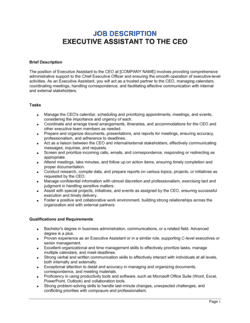
vs Executive Assistant Job Description

An executive assistant job description focuses on corporate and operational support — board governance, stakeholder communications, and business scheduling — without personal or household duties. A personal assistant job description explicitly covers personal errands, household management, and lifestyle coordination alongside professional tasks. Use the executive assistant template for C-suite hires in a corporate setting; use this template when the role spans professional and personal life.

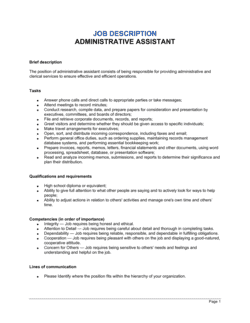
vs Administrative Assistant Job Description

An administrative assistant job description covers office-based support tasks shared across a team or department — data entry, filing, reception, and general office management. A personal assistant job description is dedicated to a single individual, carries a broader scope including personal duties, and typically requires stronger confidentiality provisions. The PA role commands a higher seniority and compensation band in most organizations.

vs Employment Agreement (At-Will Employee)

An employment agreement is the binding contract that governs the working relationship — compensation, IP, non-compete, termination, and severance. A job description defines the scope of the role and is typically attached as a schedule to the employment agreement. Both documents are required: the job description without an employment agreement lacks full contractual force on IP and restrictive covenant terms.

vs Independent Contractor Agreement

An independent contractor agreement engages a self-employed PA for project-based or ongoing work without creating an employment relationship — no tax withholding, no statutory benefits, no unfair dismissal rights. A job description paired with an employment contract establishes full employee status with all associated protections and obligations. Misclassifying a PA employee as a contractor triggers back taxes and penalty exposure in every major jurisdiction.

Industry-specific considerations

Financial Services

PAs in financial services require enhanced confidentiality clauses covering client data, trading information, and regulatory filings, with explicit reference to FINRA or FCA conduct obligations where applicable.

Legal and Professional Services

Legal sector PAs often support multiple partners simultaneously, requiring duties clauses that address privilege, client confidentiality, and conflict-of-interest protocols.

Healthcare and Life Sciences

Healthcare executive PAs must comply with HIPAA in the US and equivalent data protection laws elsewhere, with confidentiality clauses explicitly covering patient information even when accessed incidentally.

Technology / SaaS

Tech company PAs frequently manage IP-sensitive calendars, investor relations schedules, and board communications, requiring IP non-disclosure provisions and device security obligations in the job description.

Private Household / UHNW

Household PAs need expanded duties covering family logistics, property management, and lifestyle coordination, with confidentiality clauses that extend to family members and domestic arrangements.

Media and Entertainment

PAs in media environments often manage talent relations, press schedules, and sensitive personal branding matters, requiring clear scope boundaries and robust confidentiality terms covering public and private personas.

Jurisdictional notes

United States

At-will employment applies in 49 states, meaning no notice period is legally required unless contracted. However, household employers must comply with the domestic worker Bill of Rights in states including California, New York, and Illinois — covering minimum wage, overtime, and paid rest. Non-compete and confidentiality enforceability varies sharply by state; California restricts both significantly. Household employers with PAs working more than a threshold of hours must register as household employers and withhold payroll taxes.

Canada

Each province's Employment Standards Act sets minimum notice, termination pay, and overtime entitlements that the job description must not undercut. Ontario common-law notice for long-tenured PAs can significantly exceed statutory minimums. Quebec requires employment documents to be provided in French for provincially regulated employers. Non-solicitation and confidentiality clauses are enforceable when reasonable in scope, but non-competes face stricter scrutiny for non-executive roles.

United Kingdom

Employers must provide a written statement of employment particulars — which incorporates the job description — on or before the employee's first day. Statutory minimum notice is one week after one month of service, increasing with tenure. Household employers have additional obligations under domestic worker rules. Post-termination confidentiality is enforceable but must be proportionate in scope and duration to be upheld by an employment tribunal.

European Union

The EU Transparent and Predictable Working Conditions Directive requires written job terms — including duties and working hours — within seven days of hire. GDPR applies to any personal data the PA handles, including the employer's own data, requiring explicit reference to data handling obligations in the confidentiality clause. Member states including France, Germany, and Spain impose statutory minimum notice and severance that override less favorable contractual terms.

Template vs lawyer — what fits your deal?

PathBest forCostTime
Use the templateStandard PA hires in a single jurisdiction with no equity, complex IP, or high-risk confidentiality requirementsFree20–30 minutes
Template + legal reviewPAs supporting executives with access to sensitive financial, legal, or family data, or hires in Canada, the UK, or the EU$200–$5001–2 days
Custom draftedUHNW household PAs, cross-border arrangements, or roles in regulated industries with specific compliance obligations$800–$2,500+1–2 weeks

Glossary

Job Description
A formal written document that defines a role's title, duties, reporting structure, required qualifications, and employment terms — used in hiring, performance management, and termination.
Reporting Line
The direct management relationship that specifies which person or role the employee reports to and is accountable for day-to-day direction.
Scope of Work
The defined set of tasks, responsibilities, and activities a role is expected to perform — the boundary between what the employee is and is not responsible for.
Confidentiality Obligation
A contractual duty requiring the employee to protect sensitive information about their employer, household, or organization from unauthorized disclosure.
At-Will Employment
An employment arrangement in most US states where either party may end the relationship at any time for any lawful reason without advance notice.
Non-Disclosure Agreement (NDA)
A separate or incorporated agreement preventing the employee from sharing the employer's confidential information with third parties during or after employment.
Essential Functions
The core duties a role must perform to fulfill its purpose — relevant to disability accommodation assessments under the ADA and equivalent statutes.
Probationary Period
An initial employment phase, typically 30 to 90 days, during which the employer assesses fit and performance with reduced formalities for termination.
Job Grade / Band
An internal classification that groups roles by seniority, scope, and compensation range, used to maintain pay equity across the organization.
Acknowledgment Clause
A signed statement by the employee confirming they have read, understood, and received a copy of the job description — creating a record of mutual awareness.

Part of your Business Operating System

This document is one of 3,000+ business & legal templates included in Business in a Box.

  • Fill-in-the-blanks — ready in minutes
  • 100% customizable Word document
  • Compatible with all office suites
  • Export to PDF and share electronically

Create your document in 3 simple steps.

From template to signed document — all inside one Business Operating System.
1
Download or open template

Access over 3,000+ business and legal templates for any business task, project or initiative.

2
Edit and fill in the blanks with AI

Customize your ready-made business document template and save it in the cloud.

3
Save, Share, Send, Sign

Share your files and folders with your team. Create a space of seamless collaboration.

Save time, save money, and create top-quality documents.

★★★★★

"Fantastic value! I'm not sure how I'd do without it. It's worth its weight in gold and paid back for itself many times."

Managing Director · Mall Farm
Robert Whalley
Managing Director, Mall Farm Proprietary Limited
★★★★★

"I have been using Business in a Box for years. It has been the most useful source of templates I have encountered. I recommend it to anyone."

Business Owner · 4+ years
Dr Michael John Freestone
Business Owner
★★★★★

"It has been a life saver so many times I have lost count. Business in a Box has saved me so much time and as you know, time is money."

Owner · Upstate Web
David G. Moore Jr.
Owner, Upstate Web

Run your business with a system — not scattered tools

Stop downloading documents. Start operating with clarity. Business in a Box gives you the Business Operating System used by over 250,000 companies worldwide to structure, run, and grow their business.

Free Forever Plan · No credit card required