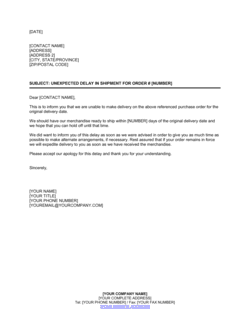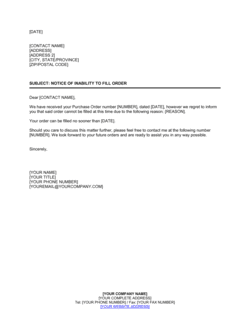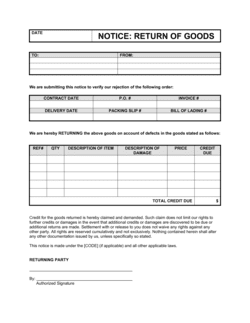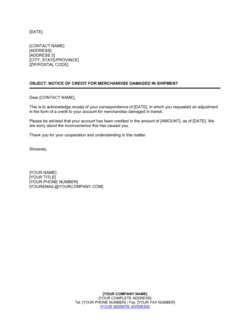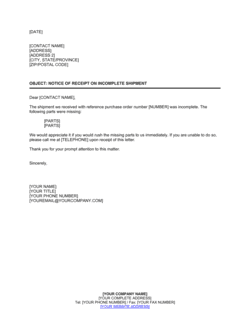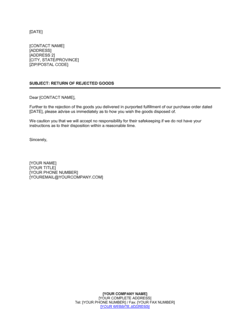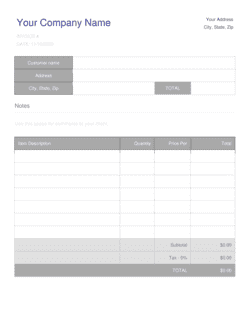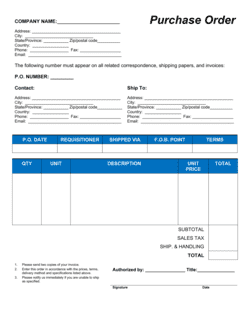
Notice of Error in Shipment and Request for Return Authorization Template

Free Word download β€’ Edit online β€’ Save & share with Drive β€’ Export to PDF

1 pageβ€’15–25 min to fillβ€’Difficulty: Standard
Learn more ↓
FreeNotice of Error in Shipment and Request for Return Authorization Template

At a glance

What it is
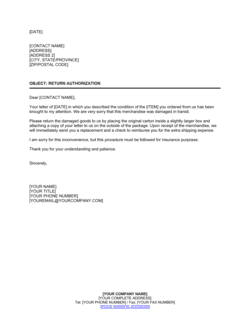
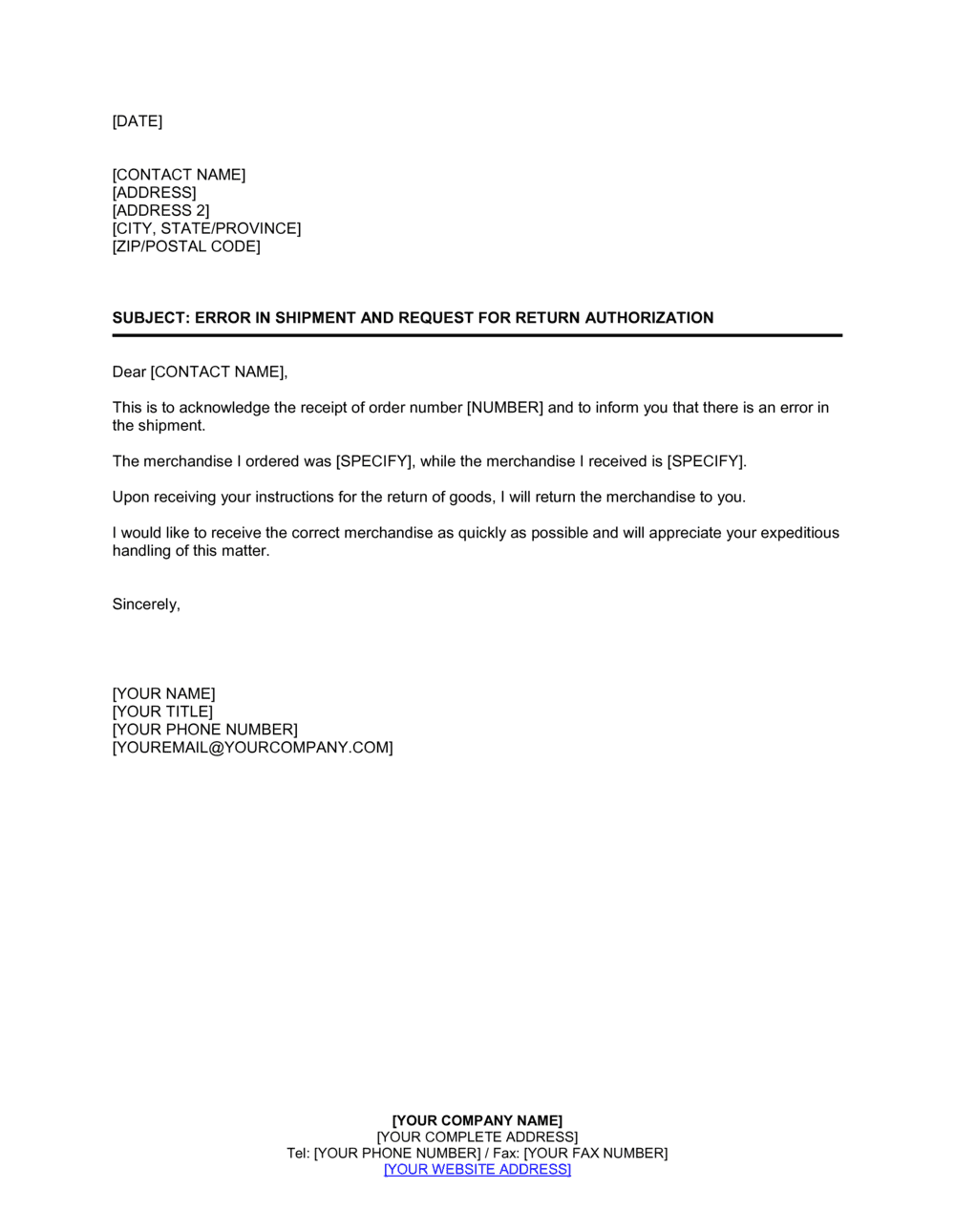
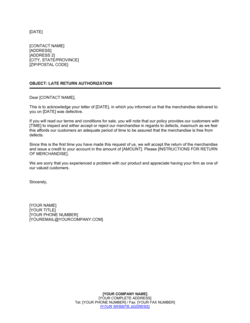
A Notice of Error in Shipment and Request for Return Authorization is a formal business letter a buyer sends to a supplier or vendor to document that the wrong, damaged, or incomplete goods were received and to formally request permission to return them. This free Word download gives you a ready-to-send structure you can edit online and export as PDF in minutes.
When you need it
Use it as soon as a shipment discrepancy is discovered β€” wrong item, wrong quantity, wrong specification, or visibly damaged goods β€” so the error is on record before any return window closes or an invoice becomes due.
What's inside
Header with sender and recipient details, reference to the original purchase order and invoice, a precise description of the error, a request for a return merchandise authorization number, and instructions for next steps including replacement, credit, or refund.

What is a Notice of Error in Shipment and Request for Return Authorization?

A Notice of Error in Shipment and Request for Return Authorization is a formal business letter a buyer sends to a supplier to document that a delivered shipment does not match what was ordered β€” whether the wrong item, the wrong quantity, the wrong specification, or visibly damaged goods β€” and to formally request a Return Merchandise Authorization (RMA) number to proceed with the return. It establishes a written record of the discrepancy tied to a specific purchase order and invoice, and gives the supplier a clear, actionable request with a stated deadline for response.

Why You Need This Document

Without a written notice sent promptly after delivery, you risk losing your right to a return or refund entirely. Most supplier return policies allow only a narrow window β€” often 5 to 15 business days from receipt β€” to report discrepancies, and an undocumented claim is easily disputed or ignored. A properly drafted letter prevents the supplier from claiming they were never informed, creates the paper trail needed to withhold payment or issue a debit memo if the matter escalates, and keeps the return process moving by setting a firm response deadline. This template gives you a structured, professional letter you can complete in under 15 minutes, attach your supporting documents to, and send the same day the error is discovered β€” before any return window closes or the invoice falls due.

Which variant fits your situation?

If your situation is…Use this template
Goods arrived visibly damaged in transitNotice of Damaged Goods
Supplier consistently short-ships orders over multiple deliveriesFormal Supplier Warning Letter
Buyer wants to return goods that are correct but no longer neededReturn of Goods Letter
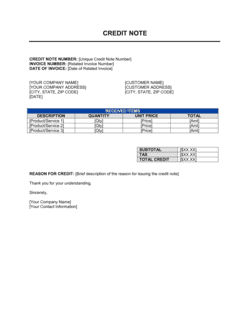
Requesting a financial credit instead of a physical returnRequest for Credit Note
Disputing an invoice amount tied to the shipment errorInvoice Dispute Letter
Supplier has not responded and a formal escalation is neededDemand Letter for Goods or Refund

Common mistakes to avoid

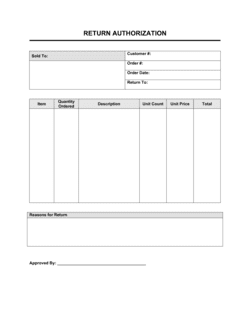
❌ Returning goods before receiving an RMA number

Why it matters: Suppliers frequently reject or lose returns that arrive without an RMA. Without it, you have no tracking reference and may receive no credit or replacement.

Fix: Always wait for a written RMA number and return shipping instructions before shipping anything back. Hold the goods securely until then.
❌ Omitting specific PO and invoice references

Why it matters: Without reference numbers, the supplier's returns team cannot locate the transaction and will delay processing while they search β€” or request the information again.

Fix: Include both the purchase order number and the invoice number in the subject line and the reference clause of every shipment error letter.

❌ Vague description of the discrepancy

Why it matters: A description like 'wrong items received' gives the supplier grounds to dispute the claim or ask for clarification, adding days or weeks to resolution.

Fix: Specify the exact SKU ordered, the exact SKU received, and the quantity affected. Copy from the original PO to ensure accuracy.

❌ No response deadline stated

Why it matters: Without a deadline, suppliers treat the letter as low-priority. You have no documented basis to withhold payment, issue a debit memo, or escalate.

Fix: State a specific calendar date for the supplier's response β€” typically 5 business days β€” and note that unresolved matters will be escalated to accounts payable.

The 9 key clauses, explained

Header: sender and recipient details

In plain language: Identifies both parties β€” company names, addresses, contact persons, and the date β€” so the letter is traceable and reaches the right recipient.

Sample language
[SENDER COMPANY NAME] | [ADDRESS] | [CITY, STATE, ZIP] | [DATE] | Attention: [RECIPIENT NAME], [TITLE] | [SUPPLIER COMPANY NAME] | [ADDRESS]

Common mistake: Addressing the letter to a sales rep instead of the accounts payable or returns department β€” the sales rep often has no authority to issue an RMA, which delays the process.

Reference line: PO and invoice numbers

In plain language: States the purchase order number and invoice number the letter relates to, so the supplier can pull up the transaction immediately.

Sample language
Re: Shipment Error β€” Purchase Order No. [PO NUMBER] | Invoice No. [INVOICE NUMBER] | Delivery Date: [DATE]

Common mistake: Omitting the PO or invoice number and relying on a description alone β€” suppliers process hundreds of orders, and without a reference number, resolution time doubles.

Opening statement of the error

In plain language: States clearly and without ambiguity that a shipment error occurred, giving the date of delivery and the nature of the discrepancy.

Sample language
We are writing to notify you that the shipment delivered to our facility on [DATE] under Purchase Order No. [PO NUMBER] contained a material discrepancy from our original order.

Common mistake: Opening with an apology or softened language that obscures the seriousness of the error β€” this signals to the supplier that urgency is low and response time suffers.

Description of the error

In plain language: Details exactly what was received versus what was ordered β€” item codes, quantities, specifications β€” so there is no ambiguity about the nature of the discrepancy.

Sample language
We ordered [QUANTITY] units of [ITEM NAME / SKU: XXXXX] per the attached PO. We received [QUANTITY] units of [INCORRECT ITEM NAME / SKU: YYYYY], which does not match the specifications agreed upon.

Common mistake: Using general language like 'wrong items received' without specifying SKUs, quantities, or the difference between ordered and received β€” vague descriptions allow suppliers to dispute the claim or request additional clarification, adding days to resolution.

Documentation reference

In plain language: Lists supporting documents attached to the letter β€” packing slip, photos of the shipment, delivery note, or bill of lading β€” to substantiate the claim.

Sample language
Enclosed for your reference: (1) Copy of Purchase Order No. [PO NUMBER]; (2) Supplier's Packing Slip dated [DATE]; (3) Photographs of the received shipment; (4) Delivery receipt signed by [NAME].

Common mistake: Referring to attachments without actually attaching them β€” the supplier's returns team will place the request on hold until documentation is received, delaying the RMA.

Formal return authorization request

In plain language: Explicitly requests a Return Merchandise Authorization number and states that the goods will be held pending instructions from the supplier.

Sample language
We request that you issue a Return Merchandise Authorization (RMA) number at your earliest convenience. The goods are being held at our facility at [ADDRESS] pending your instructions.

Common mistake: Shipping the goods back without first obtaining an RMA β€” most suppliers refuse returns without one, and unannounced returns are often lost, rejected at the dock, or processed without credit.

Requested remedy

In plain language: States whether the buyer wants replacement goods, a credit note, a refund, or a combination β€” giving the supplier a clear action to take.

Sample language
We request [replacement of the correct goods within [X] business days / a full credit of $[AMOUNT] against Invoice No. [INVOICE NUMBER] / a refund of $[AMOUNT] to our account on file].

Common mistake: Not specifying the desired outcome and leaving it open-ended β€” suppliers default to the lowest-cost remedy, which may not match the buyer's needs.

Response deadline

In plain language: Sets a specific date by which the supplier must respond with an RMA number or proposed resolution, creating a record if follow-up or escalation becomes necessary.

Sample language
Please respond with an RMA number and return shipping instructions no later than [DATE β€” e.g., 5 business days from the date of this letter].

Common mistake: Omitting a deadline entirely β€” without one, suppliers treat the request as non-urgent, and buyers have no documented basis to escalate or withhold payment.

Closing and signature block

In plain language: Closes professionally, confirms willingness to cooperate, and provides contact information for follow-up.

Sample language
We value our business relationship and trust this matter can be resolved promptly. Please direct your response to [NAME] at [EMAIL] or [PHONE NUMBER]. | Sincerely, | [SENDER NAME] | [TITLE] | [COMPANY NAME]

Common mistake: Closing with threatening language in a first notice β€” escalatory tone in an initial letter can damage the supplier relationship and slow cooperation before formal remedies are even needed.

How to fill it out

  1. 1

    Enter sender and recipient details

    Fill in your company's full name, address, and the date. Then add the supplier's name and the specific contact β€” ideally the returns or accounts payable department rather than a sales contact.

    πŸ’‘ Call the supplier before sending to confirm the correct email address and contact name for returns β€” this alone cuts average response time significantly.

  2. 2

    Add the PO and invoice reference numbers

    Enter the purchase order number, invoice number, and the date the shipment was received. These references allow the supplier to pull up the transaction immediately.

    πŸ’‘ If you have both a PO and an invoice number, include both β€” some suppliers file by one, some by the other.

  3. 3

    Describe the error precisely

    State exactly what was ordered β€” item name, SKU, and quantity β€” and exactly what was received. Be specific: wrong SKU, wrong color, wrong quantity, or damaged condition.

    πŸ’‘ Copy the exact item codes from the original purchase order rather than writing descriptions from memory β€” even minor SKU discrepancies can cause the supplier to question whether the error is theirs.

  4. 4

    Attach supporting documents

    Gather the packing slip, photographs of the received goods, the delivery receipt, and a copy of the original purchase order. List each attachment in the documentation reference clause.

    πŸ’‘ Take timestamped photos of the shipment before moving any items β€” this establishes the condition at the time of receipt and is critical if the supplier disputes the claim.

  5. 5

    State the remedy you require

    Choose one: replacement goods, credit note, or refund. Fill in the specific amount or item. If you need replacement goods urgently, state the required delivery date.

    πŸ’‘ If the error will disrupt your operations or a customer order, say so briefly β€” it adds legitimate urgency without sounding adversarial.

  6. 6

    Set a specific response deadline

    Enter a date β€” typically 5 business days from the letter date β€” by which you need an RMA number and return instructions. This creates a paper trail if escalation becomes necessary.

    πŸ’‘ Five business days is the standard first-notice window; shorten it to 2–3 days only if the situation genuinely warrants urgency.

  7. 7

    Review, export as PDF, and send

    Read the letter once for factual accuracy β€” especially the SKUs, quantities, and dollar amounts β€” then export as PDF and send to the supplier's returns contact via email with a read receipt requested.

    πŸ’‘ Keep the editable Word file and all attachments in a dedicated folder for this transaction in case you need to escalate to a demand letter or debit memo later.

Frequently asked questions

What is a notice of error in shipment?

A notice of error in shipment is a formal business letter a buyer sends to a supplier to document that the goods received do not match what was ordered β€” whether the wrong item, wrong quantity, wrong specification, or damaged condition. It creates a written record of the discrepancy and formally requests a Return Merchandise Authorization so the goods can be returned and a remedy arranged.

When should I send a notice of error in shipment?

Send it as soon as the discrepancy is discovered β€” ideally on the same day the shipment is received and inspected. Most supplier return policies set a window of 5–15 business days from delivery for reporting errors. Waiting beyond that window can void your right to a replacement or refund entirely, leaving you holding goods you cannot use.

Do I need a Return Merchandise Authorization (RMA) before sending goods back?

Yes, in almost all cases. Most suppliers will not accept or process a return without a valid RMA number, and unannounced returns are frequently refused at the dock or processed without credit. The RMA number allows the supplier to track the return, match it to the original order, and issue a credit or replacement efficiently.

What documents should I attach to the letter?

Attach at minimum: a copy of the original purchase order, the supplier's packing slip, and photographs of the goods as received. If the damage or error is visible on the packaging, photograph that too. A signed delivery receipt showing the date of receipt further substantiates the timeline of your claim.

What remedy should I request β€” replacement, credit, or refund?

Choose based on your operational need. If you need the goods urgently, request replacement with a specific delivery deadline. If the goods are not needed or the supplier cannot fulfill correctly, request a credit note or refund. Specify the remedy clearly in the letter β€” suppliers will default to whichever option is cheapest for them if you leave it open.

Can this letter be used to withhold payment on an invoice?

The letter creates the documentary basis for withholding payment on the disputed portion of an invoice, but it does not by itself authorize a unilateral deduction. Review your purchase agreement or supplier terms for the process β€” many require you to issue a debit memo or invoice dispute letter as a separate step before holding payment. Send the shipment error notice first, then follow up with a formal invoice dispute if the supplier does not respond within the stated deadline.

What if the supplier does not respond by the deadline?

If the supplier does not respond with an RMA number and resolution proposal by the date stated in the letter, escalate in writing with a demand letter or invoice dispute notice, copy accounts payable, and note that payment on the related invoice will be held pending resolution. Keep every piece of correspondence β€” the shipment error notice, the deadline, and the non-response β€” as documentation in case the dispute reaches a formal collections or legal process.

Is this letter legally binding?

The letter is not a contract or a legal instrument on its own, but it creates a documented paper trail that supports your rights under the original purchase agreement and any applicable commercial law. In most jurisdictions, a written notice of discrepancy sent within the supplier's return window is a prerequisite for exercising your right to return goods or dispute an invoice. Retain a copy of the sent letter and any delivery confirmation.

How this compares to alternatives

vs Return of Goods Letter

A return of goods letter is used when the buyer wants to return correct, undamaged goods that are simply no longer needed β€” it is a courtesy request, not a dispute. A notice of error in shipment documents a supplier mistake and formally demands a remedy. Use the return of goods letter for voluntary returns and this template when the supplier is at fault.

vs Invoice Dispute Letter

An invoice dispute letter challenges a billing error β€” wrong price, duplicate charge, or amount not matching the PO. A notice of error in shipment addresses the physical goods received, not the invoice amount. The two are often sent together when a shipment error also results in an incorrect invoice, but they serve distinct purposes.

vs Demand Letter for Refund

A demand letter for a refund is an escalation step used after a supplier has failed to respond to an initial notice. A notice of error in shipment is the first formal communication documenting the discrepancy and requesting resolution. Always send the shipment error notice first; escalate to a demand letter only if the supplier does not respond within the stated deadline.

vs Complaint Letter to Supplier

A supplier complaint letter addresses recurring performance issues β€” repeated late deliveries, quality problems, or poor service β€” at a relationship level. A notice of error in shipment is transaction-specific, tied to a single PO and delivery. Use the complaint letter for pattern-level issues; use this template to resolve a single, specific shipment discrepancy.

Industry-specific considerations

Retail and wholesale

High shipment volumes mean errors are frequent; a standardized letter template ensures every discrepancy is documented consistently and return windows are never missed.

Manufacturing

Wrong or out-of-spec components can halt production lines; a same-day shipment error notice with a short response deadline minimizes costly downtime.

Construction and trades

Incorrect materials delivered to a job site cause scheduling delays; the letter documents the error against the project PO and requests expedited replacement or credit.

Healthcare and medical supply

Shipment accuracy is critical for regulatory compliance; a formal error notice ensures the discrepancy is on record and incorrect or expired products are returned before use.

Template vs pro β€” what fits your needs?

PathBest forCostTime
Use the templateAny business needing to notify a supplier of a shipment error and request an RMA for a standard commercial transactionFree10–15 minutes
Template + professional reviewHigh-value orders where the discrepancy may lead to invoice withholding, debit memo, or a formal dispute process$50–$200 (brief review by a procurement advisor or business attorney)1 business day
Custom draftedComplex international supply chains, regulated goods (medical, food, industrial), or situations involving potential carrier liability claims$300–$8002–5 business days

Glossary

Return Merchandise Authorization (RMA)
A number or code issued by a supplier that authorizes a buyer to return specific goods and tracks the return in the supplier's system.
Purchase Order (PO)
A buyer-issued document that formally specifies the goods ordered, quantities, agreed prices, and delivery terms β€” the reference document for any shipment dispute.
Packing Slip
A document included with a shipment listing the contents β€” used to verify whether what was shipped matches what was ordered.
Bill of Lading (BOL)
A carrier-issued document that serves as a receipt for goods shipped and records their condition at the time of pickup.
Debit Memo
A buyer-issued document reducing the amount owed to a supplier, used when incorrect or short shipments result in a price adjustment rather than a physical return.
Shipment Discrepancy
Any difference between the goods ordered on a purchase order and the goods actually received β€” including wrong items, wrong quantities, or wrong specifications.
Credit Note
A supplier-issued document reducing the buyer's outstanding balance, typically issued after a return is accepted or a billing error is confirmed.
Restocking Fee
A charge some suppliers deduct from a refund or credit when goods are returned, expressed as a percentage of the original order value.
Carrier Claim
A formal dispute filed with the shipping carrier when goods are damaged or lost in transit, separate from a return request directed at the supplier.

Part of your Business Operating System

This document is one of 3,000+ business & legal templates included in Business in a Box.

  • Fill-in-the-blanks β€” ready in minutes
  • 100% customizable Word document
  • Compatible with all office suites
  • Export to PDF and share electronically

Create your document in 3 simple steps.

From template to signed document β€” all inside one Business Operating System.
1
Download or open template

Access over 3,000+ business and legal templates for any business task, project or initiative.

2
Edit and fill in the blanks with AI

Customize your ready-made business document template and save it in the cloud.

3
Save, Share, Send, Sign

Share your files and folders with your team. Create a space of seamless collaboration.

Save time, save money, and create top-quality documents.

β˜…β˜…β˜…β˜…β˜…

"Fantastic value! I'm not sure how I'd do without it. It's worth its weight in gold and paid back for itself many times."

Managing Director Β· Mall Farm
Robert Whalley
Managing Director, Mall Farm Proprietary Limited
β˜…β˜…β˜…β˜…β˜…

"I have been using Business in a Box for years. It has been the most useful source of templates I have encountered. I recommend it to anyone."

Business Owner Β· 4+ years
Dr Michael John Freestone
Business Owner
β˜…β˜…β˜…β˜…β˜…

"It has been a life saver so many times I have lost count. Business in a Box has saved me so much time and as you know, time is money."

Owner Β· Upstate Web
David G. Moore Jr.
Owner, Upstate Web

Run your business with a system β€” not scattered tools

Stop downloading documents. Start operating with clarity. Business in a Box gives you the Business Operating System used by over 250,000 companies worldwide to structure, run, and grow their business.

Start freeΒ Β·Β No credit card required