Nail Salon Business Plan Template

Free Word download β€’ Edit online β€’ Save & share with Drive β€’ Export to PDF

26 pagesβ€’2h 20m – 3h 5m to fillβ€’Difficulty: Expert
Learn more ↓
FreeNail Salon Business Plan Template

At a glance

What it is
A Nail Salon Business Plan is a structured document that maps your salon's concept, target clientele, services menu, competitive positioning, staffing model, and financial projections into a single investor- and lender-ready file. This free Word download gives you a salon-specific framework you can edit online and export as PDF to share with banks, landlords, or investors.
When you need it
Use it when opening a new nail salon, applying for a small business loan or SBA financing, seeking a commercial lease, or bringing on a business partner who needs to evaluate the opportunity in writing.
What's inside
Executive summary, salon concept and mission, market and location analysis, services and pricing menu, marketing strategy, operations and staffing plan, and three-year financial projections including startup costs, monthly P&L, and cash flow.

What is a Nail Salon Business Plan?

A Nail Salon Business Plan is a structured planning document that translates your salon concept into a concrete operational and financial roadmap. It covers your target clientele, service menu, competitive positioning, staffing model, state compliance obligations, startup costs, and three-year financial projections β€” all organized into a format that banks, landlords, and investors recognize and can evaluate. Unlike a general business plan, it is built around the specific unit economics of nail services: technician utilization rates, average ticket, per-treatment product cost, and client retention as the primary drivers of profitability.

Why You Need This Document

Opening a nail salon without a written plan is one of the fastest ways to exhaust your startup capital before the business has a chance to stabilize. Without modeled projections, most owners underestimate the ramp period β€” the 3–6 months during which client volume is building and monthly revenue still falls short of fixed costs. A written plan forces you to calculate break-even at realistic utilization rates, size your working capital reserve correctly, and set service prices that actually cover labor, product, and overhead. Beyond internal planning, a complete nail salon business plan is required for SBA loan applications, most commercial lease negotiations with national landlords, and any co-investment or partnership discussion. This template gives you a salon-specific structure so you spend your time on the market research and financial modeling that require original thinking β€” not on figuring out what sections belong in the document.

Which variant fits your situation?

If your situation is…Use this template
Opening a standalone nail salon from scratchNail Salon Business Plan
Launching a full-service beauty salon including nails and hairBeauty Salon Business Plan
Opening a spa with nail services as part of a broader menuSpa Business Plan
Quick internal planning or early concept validationOne-Page Business Plan
Preparing a visual pitch for an investor meetingElevator Pitch Template
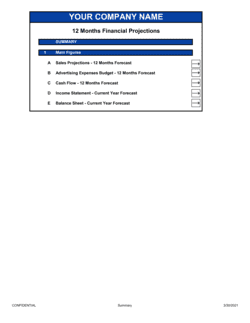
Projecting the first 12 months of revenue and expenses onlyFinancial Projections (12 Months)
Expanding an existing salon into a second locationBusiness Expansion Plan

Common mistakes to avoid

❌ Projecting 100% station utilization from Month 1

Why it matters: New salons rarely exceed 35–40% utilization in the first two months. Overstated revenue projections lead to a cash shortfall that the owner is unprepared to cover.

Fix: Model a realistic ramp: 35% utilization in Month 1, 55% in Month 3, and 70% by Month 6. Use these numbers to size your working capital reserve accurately.

❌ Setting prices without calculating per-service cost

Why it matters: Pricing below break-even on high-volume services like classic manicures erodes margin across every appointment, often invisibly until cash runs out.

Fix: Calculate product cost plus technician labor cost plus a prorated share of fixed overhead per service hour before setting any menu price.

❌ Omitting sanitation and ventilation compliance details

Why it matters: State cosmetology boards and commercial lenders both review operational compliance. A plan with no mention of disinfection protocols or MMA-free product standards raises immediate red flags.

Fix: Dedicate a paragraph in the operations section to your state board's specific requirements and name the products, equipment, and procedures you will use to meet them.

❌ Underestimating technician turnover cost

Why it matters: Nail salon staff turnover runs 30–50% annually. Losing a technician who carries a loyal client book can reduce monthly revenue by 15–20% until a replacement is trained and retained.

Fix: Budget a recruiting and onboarding line equal to 4–6 weeks of a technician's average revenue contribution, and document your retention strategy β€” scheduling flexibility, commission tiers, performance bonuses.

❌ Using national industry statistics as the only market evidence

Why it matters: A lender or investor evaluating your specific location does not care that the US nail industry is a $10B market β€” they care about the 2-mile trade area you are actually entering.

Fix: Supplement national data with local population demographics, competitor count within 2 miles, and foot traffic or daytime population estimates for your specific address.

❌ Ignoring the working capital reserve

Why it matters: Most new salons take 3–5 months to reach breakeven. Without 3–4 months of operating expenses in reserve, a slower-than-projected ramp forces the owner to seek emergency financing at unfavorable terms.

Fix: Include a dedicated working capital reserve line in the startup cost itemization β€” size it at a minimum of 3 months of projected fixed costs.

The 9 key sections, explained

Executive Summary

Salon Concept and Mission

Market and Location Analysis

Services Menu and Pricing

Marketing and Client Acquisition Strategy

Operations Plan

Staffing and Compensation Plan

Startup Costs and Capital Requirements

Financial Projections

How to fill it out

  1. 1

    Define your salon concept and target client

    Decide on your positioning β€” budget, mid-range, or luxury β€” and describe the specific client you are designing the experience for. Include demographics, spending habits, and the neighborhood you are targeting.

    πŸ’‘ Visit three competing salons in your target area as a mystery client before writing this section. Note pricing, wait times, service quality, and what clients complain about in reviews.

  2. 2

    Research your local market and trade area

    Pull demographic data for the ZIP codes within 2 miles of your planned location using the US Census Bureau's data explorer. Count competing salons on Google Maps and note their average ratings and price points.

    πŸ’‘ A trade area with fewer than two nail salons per 5,000 female residents aged 18–55 is generally underserved β€” document this ratio explicitly for lenders.

  3. 3

    Build your services menu with cost-based pricing

    List every service, its duration, the product cost per treatment, and the technician labor cost at your planned compensation rate. Set prices so each service covers its direct costs plus a contribution to fixed overhead.

    πŸ’‘ A gel manicure at $45 with a 45-minute duration needs to cover at least $8 in product and generate $22–$25 in contribution margin to support a viable P&L β€” calculate this for every service before finalizing prices.

  4. 4

    Outline the operations and compliance protocols

    Document your booking system, sanitation procedures aligned to your state cosmetology board requirements, supplier arrangements, and daily opening and closing checklist.

    πŸ’‘ Include the specific EPA-registered disinfectant product name and dilution ratio required by your state board β€” this level of detail signals operational readiness to lenders and inspectors.

  5. 5

    Plan staffing and compensation from Day 1

    Decide between commission, hourly, and booth rental models for each role. Calculate your break-even staffing cost at 50% and 75% utilization so you know when to add headcount.

    πŸ’‘ Commission-only structures preserve cash during the ramp period but can make recruiting harder β€” consider a guaranteed minimum for the first 90 days to attract experienced technicians.

  6. 6

    Itemize every startup cost

    List every one-time expenditure from lease deposit to pedicure chairs to the first product order. Add a contingency line of 10–15% of total buildout costs for overruns.

    πŸ’‘ Get two contractor bids for the buildout and use the higher number in the plan β€” lenders know buildouts run over budget and will trust a conservative estimate.

  7. 7

    Build the financial model from daily client counts up

    Start with a realistic daily client count for Months 1–6 (not your maximum capacity), multiply by average ticket, and subtract COGS and fixed expenses to get net income. Model Year 2 and Year 3 at higher utilization rates.

    πŸ’‘ Show a separate column for a 70%-of-plan scenario. Demonstrating that the salon survives at reduced volume significantly increases lender confidence.

  8. 8

    Write the executive summary last

    Pull the key numbers β€” funding ask, projected breakeven month, Year 1 revenue, and the one-sentence competitive advantage β€” into a 1–2 page summary after every other section is complete.

    πŸ’‘ Address the question a lender will ask first: 'How does this owner get to breakeven, and what happens if it takes twice as long?' Answer it directly in the executive summary.

Frequently asked questions

What is a nail salon business plan?

A nail salon business plan is a structured document that defines your salon's concept, target market, services menu, pricing, staffing model, and financial projections. It functions as both an internal operating roadmap and an external document for securing a bank loan, SBA financing, commercial lease, or investment. A complete plan typically runs 15–25 pages plus a financial model appendix.

Do I need a business plan to open a nail salon?

You do not legally need one to obtain a cosmetology license, but you will need a formal business plan to apply for an SBA loan, most bank loans, a commercial lease with a national landlord, or any outside investment. Even for self-funded openings, writing a plan forces you to stress-test your pricing, staffing costs, and break-even assumptions before committing capital.

How much does it cost to open a nail salon?

Startup costs for a nail salon typically range from $75,000 to $175,000 depending on location, salon size, and buildout scope. Major cost drivers are leasehold improvements and ventilation ($20,000–$60,000), pedicure chairs ($2,000–$5,000 each), and a 3–4 month working capital reserve. Your business plan's startup cost section should itemize every expense and include a 10–15% contingency for buildout overruns.

What financial projections should a nail salon business plan include?

A complete financial section includes monthly P&L for Year 1 and annual summaries for Years 2–3, a cash flow statement on the same cadence, a startup cost itemization, and a break-even analysis. Model revenue from the bottom up β€” daily client count at realistic utilization rates multiplied by average ticket β€” rather than starting from a top-line revenue target.

What is a realistic break-even timeline for a new nail salon?

Most new nail salons reach monthly break-even between Month 4 and Month 8, depending on rent, initial utilization ramp, and average ticket. Salons in high-foot-traffic locations with strong pre-opening marketing can break even faster; destination-only concepts in lower-traffic areas typically take longer. Plan for a minimum 3-month working capital reserve to cover the ramp period.

Should I use a commission model or booth rental model for nail technicians?

Commission models (typically 40–50% of service revenue) give you more control over client experience, scheduling, and brand standards β€” better suited for a concept where consistency matters. Booth rental reduces your payroll risk and simplifies HR but means technicians operate independently, which can create inconsistent quality. The choice should be documented and financially modeled in your staffing section, as it significantly affects your gross margin structure.

What makes a nail salon business plan convincing to a bank?

Lenders look for four things: a realistic ramp-period cash flow model with a funded working capital reserve, local market evidence rather than just national industry statistics, a detailed startup cost itemization with a contingency line, and an owner with relevant industry experience or a documented plan to hire it. Projections that show breakeven within 9 months at conservative utilization rates carry far more weight than aggressive revenue assumptions.

How is a nail salon business plan different from a general business plan?

A nail salon business plan uses the same core structure as any business plan but includes salon-specific elements: a services and pricing menu with per-treatment cost analysis, state cosmetology board compliance protocols, a technician staffing and compensation model, pedicure chair and ventilation equipment in the startup cost breakdown, and client retention metrics like rebooking rate and average ticket as primary KPIs.

How long does it take to write a nail salon business plan?

Using a structured template, most first-time salon owners complete a presentation-ready plan in 10–20 hours spread over one to two weeks. The financial model is the most time-intensive component β€” building a realistic revenue and expense model from scratch takes 4–8 hours. A template reduces the structural work by roughly 60%, leaving your time for the local market research and financial modeling that require original input.

How this compares to alternatives

vs Beauty Salon Business Plan

A beauty salon business plan covers a broader service menu including hair, skin, and nails, requiring a more complex staffing model with multiple licensed disciplines and higher equipment and buildout costs. A nail salon plan is more focused β€” single service category, lower startup cost range, and a tighter set of operational KPIs centered on technician utilization and average ticket.

vs Spa Business Plan

A spa business plan addresses a premium, multi-treatment environment with higher average tickets, licensed estheticians, and a revenue model that often includes retail product sales as a significant income stream. Nail salon plans operate on higher client volume, lower average ticket, and faster service durations β€” fundamentally different unit economics and operational rhythms.

vs One-Page Business Plan

A one-page plan is a rapid-alignment tool for internal planning or early concept validation. It lacks the financial depth, market evidence, and operational detail that a bank or landlord requires. Use it to test your concept quickly, then build the full nail salon plan before any capital raise or lease negotiation.

vs Financial Projections (12 Months)

A standalone financial projection covers only the numbers β€” revenue, expenses, and cash flow β€” without the market context, competitive positioning, or operational narrative that lenders and investors require. A nail salon business plan incorporates financial projections as one section within a complete strategic document. Use the projections template to build your financial model, then embed the outputs into the full plan.

Industry-specific considerations

Beauty and Personal Care

Service mix analysis, retail attachment revenue, and client retention rate are the primary KPIs alongside average ticket and technician utilization.

Retail and Hospitality

Walk-in versus appointment ratio and peak-hour staffing coverage are critical operational variables that directly affect revenue capture and client satisfaction.

Franchise and Multi-Unit

Franchisors require a location-specific business plan demonstrating local market demand, buildout budget approval, and adherence to brand service standards.

Small Business / Sole Proprietor

For owner-operators, the plan must address the transition from technician to business manager and document how client-facing hours will be balanced against administrative responsibilities.

Template vs pro β€” what fits your needs?

PathBest forCostTime
Use the templateFirst-time salon owners applying for SBA loans under $250K or negotiating a first commercial leaseFree1–2 weeks (10–20 hours)
Template + professional reviewOwners seeking bank financing above $250K or entering a competitive multi-location franchise agreement$500–$2,000 for a small business advisor or accountant review2–3 weeks
Custom draftedMulti-unit salon groups raising equity investment or acquiring an existing salon portfolio$3,000–$8,000 for a professional business plan writer with beauty industry experience3–6 weeks

Glossary

Service Mix
The combination of treatments a salon offers β€” manicures, pedicures, gel, acrylics, nail art β€” and the proportion of revenue each contributes.
Average Ticket
The average amount a single client spends per visit, calculated as total revenue divided by number of client appointments in a period.
Booth Rental Model
An arrangement where nail technicians rent a station from the salon owner and keep their client revenue, rather than being paid as employees.
Commission Model
A staffing structure where technicians receive a percentage of the revenue from services they perform, typically 40–50% of service sales.
Retail Attachment Rate
The percentage of client visits that include a retail product sale β€” nail polish, cuticle oil, hand cream β€” in addition to the service.
Client Retention Rate
The percentage of first-time clients who return for a second visit within 90 days β€” a core metric for salon revenue stability.
Buildout Cost
Capital expenditure required to fit out the physical salon space β€” plumbing for pedicure chairs, ventilation, flooring, lighting, and signage.
Operating Leverage
The degree to which a salon's fixed costs (rent, utilities, insurance) remain constant as revenue grows, amplifying profit margin at higher volumes.
Ramp Period
The first 3–6 months of operation during which the salon builds its client base and revenue has not yet reached steady-state levels.
Net Promoter Score (NPS)
A single-question metric measuring how likely clients are to recommend the salon to a friend, scored on a 0–10 scale.


Part of your Business Operating System

This document is one of 3,000+ business & legal templates included in Business in a Box.

  • Fill-in-the-blanks β€” ready in minutes
  • 100% customizable Word document
  • Compatible with all office suites
  • Export to PDF and share electronically

Create your document in 3 simple steps.

From template to signed document β€” all inside one Business Operating System.
1
Download or open template

Access over 3,000+ business and legal templates for any business task, project or initiative.

2
Edit and fill in the blanks with AI

Customize your ready-made business document template and save it in the cloud.

3
Save, Share, Send, Sign

Share your files and folders with your team. Create a space of seamless collaboration.

Save time, save money, and create top-quality documents.

β˜…β˜…β˜…β˜…β˜…

"Fantastic value! I'm not sure how I'd do without it. It's worth its weight in gold and paid back for itself many times."

Managing Director Β· Mall Farm
Robert Whalley
Managing Director, Mall Farm Proprietary Limited
β˜…β˜…β˜…β˜…β˜…

"I have been using Business in a Box for years. It has been the most useful source of templates I have encountered. I recommend it to anyone."

Business Owner Β· 4+ years
Dr Michael John Freestone
Business Owner
β˜…β˜…β˜…β˜…β˜…

"It has been a life saver so many times I have lost count. Business in a Box has saved me so much time and as you know, time is money."

Owner Β· Upstate Web
David G. Moore Jr.
Owner, Upstate Web

Run your business with a system β€” not scattered tools

Stop downloading documents. Start operating with clarity. Business in a Box gives you the Business Operating System used by over 250,000 companies worldwide to structure, run, and grow their business.

Free Forever PlanΒ Β·Β No credit card required