Micro Famous How To Become Well Known In Your Niche

Free Word download • Edit online • Save & share with Drive • Export to PDF

3 pages25–30 min to fillDifficulty: StandardSignature requiredLegal review recommended
Learn more ↓
FreeMicro Famous How To Become Well Known In Your Niche Template

At a glance

What it is
A Micro Famous Niche Authority Agreement is a legally binding contract between a personal brand, thought leader, or niche expert and the business, platform, or partner that engages their expertise. This free Word download defines the scope of content creation, IP ownership, exclusivity, compensation, and brand-use rights in a single document you can edit online and export as PDF for immediate execution.
When you need it
Use it when a consultant, coach, author, or niche expert is engaged to produce content, deliver speaking engagements, or lend their personal brand to a business or media platform — and both parties need clear, enforceable terms before work begins.
What's inside
Party definitions and scope of engagement, content creation obligations, IP assignment and licensing terms, exclusivity and non-compete clauses, compensation and royalty structure, brand-use rights, confidentiality, termination provisions, and governing law.

What is a Micro Famous Niche Authority Agreement?

A Micro Famous Niche Authority Agreement is a legally binding contract that governs the relationship between a business and a recognized expert who is engaged to build, lend, or co-develop authority in a specific, well-defined subject area. It covers every material dimension of the arrangement: the scope of content creation, intellectual property ownership or licensing, exclusivity restrictions, compensation and royalty terms, permitted use of the expert's personal brand and likeness, confidentiality obligations, and the conditions under which either party may exit. Unlike a generic consulting agreement, this document is designed specifically for engagements where the expert's reputation, audience relationship, and content IP are the primary commercial assets being contracted.

Why You Need This Document

Without a written agreement, the most valuable elements of a niche authority engagement are entirely unprotected. Content created by the expert may legally belong to them — not the company that paid for it — because independent contractor work does not automatically transfer copyright. The expert's name and image may be used in ways they never intended, generating false-endorsement exposure for the company and reputational harm for the individual. Royalty disputes become credibility contests rather than arithmetic exercises when no one defined what "net revenue" means. A departing expert may immediately begin producing identical content for a direct competitor, taking the audience relationship with them. Executing a complete niche authority agreement before any content is created or any proprietary information is shared closes all of these gaps — and this template gives both parties a defensible, enforceable starting point in under an hour.

Which variant fits your situation?

If your situation is…Use this template
Engaging a niche expert for a single event or keynoteSpeaking Engagement Agreement
Licensing existing content from a thought leader for redistributionContent Licensing Agreement
Partnering with a social media influencer for campaign promotionInfluencer Agreement
Co-authoring a book or course with a niche authorityCo-Authorship Agreement
Engaging an ongoing consultant without content or brand-use obligationsConsulting Agreement
Appointing a brand ambassador for long-term promotional representationBrand Ambassador Agreement
Contracting a subject matter expert as an independent contributorIndependent Contractor Agreement

Common mistakes to avoid

❌ Leaving IP ownership ambiguous

Why it matters: Without a clear work-for-hire designation or assignment clause, courts in most common-law jurisdictions default to creator ownership — meaning the company may not own the content it paid to produce.

Fix: Include both a work-for-hire designation and a fallback assignment clause so all created content is clearly transferred regardless of whether the work-for-hire doctrine applies.

❌ Overly broad exclusivity that courts will void entirely

Why it matters: A global non-compete covering 'any similar topic' makes the expert effectively unemployable in their field — courts strike these clauses in full rather than narrowing them, leaving the company with no protection at all.

Fix: Limit exclusivity to the specific industry segment, geographic market, and content format that directly competes with the company's use. A narrower clause that survives is worth more than a broad one that is voided.

❌ Undefined 'net revenue' in royalty calculations

Why it matters: If the agreement specifies a royalty on 'net revenue' without listing permissible deductions, the company and the expert will calculate entirely different numbers — generating disputes on every royalty statement.

Fix: Schedule a full list of allowable deductions (platform fees, chargebacks, taxes, refunds) and add an audit right so the expert can verify the numbers once per year.

❌ No approval mechanism for new uses of likeness

Why it matters: Without a defined approval process, the company may use the expert's image in advertising, sponsorship, or co-branding contexts the expert finds objectionable — damaging the relationship and potentially creating false-endorsement liability.

Fix: List every permitted use explicitly and require written approval for any use outside the list. A 5-business-day response window is standard and avoids unnecessary delays.

❌ Signing the agreement after content has already been published

Why it matters: Content created and published before execution has no contractual IP assignment — ownership falls back to the creator, and any confidential information already shared is unprotected.

Fix: Execute the agreement before any deliverables are produced, any likeness is used, and any proprietary information is disclosed. If content was produced first, include a retroactive assignment clause covering all prior work with separate documented consideration.

❌ No survival clause listing post-termination obligations

Why it matters: Without explicit survival language, a terminated agreement may be read to extinguish confidentiality, non-compete, and IP obligations at the moment of termination — stripping the company of its core protections.

Fix: Add a survival clause explicitly listing every provision that continues in force after the agreement ends: confidentiality, IP assignment, non-compete, non-solicitation, and royalty obligations.

The 10 key clauses, explained

Parties and scope of engagement

In plain language: Identifies the engaging business and the niche authority by their legal names, describes the subject matter niche, and sets the boundaries of the engagement.

Sample language
This Agreement is entered into between [BUSINESS LEGAL NAME] ('Company') and [EXPERT FULL NAME] ('Authority'). Authority is engaged to provide niche expertise and content creation services in the field of [NICHE DESCRIPTION] as more particularly described in Schedule A.

Common mistake: Using the expert's trade name or brand name instead of their legal name — creates enforcement problems if the individual and their brand entity are legally separate.

Content creation obligations

In plain language: Defines what content the authority must produce, in what format, on what timeline, and to what quality standard.

Sample language
Authority shall deliver [NUMBER] pieces of [CONTENT TYPE] per [PERIOD], each meeting the quality standards set out in Schedule B, by no later than [DAY] of each [PERIOD]. Revisions shall be completed within [X] business days of written feedback.

Common mistake: Defining deliverables by topic only, without specifying format, word count, or review cycles — leaving both parties unable to agree on whether an obligation has been met.

IP assignment and work-for-hire designation

In plain language: States whether content created under the agreement is owned by the engaging party as a work for hire, or whether the expert retains ownership and grants a license.

Sample language
All content created by Authority specifically for Company under this Agreement shall be considered a work made for hire under applicable copyright law and shall be the sole property of Company. To the extent any such content does not qualify as work for hire, Authority hereby irrevocably assigns all rights to Company.

Common mistake: Leaving IP ownership ambiguous by omitting both a work-for-hire designation and an assignment clause — courts in several jurisdictions default to creator ownership in cases of ambiguity.

Content license and retained rights

In plain language: Where the expert retains ownership of pre-existing or background IP, this clause grants the company a license to use it and specifies any limitations.

Sample language
Authority grants Company a [exclusive / non-exclusive], worldwide, royalty-[free / bearing] license to use, reproduce, and distribute the Pre-Existing Materials identified in Schedule C for the purpose of [PURPOSE] during the Term.

Common mistake: Granting an unlimited license to 'all content' without distinguishing pre-existing IP from newly created work — exposing the expert's entire portfolio to unanticipated commercial use.

Likeness and personal brand rights

In plain language: Governs how and where the company may use the expert's name, photo, biography, voice, and brand association in marketing and media.

Sample language
Company is granted the right to use Authority's name, approved photograph, and professional biography solely for [PERMITTED PURPOSES] during the Term. Any use outside these purposes requires Authority's prior written consent. Authority shall provide approved assets within [X] business days of request.

Common mistake: No approval mechanism for new uses of likeness — resulting in the expert's image appearing in contexts they did not anticipate or endorse.

Exclusivity and non-compete

In plain language: Restricts the expert from providing similar content, endorsements, or services to competing businesses during and for a defined period after the engagement.

Sample language
During the Term and for [X] months following termination, Authority shall not provide services, content, or endorsements substantially similar to those provided under this Agreement to any Competing Business operating in [GEOGRAPHIC AREA / INDUSTRY SEGMENT].

Common mistake: Setting non-compete scope so broadly — covering any business in a related field globally — that courts strike the clause entirely rather than narrow it.

Compensation, royalties, and payment schedule

In plain language: States the fee structure — retainer, per-deliverable, revenue share, or royalty — and the schedule and method of payment.

Sample language
Company shall pay Authority a monthly retainer of $[AMOUNT] payable on the [DAY] of each month, plus a royalty of [X]% of net revenue attributable to Licensed Content as calculated under Schedule D. Royalty statements shall be provided quarterly within [30] days of each quarter-end.

Common mistake: Defining royalties as a percentage of 'revenue' without defining what deductions constitute 'net' — disputes over allowable deductions are one of the most common sources of royalty litigation.

Confidentiality

In plain language: Prohibits both parties from disclosing the other's proprietary information, strategies, audience data, and commercial terms during and after the engagement.

Sample language
Each party agrees to hold in strict confidence all Confidential Information disclosed by the other party and to use it solely for the purposes of this Agreement. 'Confidential Information' includes business strategies, audience data, financial terms, and any information marked as confidential.

Common mistake: One-sided confidentiality that binds only the expert — the company's disclosure of its own business strategy to the expert is equally sensitive and equally worth protecting.

Termination and post-termination obligations

In plain language: Sets the notice period for termination by either party, conditions for immediate termination for cause, and what obligations survive the end of the agreement.

Sample language
Either party may terminate this Agreement with [30] days' written notice. Company may terminate immediately for cause upon Authority's material breach, insolvency, or reputational conduct reasonably likely to harm Company's brand. Confidentiality, IP assignment, non-compete, and royalty obligations survive termination.

Common mistake: No definition of 'cause' — leaving the terminating party exposed to a breach claim when the other party disputes whether the triggering event qualifies.

Governing law and dispute resolution

In plain language: Specifies the jurisdiction whose law governs the agreement and the mechanism for resolving disputes — arbitration, mediation, or litigation.

Sample language
This Agreement is governed by the laws of [STATE / PROVINCE / COUNTRY]. Any dispute shall be resolved by binding arbitration administered by [AAA / JAMS / applicable body] in [CITY], except that either party may seek injunctive relief in any court of competent jurisdiction to protect IP or confidential information.

Common mistake: Choosing a governing law with no connection to where either party operates or where performance occurs — some jurisdictions will decline to enforce such a choice.

How to fill it out

  1. 1

    Identify both parties with legal precision

    Enter the company's full registered legal name and the expert's legal name as it appears on government-issued ID or their registered business entity. If the expert operates through a corporation or LLC, name that entity as the contracting party.

    💡 Confirm whether the expert has a separate IP-holding entity — if so, both the individual and the entity may need to be named to capture all relevant rights.

  2. 2

    Define the niche and scope in Schedule A

    Write a specific, bounded description of the subject matter niche (e.g., 'B2B SaaS growth marketing for companies under $10M ARR') and list all deliverable types — articles, podcast appearances, social content, workshops — with minimum quantities per period.

    💡 A Schedule A that runs to one full page of specifics prevents 90% of scope-creep disputes.

  3. 3

    Choose IP ownership model: assignment or license

    Decide upfront whether new content will be owned by the company (work for hire plus assignment) or by the expert with a license granted to the company. This affects pricing — outright assignment commands a higher fee than a limited license.

    💡 For ongoing thought-leadership content where the expert's personal brand is the value, a license model is more appropriate and easier to negotiate than full assignment.

  4. 4

    Set exclusivity scope proportionate to the engagement

    Limit the non-compete to the specific industry segment, content type, and geography that actually competes with the company's use case. For a niche expert with a broad audience, an unlimited global non-compete is rarely enforceable.

    💡 A 6-to-12-month post-termination restriction is generally more defensible than a 24-month restriction for personal brand engagements.

  5. 5

    Complete the compensation and royalty schedule

    Enter the base fee or retainer, any per-deliverable rate, and the royalty percentage if applicable. Define 'net revenue' precisely — list every permissible deduction (returns, taxes, platform fees) so the calculation is not disputed later.

    💡 Add a royalty audit right allowing the expert to inspect Company's sales records once per year — this is standard in publishing and content licensing and builds trust.

  6. 6

    Specify approved uses of likeness and personal brand

    List every permitted use of the expert's name, photo, and bio (website, press releases, social ads, conference materials) and add a written-approval requirement for any use not on the list.

    💡 Provide a pre-approved asset package — headshot, approved bio, logo mark — in Schedule C so both parties are working from the same materials.

  7. 7

    Define termination triggers and survival clauses

    State the notice period, enumerate specific 'for cause' triggers (material breach, reputational harm, bankruptcy), and list every clause that survives termination: confidentiality, IP assignment, non-compete, and royalty obligations.

    💡 Include a 'reputational harm' clause that defines the standard objectively — e.g., criminal conviction or public conduct that a neutral observer would find materially damaging to the Company's brand.

  8. 8

    Execute before any content is created or published

    Both parties must sign before any content is produced, likeness is used, or proprietary information is exchanged. Post-creation signatures create consideration problems and leave early-produced IP in a legal grey zone.

    💡 Use a digital signature tool that timestamps execution and stores the fully-executed copy — this preserves a clear record if either party disputes when the agreement took effect.

Frequently asked questions

What is a niche authority agreement?

A niche authority agreement is a contract between a business and a recognized expert in a specific subject area that governs the terms of their engagement — including content creation, IP ownership, exclusivity, compensation, and use of the expert's personal brand. It replaces informal arrangements with enforceable obligations and protects both parties when the relationship involves valuable intellectual property or audience trust.

Who needs this type of agreement?

Any business that engages a consultant, coach, author, speaker, or online educator to create content, lend their credibility, or represent the brand in a specific niche should use this agreement. It is equally important for the expert, who needs clarity on what rights they are granting, what they are being paid, and what restrictions apply to their future work.

Does this agreement transfer ownership of the expert's existing content?

Not automatically. The agreement distinguishes between newly created content — which can be assigned to the company as a work for hire — and pre-existing materials, which the expert owns and can only license. A well-drafted agreement identifies pre-existing IP in a schedule and grants a defined license rather than inadvertently assigning content the expert created before the engagement began.

Are non-compete clauses in personal brand agreements enforceable?

Enforceability depends on jurisdiction and scope. Courts typically enforce non-competes that are limited to the specific industry segment and geographic market relevant to the engagement, and that run for 6 to 12 months post-termination. Clauses that broadly restrict a thought leader from working in their entire field for two or more years are routinely struck down as unreasonably restrictive on the individual's ability to earn a living.

What is the difference between a content license and an IP assignment?

An IP assignment permanently transfers ownership of the content from the creator to the company — the creator no longer has rights to use it without permission. A content license allows the company to use the content within defined parameters while the creator retains ownership. Assignments command higher fees; licenses are more appropriate when the expert's ongoing association with the content is part of its value.

How should royalties be structured in this type of agreement?

Royalties are typically expressed as a percentage of net revenue generated from the licensed content — commonly 10 to 25% depending on the expert's profile and the exclusivity of the arrangement. The agreement must define 'net revenue' precisely, listing every permissible deduction such as platform fees, taxes, and refunds. Quarterly statements and an annual audit right are standard terms that reduce royalty disputes significantly.

Can the company use the expert's name and photo in advertising?

Only to the extent explicitly permitted in the agreement. Likeness rights must be specifically granted and are typically limited to named channels and use cases. Using an expert's image in paid advertising, sponsorship materials, or co-branded campaigns without written permission exposes the company to false-endorsement claims and, in some jurisdictions, statutory right-of-publicity violations.

What happens to content if the agreement is terminated early?

The agreement should specify this explicitly. Content already delivered and assigned to the company typically remains the company's property. Content in progress may revert to the expert unless a partial payment clause triggers assignment of the unfinished work. Royalty obligations on previously licensed content generally survive termination for the remaining useful life of that content unless the agreement specifies a different outcome.

Do I need a lawyer to use this template?

For straightforward domestic engagements with clear deliverables and a well-defined niche, a carefully completed template is a solid starting point. Consider engaging a lawyer when the engagement involves significant IP value, cross-border parties, equity or revenue-share arrangements above $50,000, or when the expert's personal brand is central to the company's market positioning. A one-to-two hour review typically costs $300 to $600 and is proportionate to the IP exposure involved.

How this compares to alternatives

vs Independent Contractor Agreement

An independent contractor agreement covers the basic service relationship — deliverables, payment, and independent status — but typically lacks content licensing, likeness rights, royalty structures, and personal brand provisions. Use the contractor agreement for straightforward service engagements; use this template when the expert's name, content IP, and audience relationship are central to the engagement's value.

vs Consulting Agreement

A consulting agreement governs advisory services and knowledge transfer but does not address content creation rights, exclusivity tied to a specific niche audience, or royalties on produced materials. This niche authority template is appropriate when the output is publishable content and the expert's public profile is part of what the company is paying for.

vs Brand Ambassador Agreement

A brand ambassador agreement focuses on ongoing promotional representation — social posts, event appearances, and endorsements — with emphasis on FTC disclosure and campaign deliverables. This template is broader, covering content IP, royalties, and post-engagement restrictions appropriate for subject matter experts rather than promotional spokespersons.

vs Content Licensing Agreement

A content licensing agreement transfers rights to use specific existing content for a defined purpose. This niche authority template governs the ongoing creation, delivery, and commercial use of new content alongside the personal brand relationship — making it appropriate for multi-deliverable engagements rather than one-time content acquisitions.

Industry-specific considerations

Media and publishing

Column rights, podcast series licensing, and editorial exclusivity terms for niche subject matter experts contracted to produce audience-building content.

Professional services

Thought leadership content agreements where a consultant's personal brand is used to establish credibility with a firm's target client segment.

E-learning and online education

Course IP ownership, instructor royalty structures, platform exclusivity, and post-termination access rights for enrolled students.

SaaS and technology

Engaging niche practitioners as developer advocates or community-building experts, with content licensing and non-compete terms tied to a specific technology category.

Marketing and advertising

Brand authority campaigns where a recognized niche figure endorses or co-creates content for a client, requiring clear likeness rights and exclusivity boundaries.

Financial services

Regulatory constraints on endorsements and testimonials mean that personal brand usage clauses must comply with FCA, SEC, or FINRA guidance on financial promotion.

Jurisdictional notes

United States

Work-for-hire doctrine under the Copyright Act requires the parties to be in an employment relationship or the work to fall within one of the nine enumerated categories — a written agreement designating independent contractor content as work for hire is essential but insufficient without an assignment clause as a fallback. Non-compete enforceability varies sharply by state: California, Minnesota, and Oklahoma restrict or ban post-engagement non-competes. FTC endorsement guidelines require disclosure of material connections between brands and niche experts.

Canada

Canadian copyright law vests first ownership in the creator unless a written assignment exists; a work-for-hire concept applies narrowly to employees, not independent contractors. Non-compete clauses are scrutinized for reasonableness in duration, geography, and scope under common law; courts have struck down restrictions with no geographic limit. Quebec's Charter of the French Language may require the agreement to be provided in French for Quebec-based parties.

United Kingdom

UK copyright law automatically vests ownership in the creator for works produced by independent contractors — an explicit written assignment is required to transfer rights to the engaging party. Moral rights, including the right of attribution and integrity, cannot be assigned but can be waived in writing. Post-termination non-competes must be reasonable and are subject to the restraint of trade doctrine; courts will not rewrite an overly broad clause but will void it entirely.

European Union

GDPR applies when the agreement involves the processing of audience data, subscriber lists, or personal information belonging to the expert's followers — a data processing addendum may be required. Moral rights for creators are strongly protected in France, Germany, and other civil law jurisdictions and generally cannot be contractually waived. Post-engagement non-competes typically require financial compensation to the restricted party to be enforceable, with requirements varying significantly by member state.

Template vs lawyer — what fits your deal?

PathBest forCostTime
Use the templateDomestic engagements with clear deliverables, standard royalty splits, and a single niche authorityFree30–60 minutes
Template + legal reviewEngagements involving significant IP value, cross-border parties, or revenue-share arrangements above $25,000$300–$6002–4 days
Custom draftedHigh-profile thought leaders, multi-platform media deals, equity-linked compensation, or regulated industries such as financial services$1,500–$5,000+1–3 weeks

Glossary

Niche Authority
A recognized expert in a specific, well-defined subject area whose personal brand carries credibility and influence with a targeted audience.
Personal Brand Rights
The contractual rights governing how an individual's name, likeness, reputation, and associated content may be used by another party.
Exclusivity Clause
A provision that restricts the expert from providing similar services, content, or endorsements to competing businesses during the contract term.
IP Assignment
A clause transferring ownership of created content, materials, or intellectual property from the creator to the engaging party.
Content License
A grant of permission to use, reproduce, or distribute specific content under defined conditions without transferring underlying ownership.
Royalty
A periodic payment made to a content creator or licensor calculated as a percentage of revenue generated from the licensed material.
Non-Compete Clause
A post-engagement restriction preventing the expert from working with direct competitors within a defined geography and time period.
Likeness Rights
The legal right to use a person's image, voice, name, or persona in marketing, media, or commercial materials.
Moral Rights
The creator's right to attribution and to object to derogatory treatment of their work, recognized in most jurisdictions outside the United States.
Work for Hire
A legal doctrine under which content created by an independent contractor within a defined scope belongs to the commissioning party, not the creator.
Non-Solicitation Clause
A restriction preventing either party from approaching the other's clients, customers, or collaborators for a defined period after the agreement ends.

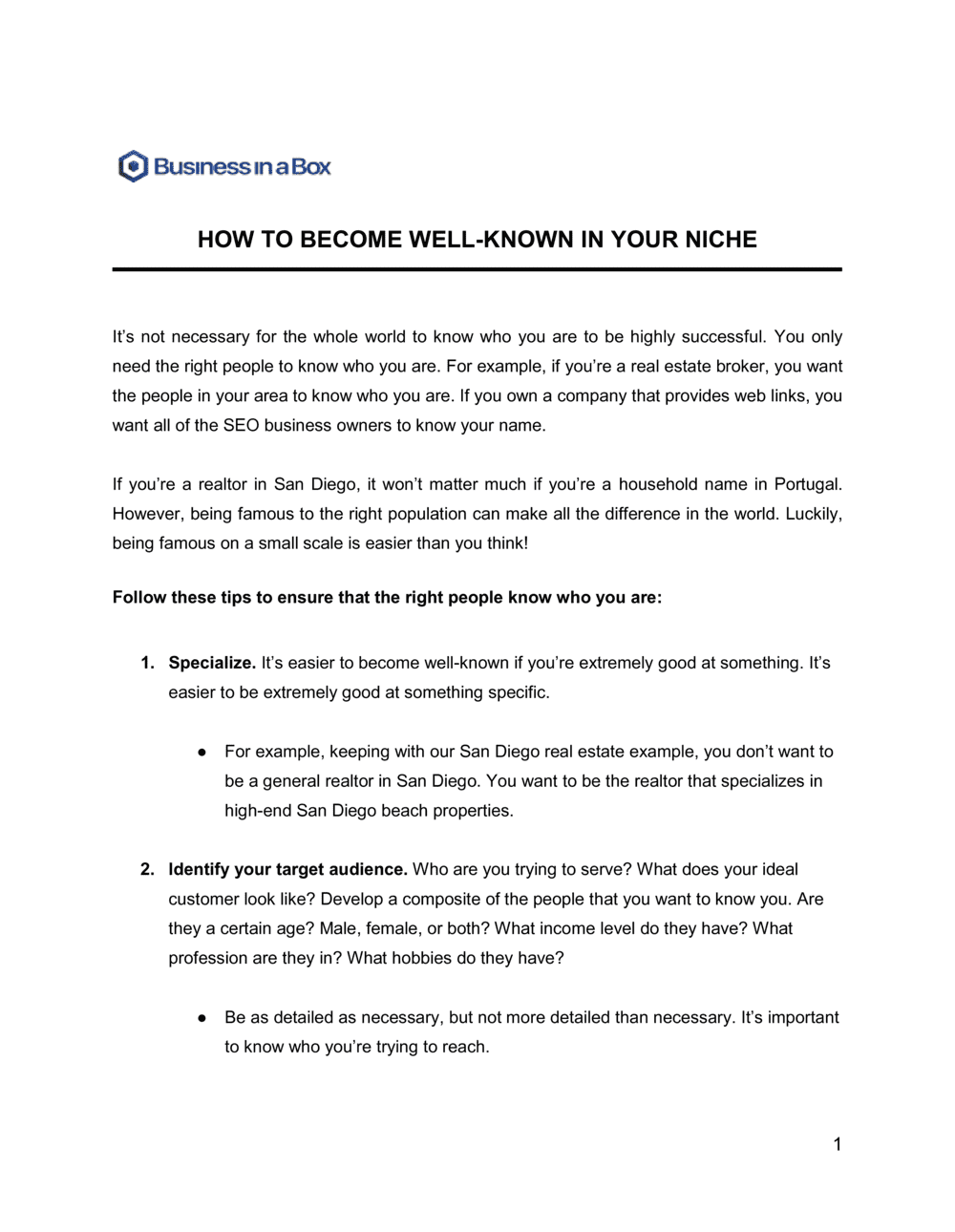
Part of your Business Operating System

This document is one of 3,000+ business & legal templates included in Business in a Box.

  • Fill-in-the-blanks — ready in minutes
  • 100% customizable Word document
  • Compatible with all office suites
  • Export to PDF and share electronically

Create your document in 3 simple steps.

From template to signed document — all inside one Business Operating System.
1
Download or open template

Access over 3,000+ business and legal templates for any business task, project or initiative.

2
Edit and fill in the blanks with AI

Customize your ready-made business document template and save it in the cloud.

3
Save, Share, Send, Sign

Share your files and folders with your team. Create a space of seamless collaboration.

Save time, save money, and create top-quality documents.

★★★★★

"Fantastic value! I'm not sure how I'd do without it. It's worth its weight in gold and paid back for itself many times."

Managing Director · Mall Farm
Robert Whalley
Managing Director, Mall Farm Proprietary Limited
★★★★★

"I have been using Business in a Box for years. It has been the most useful source of templates I have encountered. I recommend it to anyone."

Business Owner · 4+ years
Dr Michael John Freestone
Business Owner
★★★★★

"It has been a life saver so many times I have lost count. Business in a Box has saved me so much time and as you know, time is money."

Owner · Upstate Web
David G. Moore Jr.
Owner, Upstate Web

Run your business with a system — not scattered tools

Stop downloading documents. Start operating with clarity. Business in a Box gives you the Business Operating System used by over 250,000 companies worldwide to structure, run, and grow their business.

Free Forever Plan · No credit card required