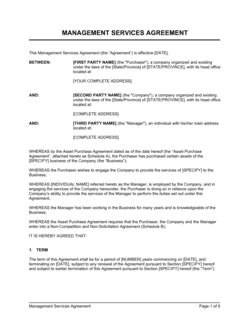
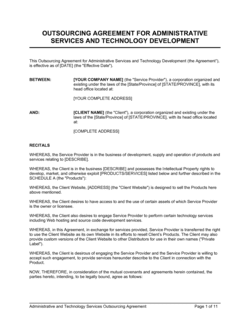
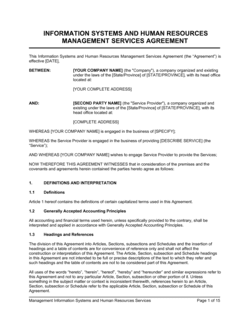
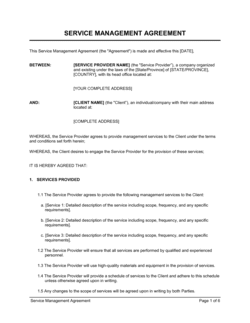
- Management Services Agreement (MSA)
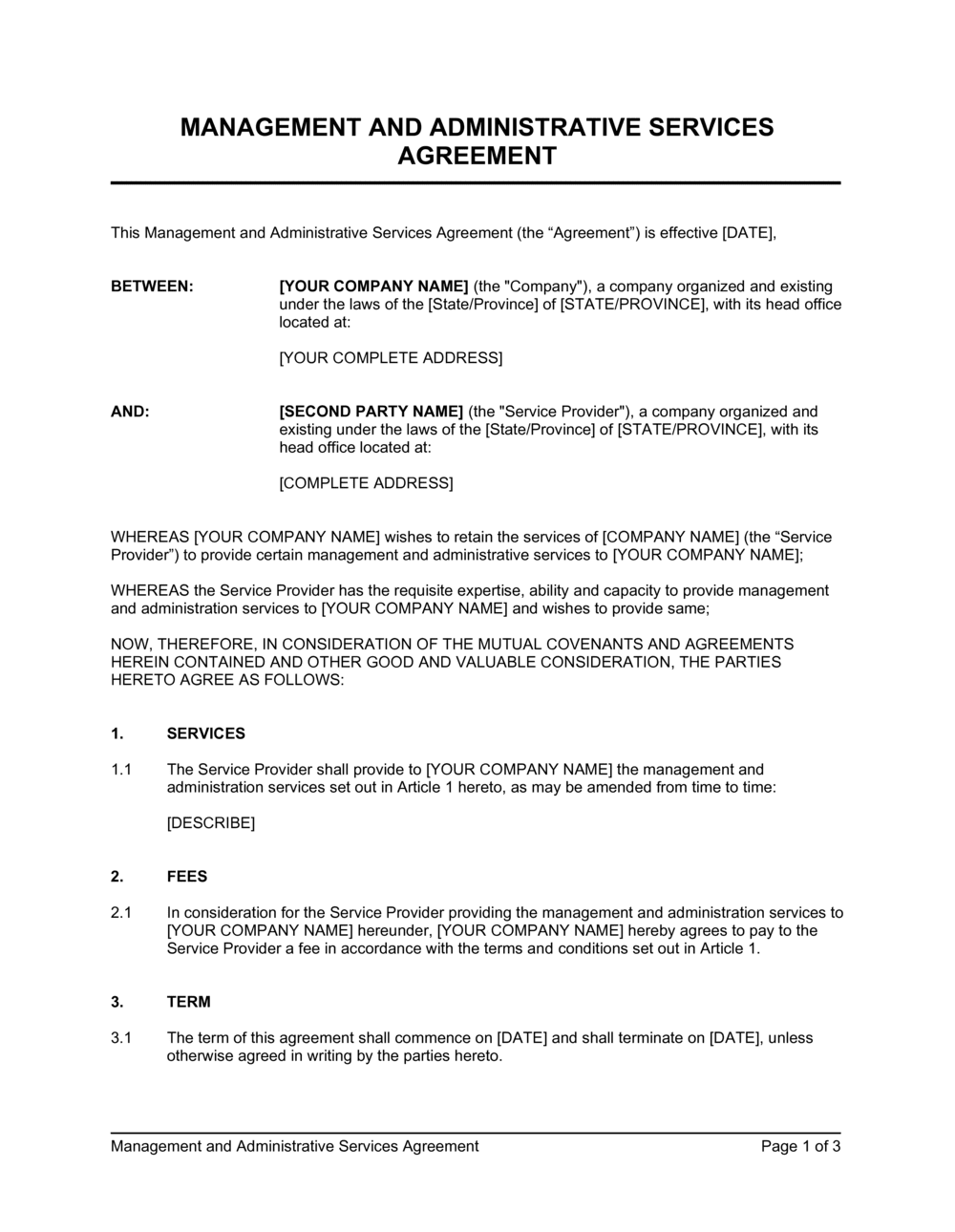
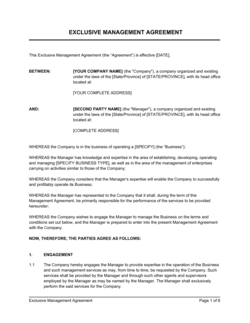
- A contract under which one party provides ongoing management, strategic, or administrative support to another party in exchange for a defined fee.
- Management Fee
- The periodic compensation paid by the recipient entity to the service provider for management and administrative services, expressed as a fixed amount, percentage of revenue, or cost-plus arrangement.
- Intercompany Agreement
- A contract between two entities under common ownership or control that formalizes the terms of services, financing, or resource sharing between them.
- Transfer Pricing
- The process of setting prices for goods, services, or intellectual property transferred between related entities, subject to tax authority review to ensure arm's-length fair market value.
- Scope of Services
- A defined list of the management and administrative tasks the service provider is obligated to perform, typically attached as a schedule to the main agreement.
- Service Level Agreement (SLA)
- A set of measurable performance standards — response times, accuracy rates, or deliverable deadlines — that the service provider must meet under the agreement.
- Indemnification
- A contractual obligation by one party to compensate the other for specified losses, damages, or liabilities arising from defined events or breaches.
- Limitation of Liability
- A clause capping the maximum financial exposure of the service provider to a stated amount — often one year of fees paid — regardless of the nature of the claim.
- Arm's-Length Transaction
- A transaction conducted between unrelated parties on commercially reasonable terms, used as the benchmark for intercompany arrangements reviewed by tax authorities.
- Cost-Plus Pricing
- A fee structure where the service provider charges the actual cost of providing services plus a defined markup percentage, commonly used in intercompany arrangements to satisfy transfer-pricing standards.
- Termination for Convenience
- A contractual right allowing either party to end the agreement without cause by providing a specified advance notice period — commonly 30, 60, or 90 days.
- Reimbursable Expenses
- Out-of-pocket costs incurred by the service provider in delivering services — travel, software subscriptions, third-party fees — that the recipient entity agrees to repay on a pass-through basis.